Thank you! Your submission has been received!
Oops! Something went wrong while submitting the form.
MENU
Product launches, platform announcements, and events from the team building Teachable.
.png)
Checkout is where a sale is won or lost. For anyone selling courses, coaching, or memberships, the moment between wanting a product and paying for it decides how much you keep, how much of your week goes to admin, and how many students around the world can buy from you at all.
Most creators end up assembling that moment themselves. One tool runs the checkout page, another handles taxes, a spreadsheet reconciles the numbers, and a separate processor covers anyone paying from abroad. Every extra piece adds a fee, a login, and one more thing to fix late at night.
Teachable rebuilt its checkout on Stripe so you start with all of that handled. You keep more of every sale, you spend less time on payments and taxes, and you can sell to students across most of the world from your first launch. Your students see a clean, familiar checkout. Underneath, it runs on the same Stripe technology behind a large share of online commerce, and it does the operational work for you.
The timing works in your favor. Goldman Sachs Research projects that the creator economy could roughly double to $480 billion by 2027, up from $250 billion. More of that money will move across borders, on phones, and in local currencies. Teachable Payments was built for that.
Your checkout should earn you more, hand back your weekends, and let you sell anywhere. That is Teachable Payments.
Your checkout should make you more money, give you your weekends back, and let you sell anywhere in the world. That is the new Teachable Payments.
Here is what comes built in from your first sale, next to what selling with a separate payment tool usually looks like.
The first thing you feel is how much you keep. Your rates start below standard processing, and creators selling internationally see the biggest reduction. Talk with our team to see your exact rate, then read the full breakdown on our pricing page.
Selling more from the same traffic matters just as much as the rate. Built-in order bumps add around 20% in revenue on the transactions that use them, Buy Now, Pay Later lifts sales by about 25%, and tax-inclusive pricing can raise checkout conversion by up to 22%. These tools come with your checkout, with nothing extra to install.
“When you are just starting, giving up a small percentage may not seem significant. But as your business grows, every percentage point starts to matter.” — Stefan Kunz, founder of Stefan Kunz Studio
Rates start as low as 2.5% + $0.30 based on where you are and how much you process. Talk with our team to see your exact number, then read the details in our Teachable Payments help guide.
Next, you stop being your own accountant. On every sale, sales tax, VAT, and GST are calculated, collected, and remitted for you across 45+ countries.
There are no forms to chase, no spreadsheets to reconcile, and no separate tax app to connect. Tax handling runs on Stripe Tax, so it keeps getting stronger over time.

Your students should pay the way they already do. Teachable Payments gives them more than 35 ways to check out. On a phone, that means one tap with Apple Pay or Google Pay and no card entry. With local currency display, buyers see prices in their own currency automatically, so a student in Sao Paulo or Warsaw feels at home at checkout.
When a buyer sees their own currency and their usual payment method, more of them finish the sale.
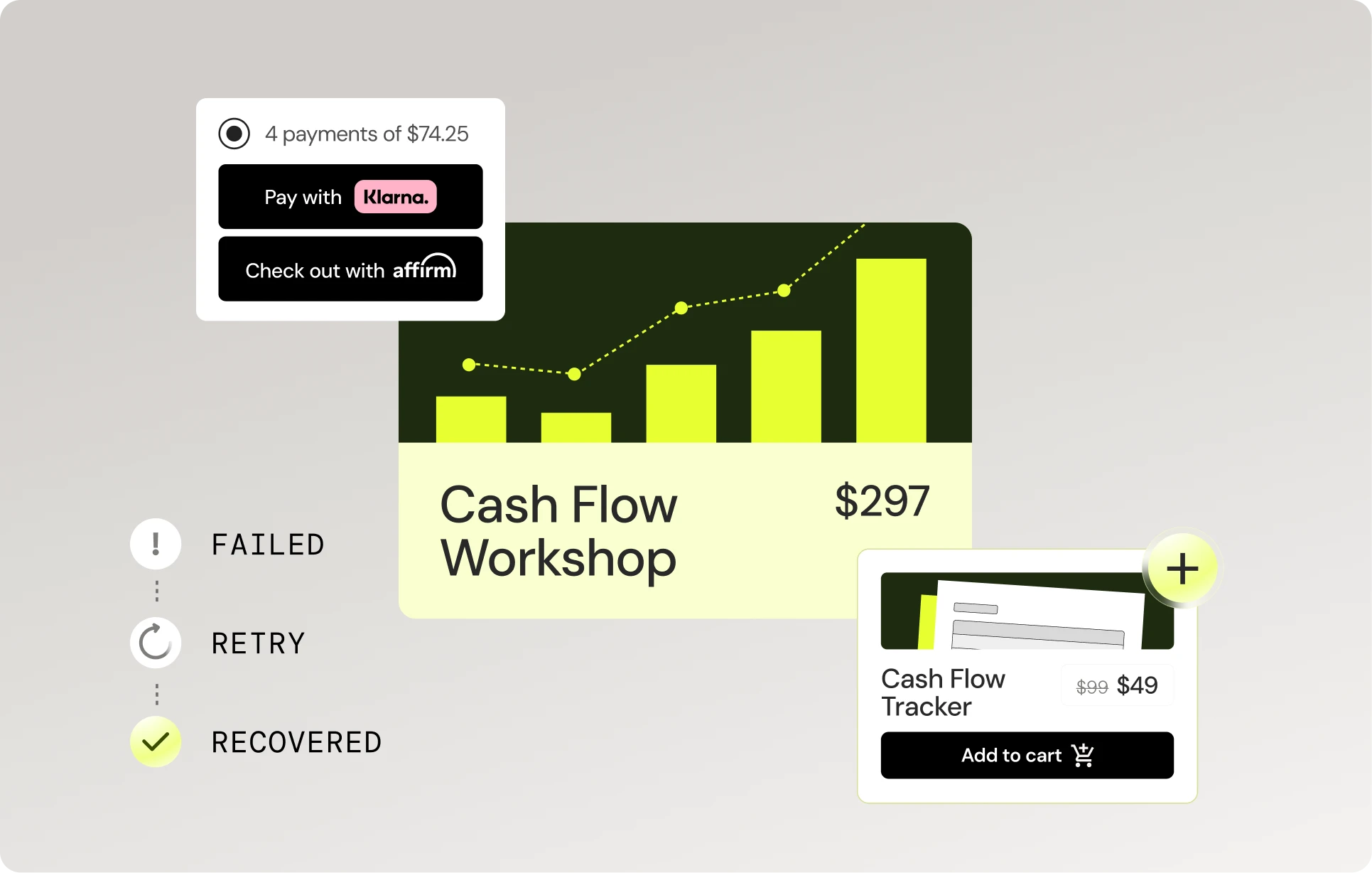
Recurring revenue runs on Stripe Billing. Failed payments get retried automatically, and many are recovered before you would notice. You get smart dunning, proration, and tax-aware invoicing from day one. For anyone selling memberships, coaching, payment plans, or drip courses, recurring payments can raise lifetime student value by around 43%.
Your money should reach you quickly. Eligible creators get instant payouts, with funds arriving in minutes through eligible debit cards or bank rails. Every transaction runs through Stripe fraud protection, so risky charges get caught early, before they turn into a costly chargeback.
There is no migration and no separate processor to connect. Teachable Payments is part of the platform, so it is on from your first product, and setup takes minutes. It is powered by Stripe for reliability and security.
You also get a named Customer Success Consultant who knows your setup and answers you directly, plus warm intros to other creators and invitations to Teachable events around the world.
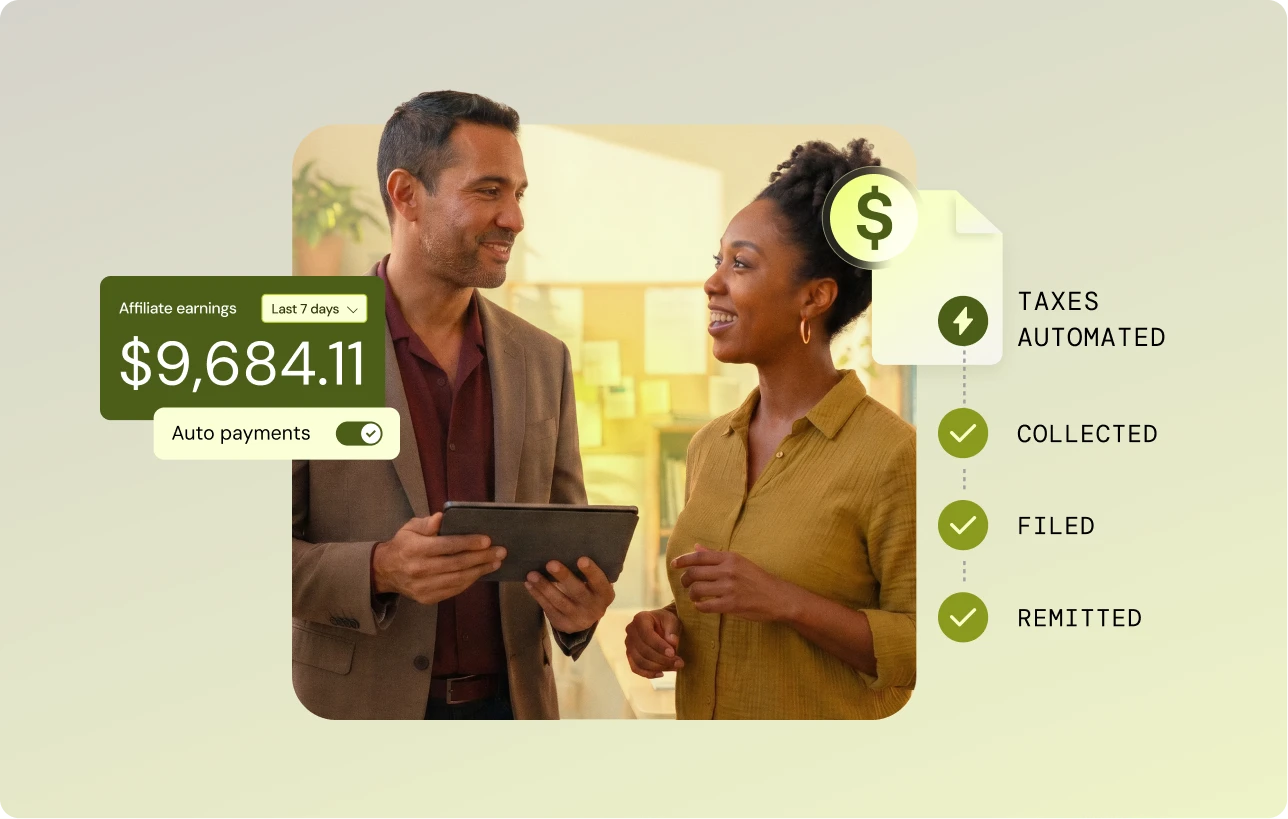
Creators are already growing across borders on Teachable, and these payment features fit exactly how they sell. For Stefan Kunz, having payments built into the platform mattered from day one. He could open enrollment without wiring up a separate processor, which kept his attention on his students.
“It felt like a platform that would let me focus on creating and teaching rather than managing technology.” — Stefan Kunz, founder of Stefan Kunz Studio
Stefan has taught more than 8,000 students across 25-plus launches, reaching learners on nearly every continent, with Teachable handling tax and local payment methods for him.
With students from 188 countries, tax compliance could have been a nightmare. Teachable handles it all, so we can focus on helping our members build their data skills. — Leila Gharani, XelPlus Academy
Youness School has supported more than 2,000 engineering-prep students across Morocco and France, plus another 20,000 reached through free lessons, on a platform that travels with the student wherever the signal goes. For more stories like theirs, browse our creator success stories.
The new Teachable Payments gives you better rates, less admin, and more buyers, all inside the platform you already use.
See the new Teachable Payments and talk with our team, then see how creators are already selling worldwide with it.
Teachable DOES NOT provide legal or tax advice to users of Teachable Payments. By using Teachable Payments, You are solely responsible for obtaining any such legal advice and tax advice that You consider appropriate in connection with Your use of Teachable Payments.
A large audience and a thriving business are two different things.
Plenty of creators build the first and assume the second will follow. The ones who grow past a certain point work out something harder: how to turn attention into demand, and demand into a business that holds up across markets, languages, and currencies.
That problem is the reason we brought Europe's top creators to Rome.
Teachable Collective Rome is a three-day, invite-only gathering running June 23 to 25, built for established European creators who want time with peers operating at the same level and direct access to what we see across our top accounts.
It is the European counterpart to the Collective we hosted in Los Angeles earlier this year. Follow along on Instagram as the week unfolds.
Twenty-two Teachable schools and around 30 creators and operators are in the room, and the guest list is regional by design. Seventeen of the schools are based in Europe, with a few more traveling in from the United States, Canada, and Australia. The largest groups come from the UK, Italy, Spain, Austria, France, and Romania.
What these creators teach covers a lot of ground. Languages lead the room, followed by music, exam and interview prep, and tech. Around those sit creators teaching astrology, aviation, dance, marketing, nutrition, philosophy, and photography. One attendee runs a language podcast with more than 400 million downloads.
Teachable Select schools start at $250K in annual sales and Elite starts at $1M, the same tiers we recognize across the Customer Journey program. Rome is what that support looks like at the top of the range in Europe. Like our week at SXSW this spring, it is built as much around the rooms between sessions as the sessions themselves.
The framing we are taking into the day is direct. A big audience is a strong starting point. Turning it into a strong business takes a different set of moves. Early growth rewards reach and repetition. Past a certain point the ceiling changes, and what drives results is product depth, repeat purchases, and how well a creator sells into new markets.
Three things come up again and again across our top European accounts:
The first evening is a welcome dinner on a rooftop terrace in the center of Rome. No agenda, no presentations. The point is to let the group meet, warm up, and set the tone before the working day that follows.
The full content day takes place at Soho House Rome and runs from morning into the evening. Our Managing Director, Giovana Carvalho, opens with Teachable's read on where creator education is heading in Europe. From there the day moves through three creator keynotes:
Between the keynotes, our data and product team breaks down what actually drives repeat purchases across top accounts and how to price for audiences a creator has not sold to before. After lunch, the whole group moves into hot seats, where creators bring a live business problem and the room works through it together. The day closes with a happy hour, and our team films creator content throughout.
The final day moves out of the city. The group heads to Frascati, in the hills outside Rome, for a wine tour and tasting. It is the least structured part of the event, and that is on purpose. Some of the most useful conversations at the LA Collective happened in exactly these moments, away from a stage, when creators compare notes on what is working in their businesses.
Rome is invite-only, and most creators reading this are not in the room this round. The thinking behind it applies at every stage.
The demand for expert-led education is growing, and it is global. Goldman Sachs Research expects the creator economy to roughly double to $480 billion by 2027, up from around $250 billion.
The creators who grow into that are the ones treating their teaching as a real business, with deeper products, stronger repeat purchases, and pricing and payments built for buyers in more than one country.
We run the Customer Journey program because a creator at $50K needs different things than a creator at $500K, and both need different things than one pushing past $1M.
The Collective is what that support looks like at the top tier. Rome is where we bring it to Europe.
Talk to our team to understand how Teachable can support where your business is heading next. If you are ready to start building, you can do that today.

We have been busy. Over the last few months we shipped updates to mobile, certificates, translations, and B2B distribution, plus there are a couple of existing features worth revisiting. Here is everything, and why it matters.
According to Salesforce Research, smartphones generated roughly two-thirds of all US online shopping orders in Q3 2024. For your students, mobile is the primary screen, and in many global markets it is the only one. So we treated it that way.
We shipped a set of improvements to the Teachable mobile app: offline access, push notifications, expanded language support, and better performance.
iOS and Android are now fully on par. Whatever the experience is on one, it is the same on the other.
The bigger story is reach. The gap between someone enrolling in your course and actually completing it is largely a mobile problem. Most students browse, buy, and consume content on their phones, and any friction in that experience is a drop-off point.
Offline access means a student on a plane, a commute, or a spotty connection can still make progress. Push notifications mean you can bring them back when they drift. Together, these become completion rate levers.
For course creators, completion rates tie directly to reputation, reviews, and referrals. For anyone building a global audience or selling into markets where mobile is less a preference and more a given, this update closes a meaningful gap.

Completion certificates are now available on Teachable, with direct LinkedIn sharing built in. Full setup details are in the certificates support article.
Strategically, this is one of the underrated growth tools available to course creators. Every time a student shares their certificate on LinkedIn, your course name reaches their entire professional network: people who are exactly the kind of audience likely to be interested in what you teach.
That is organic distribution you do not have to pay for, driven by the people who have already validated your content by completing it.
There is a second effect worth naming: certificates change how students engage with a course before they finish it. Knowing a credential waits at the end raises the perceived value of completing, which means higher finish rates, better reviews, and stronger word of mouth.

See how Antoine van der Lee built his iOS developer community on Teachable. Certificates are part of that story.
For anyone running corporate training, customer education, or compliance programs, certificates also add a layer of institutional credibility that enterprise buyers often require.
One-click translations already existed on Teachable. Previously, they covered the dashboard, product catalog, and product detail pages. Curriculum, checkout, and all other pages were excluded, which meant a student could browse in their language and then hit a wall as they moved deeper into your school.
That gap is closed. Translations now apply to your entire school. Go to Site > Language and text, select from the dropdown, and every page updates, checkout included. We support 13 languages: English, Arabic, Spanish, French, German, Portuguese, Italian, Japanese, Thai, Chinese (Traditional and Simplified), and Turkish.

The strategic implication is significant. Language has always been one of the biggest invisible barriers to course sales. A student who finds your content in their language but hits English at checkout is likely to leave. Localization at the checkout level is a conversion issue, and now it is resolved with a single setting. For creators who have been building multilingual audiences or expanding into new markets, this removes the last real friction in the purchase flow.
B2B Bulk Distribution is now available in Early Access, and it is worth understanding what this opens up.
Until now, running a training program on Teachable at volume meant friction at the enrollment layer. Bulk distribution removes that ceiling. You can enroll entire groups in one action, which means the operational overhead that used to make large-scale training painful is largely gone.
This matters beyond convenience. For creators and companies building B2B revenue streams, selling training to other businesses rather than individual consumers, the ability to deliver across dozens or hundreds of learners is often the difference between a pilot and a real contract.
Enterprise buyers need to know the platform can handle their volume before they commit. Teachable for Enterprise is built for exactly that, and bulk distribution is a core part of how it works. You can read more about the B2B revenue model in how to sell online training B2B.
Early Access means two things: you can start using it now, and you get direct input into how it develops. We are actively working with early users to shape the product. If you are running or planning a large-scale training operation, this is the time to get in.
Apply to the early access waitlist.
Some of the most powerful things on Teachable are not new. Here are two features that creators are already putting to work, and worth knowing about if you have not explored them yet.
If you are using teachable:pay, every sale you make is already covered for tax compliance: US sales tax, EU VAT, and UK VAT, with Teachable handling it automatically.
Most creators do not realize this is on by default, which means they absorb compliance worry they do not need.
The second piece is checkout conversion. teachable:pay supports Apple Pay and Google Pay, which means anyone buying on mobile can complete a purchase in a couple of taps.
Checkout abandonment is one of the most consistent revenue leaks in an online course business, and the payment step is a major contributor. This already exists. It is already working. If you have not enabled it yet, now is the time.
Teachable has achieved SOC 2 Type II accreditation, a rigorous independent audit covering security, availability, confidentiality, and privacy.
A Type I certification confirms controls are designed correctly. Type II verifies they are consistently followed over time. That is a meaningful distinction for buyers doing due diligence.
If you are selling training to enterprise customers or running B2B programs, security compliance is often a procurement requirement. SOC 2 Type II answers that question before it becomes a blocker.
It is also a credential worth putting in front of potential B2B buyers proactively. Most will not ask until they are already deep in a buying process, but having the answer ready can move things forward.
We are always building. Keep an eye on your school and stay up to date with us on Instagram, LinkedIn, and YouTube for more!
.jpeg)
Most company videos are scripted. Leadership says the right things, hits the right notes, and nobody gets surprised.
This one was different.
We put three of Teachable’s most senior leaders on camera: Giovana Carvalho (Managing Director), Anna Damico (Head of Sales), and Olivia Owens (Head of Product Marketing & Partnerships). We asked them the things nobody usually asks: whether what Teachable sells still matters when anyone can ask ChatGPT anything, what the most common reason creators fail actually is, and where they are placing their bets for the next 12 months.
No press release framing or scripted answers.
What followed was a candid 25-minute conversation about AI, creator identity, corporate learning, and where the real opportunities are right now. Below are the moments worth keeping.
“We want people with perspectives, lived experience, taste, to continue to create the experiences that create outcomes.” –Olivia Owens, Head of Product Marketing & Partnerships, Teachable
Short answer: no.
The opening question was blunt. Does what Teachable sells still matter in a world where anyone can ask an AI to explain anything.
Anna didn’t hesitate.
“People need learning fast. People need people with experience sharing those learnings with them. I believe AI came to accelerate, to help Teachable as a concrete, solid, stable, reliable tool. But I don’t see that it will become obsolete. Absolutely not.” –Anna Damico, Head of Sales, Teachable
Olivia grounded it with a personal example. A few years ago, she took a time management course through a coaching program because she was struggling to juggle competing priorities. The course had content. But what actually changed her behavior was accountability.
“I could type into ChatGPT, 'here’s my calendar, help me fix this,' and do nothing with it. But I had to meet with her every week. 'How is that going? Did you actually change that behavior?' That’s what I can’t replicate.” –Olivia Owens, Head of Product Marketing & Partnerships, Teachable
Giovana went further, arguing that accountability is the core driver of learning at all.
“I need someone who’s depending on me, who’s putting faith in me. Competing against the amount of stimuli we’re all getting every single day is insane. We really need that human bonding and relationship. That emotional weight that comes with learning expectations” –Giovana Carvalho, Managing Director, Teachable
The Expert Exchange thesis in plain language: AI gives everyone access to the same information. The thing it cannot manufacture is the lived experience, judgment, and accountability that come from learning with a human who has actually done the thing. That gap is where creators build their businesses.

Every student who arrives at your course is there for a different reason. Students come from different backgrounds, want different outcomes, and carry very different prior knowledge. And yet most online courses still start everyone at lesson one.
Giovana called out the mismatch directly when the conversation turned to what Teachable is building next.
“Usually you start a course in the same place, but people come from from very different backgrounds, very different intents. I want to learn French because I want to go to Paris and feel like a local. That’s a very different application of the same subject.” –Giovana Carvalho, Managing Director, Teachable
The product bet she’s most excited about: learning paths that let students chart their own course. Not a fixed curriculum, but a system that assesses what each student already knows, where they want to go, and builds an experience around that.
Olivia extended the point from the creator side. Chasing completion rates misses the point entirely.
“The win is: I have this problem, this piece of information unlocked me so I could move forward. Being able to help creators deliver the content that speeds up that learning outcome moment for their student. That's the way they’re going to continue to add value.” –Olivia Owens, Head of Product Marketing & Partnerships, Teachable
What this means for creators: Shorter, more targeted content often outperforms the 50-hour course. Students don’t want volume. They want the specific insight that moves them forward. Learn how to structure your course curriculum to match student intent, not just cover the topic.

The conversation shifted to employee learning, and Anna brought data.
“Recent studies show that employees in the traditional workforce value professional development more than salary. It’s something connected to the value proposition of your brand. When you go to campus to hire talent, you can say: ‘We’re going to invest in your skills. We want to see you succeed.’ Companies doing that are attracting talent, retaining talent, and building careers in a more sustainable way.” –Anna Damico, Head of Sales, Teachable
The barrier used to be budget. Small businesses couldn’t afford dedicated learning platforms for their teams. That has changed.
“You don’t need a large investment to build a learning platform for your employees. You can own a bakery with 25 employees and teach them how to handle daily operations. In the past, very small companies had to outsource everything. The use cases go from fashion to food to upskilling to changing careers internally. Regardless of sector, industry, cohort, seniority. We have a solution for you.” –Anna Damico, Head of Sales, Teachable
Giovana made the cultural argument for why this matters beyond retention numbers.
“Corporate training used to be very stale. Employees are people. Your employees are students and consumers. They want to see what’s out there now, in real time.” –Giovana Carvalho, Managing Director, Teachable
For creators with existing audiences: Olivia pointed out that the same course you’ve built for individual students can be taken to companies. A design course for freelancers, for example, can also be sold to an in-house design team looking to level up. Teachable supports both routes. Read more about how creators use Teachable to sell to organizations.

Anna had a clear answer when asked the question most company videos avoid entirely.
Anna had three answers. Fear of judgment tops the list, followed by striving for perfection and lacking consistency. Those are the traps she sees creators fall into repeatedly. Her take:
“Your first product is going to be very, very bad. Do it anyway. You need to test your methodology, your way of teaching, the appetite of your audience, whether you’re hitting the right persona. If your first launch is a success, you’re very late to this party.” –Anna Damico, Head of Sales, Teachable
Olivia built on that with an identity argument. Too many creators refuse to commit to a direction until everything is figured out.
“A willingness to be bad is critical for being a creator. You have to be willing to put things out there that are not perfect, that are not proven. And I think people don’t speak enough about the mental health side of being a creator. Every single day you’re putting yourself out there to be judged. That should not be ignored.” –Olivia Owens, Head of Product Marketing & Partnerships, Teachable
The practical move: Publish something before it’s ready. Treat your first launch as a test, not a finished product. Collect real feedback. Iterate. The creators who succeed are almost never the ones who waited until everything was perfect.
The most pointed exchange of the conversation came when Giovana raised what she called “the age of AI slop.” If everyone has access to the same tools and generates the same content, differentiation has to come from somewhere else.
“Do you have an opinion? Do you have a perspective? Do you have reasons for why you think this way? The people with the opinion are the people that always edge out for me. Because when something comes up, they’re going to be decisive. They’re going to say: we should do this.” –Olivia Owens, Head of Product Marketing & Partnerships, Teachable
Anna took it to the hiring context.
“In a world of AI where everyone can learn the same things and get the same answers, the human aspects are what will set us apart. When you get five resumes with the same hard skills and the same degree, I need to talk to those people. Don’t try to be the same. It’s not going to be sustainable.” –Anna Damico, Head of Sales, Teachable
For online course creators, this has a direct application. Formulaic content with no clear voice or perspective is already losing ground. The creators building durable audiences right now are the ones with something specific to say, and the willingness to say it.
Related: How to find your niche as an online course creator and build a business around what you actually know.

Giovana asked Olivia directly: how do creators grow right now? Her answer had three parts.
Before chasing new audiences, look at who has already bought from you. What comes next for someone who finished your course. Coaching, a higher-tier program, a community membership. Most creators underestimate what their existing audience is willing to invest.
The same intellectual property you’ve built for individual students can be packaged and sold to organizations. A course for independent designers can become team-level training. A sales methodology course can become onboarding for an entire revenue team. The content is already built.
If you pull your platform demographics, there’s a good chance you already have students in markets you’ve never actively targeted. That’s an audience that found you organically. Olivia’s point: there is probably more value in that global reach than most creators have explored.
For more on audience-building strategy: How to build and grow an audience for your online course.
The conversation covered a lot of ground. A few things stand out as worth carrying forward:
Watch the full Expert Exchange conversation on YouTube, or start your free Teachable trial to see how the platform can support your next move.
The most successful creators on Teachable share one trait that rarely gets discussed: they treat growth as a new problem, not a continuation of the old one.
Getting to a serious revenue milestone requires one set of skills. Staying there requires a different set entirely. Buyer behavior shifts. Student expectations rise. Product ecosystems start to matter more than any single launch. The creators who recognize that shift early are the ones who keep moving.
That recognition is the through-line of Teachable Collective: a two-day invite-only gathering in Los Angeles this April, built for creators operating at scale who want to think seriously about what comes next. Follow along on Instagram for more updates as the week unfolds.
Teachable Select and Elite creators are gathering in LA across two days of studio content, peer exchange, and recognition. Select tier starts at $250K in annual sales. Elite starts at $1M.
The point is not the agenda. Creators at this level rarely get unstructured time with peers who understand the specific pressures of running a knowledge business at scale. That room does not happen by accident.
The Collective brings together 16 of the top Teachable schools, roughly 20 attendees, and that is entirely by design.
At this level, what creators need most is time with peers who understand the specific pressures of running a knowledge business at this revenue level, and direct access to what we are seeing across our top accounts. The Collective is built to deliver both.
The framing we are taking into this day is direct: what got you to your current revenue level is not necessarily what will grow you from here. Early-stage growth rewards volume. Launch, promote, repeat. At a certain point, the ceiling changes. Product depth, student retention, and the actual quality of your learning experience start to drive results more than any promotional push.
Here is what our data consistently shows across our top accounts:
The ManyChat keynote ties directly into this conversation. For many of our top creators, automation is the mechanism that makes consistent revenue possible without the creator being involved in every sale. The keynote covers how that works in practice and what it looks like to build a course business that does not depend entirely on the creator showing up every day.
The following afternoon, we move to the marina. Our Teachable Elite creators board a boat for a cruise along the LA waterfront, with welcome drinks and a fireside chat on the water. After docking, we walk to Cast and Plow for a dinner recognizing the creators who crossed $1M in GMV in 2025.
That milestone is also not a finish line. For most creators who reach it, the moment is closer to a transition. New questions open up: which products are actually driving growth, how the student experience holds up at volume, what the business looks like when it runs without constant creator intervention.
The Collective is invite-only. Most creators reading this are not in the room this round. That is fine.
The thinking behind it applies to every stage. The creator education market is evolving faster than most platforms acknowledge. Buyer behavior is shifting. Students expect more. What constitutes a quality learning experience keeps moving.
We launched the Customer Journey program because creators at $50K need different things than creators at $500K, and both need different things than creators pushing past $1M. The Collective is what that commitment looks like at the top tier. See what the Customer Journey includes when you qualify.
Talk to our team to understand how Teachable can support where your business is heading next.
We spent a full week in Austin for SXSW 2026. Six days of programming that spanned a private breakfast, a full content production shoot, an official SXSW panel, and a sunset sail with 75 creators and industry professionals.
Across every room, every conversation, and every format at SXSW (March 11–16), one signal kept surfacing: human presence is becoming scarce, and scarce things become premium.
Here's everything that went down.
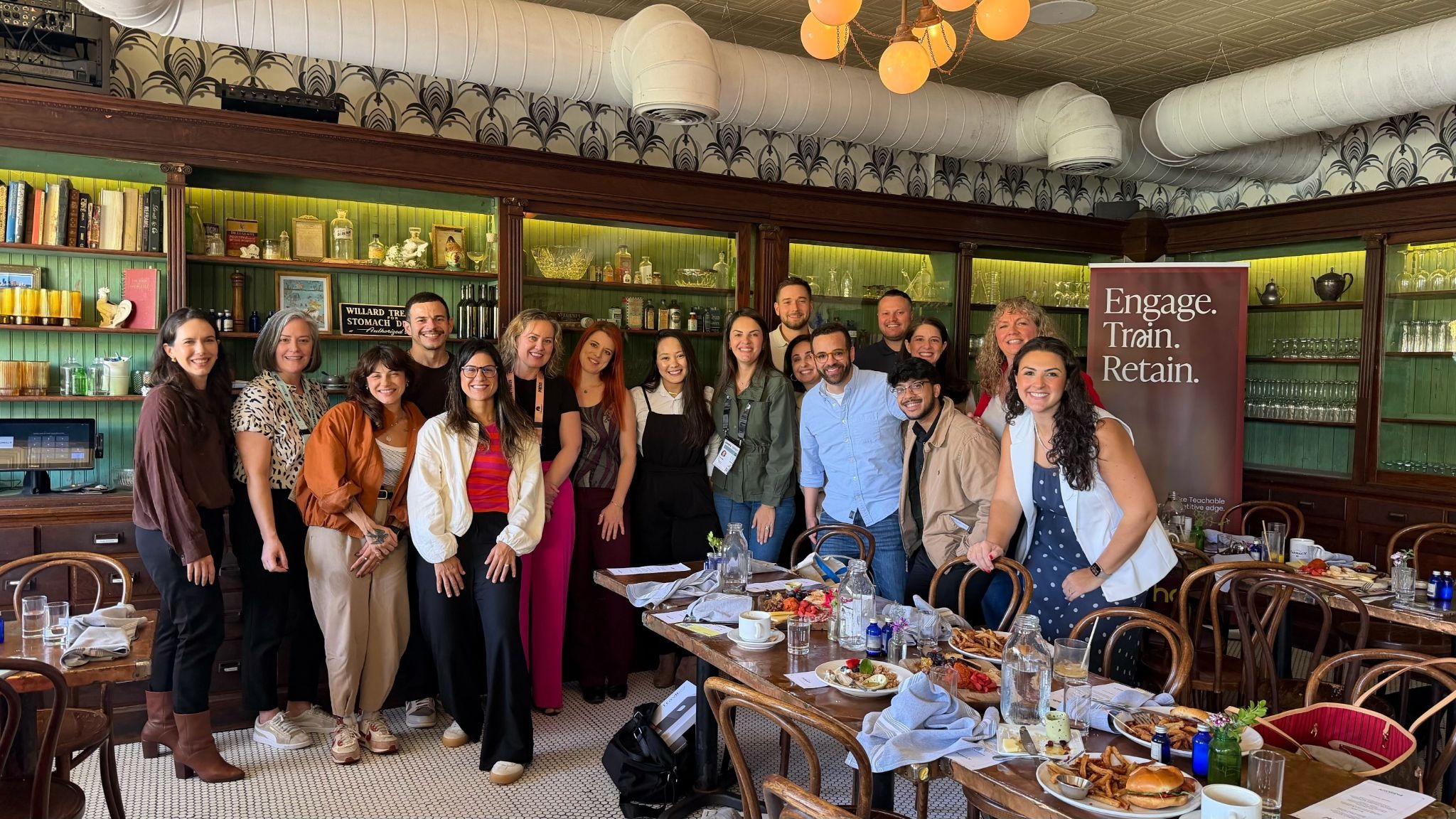
We kicked off SXSW week with an invite-only breakfast at Hillside Farmacy during SXSW EDU, bringing together some of the sharpest creators, educators, and brand leaders in the industry. Anna Damico (our Head of Sales), Giovana Carvalho (our Managing Director), and members of our sales and leadership team hosted the morning.
The setting was intimate, and the conversation matched it. Guests talked about the future of learning, the real mechanics of scaling a knowledge business, and what's actually changing for education creators in 2026.
There was no pitch deck and no keynote stage. Instead, we gathered a table full of people who are building in this space and wanted to talk honestly about where it's headed.
For us, mornings like this are where the most important conversations happen.
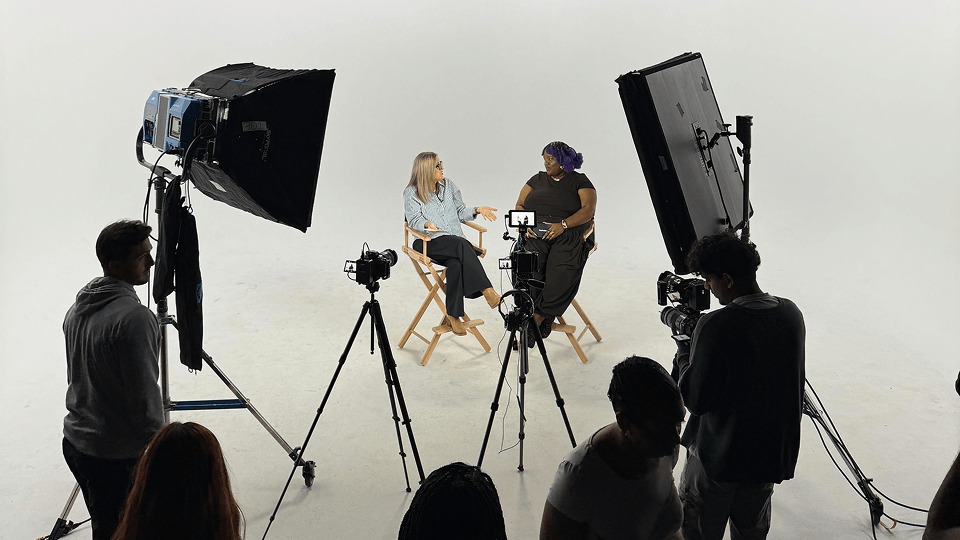
On Saturday, our team took over a white-backdrop studio in Austin for a full day of original video production with our creator and leadership teams. The talent lineup brought together some of the most credible voices in the creator economy and technical education:
Our very own Anna Damico and Giovana Carvalho also went on camera to record a leadership conversation about where online learning is headed and what we're building in 2026.
The shoot covered multiple formats across the full day, ranging from playful data games to candid thought-leadership conversations to product storytelling.
All of the footage is still in post-production. The finished content will roll out across our YouTube, LinkedIn, Instagram, and paid channels in the coming weeks, so keep an eye on our social feeds!
This was the centerpiece of our public presence at SXSW 2026. Olivia Owens, our Head of Product Marketing & Partnerships, returned to the SXSW stage for the third consecutive year to moderate a panel in the official Creator Economy Track.
The panel: How Creators Teach: Turning Knowledge Into Income and Community
Panelists:
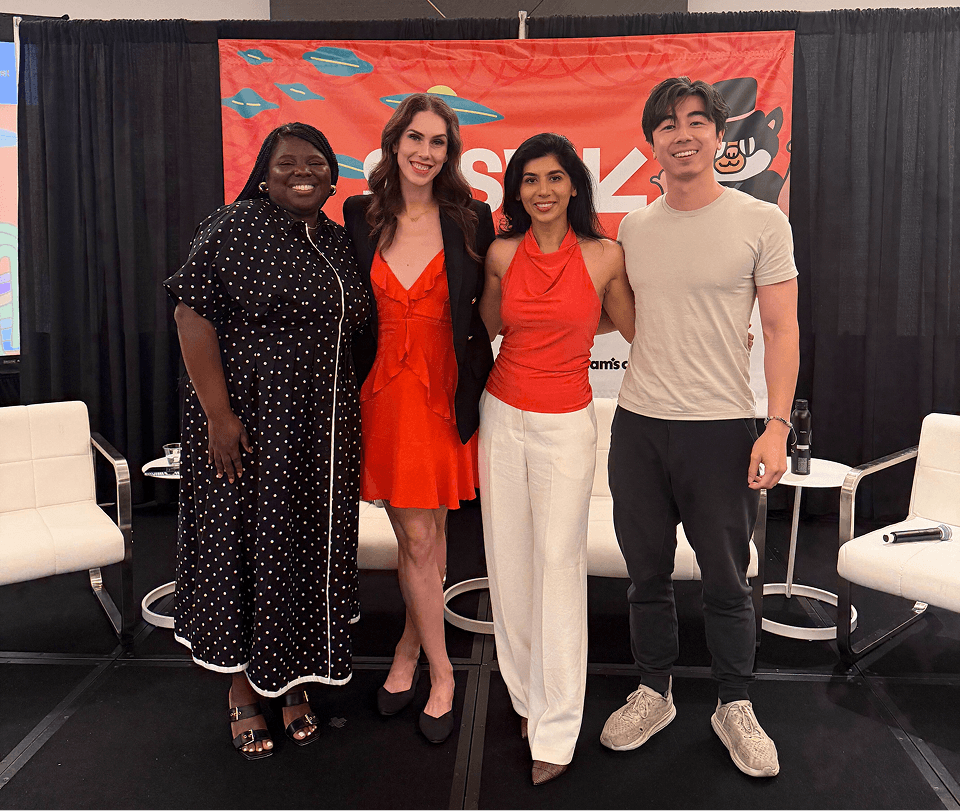
We took the stage at the SXSW conference with creators to discuss what truly matters in education: lived experience and human connection. In a world flooded with AI, we explored the growing anxiety around AI displacement.
Over 60 attendees watched us break down how human engagement keeps students involved and drives positive outcomes.
Olivia opened with numbers from our own learner research. Creators who resell to their existing audience do so at four times the average rate. 92% of students say they'd buy from the same creator again.
The number one reason customers say they don't buy again is there's no clear next step. The relationship fizzles.
Each panelist broke down the real shift that happens when free content becomes paid education.
Eugene built his Instagram audience on relatable ADHD comedy. When he launched his first coaching program, he didn't pitch it cold. He funneled followers through a five-day challenge first, because going straight from comedy skits to "I can fix your ADHD" doesn't land. The challenge built the authority. The authority converted the students.
Sundas took a different approach: obsessive clarity on outcomes. Her most successful course ends with 15 resume bullet points, three per project across five hands-on data science builds. Students don't just learn. They leave with something they can put on a resume that day.
Cassandra went professional-only after COVID and never looked back. The student who shows up for business reasons and the one who followed you for free tips are two completely different relationships. Knowing which one you're building for changes everything about how you price, structure, and deliver.
Watch the full panel replay here
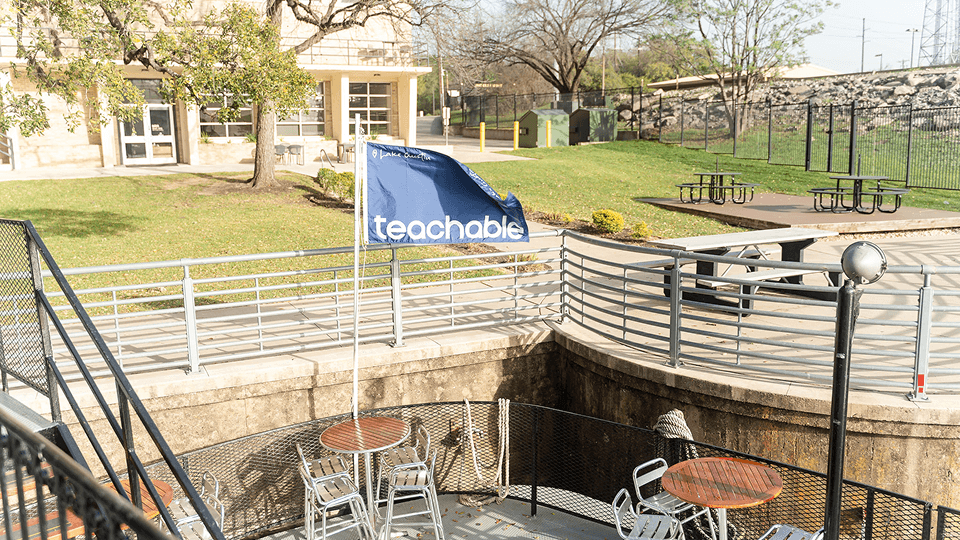
The week ended on the water. Our Creator Partnerships team brought 75 creators and industry professionals together for a sunset sail, and the guest list reflected exactly the kind of room we wanted to be in.
Attendees spanned teams at ManyChat, Pinterest, HubSpot, and Kit, alongside educators at every stage: established creators, rising voices, and people just starting to figure out what they want to teach.
Many creators called the Teachable Sunset Sail their favorite part of the week. Content from the sail, from floating social clips to candid creator conversations, will be rolling out alongside the studio content in the weeks ahead.
Our Managing Director, Giovana Carvalho, spent the full week at SXSW attending sessions, hosting conversations, and meeting with creators and industry leaders. She came back with six observations that shaped how we're thinking about the months ahead.
The themes that surfaced across every conversation in SXSW are ones we'll be building on all year: human expertise is more valuable than ever, the best creators are building real businesses (not just audiences), and the global demand for expert-led education is accelerating.
Follow us on LinkedIn, Instagram, YouTube, and TikTok to catch the content as it drops. And subscribe to our newsletter, to get the full picture delivered to your inbox.
If you're an expert ready to turn what you know into a business, start building on Teachable.
.png)
If you’ve ever tried building a course or launching a digital product, you know how hard it is to get the guidance you need at the level you need it.
That’s why we’re launching the Teachable Customer Journey program.
We’ve put together a tiered program that matches the level of guidance, access, and recognition you receive to the size and ambition of your business.
The more you grow, the more we grow alongside you.
You built a course. Then another one. Students enrolled, revenue grew, and before you knew it, you were running a real business on Teachable.
Think of it like an airline loyalty program, but instead of up
‘rades to first class, you get dedicated success managers, invite-only in-person events, and recognition designed to actually move your business forward.
The Teachable Customer Journey has three tiers, each based on your annual sales through the platform. You don’t need to sign up or apply. Your tier is tracked automatically, and you’ll be placed into the right level at the beginning of each quarter based on your performance over the rolling last 12 months.
If your sales grow and you qualify for a higher tier mid-year, you could be upgraded at the start of the next quarter. And to protect creators who have a slower season, downgrades are only processed annually, giving you room to recover.
Here’s what each tier looks like.
This is the starting line. Every creator on Teachable begins here, and the experience is built to help you find your footing, make your first (or next) sale, and build momentum at your own pace.
What you get:
Teachable Base is self-serve by design. Step-by-step tutorials through Teachable:U and YouTube, combined with regular live sessions, give you the tools and answers to keep moving without waiting on anyone.
Once your business crosses the $250K threshold, you stop figuring things out alone. A named Teachable success manager is assigned to your account, and the resources available to you shift from general guidance to targeted, growth-focused execution.
What you get:
The difference at this level is focus. Your success manager helps you decide which sessions to attend, which features to prioritize right now, and what to ignore until later. Practical templates, session recordings, and clear direction replace the guesswork that can slow down growth at this stage.
At this level, Teachable becomes a true partner in your business. The conversation moves from “what should I do next” to “where should my next $500K come from?” A dedicated senior success manager works alongside you on strategy, not just execution.
Everything in Teachable Select, plus:
Elite-tier creators also gain access to small, curated rooms that don’t exist anywhere else on the platform. Council sessions bring together top creators and Teachable leadership for candid conversations about market shifts, strategic decisions, and the future of the market.
These aren’t webinars. They’re working sessions for creators operating at a scale where the right conversation can be worth more than the right feature.
We built this program because the old model didn’t match reality. Creators at $50K need different things than creators at $500K, and both need different things than creators pushing past $1M. The Teachable Customer Journey puts the right resources in front of you at the right time, so your energy goes toward growing your business instead of searching for answers.
Whether you’re building early momentum, scaling toward your next tier, or operating at the top of the platform, this program is designed to reward your progress and accelerate what comes next.

We’ve been keeping a BIG secret over here at Teachable, and we’re thrilled to finally share it with you! In partnership with Sonic God Studios, Teachable is bringing you the reality competition show for creator-entrepreneurs—announcing 60 Day Hustle streaming on Amazon Prime!
As a founding partner and pioneer of the creator economy’s first-ever competition series, Teachable is committed to being a partner and advocate for creators everywhere. We firmly believe that the creator economy is here to stay and that creator-founded businesses are the future. That’s precisely why we’re thrilled to help bring this new series to a silver screen near you!
What’s more, we’re excited to share that real creators like Chris Do from The Futur who have made a real impact and income on Teachable will be featured on 60 Day Hustle! Chris steps in to mentor the contestants during a key episode, and you won’t want to miss it.
A first-of-its-kind, 60 Day Hustle is an intense timeframe competition for early stage entrepreneurs. streaming this summer on Amazon Prime, 60 Day Hustle challenges creators to take their business ideas and grow them beyond their wildest dreams. See real people handle real challenges and get tips you can apply to your own business.
Led by serial entrepreneur, Teachable creator, and global influencer Rudy Mawer, contestants will not only compete for a life-changing investment opportunity, but they will also receive expert mentorship and insight from star-studded industry leaders along the way.
Over a six-week period, entrepreneurs dive headfirst into a series of challenges and gain the knowledge and experience that can sometimes take years to master.
Witness the high-stakes drama and learn alongside the contestants as they get a deep dive into some of the biggest entrepreneurship lessons. Most importantly, find inspiration for your own work and life!
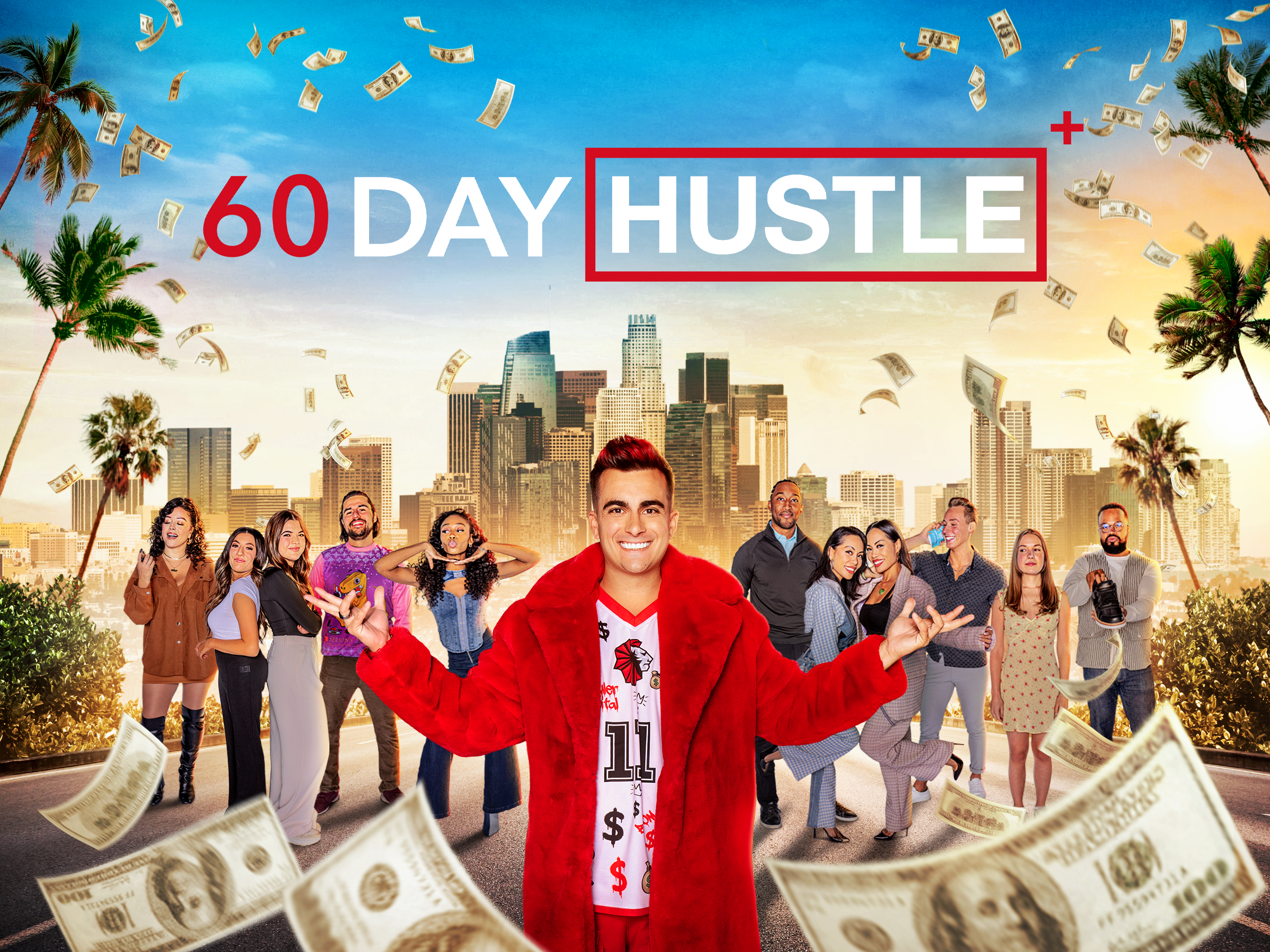
We know just hearing the word “hustle” can sometimes send a wave of stress crashing down. But the reality is: being a creator is a hustle. Creators wear so many hats from CEO to marketer to social media editor to accountant—and more.
But we’re here to remove the bad rap that hustle culture gets. Hustling isn’t just about making money or the next big win. It’s not about getting rich quick or pivoting to the latest trend or fad. True hustle is about drive, passion, and creativity. In fact, it’s precisely these qualities that are necessary for business longevity.
We believe it’s this blend of hard work partnered with a genuine sense of compassion for the people and lives they impact that makes the hustle of a creator so important and worth celebrating.
You’ll see all this and so much more on 60 Day Hustle on Amazon Prime.
If you know anything about us here at Teachable, you know that we’re passionate about the creator economy. Creators from every industry are not only sharing what they know, but they’re leading the charge and becoming entrepreneurs daily. In fact, you’ll spot a successful Teachable creator as a mentor on 60 Day Hustle.
We believe in creators as game changers in the entrepreneurial world so much that we’ve built a platform and tools to support creators like you monetize your knowledge and build a more impactful business through online courses, coaching, and digital downloads.
By the numbers
The creator economy now supports 207 million creators! According to a survey conducted by ConvertKit, nearly 46.7% of creators are full timers, with 88% of creators expecting to earn more money in 2024 than in 2023.
In Teachable’s own Creator Connections report, which dove into more creator economy insights, we uncovered that 95% of consumers say they have learned something new from a creator. So there’s no better time to embrace the creator economy and make an impact.
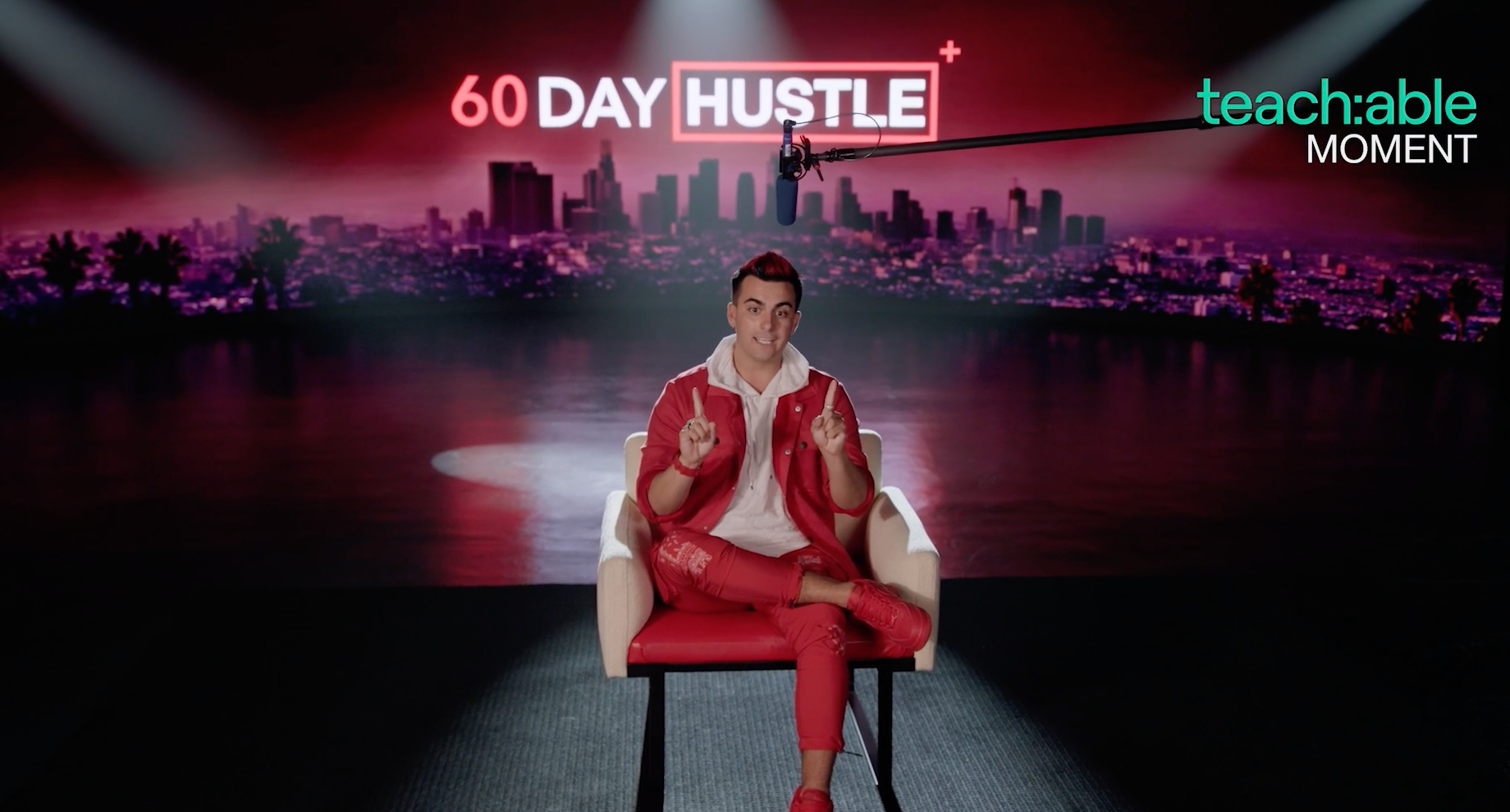
Built for creators and sponsored by your favorite creator platform, we’re excited to help bring to life a first-of-its-kind competition show for creators: 60-Day Hustle with a Teachable creator as a mentor.
Meet the Teachable creators involved:
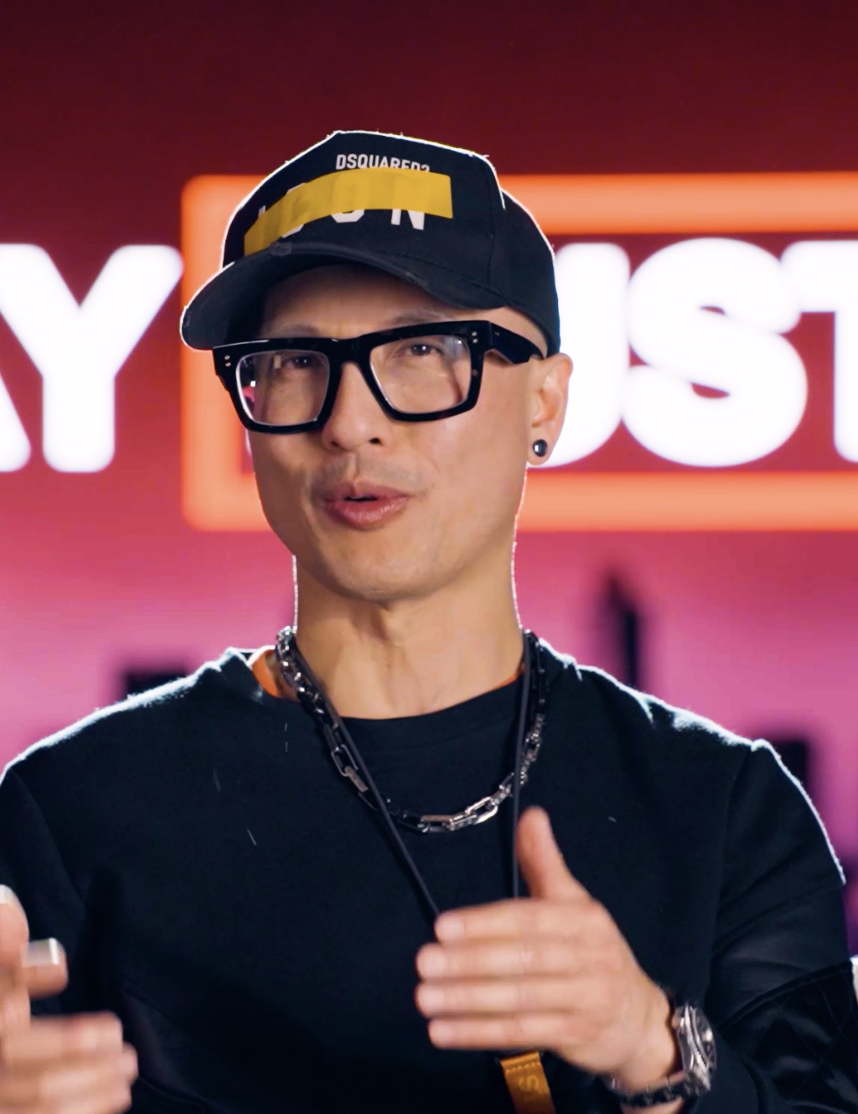
Emmy-winning director, designer, and all-around brand expert, Chris offers his marketing secrets in a launch-focused challenge.

Influencer, podcaster, and multi-talented marketer Rudy Mawer steps in as host of 60 Day Hustle, guiding creators through this entire journey. Want to learn directly from Rudy? Sign up for his free course on Teachable, where iIn just four quick lessons Rudy will teach you how to harness the power of AI to grow your online course business.

Online sales expert, marketing guru, and creator extraordinaire, Abagail Pumphrey is a key instructor in the 60 Day Hustle companion course, teaching how to launch your own digital products.
Here’s everything you need to know about how to tune into 60 Day Hustle.
You can stream all the episodes on Amazon Prime. Binge watch or go at your own pace. 60 Day Hustle is included on all Prime subscriptions.
You can tune in this summer on Amazon Prime.
Rudy Mawer, a business mogul and global influencer, will be guiding contestants alongside other mentors including Teachable creator Chris Do (Founder, The Futur).
Creators like you, looking to turn their unique knowledge and ideas into thriving entrepreneurial businesses.
Support the creator economy and learn tips from business moguls and top creators. The contestants are put through a business accelerator and you can follow along and apply the tricks of the trade to your own business.
We believe so strongly in the power and hustle of creators that we’re thrilled to support 60 Day Hustle in partnership with Sonic Gods Studios.
As you watch 60 Day Hustle, you won’t just see the impact of Teachable and online learning, you’ll see real entrepreneurs overcoming business challenges. You’ll be inspired by mentors’ and contestants’ personal growth stories. And you’ll walk away with creative business strategies you can put into practice in your own business.
But we know the real hustle doesn’t just happen on TV. It happens every day. And we want to see you, in the weeds, doing what you do! Use #showusyourhustle
.png)
Hey there! I'm excited to share something we've been working on that I think is going to make a real difference in how you sell on Teachable.
Over the past year or two, I've had the privilege of sitting down with dozens of creators—some selling their first course, others running thriving schools with multiple products. And you know what kept coming up? Sales pages.
Not in a good way, unfortunately.
The conversations usually went something like this: "I love Teachable, but I spent three weeks perfecting my sales page before I could launch." Or my personal favorite: "I have this amazing course ready to go, but I'm still tweaking the layout of my sales page..."
Three weeks. To build a page. When you already had an amazing product ready to sell.
That didn't sit right with me.
Here's where it gets interesting. We dug into the data, and what we found was honestly kind of heartbreaking. Creators were spending not just hours, but days customizing their sales pages. We're talking serious time investment—choosing fonts, adjusting spacing, moving elements around pixel by pixel.
And the correlation with increased sales? Basically nonexistent.
In fact, in many cases, all that customization just meant one thing: delayed revenue. While you were perfecting that hero image, potential students were waiting. While you were A/B testing button colors in your head, sales that could have been happening... weren't.
The other issue? Our existing sales page builder made it really hard to figure out what actually worked. Because every page was so custom and unique to each school, there was no clear pattern of what led to more conversions. You were essentially starting from scratch every time, flying blind.
Look, I wish I could tell you we built some magical tool that lets you customize everything AND guarantees higher conversions AND launches in five minutes. But that's not reality.
What we could do was ask ourselves: What if we flipped the script entirely?
What if, instead of giving you a blank canvas and infinite options, we gave you something that was ready to sell right now? What if we took all the information you've already added about your product—the stuff that's sitting there in your course setup—and automatically turned that into a sales page that actually converts?
That's exactly what Product Detail Pages (PDPs) are.
Here's the beautiful part: PDPs take the content you've already created and transform it into a sales page that's ready to go. No hours of customization required. In fact, we've intentionally limited the customization options at launch.
I know what you're thinking: "Wait, less customization? Isn't that... bad?"
Nope! Here's why: we only want to add customization options that we know drive conversions. No fluff. No features that look cool but don't actually help you sell more. Every option we add will be backed by data showing it makes a real difference.
And the results so far? They speak for themselves. We're seeing over 50% higher conversion rates with PDPs compared to traditional sales pages. Fifty. Percent.
Let that sink in for a second. You're doing less work and selling more. That's the dream, right?
PDPs are laser-focused on one thing: getting visitors to take action. To click that purchase button. To become your student.
Every element on the page is designed to guide people toward that conversion. No distractions, no unnecessary bells and whistles—just clear, compelling information about your product and a straightforward path to purchase.
The best part? PDPs work across your entire catalog:
No matter what you're selling on Teachable, PDPs have you covered.
This is just the beginning. We're watching the data closely, listening to your feedback, and already planning what comes next.
Our focus moving forward is simple: help you sell more, easier. Every feature we add, every tweak we make, will be in service of that goal.
We're not trying to build the fanciest sales page builder in the world. We're trying to build the most effective one. The one that gets your products in front of students faster and converts those students at higher rates.
Product Detail Pages are about giving you back your time. Time you can spend creating better content, engaging with your students, or—wild idea—actually enjoying your life.
They're about eliminating the barrier between "my product is ready" and "I'm making sales."
And honestly? They're about us finally giving you something that works better, not just something that feels busier.
We can't wait to see what you do with all that extra time you're getting back. (Might I suggest making another amazing course? Just a thought. 😉)
Ready to check out PDPs? Head to your Teachable dashboard and see how fast you can go from product to purchase-ready. I think you're going to love it.