Thank you! Your submission has been received!
Oops! Something went wrong while submitting the form.
MENU
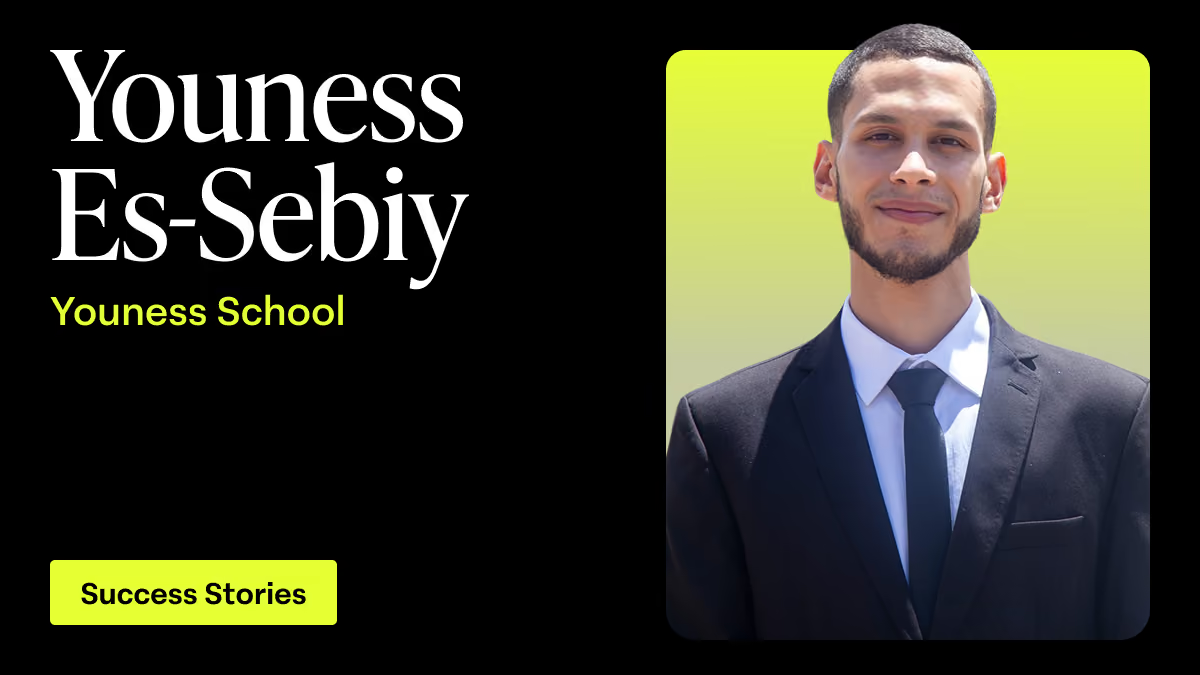
Before Youness Es-Sebiy built Youness School into a course business that has trained more than 2,000 students, he did what most serious creators do first: he tried the other options.
He taught on several platforms and compared what each one actually delivered for his school.
The answer he reached was Teachable, and he is direct about the reasons.
"I have tested other platforms in the past, including Thinkific and Podia. While they are good platforms, I ultimately chose Teachable because of two factors that were very important for my business and my students … The first is security … The second is the mobile learning experience." — Youness Es-Sebiy, Founder of Youness School
That decision came from someone who knows the stakes from the inside. In Morocco, the road to a top engineering school runs through CPGE, the Classes Préparatoires aux Grandes Écoles: two intensive years after high school studying advanced math, physics, chemistry, and engineering sciences, then one national exam that decides which schools will take a student. Youness went through all of it. He reached the other side and graduated from École Hassania des Travaux Publics, one of the leading engineering schools in the country.
Then he started teaching the students coming up behind him. He launched Youness School in 2019 while he was still an engineering student himself, recording lessons for the exact exams he had just survived. By 2023 the school was his full-time work.
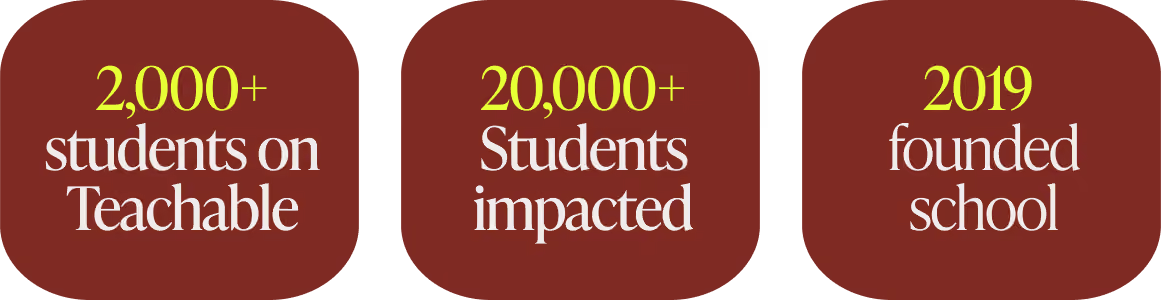
Today it has directly supported more than 2,000 students preparing for Morocco's national exam (the CNC) and the French Grandes Écoles exams, with more than 20,000 others reached through free lessons and his YouTube channels across Morocco, France, Tunisia, and Mauritania.
The two reasons he named for choosing Teachable, security and the mobile experience, run through every part of how that school works.
Youness built Youness School around a problem he had felt directly. CPGE students carry an enormous load across many subjects, and a lot of them hit a wall in one or two of those subjects with little structured help to get past it. He wanted to give them that help in a format that fit how they actually live and study.
" I went through the same preparatory classes, and they were very difficult. My goal is to help students who are facing the same problems, to help them grow and reach the best engineering schools." — Youness Es-Sebiy, Founder of Youness School
He made one early decision that shaped everything after it. Youness School would be online only. He had looked at in-person tutoring and found it too limited for what he wanted to build.
"We chose e-learning because we find the platforms very efficient. Physical classes are limited, and for our students online learning is the best solution." — Youness Es-Sebiy, Founder of Youness School
That decision raised the stakes on the platform itself. If an entire school lives online, the platform has to protect the content, reach students on whatever device they own, and keep working when the connection drops. Those three requirements are what pointed Youness toward Teachable over the other tools he had tried.
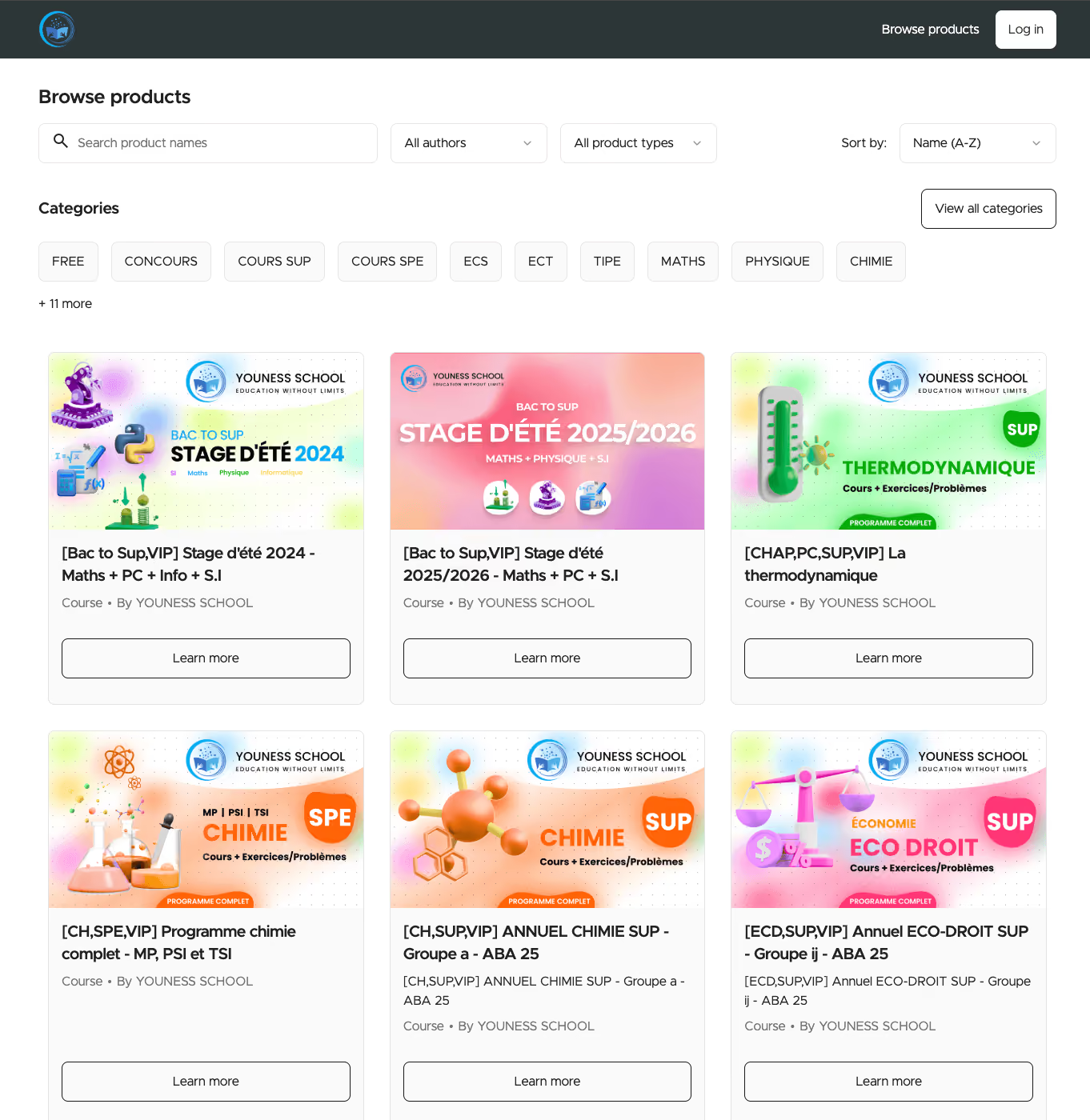
Youness runs the school with the same clarity he asks of his students. Five choices shape how Youness School finds, teaches, and keeps its students.
Most enrollments at Youness School begin with a conversation, usually on WhatsApp, where his sales team finds out where a student is actually struggling before recommending anything.
"In the beginning, we try to understand the needs of the student. If a student has problems across many topics, we offer a bundle with the whole platform. If they only have difficulty in one subject, we give them one or two courses." — Youness Es-Sebiy, Founder of Youness School
The result is a recommendation matched to what the student actually needs. A student weak in one subject buys a single course. Someone starting the full two-year climb buys a bundle, which Teachable lets him package as one grouped program.
Take action
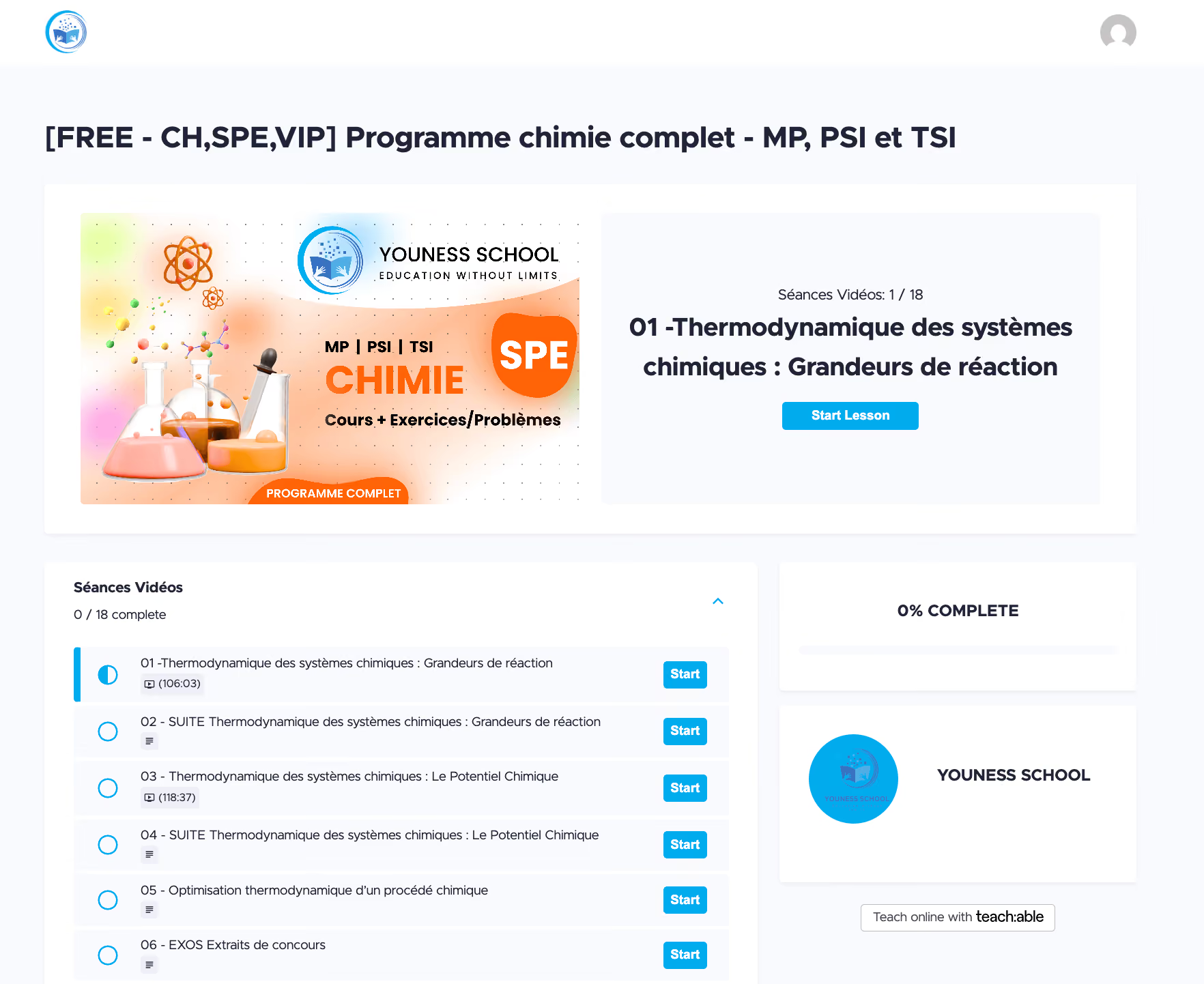
Youness School runs on three formats at once: recorded lessons students watch on their own time, live sessions with collaborating professors, and one-on-one coaching.
"We use both approaches. We have recorded classes on the platform with Teachable, and we have live courses with professors who teach in these preparatory classes. There is also coaching to answer questions and correct their work." — Youness Es-Sebiy, Founder of Youness School
The recorded library carries the core curriculum and reaches every enrolled student. Live sessions and coaching cover the moments where students need a person in the room with them: stuck on a problem set, preparing for a mock exam, or talking through method. Together they create the kind of student experience that keeps learners moving through the material.
Take action
For a school that sells exam-prep video, the content is the product. Youness named content protection as one of the two factors that decided his platform choice.
"As an online school, protecting our educational content is a top priority. I found Teachable's video hosting and content protection to be particularly strong, which gave me more confidence using the platform for premium courses." — Youness Es-Sebiy, Founder of Youness School
Secure video hosting keeps his lessons from leaking out, which matters when the same exam prep sells to a fresh cohort every year. Content that walks out the door loses the value he priced it on.
Take action
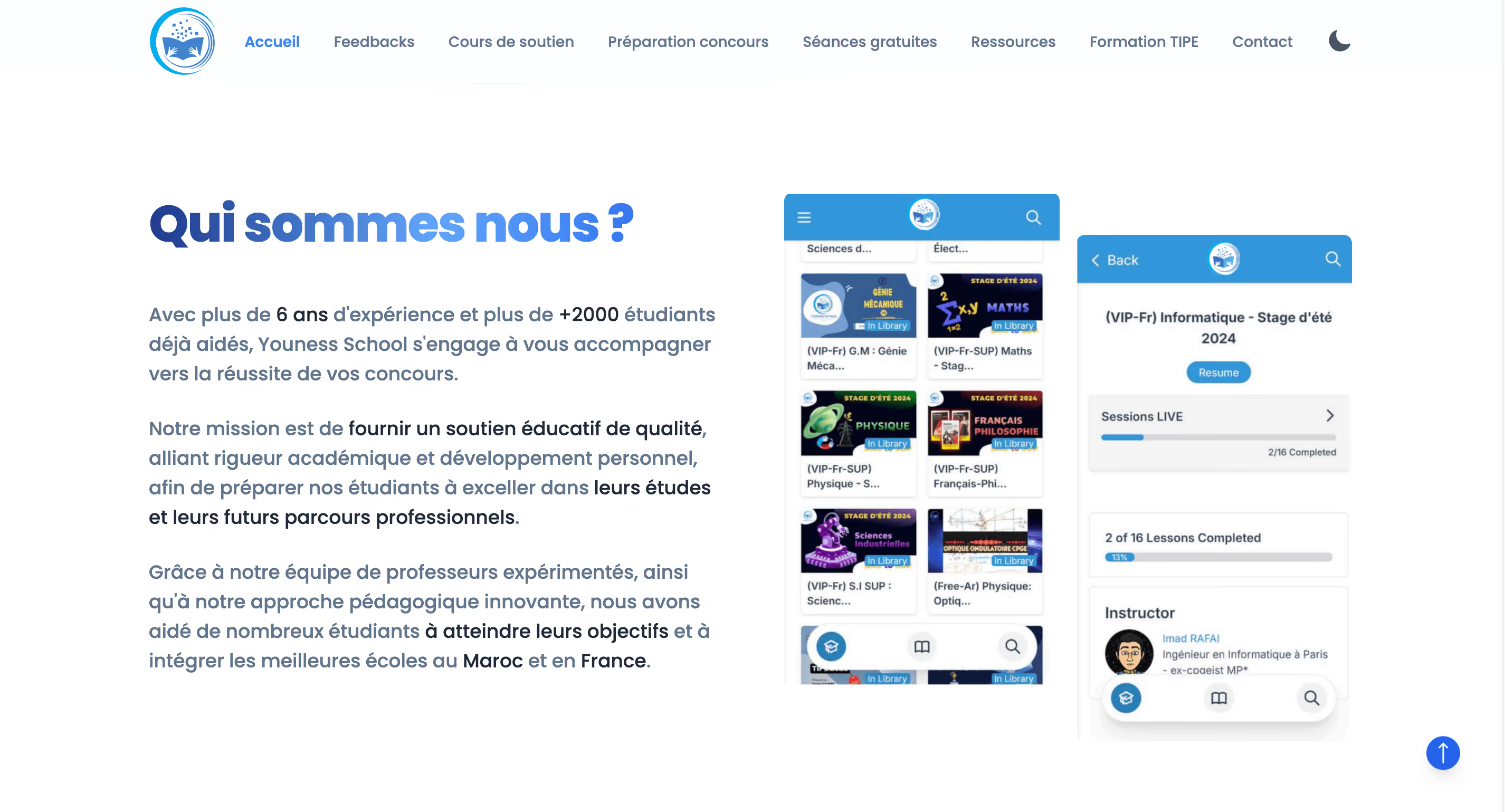
This is the choice most specific to where Youness teaches. His students are spread across Morocco and the wider Francophone world, and the connection they study on is uneven. The Teachable mobile app, and offline downloads in particular, became central to how the school reaches them.
"The mobile app lets students access their courses easily on their phones and tablets. The ability to download videos for offline viewing has been extremely valuable, especially for students who do not always have a stable internet connection." — Youness Es-Sebiy, Founder of Youness School
The context behind that quote is real. In 2025, about 36 percent of people in Africa used the internet, the lowest rate of any world region, according to the International Telecommunication Union. For a student living inside that gap, a course that only streams is a course that stalls every time the signal drops. An offline download turns a commute, a power cut, or a weak connection into study time.
Take action
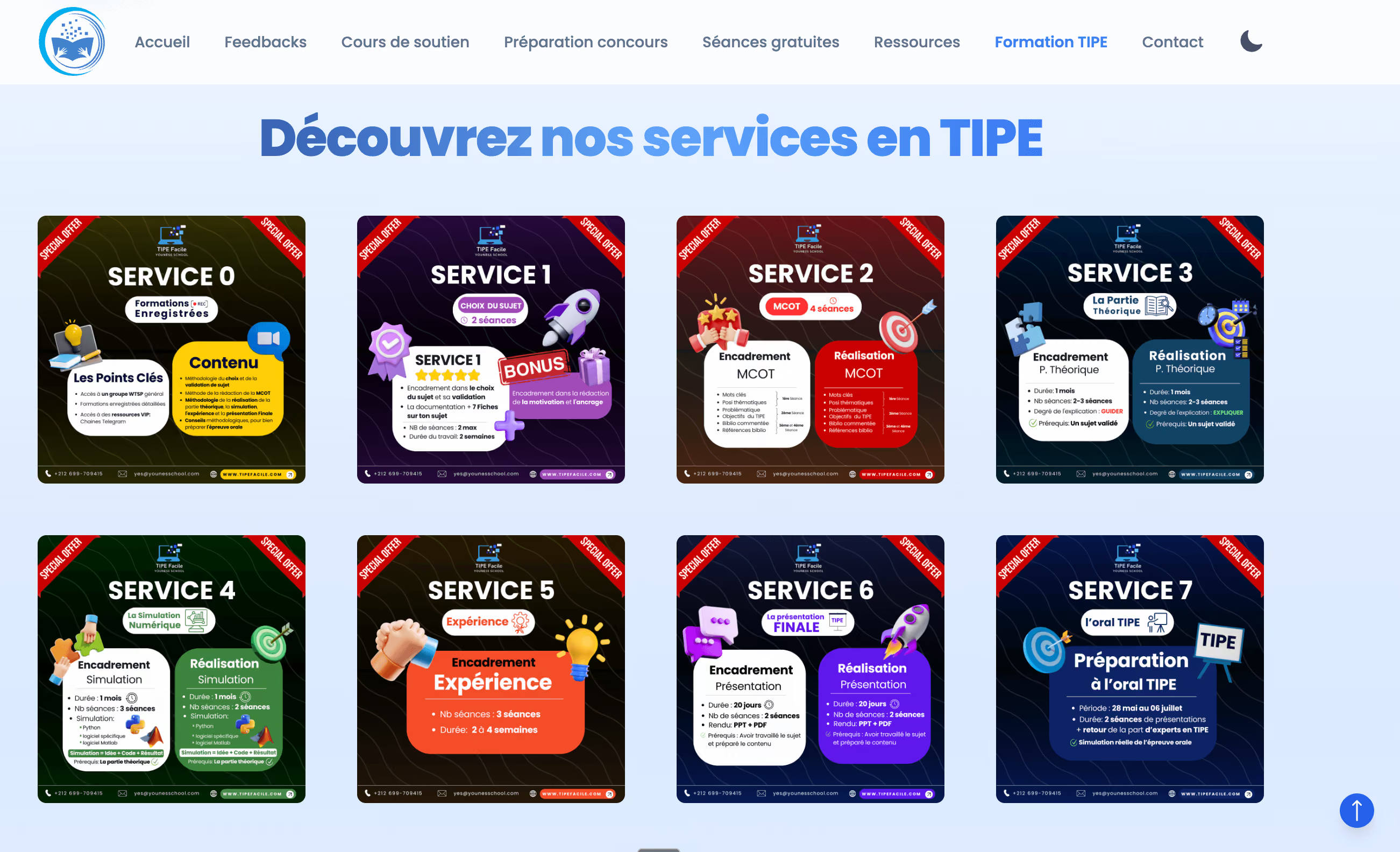
Youness prices across a wide range, from single courses around $60 to full programs above $1,000, so a student pays only for what they need. He also gives free access to families facing financial hardship, and he has used free trial periods to let students try the school before paying.
"We give some courses for free to families facing financial difficulties. We want talented students to have access regardless of their financial situation." — Youness Es-Sebiy, Founder of Youness School
More than 5,000 students have come through Youness School's free-access and trial campaigns, which widened his reach and let prospective students experience the platform before buying. Payment access shapes the model too. In Morocco, many students and parents pay by bank or cash transfer, and a card is rarely the default, so a real conversation often comes before a sale.
Take action
Youness built the school around one belief, and he states it plainly.
"We believe talented students should have access to elite-level education regardless of their city, country, or financial situation." — Youness Es-Sebiy, Founder of Youness School
That belief is why offline access matters so much to him, and why the price range stays wide. The students he most wants to reach are often the ones with the least reliable connection and the tightest budgets. Building for them first is what makes the school useful to everyone else.
The measure that matters to Youness is straightforward: whether his students get into the schools they are aiming for. Since 2019 he has worked directly with more than 2,000 of them, with another 20,000-plus reached through free lessons, webinars, and his YouTube channels. They sit the same national exam he once sat, and the strongest performers go on to the top engineering schools in Morocco and France.
"My advice would be to focus on the student experience and content protection. If security, accessibility, and mobile learning matter to you, I would recommend Teachable. Students can learn from any device and access content wherever they are, and that makes a real difference." — Youness Es-Sebiy, Founder of Youness School
Youness is one of a growing number of creators using Teachable to teach students far beyond their home country. Elisa Azoum grew French Mornings to more than 2,850 language students across dozens of countries on the same platform. The pattern is consistent: subject expertise, a clear program, and a platform that travels with the student.
Youness has a wider plan for the school. CPGE is a small field by design, with roughly ten thousand students entering each year in Morocco. He wants to take the same model to high school students, a group he puts at around half a million in Morocco alone, and eventually to learners in other countries.
"I have a global strategy to develop Youness School and help more people. In Morocco there are about half a million high school students, and we want to give them similar platforms and solutions." — Youness Es-Sebiy, Founder of Youness School
The plan he describes brings together education, technology, and the careful use of AI, built for students who would otherwise sit outside the reach of this kind of coaching.
Youness's students pay differently than a US or European creator's audience does. Cards aren't the default in Morocco. Many families pay by bank transfer. And selling across Morocco, France, Tunisia, and Mauritania means four different markets, currencies, and different sets of tax rules.
But the best part is that, in the near future, Youness won't ave to manage payments manually.
That's exactly what Teachable Payments is built for. Local payment methods appear automatically at checkout based on where the student is. Tax is calculated, collected, and remitted across 45+ countries without the creator filing anything. Prices display in the student's local currency without manual configuration.
For a school built around the belief that talented students should have access regardless of where they live, the checkout experience should reflect that too, and now it does.
Explore Youness School: Visit younesschool.com to see the courses and programs, and youness.online for more on Youness's work. Follow Youness Es-Sebiy on LinkedIn and YouTube, and follow the Youness School YouTube channel and company page on LinkedIn.
Try Teachable today: Youness built a school that protects its content, reaches students on any device, and keeps teaching when the internet drops. Teachable handles the video hosting, the mobile app, and the payments so creators can spend their time with students. With Teachable Payments, that now includes local payment methods for an international student base like his.