Thank you! Your submission has been received!
Oops! Something went wrong while submitting the form.
MENU
What successful educators are doing, what is changing in the market, and what it means for your business.
.png)
What separates a good teacher from a great one has less to do with what they know and more to do with how they make someone else understand it. Two of Teachable's most successful educators decided to find out the hard way.
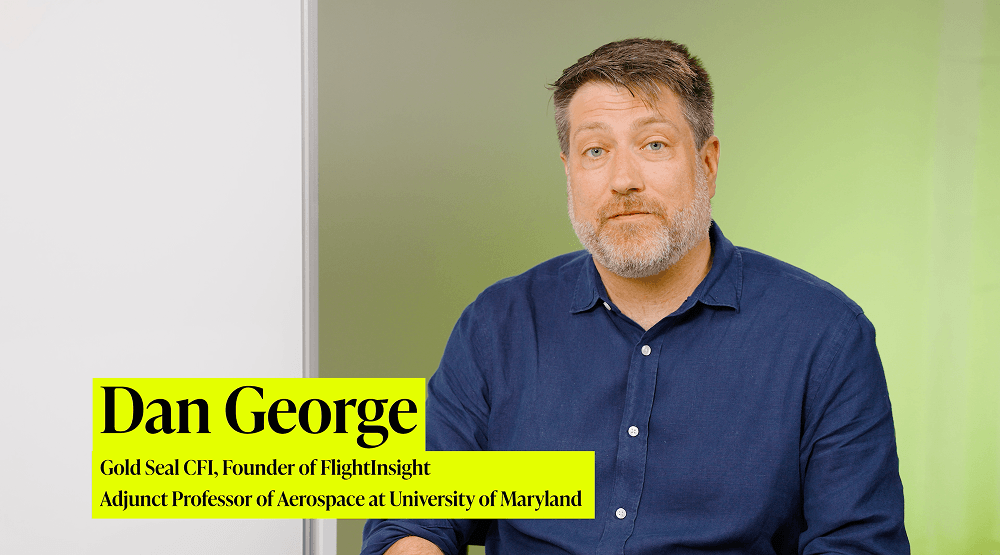
Dan George (FAA Gold Seal CFI, founder of FlightInsight, and aviation instructor to 10,000+ students across 60+ countries) and Wasim Asghar (licensed Professional Engineer in the US and Canada, founder of Study For FE, and author of 8+ engineering exam prep books) sat down across from each other and agreed to teach a foundational concept from their own field to the other. Then they had to teach it back.
The result is the debut episode of Cross-Exam, a new Teachable series where two expert educators swap roles. What the teach-back reveals about learning, retention, and the gap between knowing and explaining is worth paying attention to.
Dan opened with the lift equation: Lift = Coefficient of Lift x (1/2) x air density x velocity squared x wing surface area.
He walked through each variable, but kept coming back to velocity. Because it carries an exponent, small changes in airspeed affect lift far more than equivalent changes in any other factor.
Before getting into the equation though, Dan had to dismantle something first.
"If I slow the aircraft down, I can maintain my altitude by increasing angle of attack… I call this the Star Wars conception of how things fly. You point the ship in a certain direction and it just goes there at an angle." — Dan George, founder of FlightInsight

Naming the wrong model before replacing it is a teaching move that works better than most educators realize.
Once the flawed assumption is on the table, students will let go of it. Before it is named, they hold onto it quietly and build misunderstandings on top.
Wasim covered Ohm's Law: V = I x R, voltage equals current times resistance.
Rather than define the variables abstractly, he built the whole thing around a water pipe.
Voltage is the pressure difference between two ends. Current is the rate of flow. Resistance is whatever obstructs it.
"If there's dirt in here, if there are obstacles, rocks, pebbles, they're going to impede the flow of current." — Wasim Asghar, founder of Study For FE
From there, he went after the most persistent misconception in electrical safety: that voltage is what kills you.
It is actually current.

Roughly 40 milliamps through the body is a guaranteed fatality. A coffee maker draws about 1,000 milliamps. The lethal threshold is two to five percent of what runs through a kitchen appliance.
"It's not the voltage that is dangerous. It's really the current." — Wasim Asghar, founder of Study For FE
A bird sitting on a 1,000-volt transmission line survives because the voltage difference across its two feet is zero.
For anyone building a course on a technical subject: definitions without physical anchors give learners nothing to hold onto.
A concrete system they already understand gives the new concept traction.
Both Dan and Wasim have taught their subjects hundreds of times. What this episode showed is how both of them have rebuilt their explanations around the most common misunderstandings rather than the most logical starting points.
Dan leads with the lift equation because it forces students to confront the variables that actually matter in the cockpit. Wasim leads with the water pipe because it replaces the assumption that voltage is dangerous with the fact that current is.
A 2008 study by Kornell and Bjork found that retrieval practice, having learners reconstruct material from memory rather than passively review it, produces significantly stronger retention than re-reading alone. Cross-Exam runs that experiment in real time.
Dan described what happens when he teaches the same material over and over.
"Every time I do it, it gets a little bit different. I can always rediscover some kind of a new insight or some new way of teaching." — Dan George, founder of FlightInsight
Dan built FlightInsight into a school with over 10,000 students by publishing twice a week, every week, for four years. His full creator case study gets into how that consistency turned into a real business.
Wasim built Study For FE on the same principle. His reframe that current determines electrical danger is the kind of correction that sticks because it runs counter to what most students walk in believing.
Dan and Wasim both teach on Teachable. Between them they have built course libraries that reach students in dozens of countries, in fields where getting the material wrong carries real consequences.
Both of them became better teachers by treating their explanations as working documents rather than finished products.
Watch the full episode of Cross-Exam.
Want to know more about this episode’s guests?
Follow Dan George: YouTube | Website | Teachable School | Instagram | LinkedIn
Follow Wasim Asghar: YouTube | Website | LinkedIn

Teachable gives you courses, coaching, digital downloads, and memberships in one place. See plans and pricing.
%2520(1).jpeg)
Two of the sharpest voices in the creator economy walk into a room with a stack of questions they have never seen before. One gets 60 seconds to answer. The other has to decide: agree or challenge.
That is the premise behind Trade Secrets, a new Teachable video series pairing industry experts for rapid-fire, unscripted conversations about what it actually takes to build a business around what you know.
In this debut episode, Lia Haberman (creator economy expert, UCLA Extension instructor, and author of the ICYMI newsletter for 45,000+ subscribers) sits across from Jayde Powell (founder of The Em Dash Co., LinkedIn creator, and host of #CreatorTeaTalk). The result is an honest, funny, occasionally combative exchange about pricing, product launches, upselling, mental health, and the corporate-to-creator pipeline.
Here are the biggest moments from their conversation, and the takeaways you can put to work today.
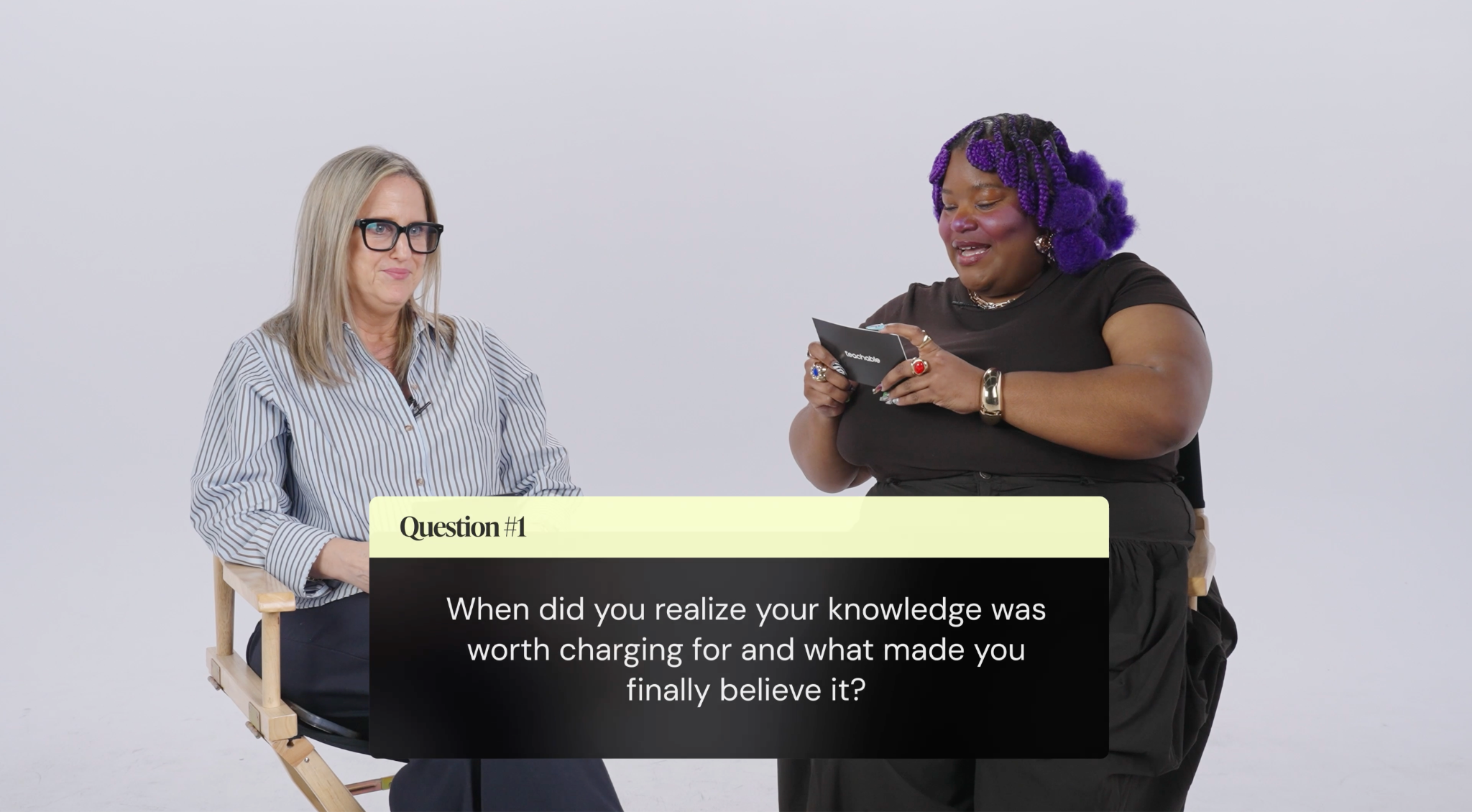
Lia opened with a confession that most educators will recognize. Years spent in higher ed conditioned her to give knowledge away for free, and the habit stuck.
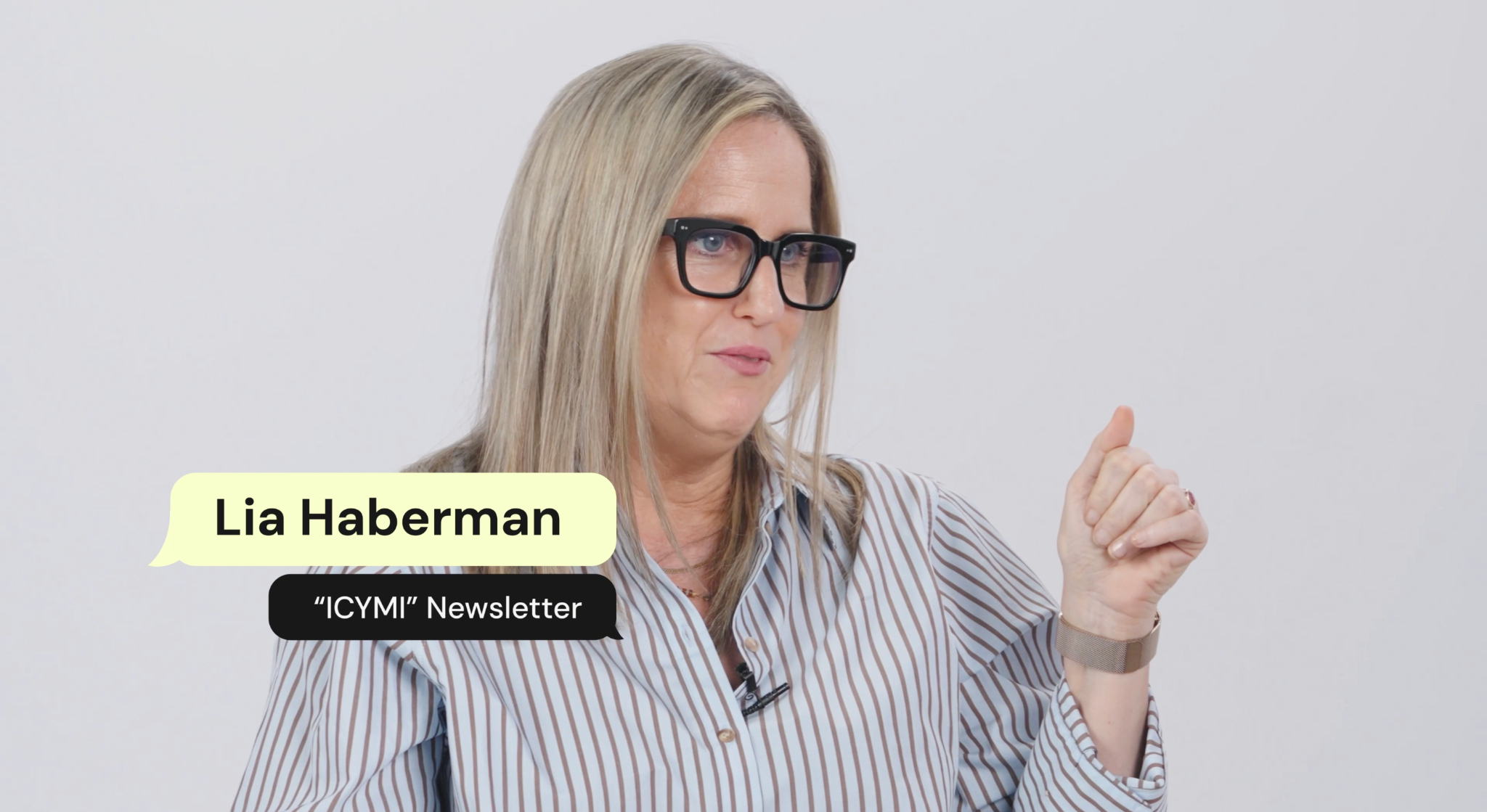
"I teach students in higher ed. I like to give my knowledge away for free. I, however, realized that this is not a good business model." — Lia Haberman, Social + Influencer Marketing Consultant
She credited female entrepreneurs, including Jayde and Rachel Carson, for shifting her perspective. The realization came through observation: watching peers charge confidently for the same type of expertise she had been handing out at no cost.
"I think it's just the way that I came about it into this industry. It's teaching students and like mentoring young people. I think that like, it puts you in a mindset of actually not charging and just being like, yes, I want to help you, want to uplift you." — Lia Haberman, Social + Influencer Marketing Consultant
Jayde pushed back on the "give it away" mentality, drawing a clear line between free content as a lead magnet and free content as a long-term business model.
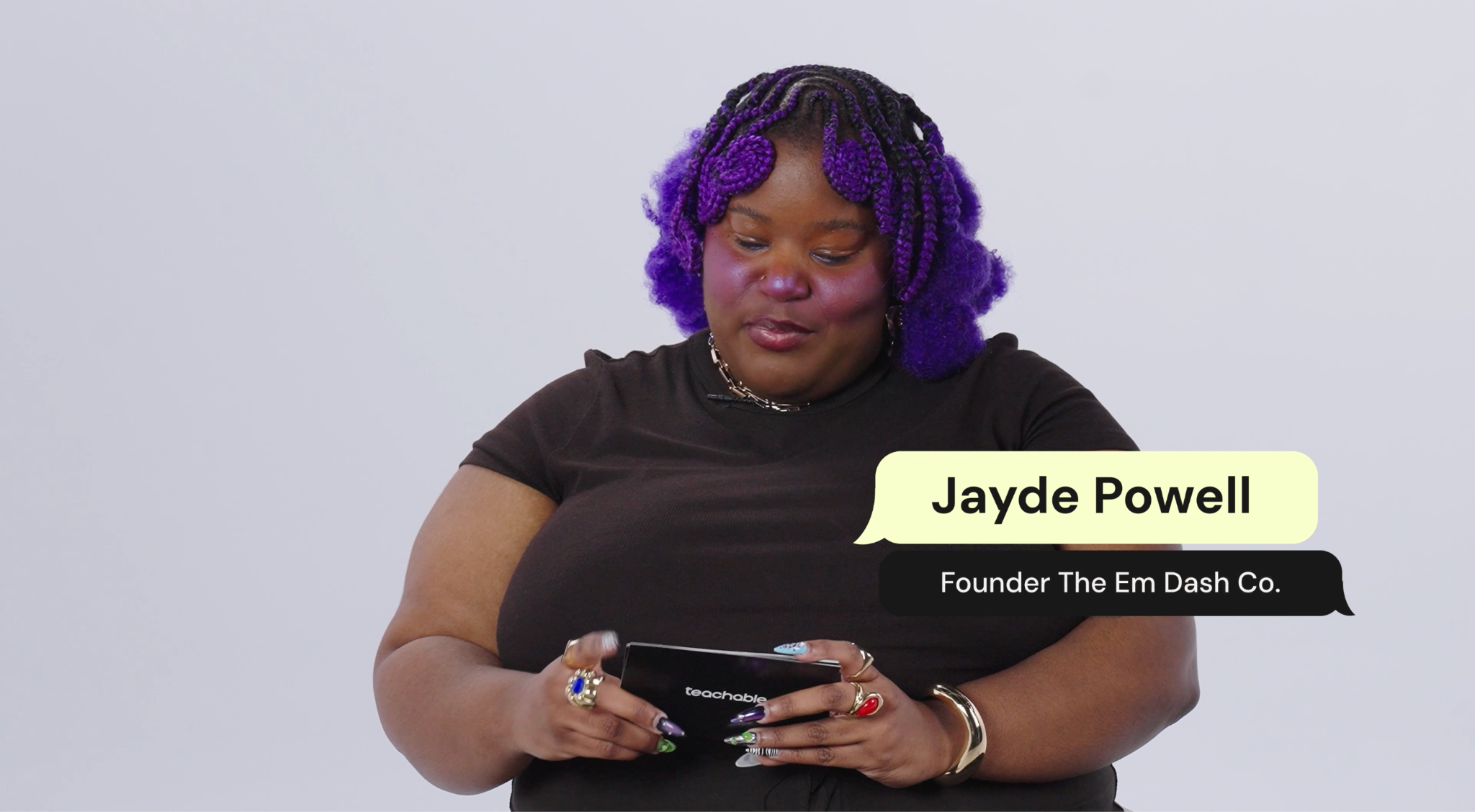
"In a certain circumstances, if it's a lead magnet. Absolutely. Yeah. But when long term, you should definitely be charging for what you now." — Jayde I. Powell, Founder & Head of Creative, The Em Dash Co.
That tension (free vs. paid) sits at the center of the creator economy right now. Goldman Sachs Research projects the creator economy will nearly double from $250 billion in 2024 to roughly $480 billion by 2027 (source). The money is there. But plenty of experts still struggle with the mental shift from "helping" to "selling," especially those with backgrounds in education or mentorship.
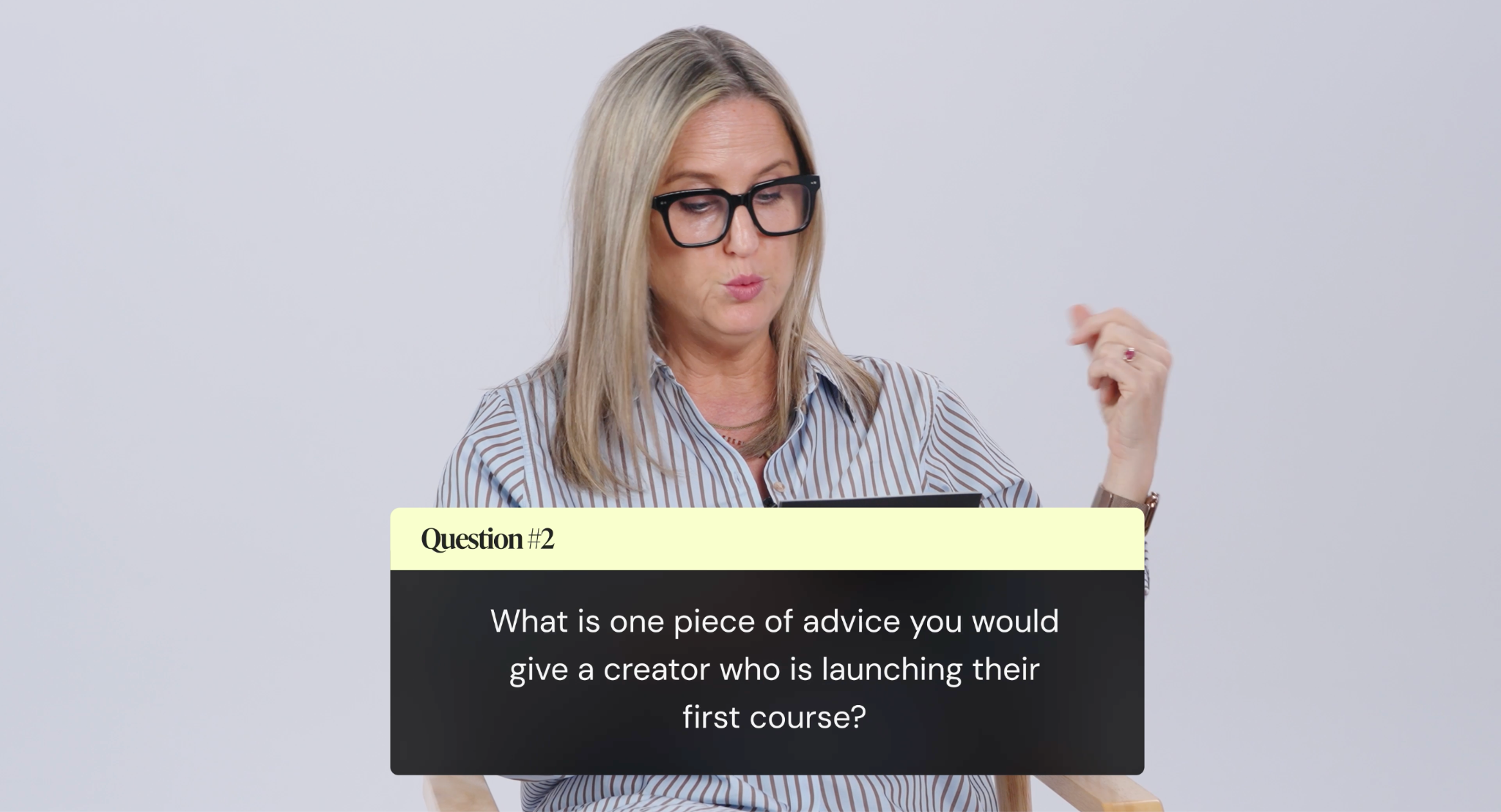
When Lia asked for one piece of advice for a first-time course launcher, Jayde had a clear answer: stop waiting for perfection.
"I would say just do it fast and don't feel like you have to do it perfect the first time around, because you'll learn a lot about your customers and your students and like what they want from you over time." — Jayde I. Powell, Founder & Head of Creative, The Em Dash Co.
She backed it up with her own experience, noting that she launched courses in 2024, gathered learnings, and is now relaunching with major improvements.
"I launched my courses last year. Got a lot of learnings from it. And now I'm relaunching them because I've learned more. I know how I want to, like, refine things. I know how I want to set up my courses." — Jayde I. Powell, Founder & Head of Creative, The Em Dash Co.
Lia agreed completely and drew a parallel to her own newsletter launch.
"It was the same thing when I launched my newsletter. The one was like kind of a hot mess, but like it got better over time." — Lia Haberman, Social + Influencer Marketing Consultant

This tracks with what successful Teachable creators repeat over and over. Antoine van der Lee, a developer who made $40,000 on his first Teachable course launch, has talked about treating his content as a "personal knowledge base" he chose to make public, rather than something that needed to be polished before anyone could see it. The pattern is consistent: ship version one, gather real feedback, and build version two around what your actual audience tells you they need.
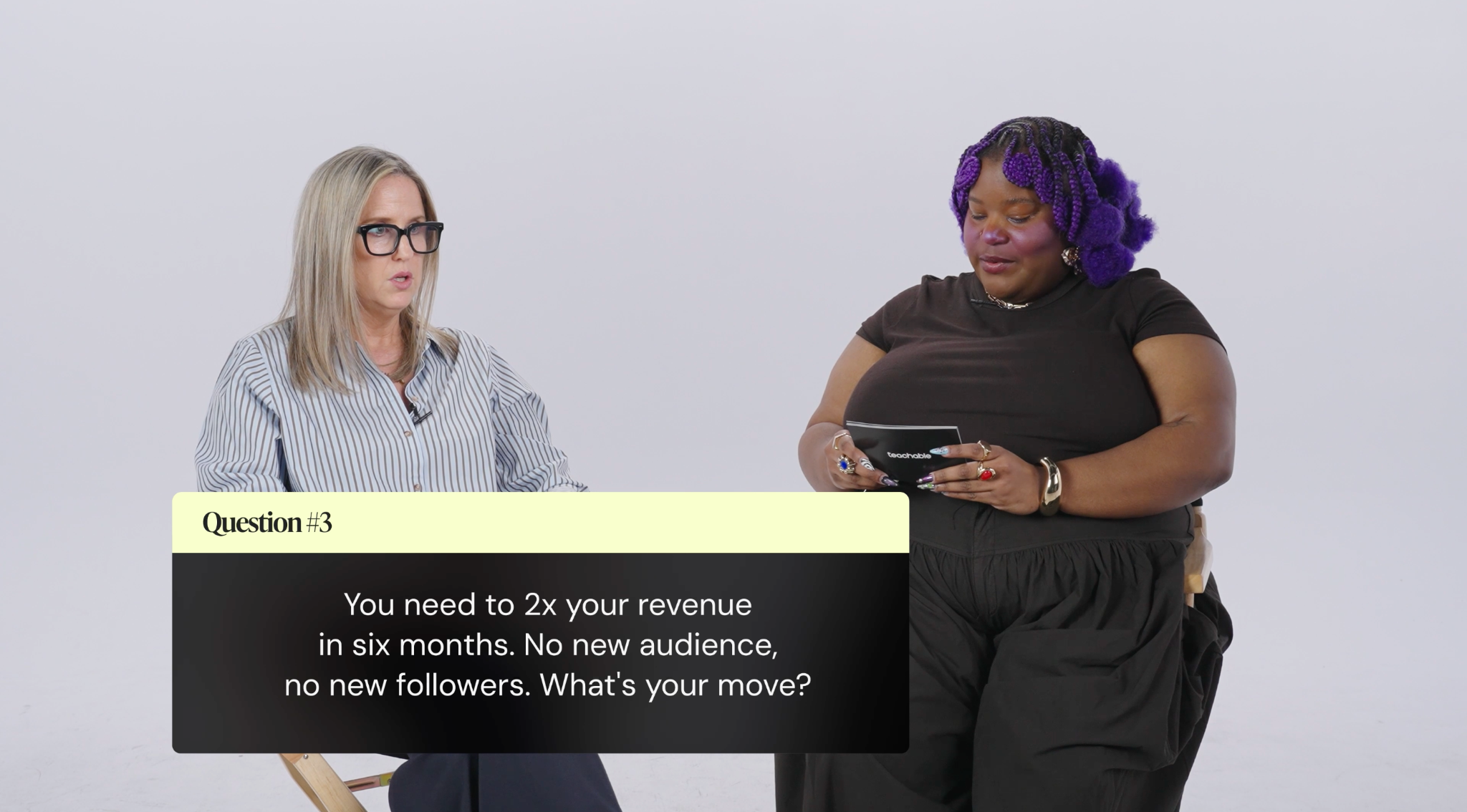
One of the most tactical questions in the episode asked both creators to 2x their revenue in six months with no new audience and no new followers. Lia went straight to the upsell.
"Much easier to like. Keep your retain your existing audience and charge them more. Develop maybe like for variations of your product. Like maybe it's like live mentoring or something like that. So you're like, whatever I'm selling, I'm now doing like bonus add ons for the people who already love and believe in me." — Lia Haberman, Social + Influencer Marketing Consultant
Jayde confirmed this from her own consulting work, where she uses a similar approach when crafting proposals for brand partners.
"Every time I craft like a proposal for any of my clients or my brand partners, like I'm always like, and for this additional fee, you can get this. And then always like they usually select it." — Jayde I. Powell, Founder & Head of Creative, The Em Dash Co.
For Teachable creators, this is where tools like one-click upsells and digital product bundles become serious revenue drivers. Your current students already trust you. Offering them a coaching add-on, a bonus workshop, or a bundled downloadable resource turns a single transaction into a deeper (and higher-value) relationship.

The conversation took a personal turn when Lia asked what Jayde had to unlearn from corporate life. Jayde pointed to her belief that hard work alone would open every door.
"I went in with this mindset that if I work really hard, it will like get me all the opportunities I desire. And I actually realize that wasn't the case. You have to work strategically, which means sometimes you do have to do a little bit of the politicking shaking the hand, making sure the right people know you."— Jayde I. Powell, Founder & Head of Creative, The Em Dash Co.
Lia offered a rare challenge moment, suggesting that Jayde could have deployed those same skills inside a corporate structure. She referenced the concept of the "intrapreneur," someone who operates with entrepreneurial instincts inside a larger organization.
But both agreed on a bigger point: the corporate-to-creator pipeline produces stronger businesses.
"The corporate to creator pipeline makes for better creators. They're more professional. You get deadline had more business acumen." — Lia Haberman, Social + Influencer Marketing Consultant
Jayde confirmed this from her own experience, crediting her corporate career with many of the operational skills she brings to The Em Dash Co. today. For anyone currently sitting in an office wondering whether their 9-to-5 experience has value in the creator world, this exchange offered a definitive yes. The processes, systems thinking, and professional habits you build in a corporate environment carry directly into running a creator business.
Lia and Jayde covered far more ground in the full Trade Secrets episode than we could fit here, from platform preferences (they both love Threads and LinkedIn) to brand alignment (Lia once turned down a two-factor authentication sponsorship because "nobody wants to read about that from me"). Every exchange reveals something practical about how two very different creator paths arrive at similar conclusions.
Teachable gives you courses, coaching, digital downloads, and one-click upsells in one platform. See plans and pricing.
.png)
You have the expertise. You have the content. You might even have a following that keeps asking when your course is coming out. And yet, sales stay flat after launch.
In the latest episode of Expert Exchange, Teachable’s Dani (Product Marketing) and Yas (Customer Success) play a rapid-fire game of red flags and green flags to identify the patterns that separate course creators who sell from those who stall.
The conversation covers pricing, cross-posting, pre-selling, order bumps, and one deceptively simple mindset shift that keeps too many experts stuck in build mode.
Below, we break down every takeaway from the video so you can spot the mistakes in your own launch plan and fix them before they cost you revenue.
The first mistake Dani and Yas call out is one most course creators overlook entirely: positioning. Great content with a weak sales page loses to average content with a clear, specific offer. Yas has seen this pattern across thousands of customer conversations.
"That can come in having a clear CTA on your social networks, on your Instagram, on your YouTube, and of course a good sales page, so that people can completely understand what's on the product, what they're getting, the type of value that you'll be adding to them." –Yasmim Puppin, Customer Success Lead, Teachable
The creators who convert are the ones with a visible call to action on every social channel, a sales page that spells out exactly what students get, and language that focuses on the outcome rather than the curriculum.
That last part matters more than it seems. Listing your module titles tells a prospective student what they will watch. Telling them what they will be able to do after finishing the course gives them a reason to buy.
If your sales page reads like a table of contents, rewrite it around the specific results students walk away with. Teachable’s getting started guide walks through how to set up a high-converting sales page in under 15 minutes using the drag-and-drop editor.
Both Dani and Yas flagged this as a major red flag: posting identical content across every social platform at the same time. Each platform has its own audience, its own algorithm, and its own content format. A long-form caption that works on Instagram falls flat as a tweet. A polished LinkedIn post feels out of place on TikTok.
.png)
More importantly, the people who follow you on different platforms are often different people, or at least the same people in different mindsets. What Yas recommends instead: pick the platform where you are already seeing traction. Double down there. Create content native to that platform before expanding to others. The creators who try to be everywhere at once end up gaining traction nowhere, because copy-pasted content signals low effort to algorithms and audiences alike.
When Dani asked whether pricing a first course under $50 was a red flag or a green flag, both agreed: green flag, without hesitation. A low-priced introductory product serves a different purpose than your main offer. It brings new students into your world. It builds trust. And it creates a natural entry point for a broader product suite that guides students from one purchase to the next.
"I just love a lead magnet strategy. So for me, if you have, for example, a downloadable that costs $50, that's great to get new students that later are going to buy other products from your portfolio." –Yasmim Puppin, Customer Success Lead, Teachable
This is the thinking behind what Yas calls a product portfolio. Rather than treating every course as a standalone transaction, you structure your catalog so each product leads to the next. A $37 downloadable guide leads to a $197 mini-course.
.jpg)
That mini-course leads to a $497 advanced program. At the top of the stack, you offer coaching or a mentorship for students who want direct access. Teachable’s guide to making money selling courses breaks down how to build this kind of stacked product model from the ground up.
"I feel like sometimes people wait until they have like a very complete product with hundreds of classes, something that really adds value to people, but ultimately sometimes people just want like that quick win." –Daniela Bianchin, Product Marketing Manager, Teachable
This was the greenest flag of the conversation. Selling before you finish building your course is not a shortcut. It is a strategy. When students pay before the content exists, you get two things that a finished product alone cannot provide: real revenue to fund the creation process, and real feedback to shape the content toward what paying students actually need.
Yas pointed out that pre-selling works even if you have zero recorded lessons. A live cohort model lets you teach in real time, adjust based on student questions, and record the sessions as your course content.
"You don't even need to have recorded content at all. You can do a live cohort as long as it's aligned. Of course, they'll buy it from you because ultimately they want your expertise. They want to hear from you." –Yasmim Puppin, Customer Success Lead, Teachable
The students who buy early are trusting your expertise, not a polished production. You can always refine the recordings later. Teachable’s pre-selling guide includes examples of creators who generated up to $45,000 in pre-sales using this approach.
Both Dani and Yas called the absence of an order bump a major red flag. An order bump is a low-priced, complementary product offered at checkout that increases your average order value without requiring a separate marketing campaign.
Think of it as the grocery store checkout aisle: the student is already buying, and you are offering something small and relevant right at the moment of decision.
The key is that your products need to make sense in sequence. A yoga course paired with a meditation PDF at checkout is a natural fit. A photography course paired with a lighting presets download makes intuitive sense.

"You need to have a portfolio of products and your products, they need to make sense in a sequence. If you have your product suite in a way that's structured, in a way that people will keep reaching out to the next step, this even helps with engagement and retention." –Yasmim Puppin, Customer Success Lead, Teachable
Yas stressed that this structure also helps retention, because students who see a clear next step after finishing one product are more likely to come back and buy again. Learn how to price and position an order bump in Teachable’s order bump pricing guide.
Both experts agreed: skipping free preview content is a red flag. Offering a free preview works like a trial. Prospective students get a taste of your teaching style, your content quality, and the specific results you help people achieve. That small window of free access reduces the risk for the buyer and gives them confidence that their money will be well spent.
Research backs this up. A Harvard Business Review analysis found that online courses with coaching and community support reach completion rates above 70%, while self-paced programs without that structure average between 10% and 15% (source).
The takeaway: the more you can show students what the experience feels like before they commit, the more likely they are to finish once they do. Free previews are one of the simplest ways to demonstrate that experience upfront.
Teachable lets you set specific lessons as free previews directly from your course editor, and you can manage payment options through teachable:pay to offer subscriptions, installments, and Buy Now, Pay Later alongside your preview content.
The "would you rather" segment of the video made this point cleanly. When Dani asked whether they would prefer 100 followers who trust them or 10,000 who scroll past their content, both chose the smaller, engaged audience without a second thought. Quality over quantity is easy advice to repeat. What makes it useful here is the specific way it connects to revenue.
A small audience that trusts you will buy at a higher rate, leave reviews, refer others, and buy your next product when it launches. A large audience that barely recognizes your name will bounce off your sales page and cost you more in ad spend to re-engage. The creators who build sustainable businesses are the ones who invest in depth of relationship with a smaller group rather than chasing reach metrics that look impressive in a screenshot but never convert to sales.
The final takeaway from the video is the one that ties everything else together. When Dani asked whether they would rather launch now with something imperfect or wait six months for a polished product, both chose launching messy. Every single time.
Just start putting something out there so you can test, you can get a feeling of what people are thinking about that and you can keep improving from there." –Daniela Bianchin, Product Marketing Manager, Teachable
The reasoning is practical, not just motivational. Every month you spend perfecting a product that no one has seen yet is a month without revenue, without student feedback, and without data on what your audience actually needs.

Yas made the point that Teachable’s AI tools now let you create course outlines, quizzes, and supplementary materials in a fraction of the time it used to take. The barrier to getting something live has dropped significantly. The creators who overthink the details before launching are the ones who waste months of expertise and momentum on polishing something nobody has asked for yet.
"I feel like so many people waste great knowledge and content because they overthink all of the little details. Trust your following. Trust your expertise. Just make sure that you put your knowledge out there." –Yasmim Puppin, Customer Success Lead, Teachable
The full Expert Exchange episode covers each of these mistakes in detail, with specific examples and a rapid-fire game format that makes the advice easy to follow. Watch the full episode of Expert Exchange on YouTube, and if you are ready to put these ideas into practice, start building your first product on Teachable today
.jpeg)
At Teachable, our motto is simple: if you've lived it, teach it.
But what happens when human experience goes up against an algorithm? Can real-world intuition produce a better business plan than the most advanced AI models available right now?
We decided to find out.
We gave Lia Haberman (Social + Influencer Marketing Consultant) and Jayde I. Powell (Founder & Head of Creative, The Em Dash Co.) three minutes, a whiteboard, and a business prompt they had never seen before. At the same time, three of the most advanced AI models on the market received the exact same prompt.
Then we handed all four blueprints, stripped of any labels, to Anjali Viramgama and Sundas Khalid, two of the internet's most-watched tech influencers, and asked them a single question: which plan would you actually follow?
Nobody told them which entries came from humans and which came from machines.
This is Mental Objects.
The scenario was built to mirror someone right at the edge of a creator business. You are a corporate professional with five years of experience in big tech. You have around 5,000 LinkedIn followers. You have never sold anything online. You want to launch a business in the next six months and can only commit 10 hours a week. Build a plan to generate your first $10,000 in sales.

Lia and Jayde had three minutes each to work alone, then joined forces on a single whiteboard. The AI models produced their entries independently.
Four blueprints. One judge panel. Zero context about who wrote what.
Lia Haberman approached the challenge the way a strategist would. She started by mapping the product, the audience, and the revenue model before anything else, then asked the question most people skip: what am I actually selling, and to whom?
"What is the product I'm selling? Who's the audience I'm selling it to? And what is the business model?" — Lia Haberman, Social + Influencer Marketing Consultant
Jayde I. Powell went in a different direction. No funnels, no complex models. Just a clear product, a clear price, and a direct path between creator and buyer.
"This is my vision for a digital product. It starts with my brain, and then I'm going to share that product with a price point to my audience, and then when they buy it, it puts more money into my bed." — Jayde I. Powell, Founder & Head of Creative, The Em Dash Co.
When they compared notes after the solo round, something interesting happened. Two different thinkers, two different instincts, one shared conclusion about where the real opportunity was.

Anjali and Sundas were not evaluating polish or presentation. They were evaluating one thing: would you actually stake six months of your life on this plan?
The AI entries were not weak. They were well-reasoned, followed clear playbooks, and covered the obvious bases. Some of them would probably work.
But as Anjali and Sundas worked through each entry, one blueprint started pulling ahead for a reason that had nothing to do with how it sounded on paper.
What separated the strongest plan from the field was not the size of the idea or the confidence of the execution. It was something more fundamental: the understanding that failing fast is a feature, not a flaw.
Which brings us to the result.
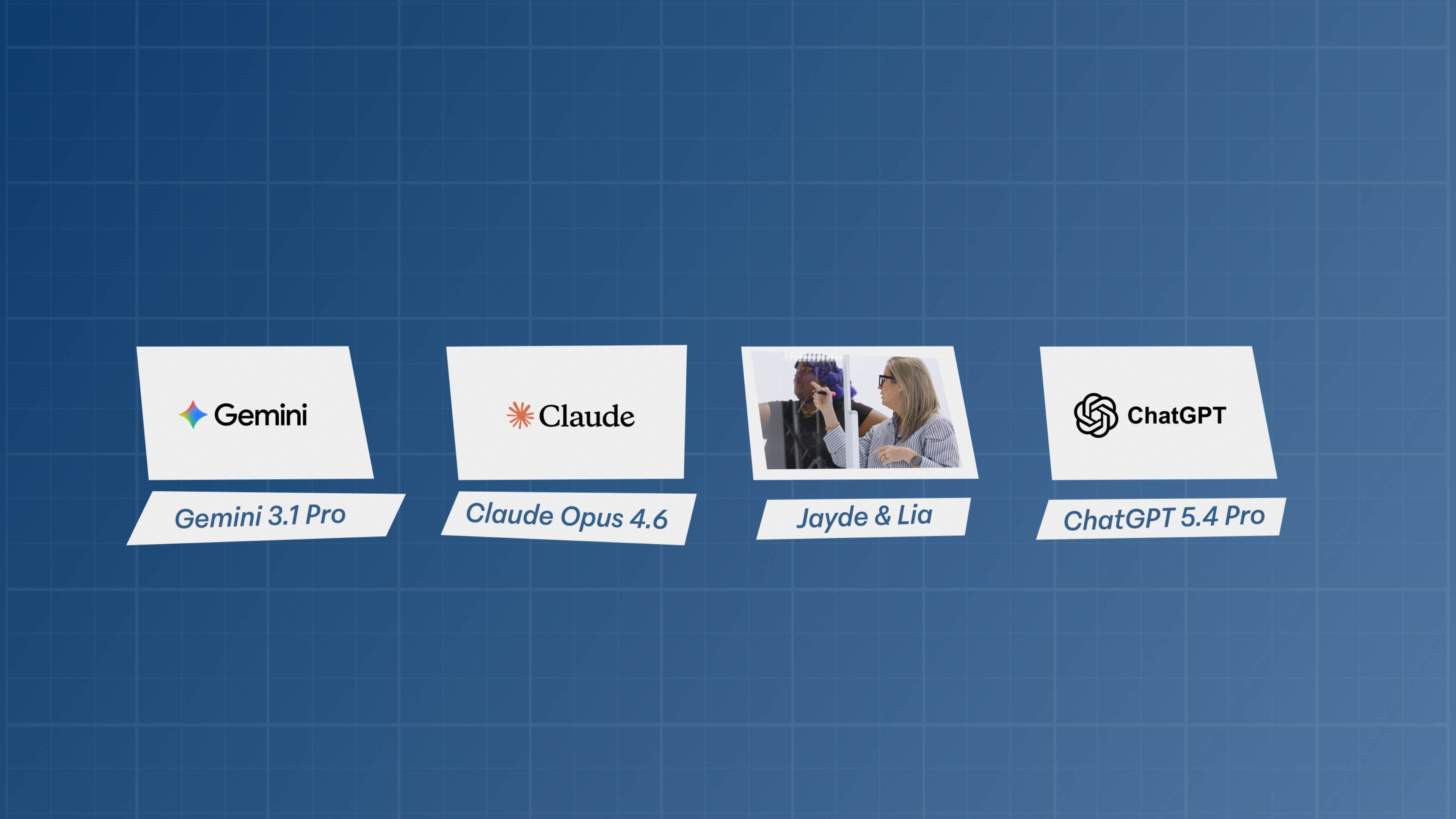
The winning plan, which both judges picked without hesitation, was the one Jayde and Lia built together.
"You are trying two different paths. Compared to the rest of them, they are going all in on one thing. So if you are going to fail, it is going to take you six months to fail. Whereas this plan lets you fail fast, get feedback, and iterate on it." — Anjali Viramgama, content creator and judge
When both judges were asked to name the author of their winning choice, they pointed to the same one. They also correctly guessed which entries came from AI.

Jayde and Lia’s plan worked differently from the AI entries. Instead of choosing between audience monetization and sponsorship revenue, it built for both from the start.
The first path targeted their existing LinkedIn community with a digital product built around a problem already showing up in the comments. The second path positioned brand partnerships as content collaborations, giving sponsors a reason to say yes without requiring a massive following.
The judges pointed to two specific advantages that set the plan apart.

Running two parallel tracks in the early weeks means faster feedback than betting six months on a single product launch. If the digital product gets no traction, the partnership track is still in play. The AI blueprints all asked the creator to go all-in on one direction before they had any signal from the market.
Building a product around what the audience was already asking in the comments was not something the AI blueprints surfaced. It reflects an understanding of how online communities actually behave, the kind of knowledge that comes from time spent inside them. According to the LinkedIn Learning 2024 Workplace Learning Report, 90 percent of organizations are concerned about employee retention, and professional development is now one of the top incentives workers look for when evaluating opportunities.
That same dynamic plays out in creator audiences: the creators who build lasting businesses are the ones who solve specific, real problems for their community, not the ones who follow the cleanest playbook.
The AI entries were not bad. They were clean, well-reasoned, and followed recognizable playbooks. Given the right person and the right execution, some of them would work.
The human entry was better for a different reason. It was designed for the reality of what it is like to be early. Most first-time creators will not nail the product on the first try. Putting two revenue paths in motion early gives you more surface area to learn from, and more chances to find out quickly what is actually working.
A few things worth carrying out of this:
If you are ready to build your first digital product, here is how to get it from idea to sale. If you are still working out your direction, start with finding your niche.
Teachable is the platform for creators who have something real to teach. Start your free trial and see what you can build with the experience you already have.
Watch the full Mental Objects episode on YouTube, or explore how Teachable creators build and sell digital products.

In an unexpected turn of events, TikTok announced earlier this week that the Creator Fund, the $1 billion allotment the brand had set aside to pay top creators on the app for successful content, will cease to exist come December 2023.
Originally launched in 2021, the fund was designed to provide those TikTok creators whose videos with at least 100K views the ability to earn revenue on their content. While this sounds like a noble effort and a great way for popular creators who had amassed a following to earn, word soon got around that the payout wasn’t quite what it originally seemed. Top creators noted getting as little as 2.5 cents per 1,000 views.
And while the Creator Fund is shuddering, TikTok says it will launch a new program (still in its beta phase at the moment) that will allow creators to earn up to 20 times more than with the previous program. (You can learn more about the rollout and the eligibility here.)
At first glance, it may not seem like the biggest shocker that yet another app payout program has folded. However, as any creator who relies on their content and community for revenue knows, this news matters—a lot. TikTok’s fund closing is yet another example of the battle for ownership between creators and their platforms of choice.
While relying on platforms like TikTok or other social media apps can be necessary for audience growth and content reach (50% of people report first finding a creator through an algorithmic recommendation!), they can be huge blockers for revenue generation and content ownership. When Instagram was down for the better part of a day a few years ago, creators lost opportunities to communicate with their audience, post their offerings, and ultimately retain control over their businesses.
As an online creator, you should be in control of your business—always. At Teachable, that’s the crux of what we do. We put control and ownership over your content, audience, and pay outs in your hands. That way if your social media platform or email service provider goes out, your business won’t.
Our no-code platform is designed for creators who want to build more impactful businesses through courses, coaching, and digital downloads—not just social media clicks or views.
When your entire business relies on an ever-changing algorithm, one little change can make or break you. But with Teachable, you own your content and control how it appears to your audience. Plus, you own how you’re paid out. You can seamlessly customize your content with our no-code course builder.
Then, use our simple ecommerce features to get paid directly by your audience. Plus, our robust suite of monetization tools—including upsells, bundles, and order bumps—unlocks more value from every product you create.
{{socialmedia-component="/blog-shortcodes/blog-popup"}}
.jpeg)
In the sun-drenched realm of Cannes, an event like no other is unfolding.
The Cannes Lions International Festival of Creativity is an annual gathering of the world’s top creative minds, leading companies, and advertisers.
This year it’s where the new rules of the creator economy are being written, and every creator should be paying attention.
Here’s what we’re seeing from the festival so far…
For the first time, Cannes Lions is rolling out the red carpet for creators. Yes, you read that right.
Creators, who once operated on the fringes of the advertising world, are now being welcomed into the grand halls of Cannes with all the pomp usually reserved for Hollywood's elite.
Top creators like MrBeast, Colin & Samir, and Madeline Argy are not just attending; they are headlining. They will be rubbing shoulders with tech giants like Elon Musk and stars like Chrissy Teigen and John Legend.
This year’s festival will feature creator-focused panels, networking events, and even a dedicated "headquarters" for creators to meet advertisers. This change shows how creators are redefining the boundaries of advertising and marketing.
Picture this: you’re sitting on an outdoor terrace overlooking one of the most breathtaking views in Cannes, complete with perfect lighting and makeup stations courtesy of Elf Cosmetics. This isn't just a fantasy—it's the new reality at Cannes, where creators can shoot content that screams luxury and exclusivity. Thea Skelton, vice president of events at Cannes Lions, says, "The backdrop is probably one of the best views in Cannes."
And if the view isn't enough to make you envious, consider the special “creator ticket” priced at a tempting €1,374 ($1,476)—about a third of the cost of a standard pass. It’s as if Cannes is saying, ‘Hop in, creators! The water is warm.’
There is a major shift in how advertisers view and use the influence of creators.
As Ammar Kandil, co-founder of Yes Theory, puts it, "Creators are the ones who have people’s attention through the work that we do. Ultimately, advertising is based on being able to monetize that attention."
For creators, this festival is a golden opportunity to mingle with top advertising executives. It’s a chance to forge new partnerships and make deals that could elevate their brands to new heights.
Samir Chaudry of Colin & Samir highlights the rare opportunity to sit down face-to-face with marketers. "Those are people making decisions to spend with us, and learning the problems they are trying to solve teaches us a lot about our own business."
Join Teachable with a free plan today and start owning your income and impact as a creator. Whether you're a budding influencer or an established content creator, we bring the tools you need to turn your passion into a thriving business. Don’t wait—start completely free today.

The news is still fresh: Last week, members of the House voted to approve a bipartisan bill giving TikTok’s parent company, ByteDance, one of two options, either sell the social media platform or face a nationwide ban.
As an online business owner who dedicates time and energy to promoting your brand, business, products, and services on various social media platforms (TikTok likely one of them!), you may be asking yourself, “What’s next?”
Let’s dive a little deeper into what’s really happening, get insights from top voices in the social media industry, and explore what your options as an online creator and business owner are in the face of this update.
Although the bill was pushed through the House, now it must pass through the Senate. Even if it does successfully make it past the Senate, TikTok plans to exercise its legal rights before ever considering a sale.
All that is to say, this isn’t an immediate concern for creators. However, it’s important to keep in mind as things move forward. And, as a creator who's work may very well be promoted or tied to the social platform, it's important to keep tabs on.
We spoke to some creators in the space to better understand their concerns, worries, and thoughts on the pressing creator economy news.

Annie-Mai Hodge is the founder and CEO of Girl Power Marketing and has nearly 65,000 followers on LinkedIn. Needless to say, she knows a thing or two about the ins and outs of social media platforms. “My biggest concern was TikTok’s US employees—which is roughly 7,000 people—who could potentially lose their jobs,” she said.
“And with mass layoffs happening across tech and gaming companies over the past couple of years, it couldn’t come at a worse time,” she added. Another creator we spoke to, Katie Stoller, founder of Influencer Insider Guide, is no stranger to understanding how influencers and creators tick—especially when it comes to TikTok.

“My initial thought went straight to the creators,” she said. “This issue is so much more complex than it seems at first blush. It's politically charged; it brings up the topic of safety and its effects on children, and it deals with how the US views China (with some racist undertones there). It's A LOT. But, my first thought went to the thousands of influencers I have personally hired on behalf of my clients who rely on this platform as their primary income stream. TikTok has democratized marketing. It has democratized becoming famous. It has allowed anyone with an idea and the guts to put it out there the ability to reach an audience. Banning the platform will be catastrophic to many. And even a sale to a new owner has the potential to alter how the platform behaves (for better or worse) and that will have an impact as well.”
This isn't the first time we've seen social media platforms like TikTok or Instagram come under the harsh eyes of both politics and the public. But for creators, this is more than just losing follower or going dark for a few hours: It's business.
Whether because of talks of bans or multiple outages and glitches, social media platforms have had their fair share of tumultuous activity over the last few years. So, does this recent TikTok news affect the way people view social media platforms in general?
Short answer: maybe.
“If it [TikTok] truly does go away (which it seems like it would be purchased by someone—no one wants to leave all that money on the table), there will be ‘copycat’ social media platforms that come to claim that market share,” said Katie.
“However, we rarely see copycats achieve the level of the original (i.e. Threads vs. Twitter/X). I also think YouTube and Meta will battle it out over procuring that short-form video market share,” she added.
And she’s not wrong. Although “copycat” social media platforms such as Triller and Dubsmash exist, they simply have not picked up the same steam as a platform like TikTok.
“I think initially—TikTok would take a hit in popularity—but I don’t think it would impact the platform on a large scale, and long-term,” said Annie-Mai. “That is, of course, if other countries don't follow suit and ban the app too. And I think people in the US would, ultimately, find a way around the ban—this isn’t a move that’ll kill TikTok.”
Although there's no need to start panicking yet, this news is a healthy reminder that platforms like TikTok are at the mercy of not only algorithms but also larger nation-wide business decisions. As a creator and business owner who may have felt reliant on the platform before, what should you do now to feel prepared in case a ban is in the cards? Let’s talk about it.
Annie-Mai wants to make one thing very clear: “Don’t panic. But think about diversifying your brand where possible, and across different channels,” she said. “If you’ve built a strong presence on TikTok, then you’ve probably got a lot of content at hand—so think about how you can repurpose it via platforms like Instagram Reels, or YouTube Shorts.”
Katie reflects the same sentiment, noting that she’s in contract with 20+ creators who owe her clients TikTok content by the summer. “People don't realize how many deals happen on the platform every hour," she said. "If the platform disappears, that means hours upon hours of re-jiggering strategy and amending contracts,” she added.
“I would say for now, we need to see what the Senate does,” she noted. “This all might be a non-issue if the bill is not passed there. If it is, we might get more insight into the next steps. I am very curious about what types of companies might step up to purchase it. In summary, for now, it's business as usual, but marketers and creators alike should stay up to date on what is going on as the impact will be huge. For creators specifically, focus on building your email database, invest in ownable assets, and drive followers from TikTok to Instagram and YouTube where applicable. Do this sooner than later since so much of this seems to be happening overnight.”
Now, what does this mean for you? For starters: Having own-able assets is key. If all of your content and audience live strictly on social media platforms, you risk losing that hard work if a ban like this goes into effect. So, what should you do instead?
If you have any kind of engaged following online, whether that’s through social media or an email list, creating learning products is the key to unlocking a deeper connection with your audience, expanding your reach, and most importantly creating safety and security for the online business you’ve worked so hard to build and nurture.
And that's exactly why at Teachable, we empower creators like you to make income and impact with your work on a platform you control. Freeing yourself from an algorithm or legislation outside of your control by opting for content outside of a platform like TikTok is the first step to true creation and business autonomy, which puts you back in the driver's seat.
{{pricing-component="/blog-shortcodes/blog-cta"}}

Discussions around a potential TikTok ban or sale to an American company are ongoing. And with the fate of TikTok hanging in the balance, more and more creators are looking for potential alternatives. But many of them have looked no further than the app Lemon8.
Creators are describing Lemon8 as a mix between Pinterest and Instagram. Lemon8 is an app owned by TikTok’s parent company ByteDance. It’s a photo and video-sharing app that creators who consistently use other social media platforms have been advertised to use, according to The New York Times.
The description of the app on the App Store reads: “Lemon8 is a content sharing platform with a youthful community. Here is where you can discover beautiful, authentic, and diverse content. It is THE destination for sharing and exploring.”
But there is no vertical scrolling in the app like Instagram reels and TikTok users as accustomed to. And instead of the app serving up any and all content, the content on Lemon8 is centered around a specific topic. And Lemon8 has its own photo editing tools built in too.
The app gained significant popularity in the last few weeks. During the final days of March the app entered the top 200 apps in the App Store for the first time, TechCrunch reported. And as of April 5, it was ranked #3 in the Lifestyle section of the App Store.
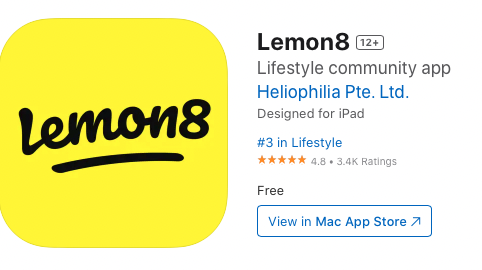
ByteDance is Lemon8’s parent company, yes, the same ByteDance that owns TikTok. And TikTok is facing continued turmoil in Congress. So it makes sense that ByteDance would be concerned with safeguarding its user base in the United States. But it’s still unclear whether Lemon8 could eventually face the same fate as TikTok and be targeted for a potential ban.
In the meantime, it could be a good app for creators to explore.
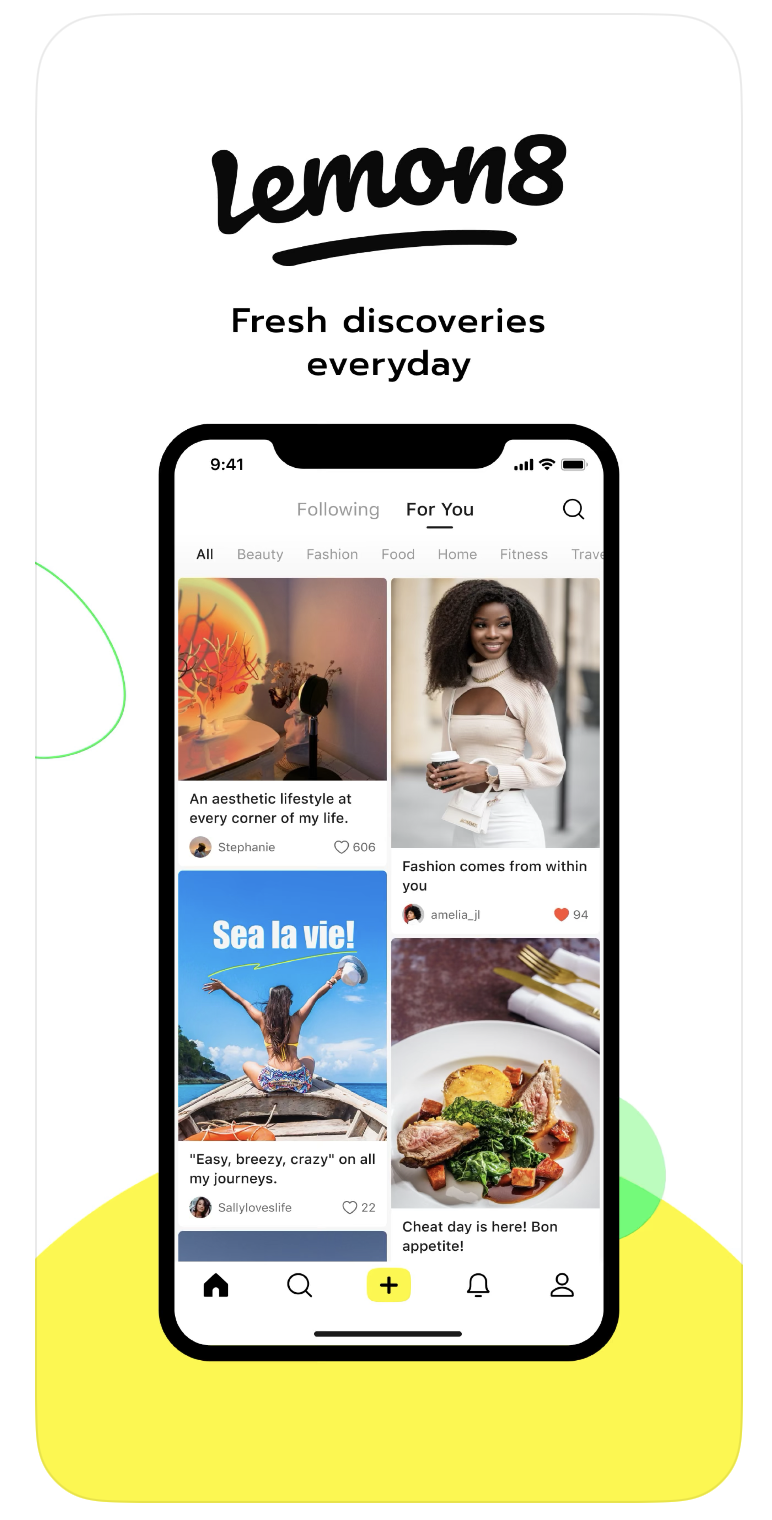
Lemon8 is available to creators in the App Store and on Google Play. The developer of the app is called Heliophilia Pte. Ltd. So when you search for the app and download it, be sure that you download the right one. The developer of the app you download should match that name.
The good news is: Creators can go ahead and download the app now! And they can sign up for an account to be one of the earliest users of the app. The app is free to download. And creators can start thinking about how Lemon8 can fit into their existing social media tools.
It could be a good idea for creators to sign up early so they get their preferred username. And so that they can figure out how to use the app sooner rather than later. Because it could be a big advantage to be able to use it and use it well if the app does continue to grow in popularity.

There isn’t a formal union for content creators but a new organization is working to make sure the ever-growing industry of creators isn’t unfair to the people actually making the content.
Content creators are involved in every aspect of society and everyone from mom-and-pop shops to the president of the United States are using creators to help market their product. However, creators are often responsible for managing their own businesses and it isn’t always easy navigating the world of securing fair compensation and protecting your creative rights.
That’s the void that the Creators Guild of America (CGA) is hoping to fill. Established in 2015, the CGA is a professional association that was created to advocate for the rights and interests of content creators across film, television, streaming, gaming, and digital content. The CGA’s primary objective of the organization is to empower creators by promoting fair compensation for their work and serving as a united front against industry challenges.
As is the case with any scenario, there are pros and cons to the CGA.

One of the CGA’s core missions is to ensure content creators receive fair compensation for their work. While they aren’t a union, CGA promises to advocate for fair pay and be the liaison between creators and industry leaders. By establishing industry standards and advocating for equitable pay structures, the CGA helps creators earn a living wage, which is crucial for the sustainability of their careers.
Those who are part of the CGA join that collective voice to try to influence positive change within the entertainment industry. Along with fair pay, that positive change also fighting for copyright protection and more transparent industry practices.
Similar to IMDB, CGA offers members accreditation. Having that independent public record of a person’s work validates and tracks creators’ contributions to their industry.
“In every creative profession, your credits are your currency,” the CGA website states. “They demonstrate a public record of accomplishment, the foundation on which your reputation rests.”
The CGA also offers a platform for content creators to network and collaborate with like-minded professionals. Through events, retreats and online communities, creators can connect with others in their field, potentially leading to new projects and partnerships.

While the CGA offers numerous benefits, nothing is perfect, and the CGA might not be right for every creator.
The most obvious con to the CGA is the membership costs. Annual dues for CGA are $99, which can be a burden for independent creators and emerging talents who may not have substantial income from their work. However, dues are eligible as business expenses so they’re tax deductible.
It’s also not available to everyone and membership isn’t guaranteed.
For those in the media category, they have to meet one of two requirements:
For those in the marketing category, they have to meet one of two requirements:
For those in the maker category, which includes co-founders, producers and developers, they have to meet one of two categories:
Those who don’t meet the eligibility requirements can join an “associate” tier, which gives them access to newsletters and events.
Not all content creators have the same goals or face the same challenges. Joining the CGA means aligning with a specific set of goals, which may not resonate with every content creator. So, it’s not for everyone. Ultimately, the Creators Guild of America offers content creators a platform to collectively address the challenges and opportunities in an evolving industry.