Thank you! Your submission has been received!
Oops! Something went wrong while submitting the form.
MENU
What if you could launch your course and start earning revenue while building a community of excited learners—all before you ever hit “record” on your first lesson?
More and more creators are turning to pre-selling as a smarter, leaner way to validate their course ideas and generate real income upfront. Instead of spending weeks (or months) building a course that might sell, they’re flipping the script—using surveys, social content, and strategic offers to get paid before they build.
In this guide, we’re breaking down how to pre-sell your course using Teachable.
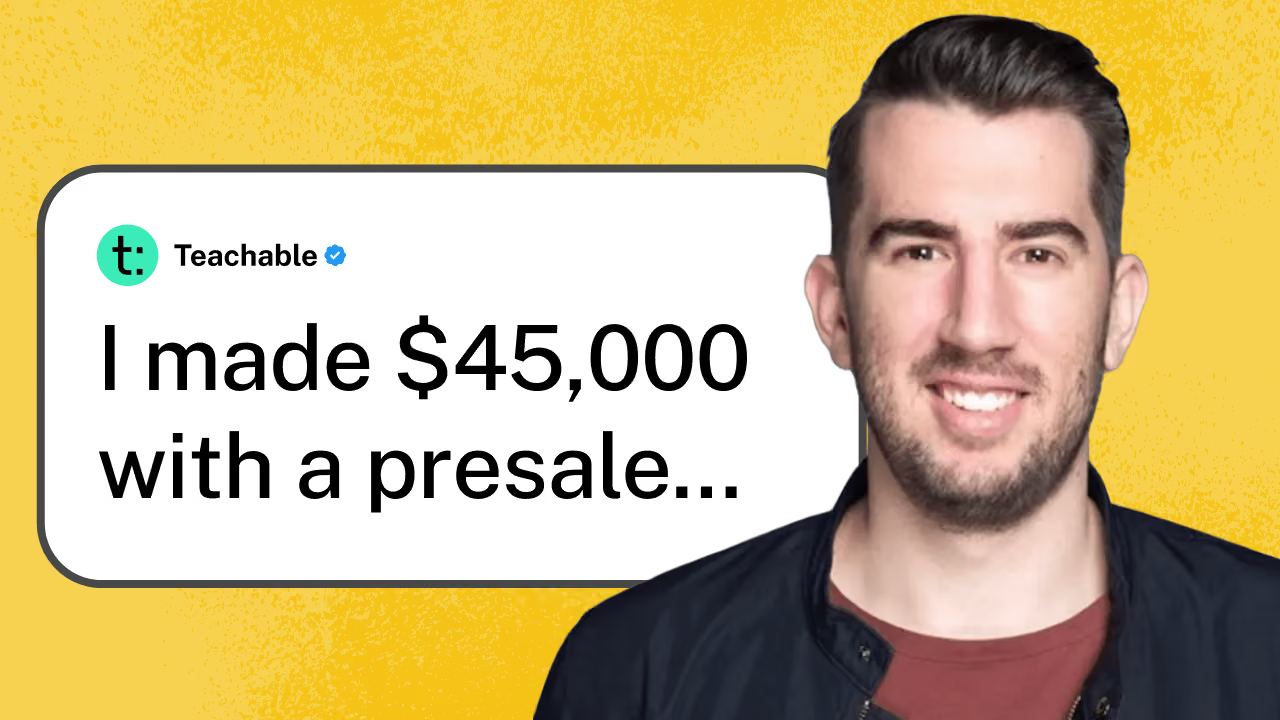
You’ll hear directly from creators who’ve done it—some making up to $45,000 in pre-sales alone—and we’ll walk you through the exact steps they followed to make it happen.
We’re keeping it real, practical, and packed with takeaways you can start using today.
Let’s dive in.
{{trial-component="/blog-shortcodes/blog-cta"}}
Let’s be honest—depending on brand deals and ad revenue can feel like a rollercoaster. One canceled partnership or slow month, and suddenly your income takes a hit.
That’s exactly what happened to creator Jack Appleby.
So he tried something different: he pre-sold a course—and made $45,000 in just 30 days.
Pre-selling gave Jack financial freedom, creative control, and proof that people wanted what he had to teach. That’s the power of selling before you build.
Why pre-selling online courses works:
Action step:
Creating a course can feel overwhelming—especially when you’re stuck asking, “What should I even teach?” The good news? You don’t have to guess.
The smartest creators don’t start with a finished product—they start with a conversation.
Jack Appleby, didn’t brainstorm in a vacuum. He went straight to his audience and asked them directly.
And it worked. By crowdsourcing course ideas from his community, Jack made sure his offer was something people were actually excited to buy.
Here’s how you can do the same:
Ask the right questions: Instead of saying “What should I teach?” focus on questions that reveal real behavior, preferences, and needs.
Think about asking questions such as:
Make it easy to respond: Use tools your audience is already comfortable with: Instagram polls, LinkedIn surveys, Google Forms, or Typeform. Keep the questions short, focused, and easy to complete in under 5 minutes.
People are more likely to complete your survey if they get something in return. You could offer:
Start spotting patterns: Once your responses start rolling in, look for recurring themes.
Is everyone struggling with time management?
Are most people new to your topic?
Does your audience lean toward self-paced formats over live workshops?
This is where things get exciting—because your course idea starts taking shape based on real data, not assumptions.
Action step:
Creating a course doesn’t have to start with a blank Google Doc. In fact, the course you’re trying to map out might already exist—in your content archive.
If you’ve ever posted a short explainer, a how-to tutorial, or a behind-the-scenes breakdown, guess what? You already have the bones of a great course.
Jack realized that one of his most popular videos—something he'd already shared publicly—could be reworked into a full, in-depth curriculum. All it took was expanding on what he’d already taught in short form.
Here’s how to reverse-engineer your best content into a course your audience will pay for:
Break it down into modules: Take a single how-to or educational post and split it into 4–5 core sections. Each one can become its own lesson or module inside your course.
Add depth and exercises: What would you really say if you had more than 90 seconds to teach that concept? Use examples, templates, scripts, or assignments to build out the content.
Use Teachable’s draft mode to build as you go: You don’t need to publish all your content right away. You can keep lectures in “Draft” status during the pre-sale period—and add a “Welcome” module to greet early students and set expectations.
Action step:
The biggest misconceptions about selling online courses?
You need to become a full-time marketer to make it work. Not true.
Instead of hard-selling, Jack used personal stories—some funny, some emotive, all true—to highlight the value of his course and connect with potential buyers.
Here’s what worked:
Most importantly, Jack shared authentic moments that led people to say: “I want that result too.”
Action step:
You don’t need slick marketing tactics. You need stories your audience will relate to.
Sure, pre-selling helps you generate income upfront—but the benefits go beyond just making money.
When you invite people into your course early, you're actively inviting them to build with you. In a very real sense, you’re bringing them behind the scenes into your creative process and allowing them to shape your products with you.
Customers from your pre-sale period will give you feedback, ask questions, and cheer you on before the course is even live.
What preselling creates:
And when you're using a platform like Teachable, it’s easy to set this up. You can create a private Slack or Discord group for early adopters, send out weekly updates as you build, or even host a live check-in before launch.
Action step:
Pre-selling flips the traditional course launch on its head. You don’t need weeks of content ready. You don’t need a massive audience. And you definitely don’t need to do it all alone.
You need a validated idea. A plan. And a willingness to build in public—with your audience right there alongside you.
Begin pre-selling your course and start a new income stream today on Teachable.
{{trial-component="/blog-shortcodes/blog-cta"}}
