Thank you! Your submission has been received!
Oops! Something went wrong while submitting the form.
MENU
%2520(1).jpeg)
Two of the sharpest voices in the creator economy walk into a room with a stack of questions they have never seen before. One gets 60 seconds to answer. The other has to decide: agree or challenge.
That is the premise behind Trade Secrets, a new Teachable video series pairing industry experts for rapid-fire, unscripted conversations about what it actually takes to build a business around what you know.
In this debut episode, Lia Haberman (creator economy expert, UCLA Extension instructor, and author of the ICYMI newsletter for 45,000+ subscribers) sits across from Jayde Powell (founder of The Em Dash Co., LinkedIn creator, and host of #CreatorTeaTalk). The result is an honest, funny, occasionally combative exchange about pricing, product launches, upselling, mental health, and the corporate-to-creator pipeline.
Here are the biggest moments from their conversation, and the takeaways you can put to work today.
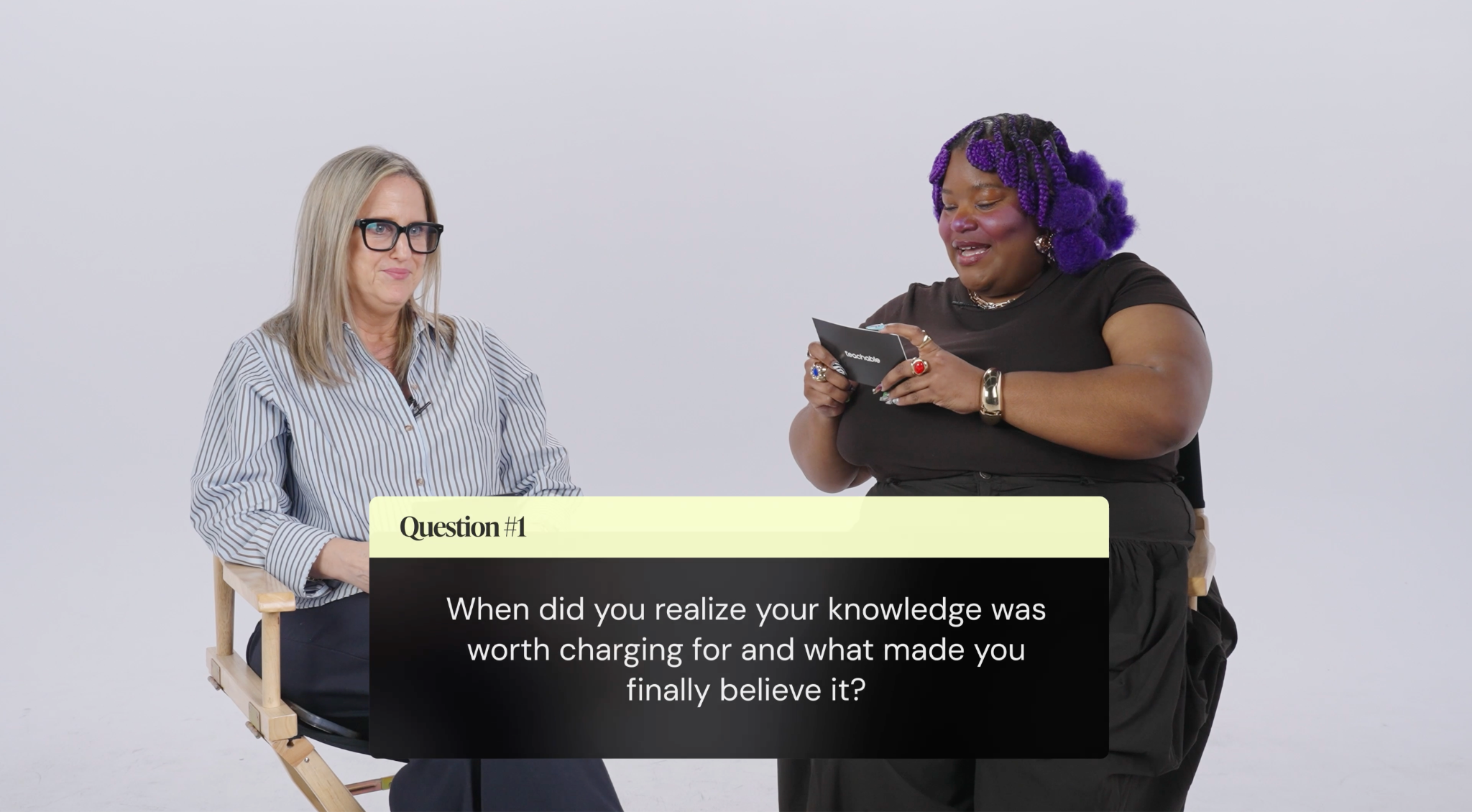
Lia opened with a confession that most educators will recognize. Years spent in higher ed conditioned her to give knowledge away for free, and the habit stuck.
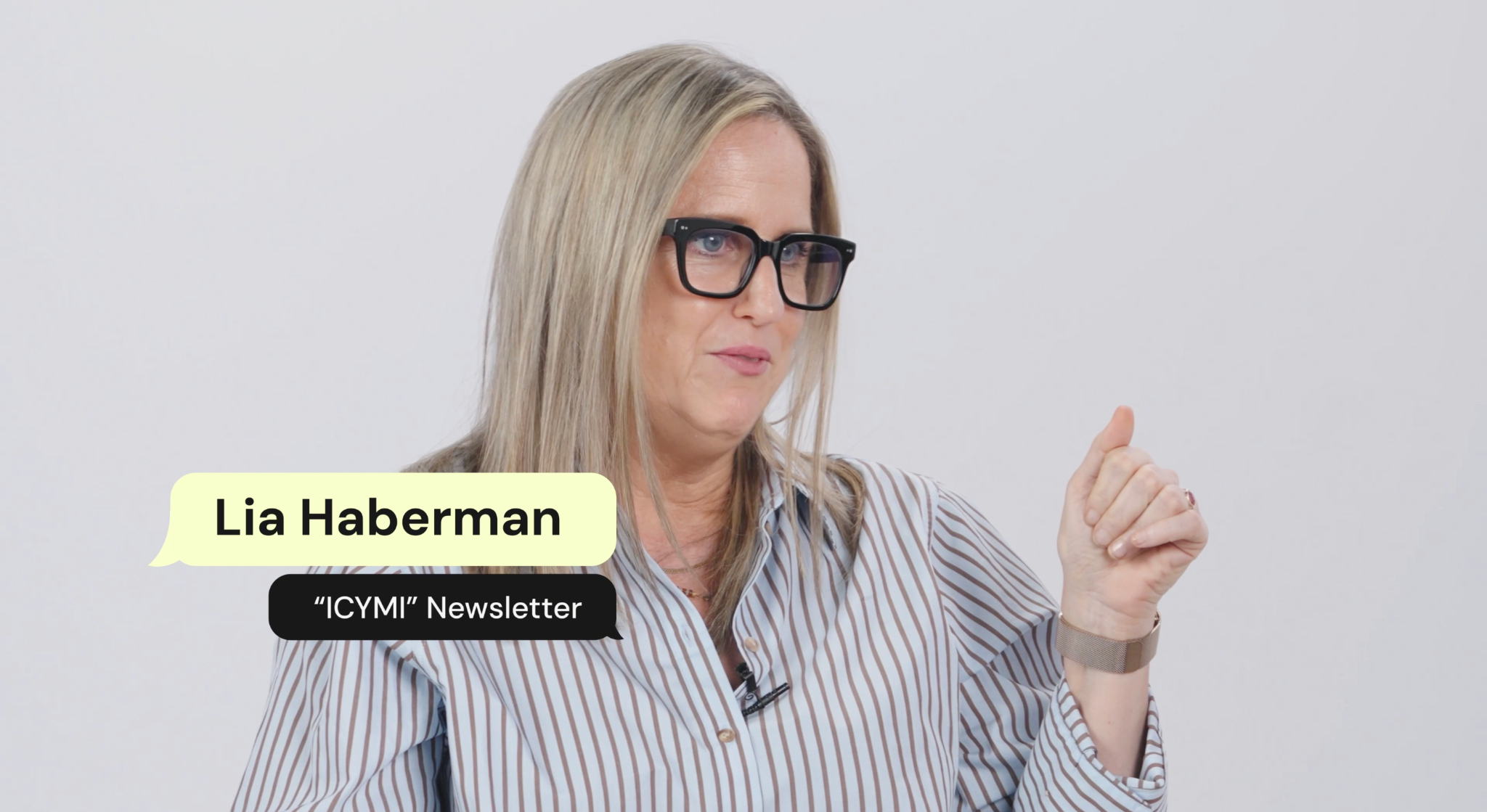
"I teach students in higher ed. I like to give my knowledge away for free. I, however, realized that this is not a good business model." — Lia Haberman, Social + Influencer Marketing Consultant
She credited female entrepreneurs, including Jayde and Rachel Carson, for shifting her perspective. The realization came through observation: watching peers charge confidently for the same type of expertise she had been handing out at no cost.
"I think it's just the way that I came about it into this industry. It's teaching students and like mentoring young people. I think that like, it puts you in a mindset of actually not charging and just being like, yes, I want to help you, want to uplift you." — Lia Haberman, Social + Influencer Marketing Consultant
Jayde pushed back on the "give it away" mentality, drawing a clear line between free content as a lead magnet and free content as a long-term business model.
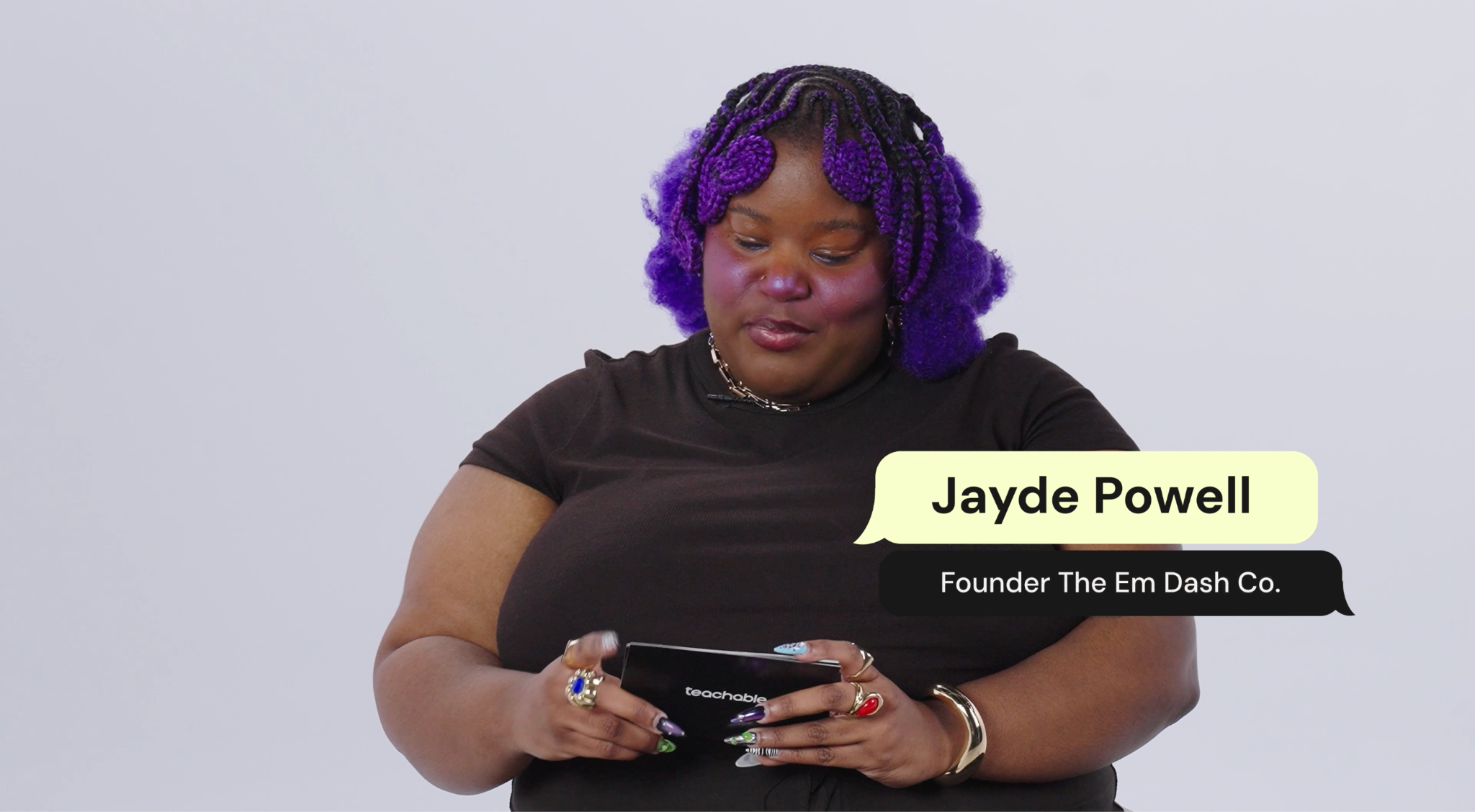
"In a certain circumstances, if it's a lead magnet. Absolutely. Yeah. But when long term, you should definitely be charging for what you now." — Jayde I. Powell, Founder & Head of Creative, The Em Dash Co.
That tension (free vs. paid) sits at the center of the creator economy right now. Goldman Sachs Research projects the creator economy will nearly double from $250 billion in 2024 to roughly $480 billion by 2027 (source). The money is there. But plenty of experts still struggle with the mental shift from "helping" to "selling," especially those with backgrounds in education or mentorship.
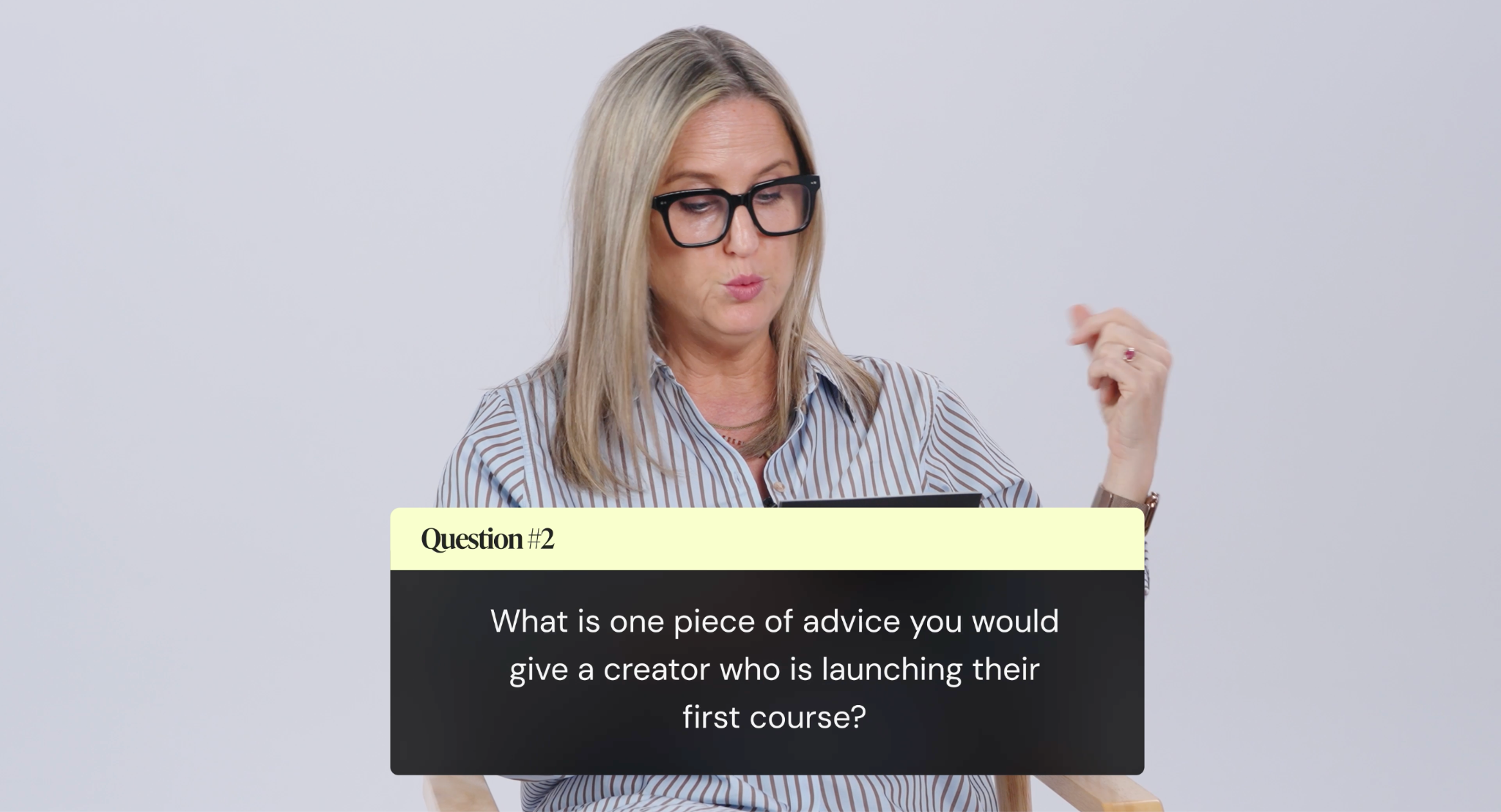
When Lia asked for one piece of advice for a first-time course launcher, Jayde had a clear answer: stop waiting for perfection.
"I would say just do it fast and don't feel like you have to do it perfect the first time around, because you'll learn a lot about your customers and your students and like what they want from you over time." — Jayde I. Powell, Founder & Head of Creative, The Em Dash Co.
She backed it up with her own experience, noting that she launched courses in 2024, gathered learnings, and is now relaunching with major improvements.
"I launched my courses last year. Got a lot of learnings from it. And now I'm relaunching them because I've learned more. I know how I want to, like, refine things. I know how I want to set up my courses." — Jayde I. Powell, Founder & Head of Creative, The Em Dash Co.
Lia agreed completely and drew a parallel to her own newsletter launch.
"It was the same thing when I launched my newsletter. The one was like kind of a hot mess, but like it got better over time." — Lia Haberman, Social + Influencer Marketing Consultant

This tracks with what successful Teachable creators repeat over and over. Antoine van der Lee, a developer who made $40,000 on his first Teachable course launch, has talked about treating his content as a "personal knowledge base" he chose to make public, rather than something that needed to be polished before anyone could see it. The pattern is consistent: ship version one, gather real feedback, and build version two around what your actual audience tells you they need.
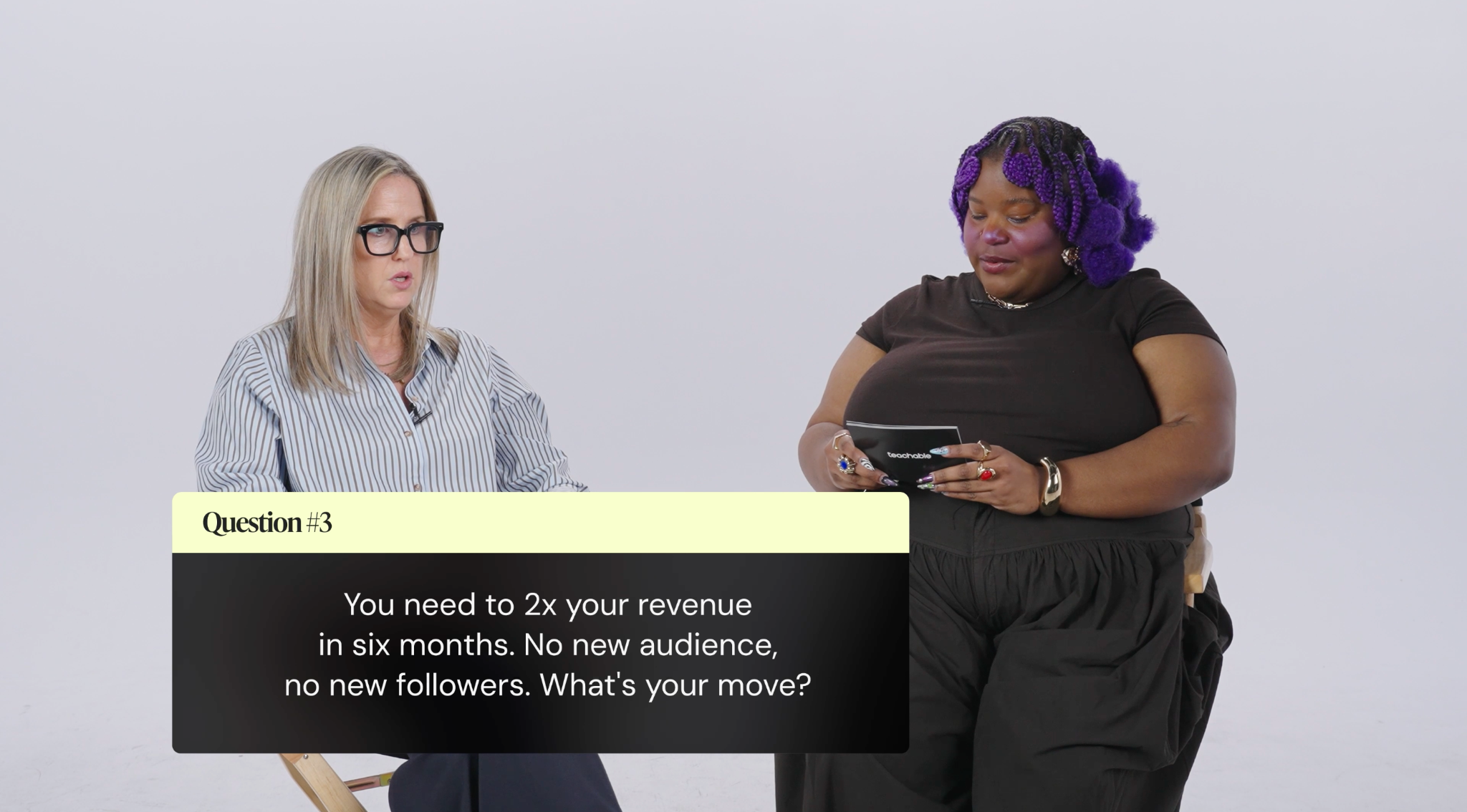
One of the most tactical questions in the episode asked both creators to 2x their revenue in six months with no new audience and no new followers. Lia went straight to the upsell.
"Much easier to like. Keep your retain your existing audience and charge them more. Develop maybe like for variations of your product. Like maybe it's like live mentoring or something like that. So you're like, whatever I'm selling, I'm now doing like bonus add ons for the people who already love and believe in me." — Lia Haberman, Social + Influencer Marketing Consultant
Jayde confirmed this from her own consulting work, where she uses a similar approach when crafting proposals for brand partners.
"Every time I craft like a proposal for any of my clients or my brand partners, like I'm always like, and for this additional fee, you can get this. And then always like they usually select it." — Jayde I. Powell, Founder & Head of Creative, The Em Dash Co.
For Teachable creators, this is where tools like one-click upsells and digital product bundles become serious revenue drivers. Your current students already trust you. Offering them a coaching add-on, a bonus workshop, or a bundled downloadable resource turns a single transaction into a deeper (and higher-value) relationship.

The conversation took a personal turn when Lia asked what Jayde had to unlearn from corporate life. Jayde pointed to her belief that hard work alone would open every door.
"I went in with this mindset that if I work really hard, it will like get me all the opportunities I desire. And I actually realize that wasn't the case. You have to work strategically, which means sometimes you do have to do a little bit of the politicking shaking the hand, making sure the right people know you."— Jayde I. Powell, Founder & Head of Creative, The Em Dash Co.
Lia offered a rare challenge moment, suggesting that Jayde could have deployed those same skills inside a corporate structure. She referenced the concept of the "intrapreneur," someone who operates with entrepreneurial instincts inside a larger organization.
But both agreed on a bigger point: the corporate-to-creator pipeline produces stronger businesses.
"The corporate to creator pipeline makes for better creators. They're more professional. You get deadline had more business acumen." — Lia Haberman, Social + Influencer Marketing Consultant
Jayde confirmed this from her own experience, crediting her corporate career with many of the operational skills she brings to The Em Dash Co. today. For anyone currently sitting in an office wondering whether their 9-to-5 experience has value in the creator world, this exchange offered a definitive yes. The processes, systems thinking, and professional habits you build in a corporate environment carry directly into running a creator business.
Lia and Jayde covered far more ground in the full Trade Secrets episode than we could fit here, from platform preferences (they both love Threads and LinkedIn) to brand alignment (Lia once turned down a two-factor authentication sponsorship because "nobody wants to read about that from me"). Every exchange reveals something practical about how two very different creator paths arrive at similar conclusions.
Teachable gives you courses, coaching, digital downloads, and one-click upsells in one platform. See plans and pricing.