Thank you! Your submission has been received!
Oops! Something went wrong while submitting the form.
MENU

TL;DR: To sell on Instagram, switch to a business account and set up a shop and catalog in Meta's Commerce Manager, then tag products in your posts, Reels and Stories. Since September 2025, shops on Facebook and Instagram use website checkout, so buyers browse on Instagram and pay on your website. Visual products like clothes, accessories, makeup, skincare, workout gear, art, food and furniture tend to sell best. Meta's Commerce Policies don't allow shops to list downloadable digital content or digital subscriptions, so courses and downloads sell through your bio link, Stories links and DMs instead.
If you’re looking to grow your business and add additional revenue streams, look no further than the popular photo-sharing social media platform Instagram. With Instagram’s shopping tools and 3 billion monthly users, you can show products to buyers where they already spend time, then send them to your own website to pay.
Throughout this article, learn more about the benefits of selling on Instagram, how to get started, and 10 ideas of what sells the most on Instagram.
Not sure why you should bother with Instagram? Trust us, there are quite a few benefits. Here are the top three you need to consider.
Instagram has 3 billion monthly active users, according to Meta CEO Mark Zuckerberg in September 2025. With a user base that large, you can bet your target audience is likely there.
If you have product photos or mockups, Instagram is the perfect platform to share those on. Due to its visual nature, product photos and videos fit right in, and sharing them can be a great way to reach an even wider audience of potential customers.
Because you can create an entire shop with Instagram, you’re able to turn the social platform into an entirely new revenue stream for your business. Buyers can browse your shop, collections and product pages inside the app. When they're ready to buy, Instagram sends them to your website to complete the purchase.
Many people browse Instagram to discover products, read comments and watch Reels before they buy. That means your audience might be shopping around for a product like yours while they scroll.
If you’re interested in selling physical products through an Instagram shop, there are just a few eligibility requirements to keep in mind.
If you meet these criteria, you can go ahead and start setting up your Instagram shop. Note that you’ll need to create a catalog in Commerce Manager before you can start linking products to your Instagram shop.
Want to start generating even more sales for your business? Let’s walk through the steps of getting your Instagram shop set up and how to let customers know you’re open for business.
Step one is actually setting up your Instagram shop. As mentioned, to do this, you’ll need to have an Instagram business account and a Commerce Manager account.
Once you’ve gotten that taken care of, follow these steps:
Once you’ve taken these steps, you can start promoting and selling your products on Instagram.
Now that your shop is set up, it’s time to start tagging products from your Instagram shop in your posts, stories, and reels. This way, when someone sees a photo of a product they love, all they have to do is tap it to view the product and head to your website to buy it.
Here’s an example of what this could look like on your Instagram posts:

Tag just a single product or tag several, depending on what’s pictured. It’s easy to do. When you’re creating a new post, the “Tag products” option will appear on the screen when you’re adding your caption and other final details before you publish. In Stories, use the product sticker instead.
You can feature and tag products in your regular Instagram posts, your reels, and your stories, so make sure you’re creating a wide variety of content and taking advantage of this feature.
Meet your audience where they are. Some go through stories of the accounts they follow, others scroll through reels, and others simply scroll through their feed or the explore page. Make sure you’re creating different types of content that features your products to give your audience an even bigger chance of discovering them.
Work with influencers in your industry to further promote your products and your brand. You can even give the specific accounts you work with permission to tag your products in their posts, creating a simple process for those introduced to your business via influencers to easily purchase your products.
If you’re lucky enough to have existing customers take photos and videos of your products, ask them if you can repurpose them onto your own feed. User-generated content (or UGC) helps create an authentic vibe that doesn’t feel like marketing content. Integrate as much UGC as you can into your strategy, and of course, don’t forget to tag your products in each one.
Finally, consider allocating some of your marketing budget towards Instagram ads. You can still tag products in these ads, but you can also create a call-to-action to your full Instagram shop, enabling ad viewers to start shopping around.
There are a number of different types of ads with various objectives. Play around with different ad types until you discover the ones that get you the best results.
The products that tend to sell best on Instagram are visual ones that look good in a photo or a Reel, such as clothes, accessories, makeup, skincare and workout gear. Digital products like courses and downloads sell too, but through a link to your own checkout rather than a shop.
You might already have an established business with products to sell. But if not, you may be looking for inspiration to get started. Here are 10 ideas of things you can sell with Instagram’s shopping tools and your own website.
Clothes and apparel are a common product sold on Instagram. Tons of online boutiques take advantage of Instagram shopping to increase sales and reach a wider audience of customers.
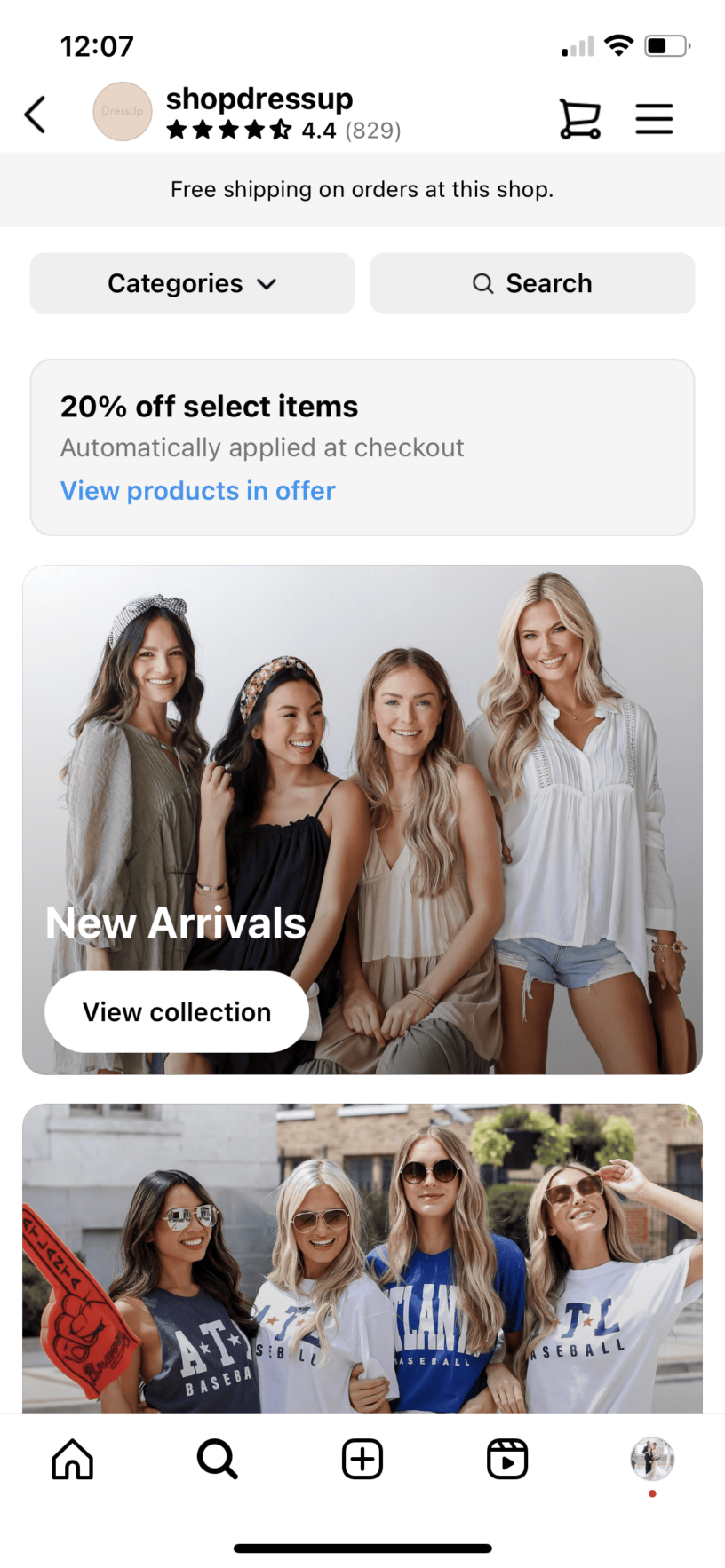
Here’s an example of boutique Dress Up and its Instagram shop. The store is even offering a 20% discount on select products through Instagram and has categorized products to make it easier to shop on the app.
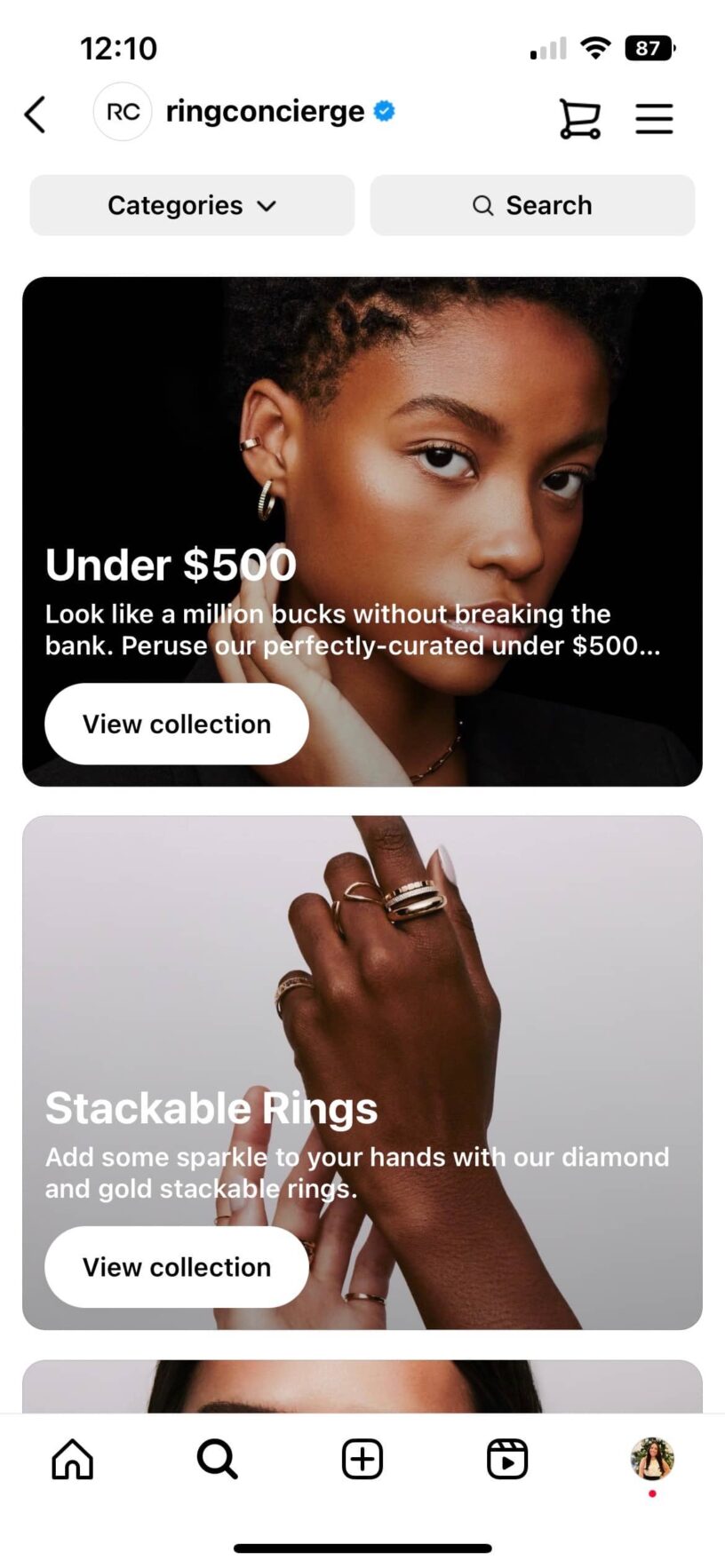
Accessories, jewelry, sunglasses, shoes, etc., is another great product to sell on Instagram. You can sell handmade jewelry. There are many polymer clay and metal working brands selling handmade jewelry on Instagram.
Or, you can go a more traditional route, like Ring Concierge below. The brand creates fine jewelry and sells it on their website, while also creating a shop on Instagram. This makes it easy for them to tag products directly in their content, increasing sales.
Instagram is a common place for people to look for makeup inspiration, learn more about how to better apply makeup, and, of course, purchase makeup products. This means selling your makeup products on Instagram can help bring in more sales, whether you have an established brand or want to create your own products.
Here’s an example of what your shop could look like from Tarte Cosmetics:

Skincare products cover a wide range of options: face masks, face washes, creams, moisturizers, and more. You can even include hair care products here if you’d like.
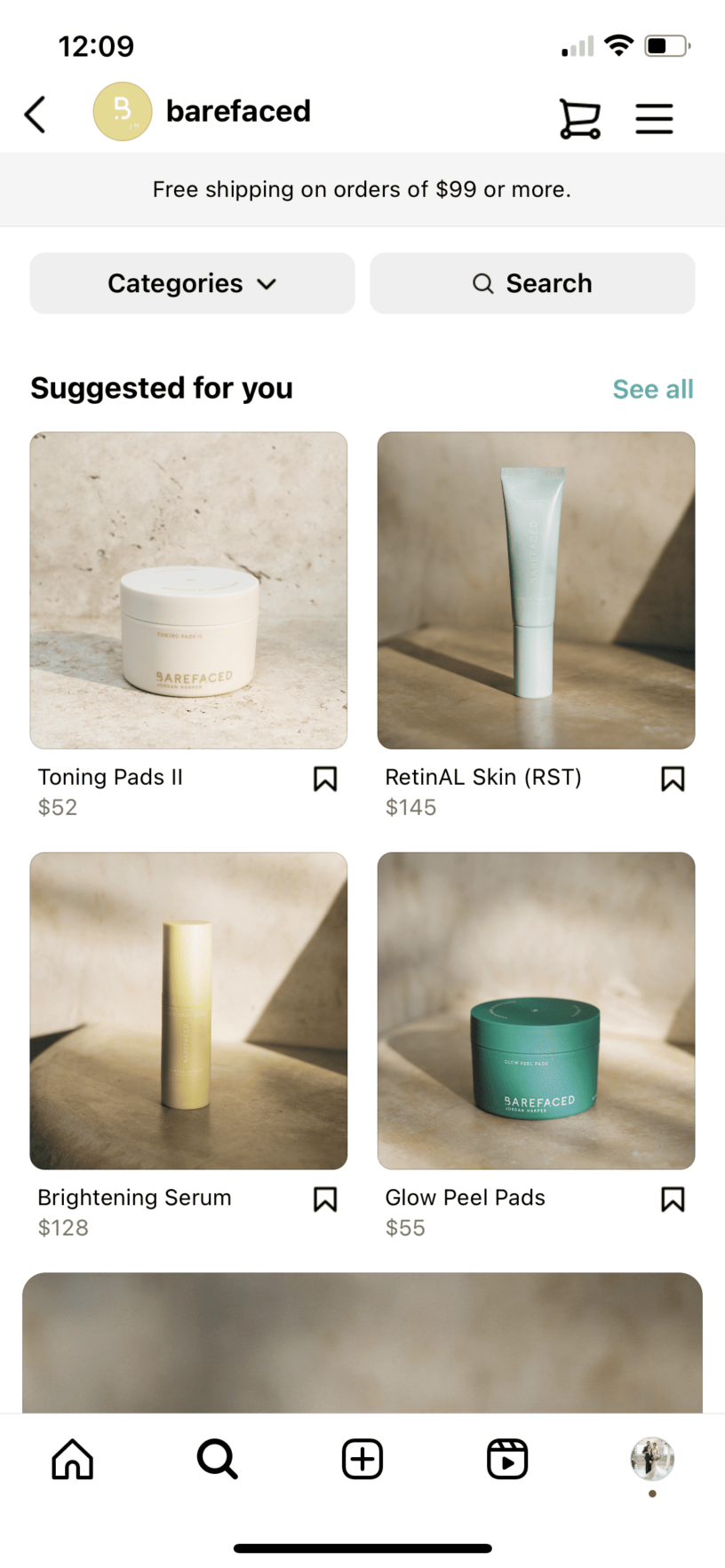
Here’s an example of a shop on Instagram selling skincare products:
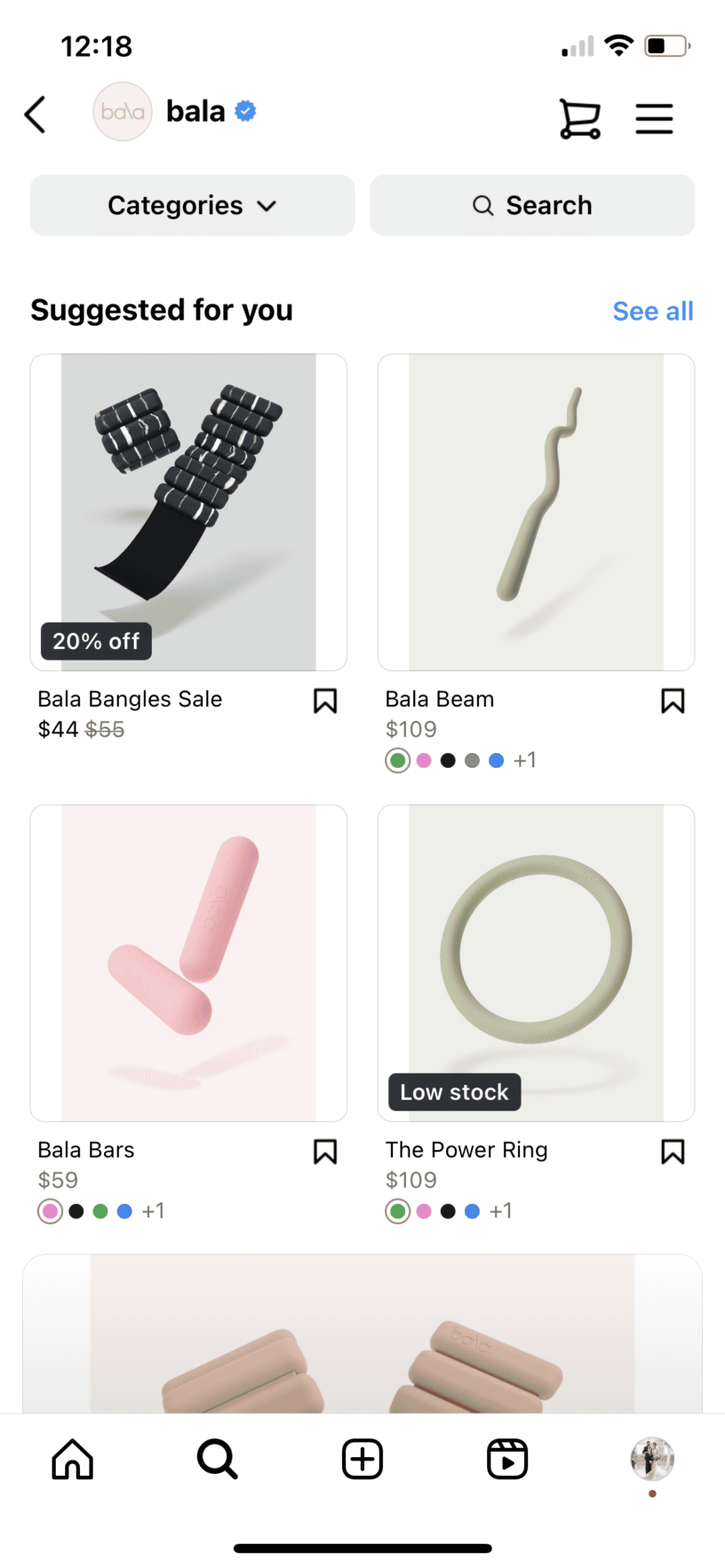
Workout gear, yoga mats, fitness clothes, fitness products, protein powder, etc., are all great products to sell on Instagram. Many users love to peruse the app for workout ideas and motivation, so putting your products in front of that audience can help build a larger customer base.
Here’s an example of fitness company Bala’s Instagram shop:
Are you an artist? While many artists have one-off drops, others have consistent products available. If you’re one of the latter, consider offering your regular products via Instagram’s shop.
Here’s an example of what this could look like from artist Ashley Longshore:

While the past few examples we’ve covered have all been physical products, you can sell digital products on Instagram, too! Instagram shops don't allow downloadable digital content or digital subscriptions, so you promote courses in your content and send followers to your course sales page. Put the link in your bio, add link stickers to Stories, and answer questions in DMs. Our guide to building an Instagram sales funnel walks through each step, and you can host the course itself on an online course platform.
Another digital product to sell is various types of digital downloads. Checklists, guides, workbooks, templates, etc. These are very popular products, and you can easily sell more of them by promoting them on Instagram and linking to a digital downloads checkout on your own site. For more ideas, see our list of digital products to sell.
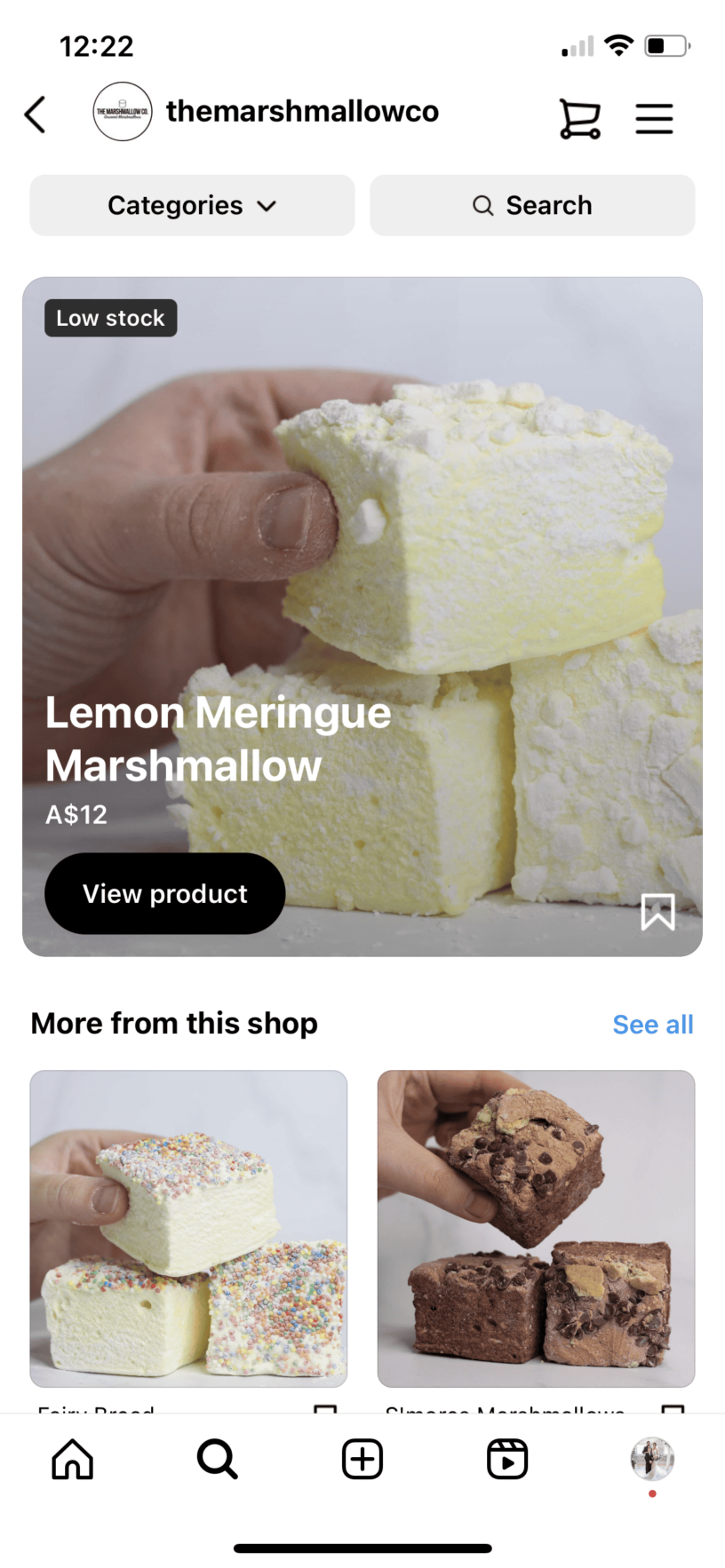
Food can be a tricky product to sell online, but many bakeries and other companies have figured it out. Maybe you’re selling hot sauce, cereal, baked goods, or something else that can easily package and travel well. Consider offering your products via Instagram!
Take a look at this Instagram shop, The Marshmallow Co. The brand has listed a number of types of marshmallows for sale that its customers can easily buy after finding them on Instagram.
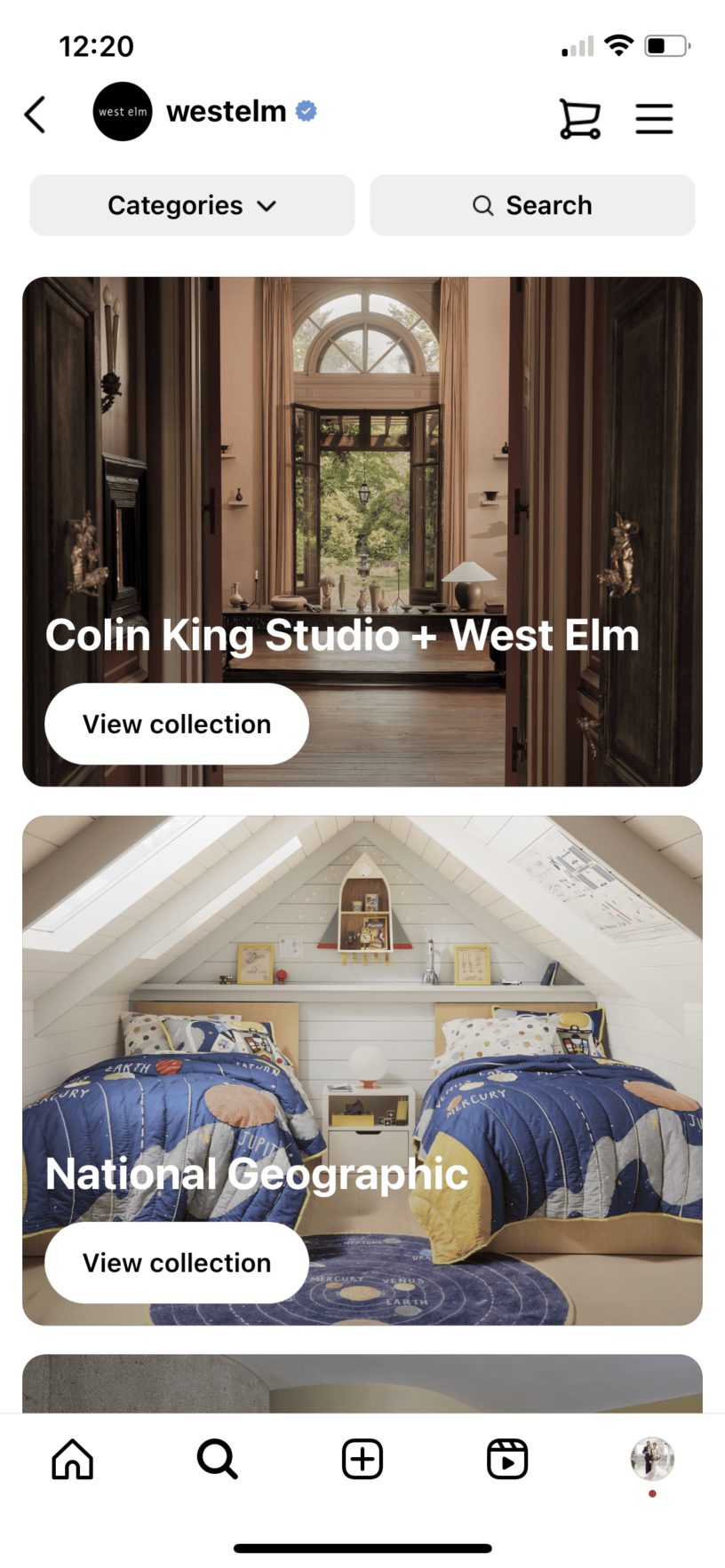
And last, but certainly not least, is furniture! While bulky, if you have a website that you use to sell furniture, you can easily translate that to an Instagram shop.
Here’s an example of popular furniture brand West Elm’s Instagram shop:
Courses and downloads can't be listed in an Instagram shop, but Instagram is still a good place to find buyers for them. Here's how creators sell digital products from Instagram:
If you're ready to turn Instagram followers into paying customers, you need somewhere to host and sell the course, download or coaching offer you're promoting. Start a 7-day trial and build your first course before committing to a plan.
Can I sell directly through Instagram?
Partly. You can list products in an Instagram shop and tag them in posts, Reels and Stories, but since September 2025 buyers complete the purchase on your website, not inside Instagram.
Can you sell digital products on Instagram?
Yes, but not through an Instagram shop. Meta's Commerce Policies don't allow listings for downloadable digital content or digital subscriptions, so you promote courses and downloads in your content and link to your own checkout.
Instagram shop: A storefront built inside your Instagram business profile where you list products for people to browse and tag in your content.
Commerce Manager: Meta's tool for setting up and managing the product catalog that powers your Instagram and Facebook shops.
Product tagging: Adding clickable tags to products in posts, Reels and Stories so viewers can tap through to a product page.
Website checkout: The purchase flow Instagram now uses for every shop, where buyers complete payment on your own site rather than inside the app.
Bio link: A link in your Instagram bio that points followers to your own sales page, useful for selling products like courses and downloads that can't be listed in a shop.