Thank you! Your submission has been received!
Oops! Something went wrong while submitting the form.
MENU

Strategies for improving completion rates, deepening participation, and building a loyal student community.

Student testimonials can go a long way in helping potential students make the decision to sign up for your course. Who better to help promote your course than happy students who are your best success stories?
Your student testimonials are a great addition to your sales page and showcase your course’s impact on those who have taken it. Sounds great right? but you might be wondering just how you get these testimonials. Most students won’t just send you a testimonial, you’ll have to ask.
This is new for some course creators, and to help you navigate exactly how to ask for a testimonial we built out a whole guide. Not only did we create a sample email so you can see word for word how to ask for a testimonial, but we also covered where to feature them, and how to best use them!
Once you have testimonials you can add them to your site, and hopefully see the benefits of them with more students signing up because they’re persuaded by reading first-hand experiences from your students.

Imagine pouring your energy and expertise into building an online course—something you know your students need—only to watch them drift away after the first module, never to return. You’ve seen it: analytics dashboards showing dwindling engagement, course completions stuck at a dismal percentage, and referrals that barely move the needle. It’s enough to make any creator question the value of their hard work.
But what if you flipped the script?
Picture transforming your course into a bustling, engaged community—a place where students are not just learning, but thriving, sharing their wins, and recommending your course to everyone they know. That’s the transformative power of a stellar student experience—and it’s the single most impactful growth strategy you can embrace as a course creator.
I remember teaching a workshop on software development at a local community center, long before I even considered moving my courses online. I poured hours into my curriculum, confident that my expertise would shine through. But when I looked around halfway through the first session, I saw glazed eyes and disconnected learners. That was my wake-up call.
I realized that it’s not just about delivering content; it’s about creating an environment where students feel engaged, supported, and part of something bigger. I started incorporating more interactive exercises, real-world coding challenges, and group discussions.
The difference was immediate—students were collaborating, asking questions, and even sharing their own resources. That experience taught me that prioritizing the student experience is the key to transforming any learning journey from forgettable to phenomenal.
A stellar student experience isn’t just a nice-to-have; it’s a direct path to profitability. Data from McKinsey shows that learners who rate their digital learning experience highly are 40% more likely to complete their programs, and a staggering 50% more likely to enroll in another course. This is no accident: when students feel seen, supported, and motivated, they stick around.
They finish what they start and, as their passion becomes contagious to those around them, you’ll have yourself an approach more fruitful than any form of omnichanel marketing. They talk, sharing their positive experiences with colleagues, friends, and social media followers. This organic word-of-mouth is the lifeblood of modern online businesses, fueling growth without the need for bloated ad budgets or aggressive sales tactics.
The student experience acts as a flywheel: engaged students are more likely to complete your course, refer it to others, and purchase additional products or services. Retention becomes self-sustaining. Every happy student becomes a brand ambassador, every completed course a case study in trust and credibility. Instead of chasing new leads endlessly, you’re building a sustainable revenue stream that grows with every satisfied learner.
So, what does a top-tier student experience actually look like? It starts with design—an experience built not just for learning but for delight, motivation, and connection. Think about the best courses you’ve ever taken. Chances are, they didn’t just dump information on you; they guided you, celebrated your wins, and made you feel like part of something bigger.
At leading educational institutions, the student journey is meticulously crafted. Touchpoints are designed to anticipate needs, from onboarding emails that set expectations to milestones that celebrate progress. Gamification—like quizzes and certificates—keeps learners engaged and invested in their progress.
A sense of community, often missing in online learning, fosters connection and accountability, turning passive learners into active participants. Even small features like a mobile learning app or flexible drip delivery can transform a course from a static file dump into an interactive, dynamic experience that meets students where they are.
This is the benchmark: courses that don’t just teach, but guide. That’s where your growth potential lies.
Top educational institutions have spent decades perfecting how to keep students engaged and motivated. These best practices can be adapted to your online course to create a student experience that’s as effective as it is engaging:
Incorporating these best practices into your online course with Teachable’s tools can help you elevate the student experience and set your course apart from the competition.
Teachable isn’t just a platform—it’s your partner in building experiences that scale. Every feature is designed to help you create transformative learning journeys that keep students coming back for more.
Take the Student Hub, for example. It’s more than a discussion board; it’s a vibrant community space where learners ask questions, celebrate milestones, and build relationships with peers.
Quizzes and compliance checks not only reinforce knowledge but also add accountability—so students know where they stand and how far they’ve come. Completion certificates turn abstract progress into tangible wins, perfect for sharing on LinkedIn or including in portfolios. These small touches add up to something big: a student experience that feels personal and rewarding.
And let’s not forget the mobile app—a game-changer for busy professionals. Learning doesn’t happen in a vacuum; it happens on commutes, lunch breaks, and late-night study sessions. Teachable’s app puts your course at students’ fingertips, seamlessly integrating learning into their lives.
Ready to put these ideas into action? Here’s how you can enhance your student experience today, without adding hours to your workload:
Craft personalized welcome messages that make students feel seen and valued from day one. Incorporate quizzes to reinforce key concepts and give students quick wins. Celebrate their progress with completion certificates they can share proudly on social media.
Use the Student Hub to answer questions, celebrate milestones, and build a sense of community. Each of these steps adds a layer of connection and support that keeps students engaged—and more likely to complete your course and refer it to others.
A good student experience blends engaging content with community, support, and milestones. When students feel guided and connected, they’re more likely to complete the course, share their success, and become repeat customers.
Leverage interactive tools like quizzes, discussion forums, and certificates. Foster a sense of community with features like Teachable’s Student Hub, and provide personalized feedback that helps students feel supported.
Teachable’s Student Hub, quizzes, compliance features, mobile learning app, and completion certificates all work together to keep students engaged, motivated, and on track.
A world-class student experience doesn’t just keep your students happy—it’s your ultimate growth engine. It turns one-time buyers into loyal fans, sparks organic referrals, and drives sustainable revenue that grows year after year.
Don’t settle for average—transform your student journey with Teachable’s powerful features and see the difference for yourself. Ready to build an experience that sells itself? It all starts with a single step—on Teachable.

Many people seek transformational coaching to make long-lasting improvements in their lives and careers. In fact, life coaching—a type of transformational coaching—is one of the fastest-growing industries in the United States.
In this article, you’ll explore everything you need to know about being a transformational coach, including examples and tips to start your own coaching business.
Transformational coaching encourages individuals to dig deep and better understand who they are and what they want to live a more fulfilling, rounded life. The transformational coaching model focuses on Psychologist Abraham Maslow’s idea of self-actualization, the desire to live up to one’s fullest potential, as a fundamental human need.
To foster long-term success, transformational coaches help clients self-reflect on challenges, values, strengths, and life goals. Coaching can occur one-on-one or in a small group and lasts several sessions.
Coaching niches that often use the transformational approach include:
Transactional focuses on actions like getting a new job, becoming an Olympic athlete, or paying off your credit card debt.
Transformational coaching focuses on personal development. Clients can accomplish goals like those listed above, but they should also grow as a person. Instead of only focusing on paying off debt, a transformational coach would also help clients with their relationship with money. Coaches and clients would work together to build healthier habits when it comes to finance and life in general.
It’s about helping clients become their best selves outside of the main goal or achievement they’re focusing on.
Many Teachable creators have coaching businesses and earn an income helping others improve their life. Some help clients make lifestyle changes for a fulfilling career, while others support clients in overcoming trauma to focus on their dreams.
To help you decide if this is the right type of coaching for you, let’s look at some Teachable examples.
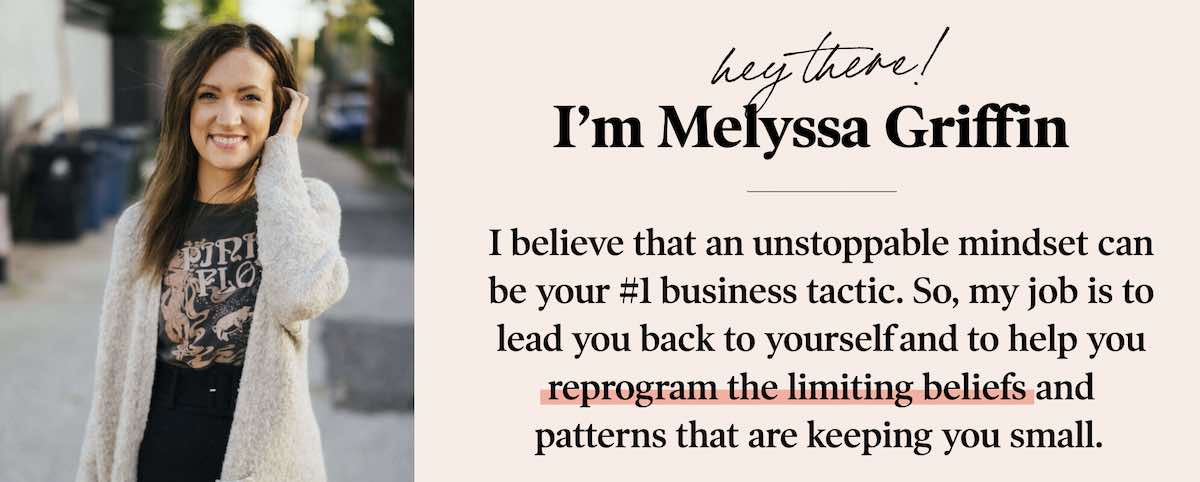
Melyssa Griffin is a transformational coach who helps entrepreneurs take their work and mindset to the next level. Not only does she offer business success tips, but she also coaches clients to identify and reprogram limiting beliefs. In her six-month coaching program, she helps individuals build a solid foundation to become who they want to be and reach their goals.
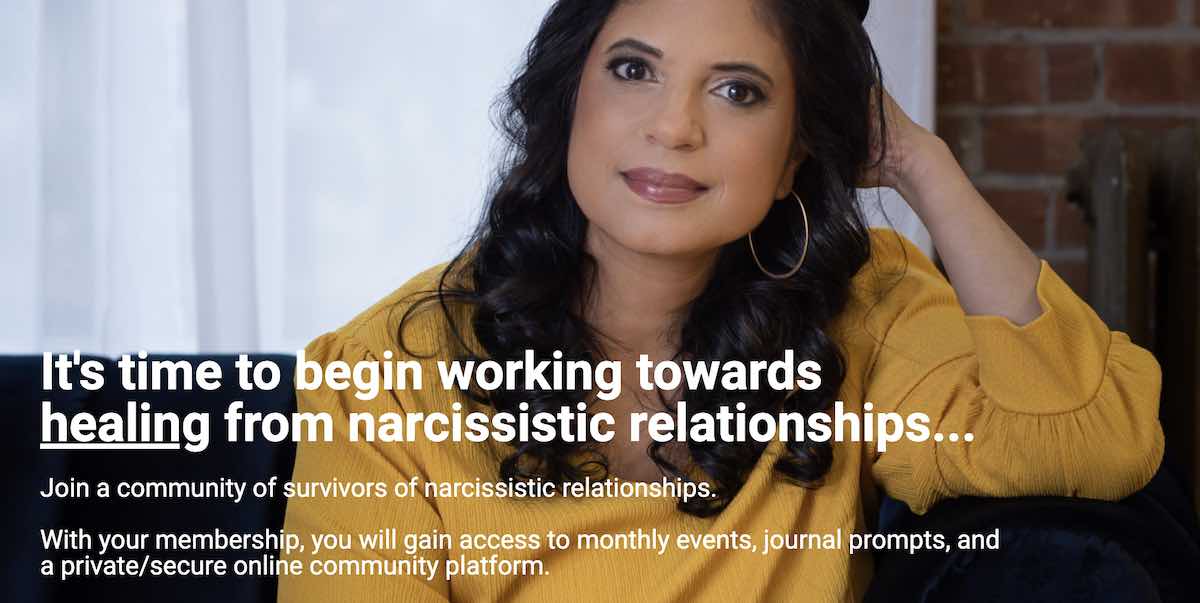
Dr. Ramani is a licensed clinical psychologist who’s transitioned her therapy work to coaching survivors of narcissistic relationships. Through her coaching program, she offers resources and support for clients on their healing journey. She’s helped clients heal by covering topics like:
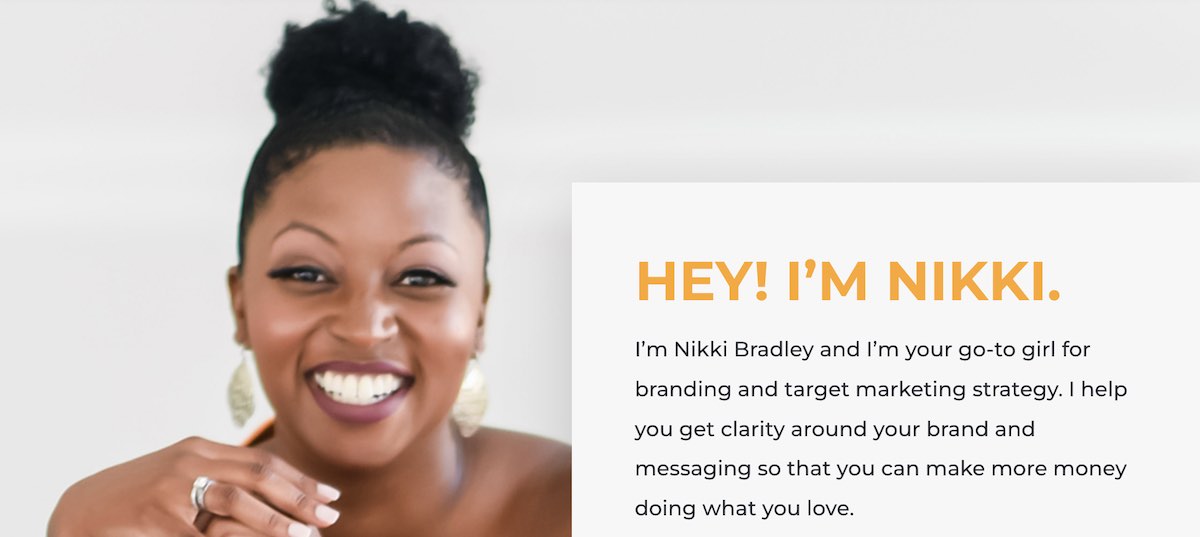
Nikki Bradley is a business coach who uses a transformational approach to help entrepreneurs succeed. In her coaching sessions, she works with individuals to define who they are and get clarity on goals to create long-term plans. Her primary focus is helping her clients develop processes and marketing strategies that lead to desired results.
Transformational coaching is for anyone committed to making lasting, healthy changes that will improve their lives. When someone works with a transformational coach, they develop attitudes, behaviors, and habits necessary for meeting their goals.
Most people can benefit from working with a transformational coach. Clients can learn how to:
The best, longest-lasting coaching results include active listening and focus on client strengths. In general, transformational coaches can help clients:
Here are some tips to help you practice transformational coaching with your clients.
When you begin working with clients, get to know their goals and challenges. This helps you discover how to best support your clients in achieving the results they’re looking for or need for more fulfillment.
The best way to learn about your clients is by having them complete a client intake form. Specific questions depend on your specialty and who you’re helping. Examples include:
You can create an intake form with Teachable’s coaching platform.
Some coaches also offer discovery calls with potential clients who aren’t sure if transformational coaching is right for them. You can use this time to discuss how you can help them and learn more about their goals and challenges.
As a transformational coach, you often act as a guide rather than a problem solver.
Actively listening to your clients and practicing emotional intelligence gives them a safe space to learn more about themselves and uncover their potential.
Research also shows that effective listening is essential for cultivating trust, motivation, and results.
When you’re working with clients, this can look like:
Many coaching clients struggle to be their best selves and meet goals because of limiting beliefs and other challenges like self-doubt. Your client may or may not already be aware of these.
Your objective through coaching sessions is to help your clients get clear on their struggles to overcome them and effectively work towards long-term goals and fulfillment.
You can support your coaching clients in overcoming these challenges by helping them:
The transformational coaching style focuses on positive psychology, which aims to improve a person’s quality of life by identifying positive experiences and traits. Research shows positive psychology increases motivation to make changes, the probability of achieving goals, and a sense of life direction.
Your clients might not always know what their strengths are. To help them identify these, you can ask self-reflective questions like:
Then, you can support your client to identify how they can use their strengths to work towards growth.
For example, a financial coach working with a client who wants to be debt-free can help them pinpoint related strengths. Then, use these strengths to support the client in discovering ways to manage finances better and make necessary changes to achieve new goals.
A plan is necessary for making long-lasting, positive lifestyle changes. This is also a transformational coach’s ultimate goal for clients.
Once you know your client’s struggles, goals, and strengths, you can help them create a plan for lifelong success. Because you want their plan to be attainable for them, it’s essential to let them take the reins as you guide them.
Here are some ways you can help your client build their long-term plan:
For example, Quanisha Green coaches black women to build confidence and grow a successful business. During the planning phase, she provides clients with relevant tools and resources that help turn their expertise into a successful business.
Transformational coaching is an excellent income opportunity for those who enjoy helping others.
If you’re considering becoming a coach, Teachable makes setting up your business and supporting your clients easy.
As a no-code platform, Teachable lets coaches create, sell, and manage all aspects of their business. We also support additional income streams like courses and digital downloads so you can expand your offerings.
Start today by signing up for Teachable’s free plan.

Good student retention strategies are vital for any organization. And, maximizing your retention is vital to keep profits flowing and to help your brand’s reputation improve throughout your industry. But, it’s all too easy to implement student retention strategies that can do more harm than good. Let’s look at the strategies to avoid, and why they could be doing more damage than you’d like. Then we’ll cover alternatives you can use to improve your retention.
There are plenty of retention strategies that fail to keep students and customers engaged with your brand or educational organization. Let’s explore a few of the most ineffective strategies and learn to identify them.
Many businesses and online schools think that loyalty programs will help keep their target audiences engaged indefinitely. Loyalty programs are a great idea in theory. But they can be implemented incorrectly, especially if they don’t offer good incentives. Unattractive loyalty programs can drive students away from your business and negatively hurt your long-term chances of success.
Some signs of unattractive loyalty programs are:
It can be tempting to emphasize speed over quality. But, it can cause some serious damage to your retention efforts. All creators want to keep their content coming so their students always have fresh courses to take. However, emphasizing speed instead of quality, you risk the quality declining. If that happens, you target audience could feel that you don’t care about their experience; you just care about getting them to make an initial purchase.
This negative effect can even happen subconsciously. Some customers may dislike your brand without fully knowing why, but they still leave your company for a competitor because they notice a slip in the quality of the classes you put out in rapid succession.
The right online ads are targeted specifically for a unique audience with unique needs. If you advertise to people who aren’t in your target audience—or if you send the wrong ads to your current customers and students—you could hurt customer retention by:
In both cases, retention can be negatively affected enough that you lose those customers or students permanently.
Lastly, email marketing can help with student retention, but only if you use it wisely and sparingly. No one likes to feel like they are being spammed by emails. So if you’re constantly firing off emails to your target audience all the time, that’s exactly what they will think.
Keep it simple, and don’t market to your core audience every day or even every week (depending on your niche and what your marketing metrics indicate). Avoiding spammy email marketing tactics will make your ads more likely opened by your target audience and less likely to get trapped in spam filters.
Ineffective student retention strategies can hurt your efforts. But there are ways to remedy them and implement solid alternatives. Let’s look at a few ways to how to rehab your retention.
For starters, be sure to do thorough research for your target market, so you intimately understand your ideal customers or students. By researching your target market, you’ll:
Research is the key to good marketing and customer retention tactics. If your research is subpar, go back to the drawing board and collect more information about key audience metrics, demographics, and other factors.
Next, consider offering free trials or products to prospective customers or students who aren’t yet fully engaged with your brand. Free products can improve customer retention by:
Free trials start off your relationship on a positive note and increase the likelihood that a customer will be retained in the future. Using Teachable you can offer a free trial coupons or free products like PDFs or mini courses to students.
Similarly, you should always invest in your course quality rather than quantity. A rushed product is bad forever, and a customer will notice that. But, a product that takes a little longer to finish but is better overall will help your students realize the full value of your course.
Therefore, it’s almost always better to delay a product or class if necessary to reach certain quality benchmarks. A phenomenal product that comes with critical features such as intuitive tools, customer-requested information, and more will stick in the minds of your consumers for a long time.
Lastly, take a close look at your existing loyalty program and make sure it offers real value to your long-term customers. Many people will sign up for loyalty programs or referral programs if there’s enough value to warrant it.
By offering extra value, you could boost customer retention significantly. For example, a program that guarantees a discount for future purchases is a great way to get people coming back to your brand for years to come. And with our new student referral program, you can do just that.
Loyalty programs or referrals can and should be utilized for educational organizations, as well. For example, a referral program that delivers a discount to your students to use on their next purchase has them looking forward to your next launch. It can also help you grow your student base quickly, too, as it brings in more qualified students.
Ultimately, developing proper student and customer retention strategies is the key to maximizing your profitability and making the most of your marketing efforts. But you have to be sure to leverage the right retention strategies, so you don’t accidentally reduce the number of long-term clients for your brand.

If you’ve thought about becoming a life coach, you may have also thought about if you need a life coach certification. The short answer is no, you don’t need one. There’s no official life coaching certification process. However, the long answer is it depends on your coaching services, clients, and goals.
Life coaching is a fast-growing industry that brought in $1.5 billion in the United States last year. Globally, the coaching industry is worth around $2.85 billion. It could be a profitable business for you, but what do you need to get started?
There are hundreds of life coaching programs to choose from, which can also make it hard to decide. In this article, we’ll dive into life coach certification programs and alternatives to help you make a decision.
To be a life coach, you only need knowledge and experience in your coaching niche. An accredited life coaching certification can distinguish you from other providers. For example, let’s say you work with a large company and offer your coaching services to their employees. The company may ask for a certification as an extra layer of credibility.
Life coaching isn’t a regulated profession—it doesn’t have a universal standard or certification process. It’s up to each coach to decide whether to pursue formal life coaching certification.
However, you can leverage the below qualifications to help you land more (and higher-paying coaching clients).
Although many life coaches (55%) have a Bachelor’s degree, they don’t usually go to college to pursue life coaching. Rather, specific majors like psychology (24%) and business (12%) can naturally transition to a life coaching career.
Certification may provide resources, training programs, and networking opportunities. You can supplement certifications with real-world experience, too. For instance, a former personal trainer or professional athlete would have the right experience to become a fitness coach.
Ultimately, life coaches should be ethical, honest, and knowledgeable of the subject they’re coaching. Whether you gain those qualities through a life coach certification program or somewhere else, isn’t as important.
Becoming a certified life coach won’t hurt, but is it worth it? The answer depends on your background, needs, and goals.
For some, life coaching certification is a valuable way to gain the tools and knowledge for a professional coaching career. It can also help you connect with potential clients, demonstrate your expertise and credibility, and expand your network.
On the other hand, you can be a successful life coach without it. Ultimately, you must decide what’s best for you. Consider the potential benefits and other factors to determine whether life coaching certification is worth it for you.
Opting out of life coaching certification today doesn’t mean you can’t do it later on after you have your first coaching clients. You can jump into your coaching career and revisit it in a year or two. There’s no right or wrong way to start down the path of coaching.
If you pursue certification, look for programs that are accredited. The International Coaching Federation (ICF) and the National Board for Health and Wellness Coaching (NBHWC) accredit coaching programs. ICF focuses on life coaching more broadly, while NBHWC accredits health and wellness coaching programs.
ICF’s accredited programs have three certification levels. Each requires you to pass an exam to get certified. Other requirements are that you must do specific hours of learning and client coaching experience. Here’s the breakdown for each level:
Many legitimate coaching programs use the ICF credentialing structure for their certificate programs. However, they may call their levels different names from those above. Carefully review the details of a program to verify it’s worth your time and money.
Your coaching niche will also influence the certification you choose. For instance, if you specialize in nutrition, business, or executive coaching, you might look for certification for that area versus a broader life coaching program.
When you’re ready to choose a life coaching program, you may find the number of available courses overwhelming. First, it’s helpful to narrow down your niche. Here are different types of life coaches:
Once you have a niche, you can research programs that suit your goals, skillset, and budget.
If you want a thorough life coaching program and don’t mind a higher price point, the Institute for Professional Excellence (iPEC) is a good choice. This program focuses on developing leadership qualities and core competencies, including:
The program also includes training on how to create coaching business plans and develop successful teams. The cost includes ongoing support, membership in an online community of other coaches, and monthly seminars from experts.
You’ll also receive three life coaching certifications in one program. As a result, the iPEC program is one of the most comprehensive, and also more expensive, options on the market. Therefore, it’s ideal for full-time, experienced coaches.
If you’ve been coaching for a few years and want to boost your credibility for higher-paying clients, it could be worth the investment.
The Institute for Life Coach Training (ILCT) has several programs and paths for different credentials and coaching specialties. It offers programs for the following coaching specialties.
At the end of the program, students receive a life coaching certificate and take the ICF exam. Pricing varies depending on the course you choose. ILCT is a good option for those who want to start small and take more courses from the same school later.
Life Coach School is a long-term, high-cost program for those serious about making a full-time career out of life coaching. Participants will learn to help others set meaningful goals, create actionable plans to achieve those goals and develop coaching skills.
The Life Coach School provides plenty of resources. The school offers ongoing support throughout the program via email, chat, or phone, and an active online coaching community.
Upon completion of the program, participants receive a certification from the Life Coach School.
The Health Coach Institute’s courses cover nutrition, lifestyle coaching, business development, and more. It’s best for those who want to become a health and wellness coach.

Courses from the Health Coach Institute are entirely online. Still, there are opportunities to connect with others in the program. The Institute gives students access to an online library and a private Facebook group.
Trustpilot users rate the company’s programs 4.8 out of 5 stars. The Health Coach Institute reports they have a community of 20,000 satisfied graduates.
One unique aspect of the certification program is addressing your self-limiting beliefs. Learning to do this personally will help you teach your own pupils to do the same.
Professional health coaches teach all Health Coach Institute courses. Parts of the program offer 1:1 instruction, so you can ask experts questions directly.
The CaPP Institute offers several programs, but the best choice for new coaches is its Coach Training Intensive program. Unlike other coaching certifications, this is a three-day, online workshop that teaches you how to change lives as a coach.
The program focuses on psychology and coaching theory. The end of the course focuses on business development. It includes a workshop where you’ll create a coaching business plan.
The Coach Training Intensive program is best for coaching beginners that want to start right away. It’s also a solid option for coaches who have been out of the market for a while and want a quick refresher course.
The cost of life coach certification programs depends on the program. Generally, accredited programs range from $1,400 to $25,000. Some unaccredited online courses may offer life coaching programs for less than $500. However, intensive courses and those accredited by the ICF cost more.
While these prices may seem high, they could be worth the investment compared to how much life coaches make. The average salary for life coaches is $62,500, but this figure will vary based on your niche, experience level, and overhead expenses. According to ICF, $244 is the average cost per coaching session.
Offering online coaching services with Teachable can keep costs down since you can easily scale and don’t need a physical location.
Given all the variables at play, choosing a life coach certification program can be challenging. Answering the questions below will help you decide which coaching program is right for you.
If you don’t think life coaching certification is right for you, don’t fret. Getting certified doesn’t guarantee a profitable coaching business—it’s optional. People care more about results than credentials.
Here are some alternatives for life coaching certification:
If you’ve worked as a personal trainer, nutritionist, therapist, or in another role related to the coaching vertical you’ve selected, put that to use. Talk about your experience when interviewing new clients and include information about your past in your marketing materials. Relevant work history may get you farther than a certification.
You can always learn by doing, and anyone can start coaching. In the beginning, you can take on two or three clients to build experience. As you gain new skills and confidence over time, you’ll be able to take on more clients or charge higher rates.
Most coaches get new clients through referrals. Request Google or social media reviews from your satisfied customers and ask them to pass your name along to anyone they know in the market for services like yours. Those testimonials will do more for your credibility than any certificate would.
Ultimately, whether to pursue life coach certification is a personal decision that you should base on your circumstances and goals. Weigh the pros and cons carefully to decide what’s best for you.
If you enroll in a life coach certification program, be sure it’s accredited. You should also run the numbers on the course cost and outline a plan for when you’ll break even in your coaching journey.
If you decide that certification isn’t right for you, draw on your experiences and seek referrals to help you build your business. You can start your coaching journey today without a life coaching certification. Teachable offers a free plan, where you can create one coaching product.

Your relationship with your students is essential to your business. We get that. So, when you let us know you needed deeper PayPal capabilities—namely, a way to let your students pay for recurring payments via PayPal—we took action. To help both you and your students, we’re launching PayPal Recurring Payments.
With PayPal Recurring Payments, creators utilizing Teachable Payments or Monthly Payment Gateway with BackOffice and PayPal enabled will now be able to offer PayPal as a payment option on monthly recurring payments, namely subscriptions or payment plans.
Offering your students recurring payments through PayPal means more peace of mind. Not only will expanding your recurring payment options to include PayPal automatic payments keep your students feeling secure and safe while shopping, but it may also reduce the likelihood of churn at checkout. And, hopefully keep you from losing out on potential revenue.

Thanks to PayPal’s trusted name, students will feel confident with their purchases and their payment information. They can also leverage PayPal’s own feature set to manage their automatic payments. Students who purchase a recurring payment product using their PayPal account can manage their recurring payments on both the Teachable platform and in their PayPal account directly. This flexibility allows students to update their payment method, request a refund, cancel their subscriptions, or leverage any of the other unique capabilities PayPal and the PayPal app provide.
It’s your students’ money and it’s in their control.
But it’s not just your students who will benefit from the world of options. You will as well.
We know some creators have hesitated to offer recurring payment options or subscriptions because PayPal wasn’t available for those particular pricing options. If that sounds like you, consider PayPal Recurring Payments a way to expand your offerings.
The functionality of PayPal Recurring Payments will be nearly identical to the existing recurring payments offerings we have on the Teachable platform. You’ll still be able to sell your products to students via payments over a period of time of your choosing. And students will still gain access to your content over that designated timeframe and can cancel at any time they wish.
You’ll both just have the added benefit of PayPal as a payment option. To use, your student will just need to set up a PayPal account. (Note: If a student applies a coupon or selects an order bump while purchasing a recurring payment product, the PayPal payment method will not be available to use.)
Need a refresher on the recurring payment options we have at Teachable? See below for which one may be best for you.
In the subscription option, students will have access to your product as long as they continue to pay for the course. You can set your subscription to charge monthly. The billing cycles are determined based on the date the student enrolls. In this instance, student will see a PayPal monthly payment on their bill.
Subscriptions are great for creators who have content to continually deliver or update. They’re also ideal for those creators who want to offer a coaching or group learning component on a regular basis. They can even work well to help market an online community.
With this option, students pay a set amount of monthly fees for indefinite full access to your product. Not only do payment plans mean you can offer more budget-friendly payment options to students, but they’re also particularly impactful for courses with higher price tags.
Our new PayPal Recurring Payments option will ultimately give both students and creators a sense of control, flexibility, and security.
Taking advantage of the new PayPal Recurring Payments feature is easy. Simply, utilize Teachable Payments or Monthly Payment Gateway, our native payment gateways, and enable BackOffice and PayPal.
BackOffice, our suite of services that make the financial logistics of managing an online course a breeze, will now allow you to set up recurring payments on PayPal on all of your recurring payment products.
If you haven’t enabled BackOffice through Teachable Payments onboarding—or if you’re using the Monthly Payment Gateway—opt-in to BackOffice by completing the following steps:
In the Teachable BackOffice section, click on the Enable Teachable BackOffice button.
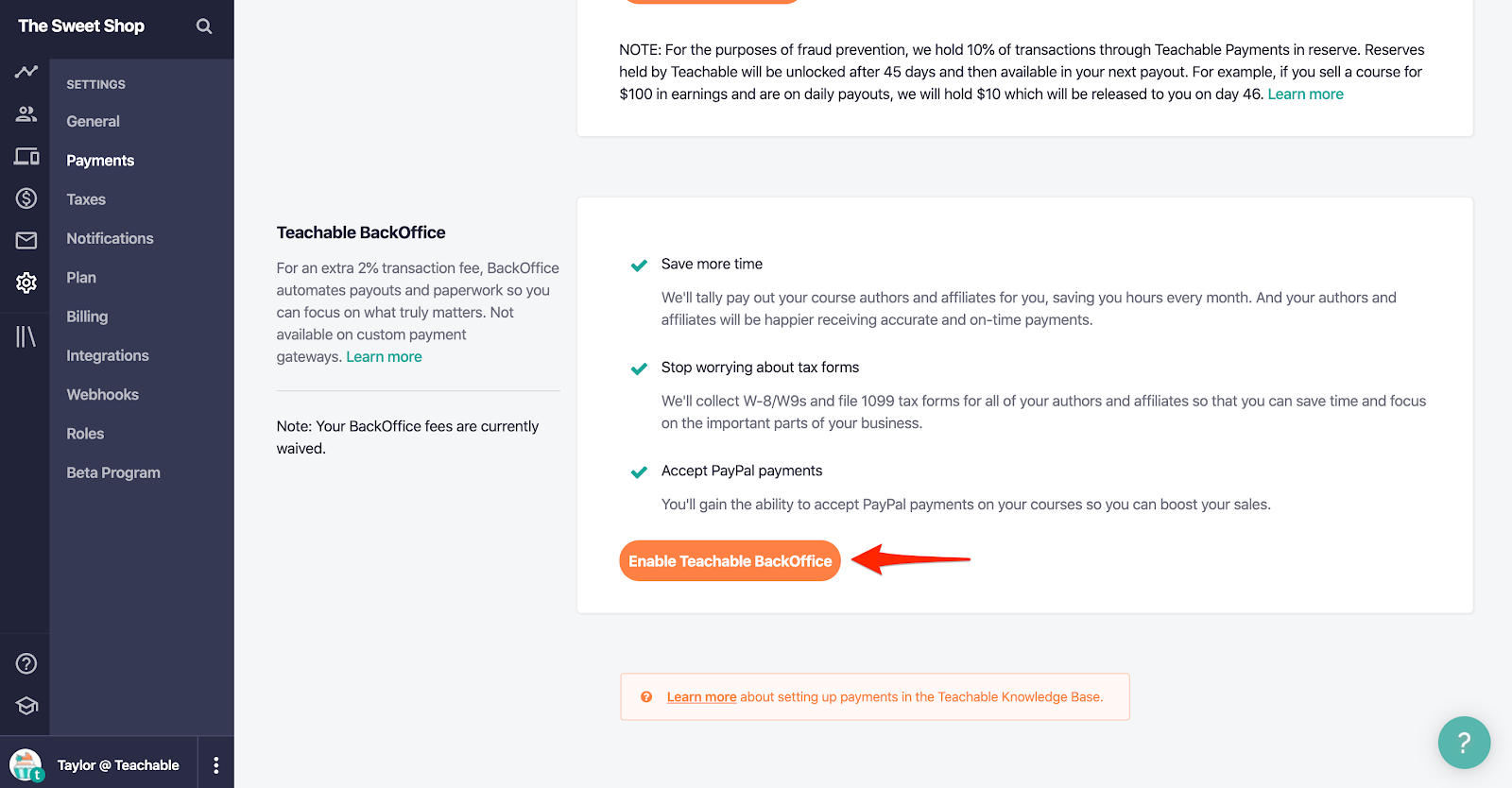
It’s that simple. We want the best for your business, so we’re delivering our best. Enable BackOffice today so you can get started expanding your offerings and set up recurring payments on PayPal for your students today.

When creating a course, downloadable, or any online product, it’s important to reflect on how your material will be received. Luckily there are practices that you can implement during the creation process to ensure that the student experience is as impactful and valuable as possible.
Ideally, your students will feel welcomed, understood, and considered by your content. The better the experience your products provide, the more likely it is that your students will undergo a positive transformation, become lifetime customers, and leave positive reviews. This can also give you a boost when it comes to achieving your business goals. Read on to find out how!
Of course, you know what the overarching goal of your course or downloadable product is. Whether that’s sharing about oil painting skills or about being a spiritual business owner, you and your audience know the niche in which you reside. Have a specific intention with each product that you offer. Define what students will walk away with a new understanding of. When doing this, be as specific as possible and include it at the beginning of your course or downloadable.
For example, instead of “By the end of this course, students will know how to knit” you could say “By the end of this course, students will be able to confidently create basic knit stitches and cast on and off.”
You can also create an intention for how students will feel as they go through your course or product. Perhaps they will feel supported, inspired, or motivated—setting the intention at the start of the creative process makes it easier to weave elements into the product that elicit these feelings and create the best learning environment for students.
We all need some encouragement at times. That includes your students who are excited to learn. To help offer them support, you can set emails that send during specific times of the cohort-based course. This can be especially helpful if there’s a certain module or lesson that’s more challenging or tends to have higher drop-off rates among students. You can also include FAQs as part of the content, and provide students with a way to reach out to you, extra resources, and other places they can get support. This is also a great way to connect with potential coaching clients if that’s something you offer!
Learning is certainly not a one-size fits all experience, so keep in mind that there will be a variety of learners engaging with your material. The three main types are visual, audio, and kinesthetic/tactile. You can be sure you’re appealing to each learning style type by including at least one support for each type of learner.
The better and more confident you feel about your course or product, the more able you are to show up for your students consistently, and the more likely you are to share what you’re offering. Writing a letter of gratitude is a great way to get the positive emotions flowing and to elicit genuine excitement about what you’re offering. Studies show that writing a letter of gratitude can shift your brain chemistry by significantly improving mental health in the weeks following this practice. Before you launch your new product, take a moment to write a letter of gratitude for all the people that will invest their time, money, and energy by signing up for what you’re offering. This will still make a positive impact, even if you don’t share it!
Taking the time to include this opening and closing message can go a long way in terms of setting a positive note for your students. It can be short and sweet—make sure to express your gratitude that they’ve chosen to learn from you, and applaud them for investing in their own learning! The end message can also include a question for reflection or an invitation to leave feedback. Not only is this a neat way to open and close the learning experience, but it helps people to feel more connected to and appreciated by you.
One powerful way for students to track their progress and feel motivated to keep going is through a visual goal tracker. Using a goal tracker that you can see, and envisioning it to be complete, increases the chances of you successfully completing your goals. You can provide this for your students by creating a chart or tracker that highlights different benchmarks of the learning process—like mastering different skills or putting in a certain amount of practice time. This is also an encouraging way for students to stay on track and celebrate the progress they’ve made!
Find what fits best with your course, downloadable, or podcast—whether that’s one or all of the strategies, they’re sure to help students have a more positive learning experience so they can really get the most value from what you’re offering. As you get more intentional with the learning environment you’re creating, watch as your audience has more positive transformations and your product sales continue to grow!

For many coaches, the dream of building a thriving business quickly turns into an exhausting reality, i.e., endless one-on-one calls, unpredictable income, and the constant struggle to scale without sacrificing personal time. If you've ever felt like you're stuck trading time for money, you're not alone. And although the coaching field is booming according to a recent global coaching study, up 54% since 2019 for 109.200 practitioners globally, there's a twist.
The International Coaching Federation (ICF) study also shows that online coaches hourly rate has increased to $244 per hour. While this growth is excellent, there’s only so much time in a day for coaches who want to scale. Growing beyond 1:1 calls requires a systemized approach that maximizes profit without increasing workload. Platforms like Teachable make it easier than ever to transition from time-intensive coaching to sustainable, automated income models.
{{trial-component="/blog-shortcodes/blog-cta"}}
Traditional hourly coaching creates a natural income ceiling. Every additional client means more time spent on calls, follow-ups, and administrative tasks. This leaves little room for business growth and personal freedom.
The key to scaling is asynchronous coaching models, where clients can access your expertise without requiring live interaction. For many successful coaches, this means shifting to models like:
These are a few of the many ways you can move beyond the traditional limitations and build a coaching business that grows without draining your time.
Now that we've identified the bottleneck, let’s explore actionable strategies that allow you to grow without increasing your workload:
Instead of repeating the same lessons in 1:1 sessions, create a structured, self-paced course that clients can access anytime. As a matter of fact, Teachable allows you to package your expertise into an online course that provides value on autopilot.
Cheryl Porter has built a digital empire with her Vocal Method course. Her course has been purchased in 135 countries, showing how the possibilities are growing a global coaching business with Teachable.

A membership or subscription helps build recurring revenue while building a loyal, engaged community that keeps coming back for more. Offer exclusive content, live Q&A sessions, behind-the-scenes insights, and group coaching, all without the constant need for one-on-one calls. This setup turns your expertise into an ongoing, scalable business model that grows alongside your audience.
Small-group coaching lets you serve multiple clients at once while still providing personalized guidance. Not only does this maximize your time, but it also creates a dynamic learning environment where members benefit from each other’s insights, making your program even more valuable.
Think beyond just live coaching. Help your audience implement what they’ve learned with ready-to-use digital resources. Whether it’s workbooks, scripts, email templates, or swipe files, these plug-and-play tools let your clients take action on their own. It’s a scalable, near-passive income stream that works around the clock.
{{trial-component="/blog-shortcodes/blog-cta"}}
Use email automation and pre-recorded onboarding materials to educate and convert prospects into clients without spending time on individual consultations.
If you’re ready to scale your coaching business now, choosing the right platform is your most important decision. Here’s why Teachable stands out:
Teachable allows you to sell courses, memberships, coaching, and digital products.
One of the things we consistently hear from coaches who switch to Teachable from other platforms like Kajabi and Thinkific is how much they don’t miss the admin headaches. Our payouts, tax automation, and student enrollment processes are incredibly seamless by design, so you can focus on coaching.
If you’ve been in business for a while and this is the first time you're launching an online course or if you are scaling to thousands of students, you’ll find it the platform easy to customize.
Thousands of coaches have built sustainable businesses on Teachable and we are generous when telling success stories and providing resources.
The point we want to drive home is that your coaching business doesn’t have to mean working more hours. By embracing online-courses, digital products, automation, and group coaching models, you can increase your bottom-line and reclaim your time.
🚀 Ready to take action? Try Teachable's free trial today and build a course using your current resources today.

Thinking about leveling up your course by adding an online community? It’s okay to feel a bit nervous about it. Many course creators are in the same boat, unsure about managing a community and keeping it a positive space.
But let’s talk about the upsides—like more engaged students, better learning experiences, and increased loyalty to your course. These perks are just too good to pass up.
So we’re here to make things clearer and show you the essentials of community management and moderation, giving you actionable steps to build a course community that’s fun, respectful, and (importantly) troll-free. Plus, with user-friendly tools from Teachable, you can manage your community with ease, making your teaching experience not only successful but thoroughly enjoyable.
Related: How to build an online community
Moderation isn’t just a nice-to-have; it’s a must-have when you’re running an online community, especially one focused on learning.
A good moderation strategy ensures your community is a respectful and constructive place, where lively discussions can thrive. Without someone keeping an eye on things, your community could quickly get bogged down with spam, off-topic posts, or disruptive behaviors that spoil the learning vibe and might turn people away.
Moderators are the unsung heroes who keep the peace, enforce the rules, and make sure everyone plays nice. They ensure that your community not only stays healthy but also sticks to its true purpose: being a safe place where members can freely exchange ideas and dig deeper into content.
Creating an environment like that relies on proactive planning from the get-go. One of the best places to start is with your community guidelines.
Okay, now that you’ve bought into creating your online community, the next step is to craft clear and comprehensive community guidelines.
Think of these guidelines as the rulebook that sets the tone for your community, outlines acceptable behavior, and outlines the process for addressing issues. It’s all about crafting these rules in a positive light, focusing on encouraging good behavior rather than just slapping wrists for bad stuff.
When creating your community guidelines:
Getting these guidelines established from the beginning will help you protect your community’s vibe and guide how you and your moderators step in if things start to drift off-base.
For instance, say you’re running an online community focused on digital marketing, and a newbie starts posting links to their own blog in every discussion thread, regardless of whether it’s relevant. This behavior quickly becomes disruptive, with other members complaining about the spam. With your handy guidelines, you can reach out and kindly explain the house rules—that they are welcome to share relevant content in the right spots, but shouldn’t turn every thread into their own personal billboard. Guidelines like this not only help keep the peace, they also keep the discussions rich and relevant.
So having your rules clearly defined and ready to go helps everyone learn how to navigate your community successfully. Pin the community guidelines to the top of your community pages or pop them into welcome emails; this makes sure everyone, especially the newbies, knows how to help the community thrive from day one.
Okay, you’ve got your community up and running… does that mean you now have to hover over every word that’s posted to see if it aligns with your community guidelines? Thankfully, nope! Not when you’ve got the right set of moderation tools to take the load off.
Efficiency is the name of the game when it comes to keeping an eye on your community without turning into a full-time watchdog. Luckily, there are tools designed to help you automate repetitive tasks, quickly address issues, and keep the vibes positive.
If you’re running your course on Teachable, you’re in luck. Our platform comes equipped with built-in community features that are about to make your life a whole lot easier. Here’s what you can do:
Tools like these can drastically reduce the manual burden on moderators. For example, say you notice an increase in posts containing some questionable language in your digital marketing course community. Instead of combing through each one, just set a keyword filter to flag them. This way, you're not stuck hunting down every single slip-up—plus, you can still make the call when a flagged word pops up in a harmless joke. It's about saving time with automation, while keeping your human touch for the gray areas.
As you can see, using intuitive tools can make the job of moderating your online community so much easier.
Related: 21 ways to grow an online community in 2024
{{buildcommunity-component="/blog-shortcodes/blog-cta"}}
Your online community will truly blossom when members feel deeply connected to it and take ownership of their space. When they see the value they're getting and are motivated to protect this environment, you'll find they're more likely to self-regulate. This self-regulation fuels a community culture that's cooperative, inclusive, and committed to upholding standards—a real win-win!
You can encourage this further by regularly acknowledging both the big wins and the little victories of your members. Recognize those who consistently contribute positively. This not only boosts their sense of belonging but also shows you really value their input, encouraging them to engage even more. Plus, by consistently modeling respectful and constructive behavior yourself, you set a gold standard for how everyone in the community should interact.
But there's more—this approach can lead to what we like to call community-led moderation. Let’s say you notice a bunch of members struggling with a particular aspect of your course. Why not set up peer support groups? It’s a great way for members to help each other out, share tips, and deepen connections. This doesn't just strengthen the community's bonds and shared responsibility; it also eases up your moderation duties by cultivating a supportive and collaborative vibe.
So, by creating a welcoming atmosphere where members feel comfortable helping out—whether that’s by answering questions, sharing resources, or flagging issues—they'll see their actions as pivotal to the community's success. It’s about making everyone an active player in keeping the community thriving.
Making sure everyone can join in the fun means really dialing into inclusivity and accessibility in your online course community. So shake things up by providing content in different formats like text, audio, and video, and sticking to web accessibility standards to ensure no one’s left out. By embracing a mix of media and ensuring things like video subtitles and screen reader-friendly designs, you make sure everyone, regardless of their abilities or preferences, feels right at home.
But promoting inclusivity doesn’t stop with just mixing up content formats. It’s about understanding and meeting the varied needs of all community members, which could range from different educational backgrounds to various physical abilities to differences in tech access to cultural differences. This not only makes folks feel valued but also amps up their eagerness to participate.
And let’s not forget about ironing out any kinks that might stop members from getting fully involved! Whether it’s tweaking the timing of live sessions to fit different time zones or offering transcripts for those who prefer reading to listening, every little change helps. Keeping your finger on the pulse with regular surveys on accessibility, and being ready to adjust on the fly, can significantly boost how accessible and engaging your community is.
No matter how airtight your community guidelines are, tricky situations can still pop up! Handling these effectively is key to keeping your online community healthy and drama-free.
When dealing with conflicts or disruptive behavior, consider the these de-escalation strategies:
For example, say two members in your online course community get into a heated debate over a touchy subject. Things get personal, and insults start flying. Time for you to step in. Remind both sides about the community rule: respect is key. You might suggest they take a break to cool off before diving back in with a focus on facts and courteous conversation. Ping them with a private message, too, acknowledging their enthusiasm but stressing the importance of keeping discussions respectful. All of these steps help to de-escalate the situation while reinforcing community standards.
Sometimes, though, a calm chat won’t cut it, and you might need to lay down the law. If someone keeps breaking the rules, don’t be shy about giving them a warning. Make it clear that if the behavior continues, it could lead to steeper consequences, like a temporary ban to give them some time to think about their actions. And in really extreme cases, like if someone’s spewing hate speech or harassing others, a permanent ban might be the only way to keep your community safe.
Handling these sticky situations swiftly and fairly shows everyone that you’re serious about keeping the community a safe, welcoming place to learn and interact.
Moderating discussions in an online community is more art than science. It’s about welcoming diverse viewpoints and creating a safe space where members can speak their minds without fear of backlash. As a moderator, your role is to foster this inclusivity while making sure conversations stay polite and productive.
Sometimes, though, you’ll find yourself walking a tightrope—balancing healthy debates with the need to reel in behavior that goes against community guidelines. If a debate starts to turn sour, it’s crucial to step in transparently and communicate openly about any actions you take. Being clear about why you’re stepping in not only builds trust but also keeps everyone on the same page and reduces misunderstandings.
When you do have to make a moderation call, be straightforward and specific, pointing directly to the rule that’s been broken. It’s important to apply these rules evenly across the board, no matter who’s involved, to keep things fair and avoid any whispers of favoritism. Even when you’re calling out not-so-great behavior, keep your tone respectful to maintain the member's dignity and promote a constructive back-and-forth.
For example, say a member in your community repeatedly makes inflammatory comments and engages in personal attacks, despite multiple warnings. After careful consideration, you might decide it’s time for a permanent timeout to keep the peace. Making this decision public can help everyone understand what happened and why, reinforcing that your actions are about keeping the community a friendly place for everyone. This also serves as a gentle reminder of the rules and how members can report any dodgy behavior.
Deciding when to take issues public or keep them private is another part of your moderating toolkit. General reminders or big announcements about guideline changes should be public to keep everyone in the loop. But for specific issues or sensitive topics, a private chat is better, helping you handle the situation without making a spectacle and respecting everyone’s privacy.
How you handle these tricky moments can really define the spirit of your community, ensuring it remains a safe and engaging place for everyone.
Related: 4 different types of online communities & strategies for your business
So by now you should see that managing an online community for your course is absolutely something you can do -- and you should do! The benefits of nurturing a vibrant community are massive, both for you and your students.
It’s all about creating a place where learners feel secure, supported, and keen to get stuck in. This guide has steered you through the nuts and bolts of running an online community smoothly, and now you’re equipped to create a buzzing learning hub yourself. With tools like Teachable, keeping your community in line becomes a breeze, freeing you up to focus on your real passion—teaching!