Thank you! Your submission has been received!
Oops! Something went wrong while submitting the form.
MENU
Timelines, tactics, and templates for educators ready to turn a new course into a successful launch.
%2520(1).avif)
Think it’s too late to sell more this December? Think again.
If you already have an offer and an audience, there’s still time to generate sales—with very little effort—before the year ends. You don’t need a new launch, a new offer, or a big, multi-channel campaign. You just need 30 focused minutes to close open loops.
Below is a practical checklist you can implement today, even if the rest of your team is already in holiday mode.
Pick one product you already have ready to go, for example:
Attach it to your existing offer and position it as an end-of-year extra. That’s it. You can offer added value without building something new.
If you don’t have anything ready to go, don’t worry—you can still make this tactic work for you. Offer a live session as a bonus (like a welcome session or a Q&A) and schedule it for January.
Goal: Make the buyer’s decision feel easier.
This one’s simple: Reopen the same offer you already ran recently. You can use the same page, same checkout, and even the same pricing.
The most important thing is to add a clear deadline and position this moment as the last chance of the year. Just that slight tweak in messaging can drive more sales.
Didn’t run an end-of-year or Black Friday offer? No problem. Just reuse what you already have, even if it’s your evergreen offer.
This works especially well when marketed to people who:
Goal: Help people decide now instead of “later.”
You don’t need a content strategy—just clarity.
Publish or schedule one or two posts that clearly spell out:
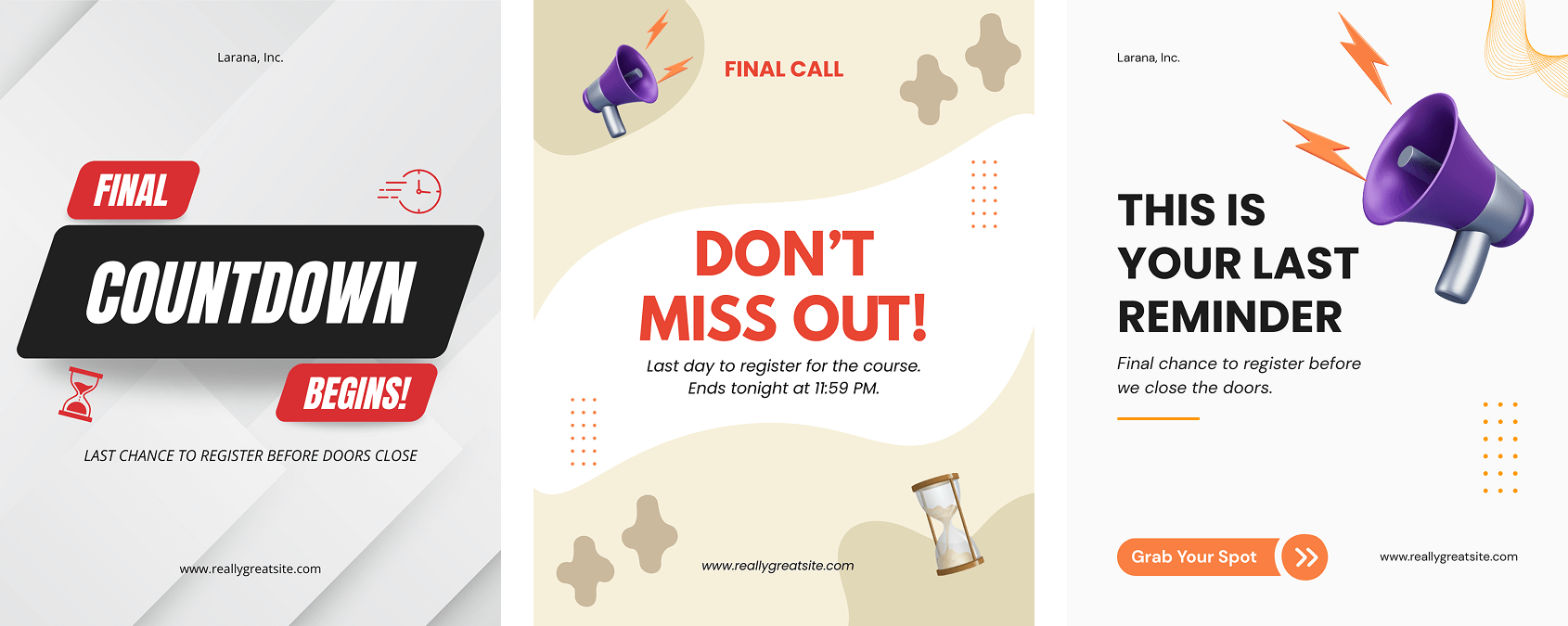
Don’t overthink it! Reuse copy from past campaigns. Create a simple Canva layout.
In fact, if you need a little guidance on where to start, we selected a few free Canva templates for you: see here, here, and here.
Goal: Remind the right people that the offer exists.
If people are already logging into your Teachable school, that means they’re already engaged. That’s why the dashboard is prime real estate when it comes to messaging limited-time offers. Don’t miss the opportunity!
Add a dashboard banner aligned with that same “last chance” framing:
You can use the same Canva template you’re using for your social posts, just make sure to resize it so it displays well. The recommended size for the student dashboard banner is 1024 × 576.
Goal: Reinforce the decision without extra effort.
If you want extra motivation to put these ideas into action, the Teachable Sales Challenge is still open!
Keep selling until December 31 and win exclusive rewards, from subscription credits to Creator Grants, and even an all-expenses-paid trip to Brazil to attend one of the world’s biggest creator economy events.
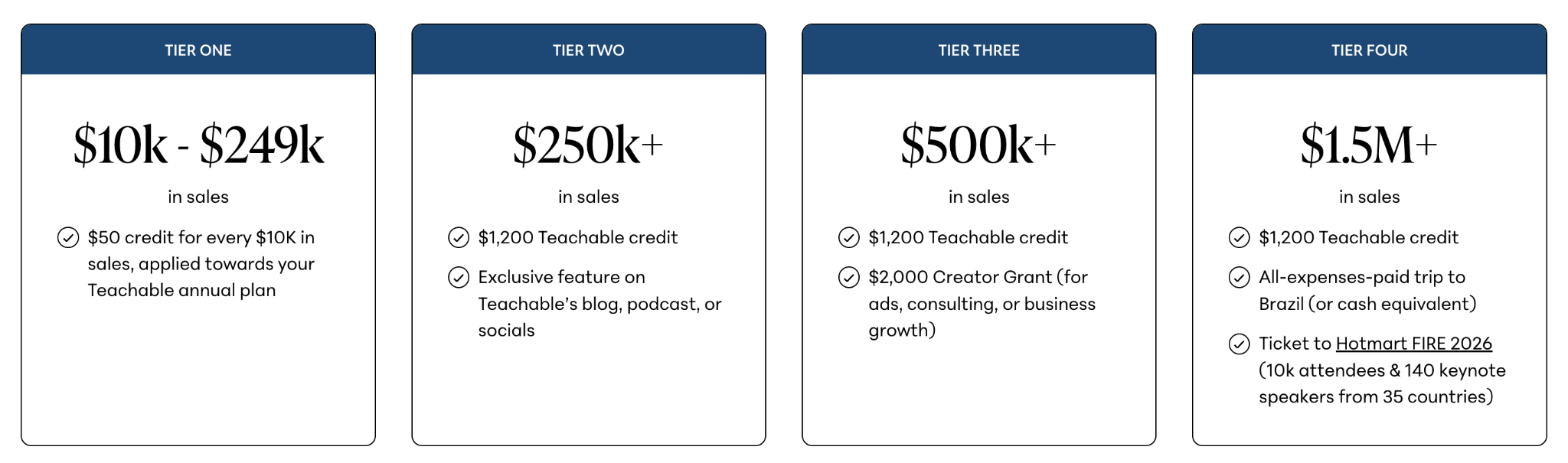
It’s a simple way to stay focused during the final days of the year—using low-effort tactics like the ones above—while keeping momentum going into the new year.

It’s one thing to think about creating an online course or to launching a new digital product or service. It’s another thing entirely to create that product, advertise it effectively, and bring that product to market successfully for immediate profits. So to maximize your business’s efficiency and profitability, you need to understand how to build a go-to-market strategy.
A go-to-market strategy will help you plan each step of your product creation and marketing process. The best go-to-market strategies can help you sell your course or coaching products and continually optimize your marketing results in the long term.
Let’s break down what a go-to-market strategy is, the different types of go-to-market strategies, and how you and your marketing team can build one for your business.
A go-to-market strategy is a comprehensive step-by-step marketing plan that you can use to prepare and launch a product or course for its target market. This marketing strategy includes a breakdown of how you’ll:
You can think of a go-to-market strategy as a roadmap, a guide, or a product creation and sales sequence.
Core to each GTM strategy is understanding a market problem or opportunity. Like the specific value a product can provide to your target audience. And a way to position your product as the ideal solution which is your competitive advantage.
Simply put, you might spend a lot of time, money, and energy creating new courses or products. And the last thing you want is for all of that money and energy to be wasted when your customers don’t buy your new products (or aren’t aware that they are available to buy in the first place).
The right go-to-market strategy sets your new products up for success. And it allows you to prepare for the product launch, and design an excellent marketing campaign to draw the right attention. Plus, it enables you to market effectively to your target customer base.
{{threesteps-component="/blog-shortcodes/blog-popup"}}

Go-to-market strategies primarily come in two different types:
Either go-to-market strategy can be successful. However, you should decide whether your products are consumable. And whether they’re only meant to be used once or twice or if they should be marketed as providing long-term value to their target users.

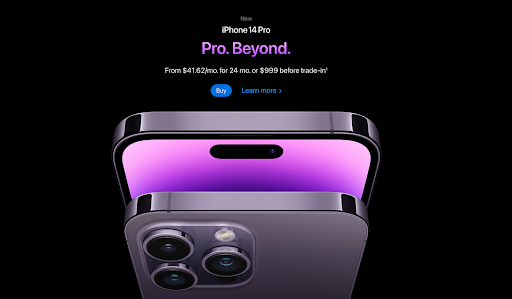
Apple employs a well-known product-led go-to-market strategy with its electronics, particularly new iPhone releases. With its loyal customer base and high-quality products, customers are eager to buy the latest iPhone model once it is released.
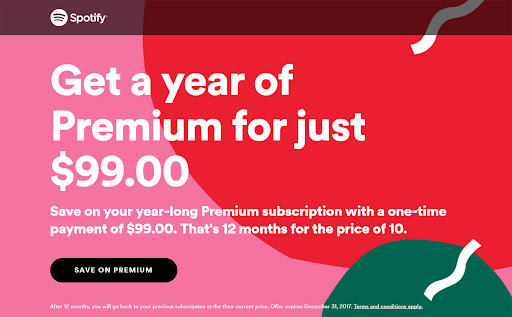
Similarly, Spotify has loyal customers. By providing high value, even with the music-streaming app’s free version, listeners are likely to upgrade to a paid subscription—and retain membership for all the features and access to music and entertainment.
A fan-favorite, customers are eager to purchase limited-edition Dooney and Bourke handbags with each new collection release, due to the well-known reputation of the luxury accessories brand and beloved Disney iconography.

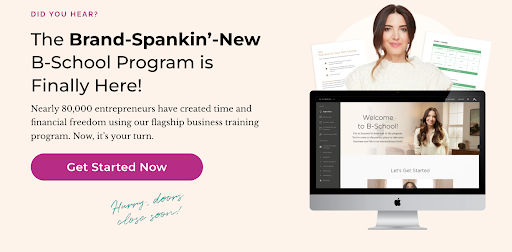
While Marie Forleo also has loyal following and high-quality offerings, her signature offering, B-School, which opens enrollment annually, would be considered a sales-led go-to-market strategy. This is due to the heavy emphasis on marketing, including free workshops, sample worksheets, and more, to attract new customers.
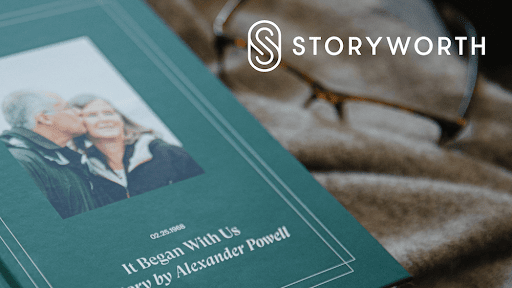
Storyworth is a fairly new brand that offers personalized books as gifts. Originally sent as a virtual gift, the physical book is assembled and sent to customers after the recipient submits a year’s worth of weekly prompts and photos. This offering is considered sales-led, as the brand utilizes influencer marketing to build interest and is a very personal gift that looks different for everyone.
Another example is Kitsch Satin Heatless Curling Set. Because it’s most likely a one-time purchase and the brand relies heavily on influencer marketing and social media ads, it is considered a sales-led go-to-market strategy.

It’s easier to understand GTM strategies if you’ve got some real-world examples to go off of.
Imagine launching a product in an existing, potentially crowded market. Say that you run a clothing brand in South Korea and want to expand your products into beauty items, like makeup. Since Korea is famous for its skincare products, your launch needs to be perfect.
In that case, you can use a GTM strategy to:
Or maybe you need to bring an existing product into a new market. Say that you run a restaurant chain and you want to open a place in a new state. You don’t plan on changing much about your operations, but you can still use a well-crafted go-to-market strategy to:
For a third positive example, you might want to test a new product in a brand-new market. Say that you run a tech startup and you’re launching your first application. You’ll use a go-to-market strategy to:
Of course, there are also examples of go-to-market strategies that didn’t perform very well. For example, Apple launched the Apple Lisa computer in the 1980s. This was one of the biggest flops of the computer company in its history. It only sold about 10,000 units because of misleading advertisements and high prices.
Given the importance of a strong go-to-market strategy for product and course launches, it’s a good idea to know how to create one for the future. Fortunately, you can make any type of go-to-market strategy with the same six steps.
Step 1: Identify your target audience and market opportunity
Step 2: Create a “value matrix”
Step 3: Create and optimize ads
Step 4: Leverage marketing to generate awareness and demand
Step 5: Choose a sales strategy
Step 6: Refine and optimize sales to improve metrics
First, you must identify your target audience and the market opportunity for an upcoming launch.
For example, if you have a self-owned business where you create website designs or improve business websites for better conversions, your target audience will likely be:
The market opportunity is related to your target audience in many ways. In the above example, the market opportunity would be your ability to produce better conversion rates and improve other metrics for your clients.
Do plenty of market research before outlining other steps of your go-to-market strategy. Only by understanding who your target consumer or student is, what they want, and how you can provide it, can you make a stellar marketing campaign and create a product they won’t be able to resist.
Next, you’ll need to make a value matrix. This is a breakdown of your buyer personas or target audience members. This part of the market strategy includes:
Think of a value matrix as a visual representation of how your product will theoretically interact with your target customers and their needs.
It’s another important tool to help you understand:
Create a value matrix for every product or service you plan on launching.

By this point, you should thoroughly understand both your target customers and how your product will provide real value to them. Or how it will directly alleviate one or more pain points. You should have all the information you need to begin and launch an effective marketing campaign.
Your marketing materials can include the following:
No matter what materials you use, you should create and continually optimize those ads for better consumer engagement in greater emotional resonance. Ideally, your marketing materials should speak directly to your target audience and tell a story.
At a minimum, every ad or marketing material needs to:
As your marketing materials develop, test them against each other with A/B testing or focus groups. So you should only ever use the most effective and resonating versions of your ads so your marketing campaign can be as memorable as possible.
To successfully bring a new product or service to market, you should focus your marketing campaign on generating both brand awareness and demand for the product. This is especially important if your business is small or new and you are trying to cultivate a loyal audience for the first time. Meanwhile, it’s important to consider the stages of the buyer’s journey—awareness, consideration, and decision—and how to communicate to your audience in each stage.
Emphasize the value and voice of your brand in content marketing. This includes advertisements, social media posts, and other marketing channels. And your brand’s voice and mission statement will help connect it to your target audience members through shared values.
Meanwhile, your ads should also demonstrate why your new product or service is so valuable. Doing so will increase demand among your target audience and the general public. Drum up some brand awareness and value for your company before launching your new product to improve initial and long-term sales.

To sell your new product or service, you’ll need to choose the right sales strategy. Generally, you can choose and succeed using one of four distinct strategies:
If you own your own business, you’ll likely use the self-service or inside sales business models. Regardless, choose the sales strategy you plan to pursue so you can prep your agents or employees. Deciding on your sales strategy ahead of time will also help you allocate resources appropriately.
Remember, choosing your sales strategy should be easy; it depends on the type of business you run, the type of products and services you offer, and who your target audience is.
Even after you initially launch a new product or service, your go-to-market strategy isn’t complete. Instead, you need to continually refine and optimize your sales techniques. Evaluate the product market fit, as well as improve key metrics like conversion rates, customer acquisition cost (CAC), key performance indicators (KPIs), and more.
To do this, elaborate or expand on your market plan and:
The right go-to-market strategy framework can significantly improve your conversion rates and profits across the board. So it’s a good idea to come up with a go-to-market strategy for each of your new products, each time you launch a course or coaching product. And this is especially true since you can use a lot of the same research and knowledge developed previously. Follow the tips above, and your go-to-market strategies will help your business thrive in this competitive market.

If you’ve been a Teachable member for a while, you know that community has always been important to us. Our founder, Ankur Nagpal, created our Facebook group, The Teachable Tribe (formerly The Fedora Family). This was back when Teachable was just getting started six years ago. It was a way to stay connected with our earliest members. As our Facebook group has grown to almost 40,000 members, barely a day has gone by where we haven’t turned to our community as a source of inspiration. It was all about sharing successes, information about how our members work and what they want, and to keep our finger on the pulse of the online course space. So now we’ve launched an elevated private community.
Beyond our focus on virtual community, our company has embodied community values in other ways. We’re a team of people who thrive off of human connection. We invite local members to many of our company parties. Most of our team members have spoken to a Teachable member in person or over Zoom at one point or another. As a company, we love getting to know our members. It is probably because we’ve always taken it as a given that we couldn’t exist without them. Now, after six years of caring deeply about community, we’re making it official. Community is now one of our brand pillars, and we’re launching a new and improved community experience just for our members to prove it.
Before we dive into the why and the how behind our shift away from our Facebook community toward a private space, we’re so excited to tell you more about what you can expect from this new space. Read on to learn more about what you’ll see in our brand new community.
Our new community is all about discussing best practices. It’s not a support forum, so you won’t get tired of seeing the same questions and knowledge base articles repeated over and over. Instead, expect to see detailed, high-level discussions of everything. From how to set up a funnel that converts to how to get press for your online course. We’re pulling out all the stops to create and surface everything you need to succeed as a business owner. From private presentations with successful course creators, to custom content from our team. From swag to challenges, and more, you can turn to us when you need a trusted advisor.
Plus, this space is just getting started and we’re committed to doing what we can to create the best virtual private community there is for online creators. As one of our early members, we can’t wait to hear your thoughts on how we can grow this important program. To access the new community now, click here or head to Admin > [click on the three vertical dots next to your name in the bottom left] > Community.
Read on to learn more about how we researched and implemented this new community.
We’ve come to realize in the past year that there would come a time when our Facebook group would no longer meet the needs of our growing community. Facebook has some limitations that make it difficult to create a community space that goes beyond the message boards.
In our community on Facebook, we weren’t able to ensure the members of our community were Teachable members. This led to conversations in the group that were less relevant to our members. The space felt less private, and yes there was lots of spam. Plus, Facebook groups were designed primarily as forums. Meaning that the only thing that we were able to offer for our community members were discussions.
Our focus in building this new community space was to create an experience that enhances what it means to be a Teachable member: something more robust, high-quality, and packed with content and perks that our members need to succeed.
But, we knew that we wanted to offer more through our community and we needed to move off of Facebook to do it. Imagining a new private community from scratch was daunting. So, we took the advice we often give to our course creators when they’re in the process of launching a new product. We turned to you, our members, to figure out what you most wanted and validate our ideas for a new community.
When we first set out to create a new private community experience. One of the biggest elements of our research was speaking directly with course creators on the phone. If you took time out of your day to speak to us about your experience with community at Teachable, thank you! Your insights were invaluable in helping us build this new space.
In speaking with our members, both those who had been active in our previous communities and those who hadn’t, there was a lot we wanted to find out. What did our members want to get out of a virtual community? Are there other communities that our members participate in, and why? What kinds of programs and perks did our members want to see us producing for our communities?
After countless hours of conversations, some clear themes about what our members wanted started to emerge. Some of them were surprising. Here are some of the biggest things we learned:
These insights were invaluable to us in determining the type of private community we wanted to create. We never could have designed this community without your feedback along the way, and we’re so excited to share with you what we created.
Our new private community is accessible to all Teachable members utilizing a paid plan at any level. Whether you’re just starting out or you’re a pro, we have a space for you. To access, you can either click here or head to Admin > [click on the three vertical dots next to your name in the bottom left] > Community to set up your profile now. We can’t wait to get to know you more in the community—there’s already a group of talented creators waiting for you to join them.

Creating your sales page can feel overwhelming. But our sales page template can help take some of the pressure off. Use our template to structure your own Teachable sales page.
We worked to break down everything that would be in your sales page. And how to structure it too. Now you’ll know where to include your instructor bio, your various call-to-action buttons, and even where to include your student testimonials.
The template covers everything from start to finish. Follow our guide to creating a sales page that converts so you see the most success possible with your Teachable school. This is a tried and tested formula so you can create your sales page with confidence.
Remember that your sales page will benefit from having personal touches. You can even add some custom sales page blocks to make it your own. They include blocks for highlighting multiple creators or personal letters. These can be great for showing that other students have found your course helpful. Or for highlighting any business partners you have helping with your course as well.
{{salespage-component="/blog-shortcodes/blog-popup"}}

Creatives shy away from their about pages and mission statements for the same reason engaged couples often put off writing their wedding vows: It’s daunting to start writing something so deeply personal and, most likely, not something that will come out right on the first try. Fortunately, unlike marriage vows, a brand mission statement isn’t just a one-time declaration but rather a narrative that can evolve. You get to continue to refine as you grow.
No matter what field you’re in, people want to know who you are, what you care about, and why they should work with or learn from you. A brand mission statement offers potential clients or students a glimpse at your core values, as well as your commitment to your craft. A well-defined manifesto can even serve as your true north. This becomes the foundation for your website, content, and offerings, which everything else—including that tricky about page—branches out from.
If we’re looking at the 5 Ws (+ 1 H) of website design or copywriting, your mission statement is your why. It’s the heart of your business. It answers the big questions like:
Your about page, on the other hand, tells site visitors who you are and how you’re qualified to bring your mission to life. Often, creatives tend to either say too much here (perhaps believing they have to justify or oversell themselves, thanks to negativity bias). Conversely, they’re too modest and don’t say enough. Fortunately, once you hone in on your why, it’s much easier to discern what to share about who you are.
Creatives dare to walk the road less traveled, a path that involves the fear of uncertainty, putting yourself out there, etc. What brought you to that point? There must have been some defining moments that caused you to choose the wilderness of creativity and entrepreneurship. Within those pivotal crossroads lie some clues of what your core values are. While you’re there reflecting, think about your brand’s origin story, how it’s evolved, and your vision for the future.
Whether you’ve already given these statements some thought or this is the first time you’re thinking about them, it can be helpful to pay attention to what brands and creators you admire and how they approach their brand mission statements. Do a little research on brands in similar fields, as well as companies you encounter on a regular basis. Whose values do you align with? What resonates?
Equally important, what doesn’t? Where are their core values lacking? Pay attention when you feel an aversion or judgment arise. Feeling judgmental doesn’t feel good, but it can quickly point us in the direction of our values by showing us what they are not. For instance, if you notice a brand cite sustainability as one of its core values, yet notice that many of its services or products aren’t so ethical, you might come to realize that environmental-consciousness and transparency are two of your core values. While it can be easy to get stuck in judgment, especially in today’s world of cancel culture, allow judgment to fuel your mission, rather than shame others.
{{homepageguide-component="/blog-shortcodes/blog-popup"}}
Ask trusted colleagues, peers, clients, or students what they love about working with you. Find out what they think you bring to the table and what they believe your core values are, simply from interacting with you. It might feel a little uncomfortable at first. However, allow yourself to be seen and see what they mirror back to you. Besides, reaching out might lead to valuable quotes or material for testimonials. If you feel comfortable, you can ask for their honest feedback on your drafted about page and mission statement. And of course, you should use testimonials on your course sales page.
You might also call on the counsel of a clear mind for guidance. Give yourself some space, away from your busy work week, deadlines, emails, and everyday routine, to relieve the pressure of the task at hand. That might look like going on a walk in nature, spending some time outdoors, or sitting in meditation. Take intentional time to focus on your business, away from your business. Be sure to have a notebook handy to jot down whatever ideas come to you, no matter how insignificant they seem. Pay attention to any recurring themes.
Understandably, sharing your heart with someone via wedding vows or sharing the heart of your business with the world can be terrifying. Know that what you have to offer is not going to be right for everyone, so you can release any self-imposed expectations of having to please or appeal to everyone. The more you align with your core values, the easier you’ll attract your ideal clients and students and write a brand mission statement that’s true to you.

People don’t usually buy a product or service from a business immediately after the first interaction. Instead, they go through what marketers call a “marketing funnel”. Each stage of the marketing funnel represents the customer’s journey from learning about your brand to becoming a customer. In plain terms, it’s how someone learns about your business, gathers information, and decides to buy or not.
Developing a marketing funnel helps you understand your customers and build a marketing strategy that speaks to them. No matter how your business makes money—selling coaching services, online courses, digital downloads, physical products, or something else—you can leverage marketing funnels.
We’ll show you everything about marketing funnels, including how to use them to grow your online business.
Put simply, a marketing funnel is a framework businesses use to turn leads into customers. For example, people may discover your business on TikTok, but they don’t buy from you right away. They’re aware of your business, but how do you get them to take action? One of the first steps is to build a marketing funnel.
With a marketing funnel, you identify all the touchpoints that you have with potential customers. Then, map them back to the marketing funnel stages. For each stage, you’ll have slightly different marketing messages and tactics that engage potential customers and eventually convince them to buy.
We’ll dive into each stage, show you how it fits into your marketing, and provide examples you can use for your business.
You’ll find many versions of the marketing funnel online. Most marketing funnels include three to five stages. There’s no right or wrong marketing funnel to use, as long as it reflects your customer journey. The most basic marketing funnels have three stages—awareness, consideration, and conversion.
Some also call these marketing funnel stages the top, middle, and bottom of the funnel.

The awareness stage or top of the funnel is where people first learn about your product or service. They may be aware of a pain point or problem and are in the early stages of researching possible solutions.
Top of funnel marketing typically focuses on brand awareness. People at the top of your funnel are not quite ready to buy from you—they’re just getting to know you.
You want to get in front of your audience so that when they’re ready to buy later in the funnel, they’ll remember you. To do this, create marketing that educates and entertains them, so you’ll grab their attention.
Examples of awareness or top of the funnel marketing include:
Some overlook the importance of awareness in the marketing funnel, but you shouldn’t. Often, it’s not the best product or service that wins, but the one that people are aware of at the time.
In the consideration stage or middle of the funnel, people have narrowed down a few choices, but haven’t decided which to buy yet. They might be considering which of your products to buy or deciding between you or your competitors.
In the middle of the funnel, you want to educate potential customers on which solution is best for them. The idea is that you guide them toward making a buying decision.
You also want to provide your potential customers or prospects with enough value that they give you their contact information. To capture their emails and other information, offer high-quality lead magnets. Then, nurture your relationship with them on other channels like email.
Obviously, you don’t want to spam them with sales pitches. But, you should re-engage them with messages, freebies, and other offerings that are personalized to their interests and needs.
Examples of consideration or middle of the funnel marketing include:
{{threesteps-component="/blog-shortcodes/blog-popup"}}
In the conversion stage or bottom of the funnel, you’ve built trust with your leads. Some marketers also call this the decision stage. People have the intent to make a purchase, so entice them to convert.
Your job at the bottom of the funnel is to present your product in a compelling way that inspires leads to take action. Leads should feel like what you’re offering is a solution to their problem.
In the conversion stage, you also need to make it as easy as possible for them to take the desired action. At a minimum, answer these questions to improve your chances of converting visitors:
Conversion examples include:
Although some marketing funnels stop at these three stages, there are others. More recently, businesses have started including two other stages in their funnels—loyalty and advocacy.
During the loyalty stage, you focus on how to keep customers so engaged that they come back and buy from you repeatedly. Many brands have customer rewards or loyalty programs that offer perks to encourage certain actions.
For example, Dunkin’ uses a points system, where users get points for each purchase. Then, they can use those points for free products.
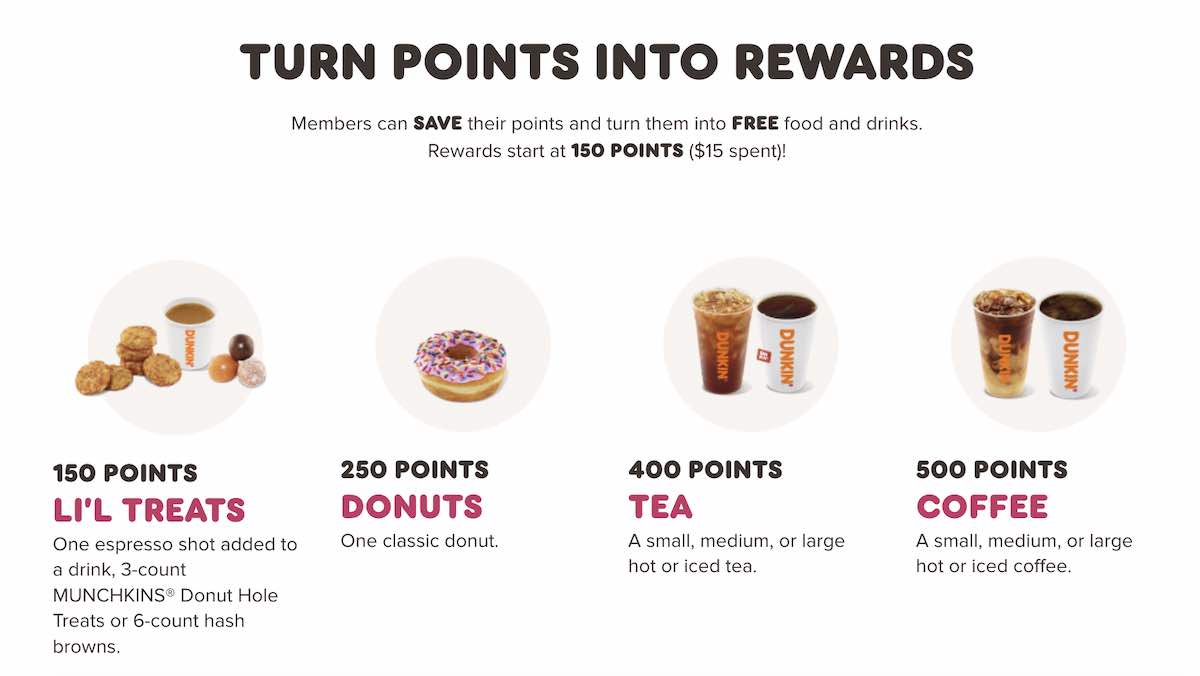
Online businesses can leverage loyalty too. For instance, after students complete one of your courses, offer them a special deal to buy another product. You could give them a discount on another course, a bundle of coaching sessions, or something else.
But, timing is everything. Ideally, share the offer a few days after they’ve completed the course, so you’re still on their mind. You can even send a congratulations email and include links to related products and an exclusive discount.
The advocacy stage is about turning your best customers into your biggest advocates. When you leverage advocacy in your marketing funnel, you can significantly grow your business.
Customers that love their experience will recommend it to their network through referrals and word-of-mouth. The best part is that it drives sales and costs you little to nothing. However, you can ask for referrals and encourage more customers to share your business with an affiliate program.
If you use Teachable to sell your products, it’s easy to set up an affiliate program. With a paid plan, Teachable tracks all affiliate sales and will even automatically pay your affiliates’ commission.
{{salespage-component="/blog-shortcodes/blog-popup"}}
Now that you understand each stage of the marketing funnel, let’s look at how they all work together to drive sales in real-life.
In simple terms, to use marketing funnels, businesses list all their products and services. Then, identify all the ways that their target audiences may discover them.
For example, let’s say someone wants to learn American Sign Language (ASL) online. Where do they begin? They start by becoming aware they want to learn and start exploring options.
Some start their customer journey with a Google search for terms like:
If you’re a course creator teaching ASL online, you’ll want to appear in those search results. Now, you know that search engine optimization (SEO) should be part of your strategy. This way, the people looking for what you sell become aware of your course.
However, what if they don’t convert immediately? Then, you’ll want to re-engage them, which you can do through retargeting ads, which they’ll see after visiting your website.
Through customer feedback, you discover that your target audience compares your course to two or three others before making a decision. In this case, they’re in the consideration stage. You can create comparison content, which usually compares your brand versus your competitor.
Gusto’s comparison pages are a great example you can use as inspiration.
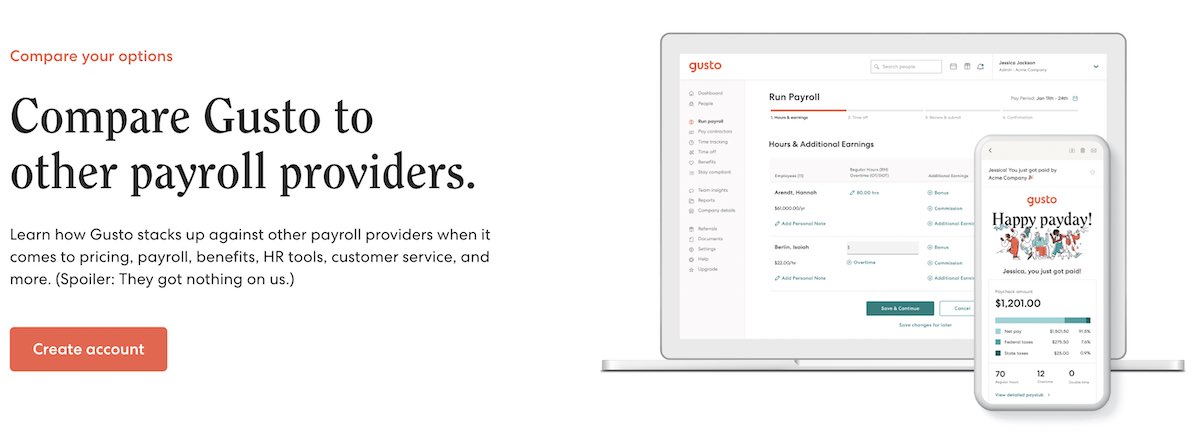
Lastly, you offer the first ASL lesson for free and find that people are more likely to buy your entire course after.
For most businesses, there are more moving parts and tactics than the ones listed above. However, to get started, keep it simple. Instead of trying everything, focus on the strategies that make the most sense for your audience and your marketing funnel.
To build your funnel, here are a few simple steps to start:
To be successful, you need to create tactics that check off every stage of the marketing funnel and work together. When the marketing funnel works together, you shorten the time between when someone becomes aware of a problem and your product, and when they buy.
Let’s dive into how Teachable creators use marketing funnels to sell more courses and other digital products.
Melyssa Griffin teaches courses for content creators and entrepreneurs. Her email list-building course is popular because she hits every part of the marketing funnel to drive sales to it.
At the top of the funnel, she creates blog content around email marketing and entrepreneur topics.
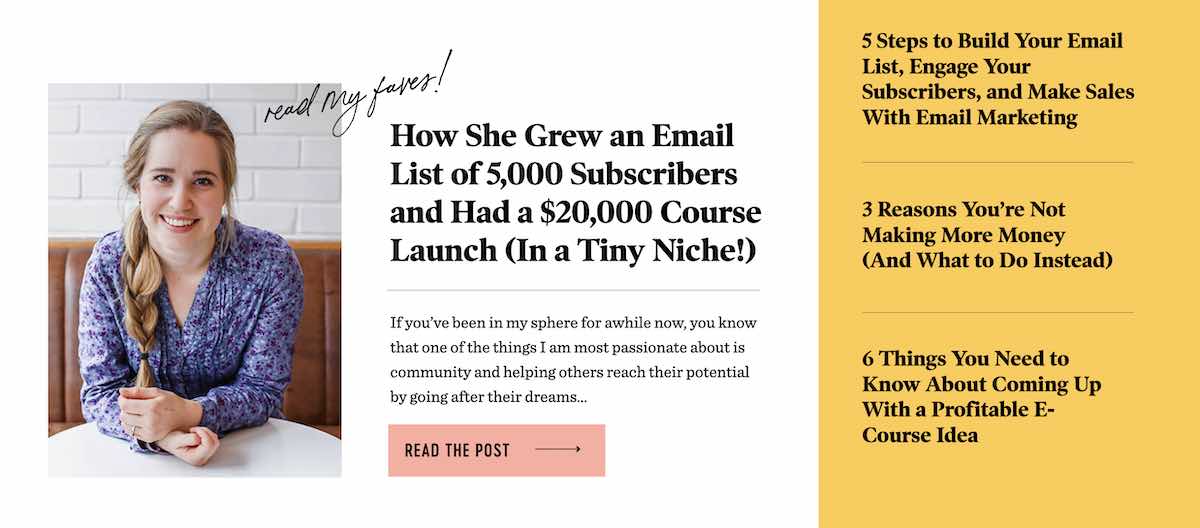
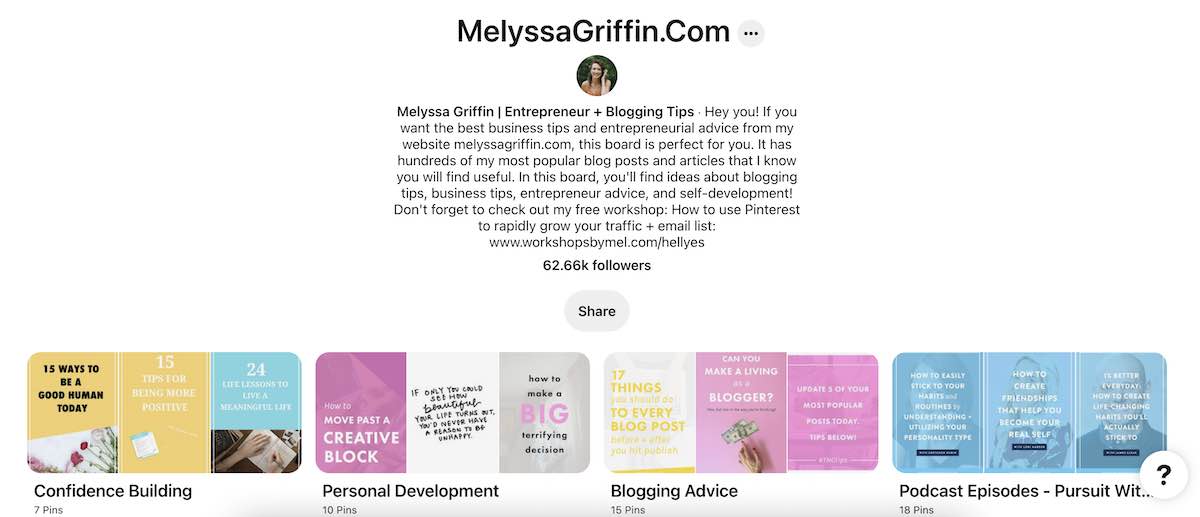
She also repurposes blog content for Pinterest and other social media to reach audiences on those platforms as well. Note how she doesn’t just share the blog link. Instead, each Pinterest post has a custom cover image and design that matches Pinterest.
{{trial-component="/blog-shortcodes/blog-cta"}}
Next, Melyssa moves leads through the funnel with quizzes, customer success stories, and free workshops.
Customer success stories are neatly organized for each course that she offers. Here’s an example from the email course.
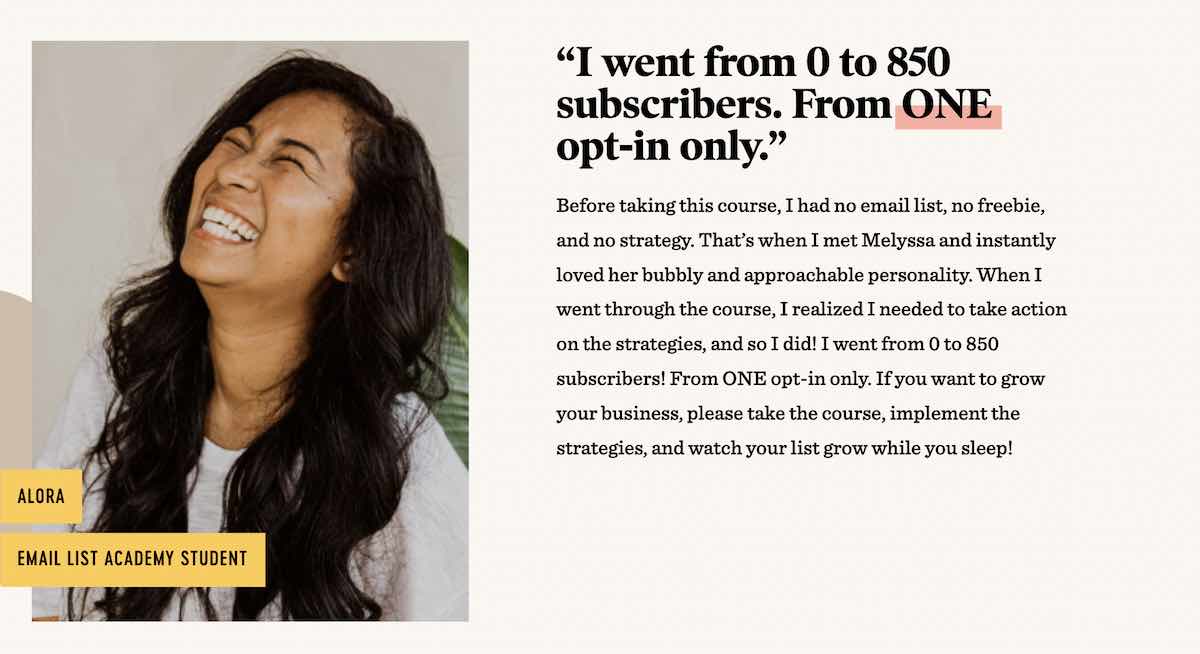
She also offers a free workshop as a lead magnet for the course.
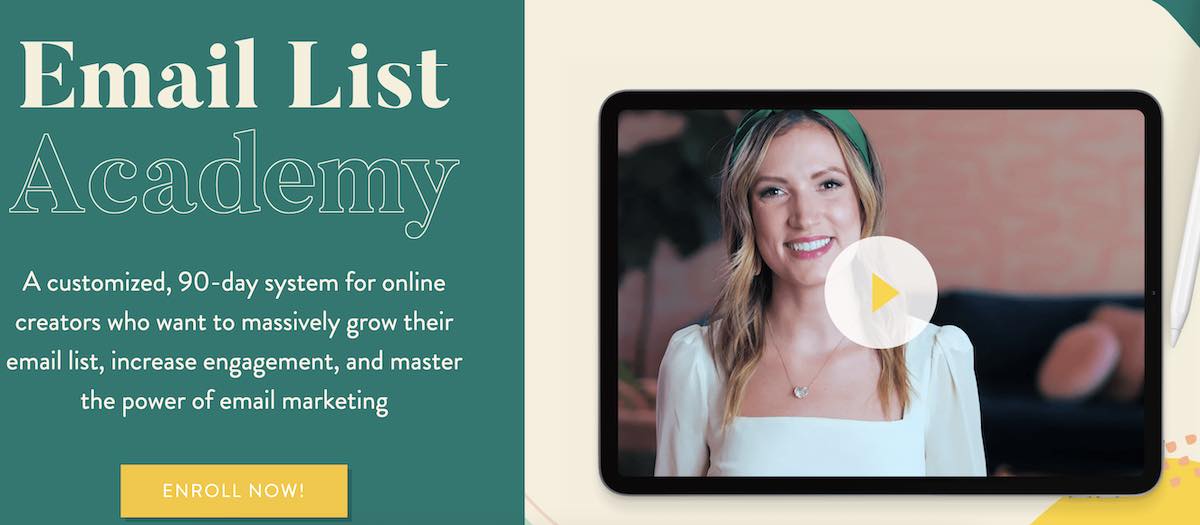
The landing pages for her courses are fine-tuned to make it easy for people to convert. They include a clear call-to-action and all the information you need to decide. The above-the-fold section clearly states what the course is and the benefits of taking it.
The creator of Every-Tuesday, Teela Cunningham teaches digital art and lettering. Like Melyssa, when she markets her online business, she checks off every stage of the marketing funnel.
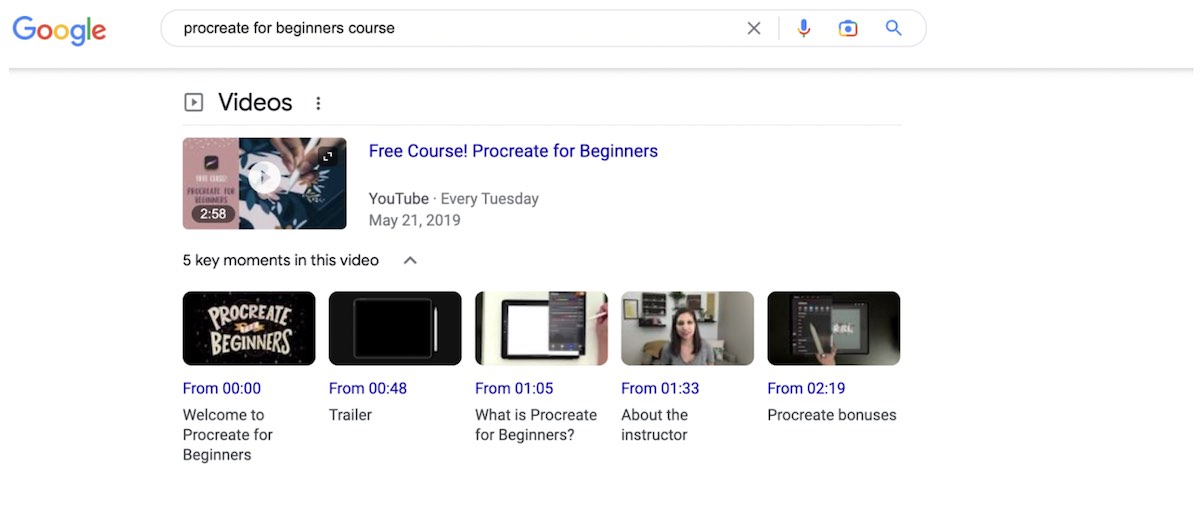
At the top, she’s building awareness with several tactics, from SEO to social media. For example, she has a Procreate for beginners course. SEO is one tactic she’s using to raise awareness.

When you search ‘Procreate for beginners course’, Teela appears in two types of search results—video and text.
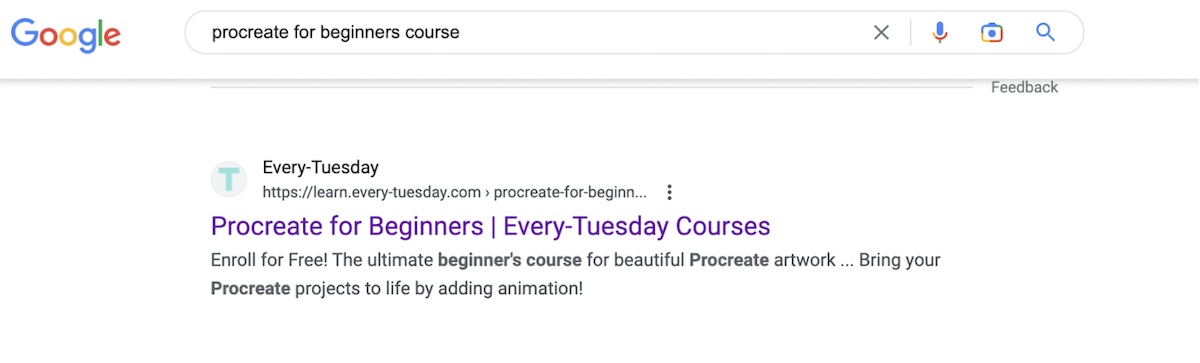
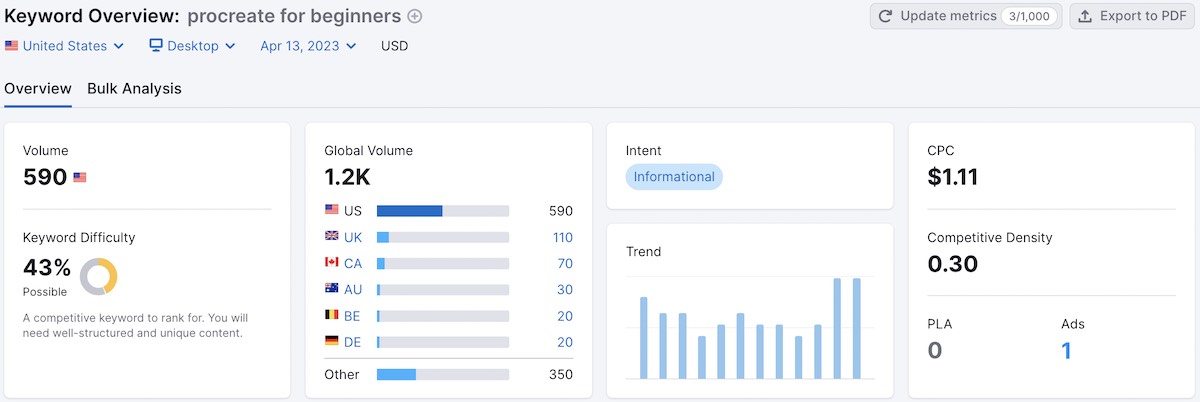
She also ranks for ‘Procreate for beginners’, which close to 600 people search for each month.
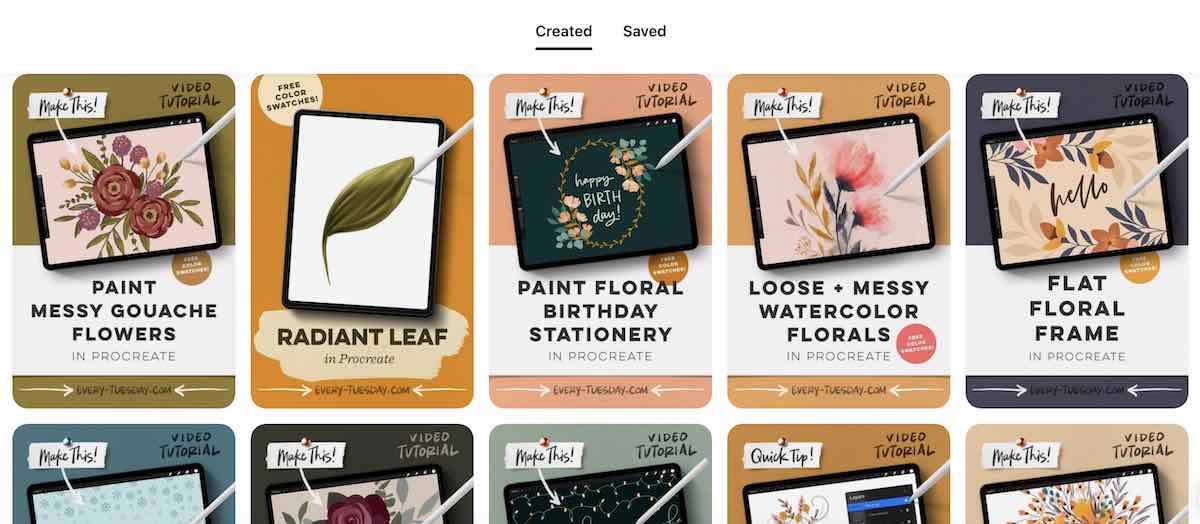
In addition to SEO, Teela has built up her audiences on Instagram, Pinterest, and YouTube by sharing tutorials and design resources.
Again, content from her site is re-purposed and designed to fit the channel. On Pinterest, posts have custom designs but still match her personal brand.
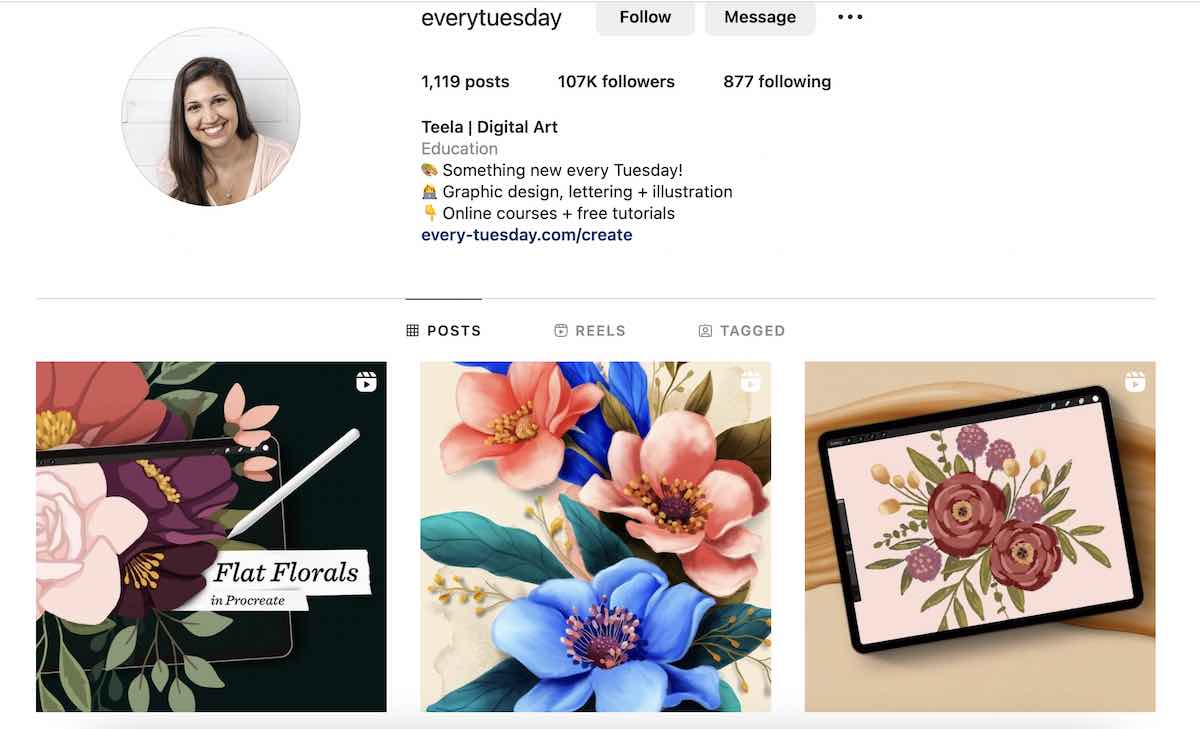
On Instagram, Teela has over 100,000 followers and shares Reels of her design and lettering creations.
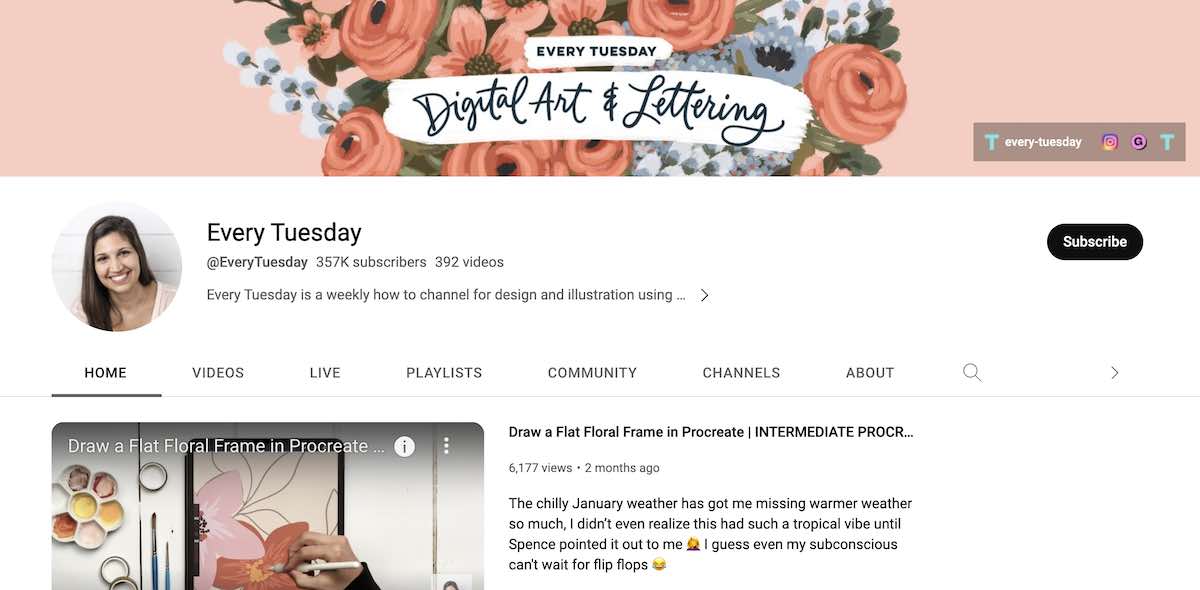
Lastly, YouTube is one of her most popular top of funnel marketing channels, with over 350,000 subscribers. She posts longer tutorials that generate interest for her online courses and digital products.
Next, she generates leads in the middle of the funnel through her community and email list, the Tuesday Tribe. She entices visitors to sign up by offering over 50 free design files, access to her resource library, and exclusive discounts.
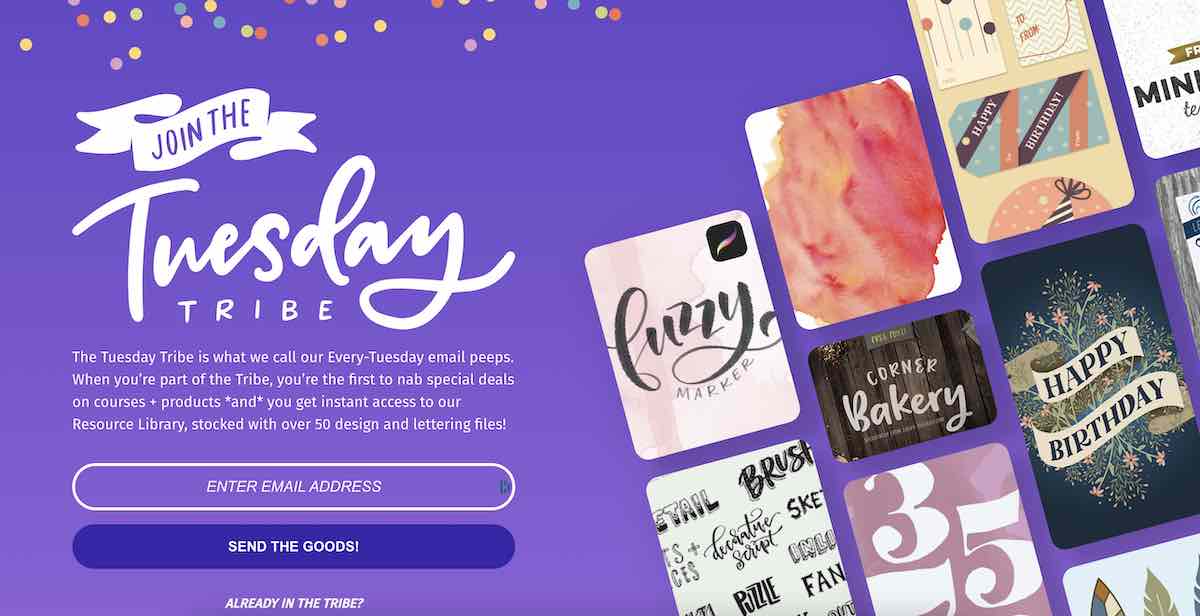
Lastly, she offers free and paid courses. Often, her free tutorials lead to sales of her digital products, which are files she uses during the course.
As you can see from both examples, every piece of content and marketing maps back to the stages of the funnel.
Think of marketing tactics as a buffet menu—you don’t eat every item off the buffet. Although you could, we don’t advise it. You don’t want to put more on your plate than you can handle. Instead, choose the goals, content, and tactics that best fit your business.
You’ll also need to measure what is working and what isn’t to prioritize where you spend your time and money. Let’s look at metrics for each stage of the funnel and how to use them.
Goal: Attract as many targeted visitors as possible with relevant content. (You can track many of these metrics for free using Google Analytics. Log in to your Google Analytics account and go to Acquisition > All Traffic > Channels.)
Goal: Convert more visitors into leads and nurture the relationship.
Goal: Get your leads to purchase (or repurchase) your product. If you use Teachable, you can find most of these metrics inside your dashboard.
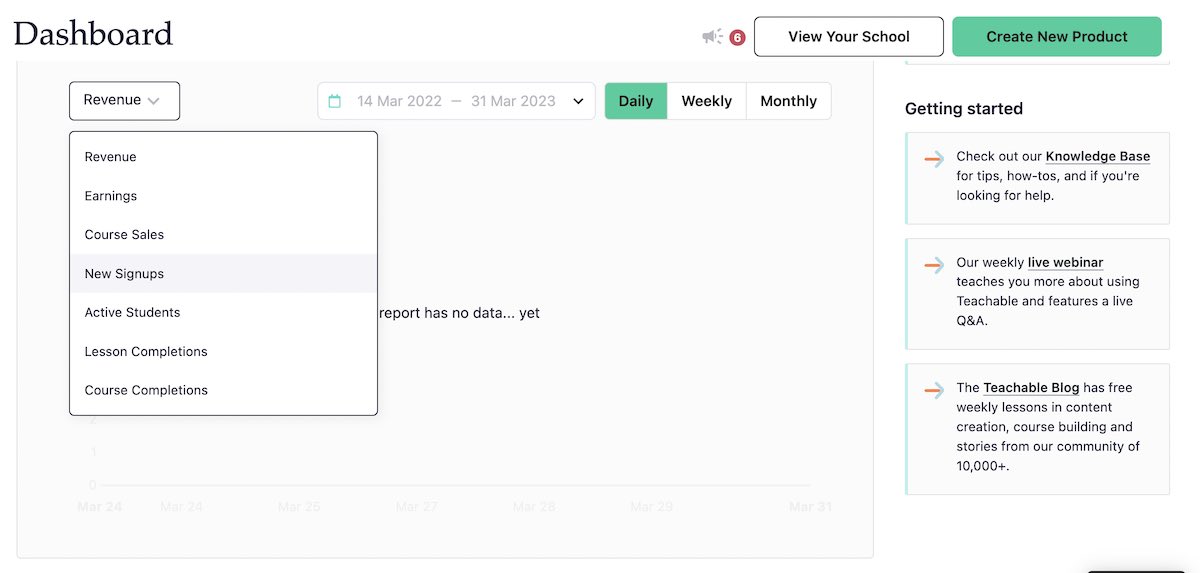

To create this marketing funnel, you might follow these steps:
Your marketing funnel doesn’t have to be complicated. Follow these steps and share your experience.

We know that creativity and passion are only half of your business. Metrics, data, and hard numbers tell the other half of the story. So when we have a chance to launch a feature, such as order bumps, that can help you meet your goals and move the needle on the numbers side, we’re going to do so. That also means when there’s an opportunity for us to share some data points to help you make smarter decisions for your business, we’re going to take it. Take a peek at some Teachable insights from our new feature, order bumps, that can help you understand how a sense of urgency from order bumps drives sales.
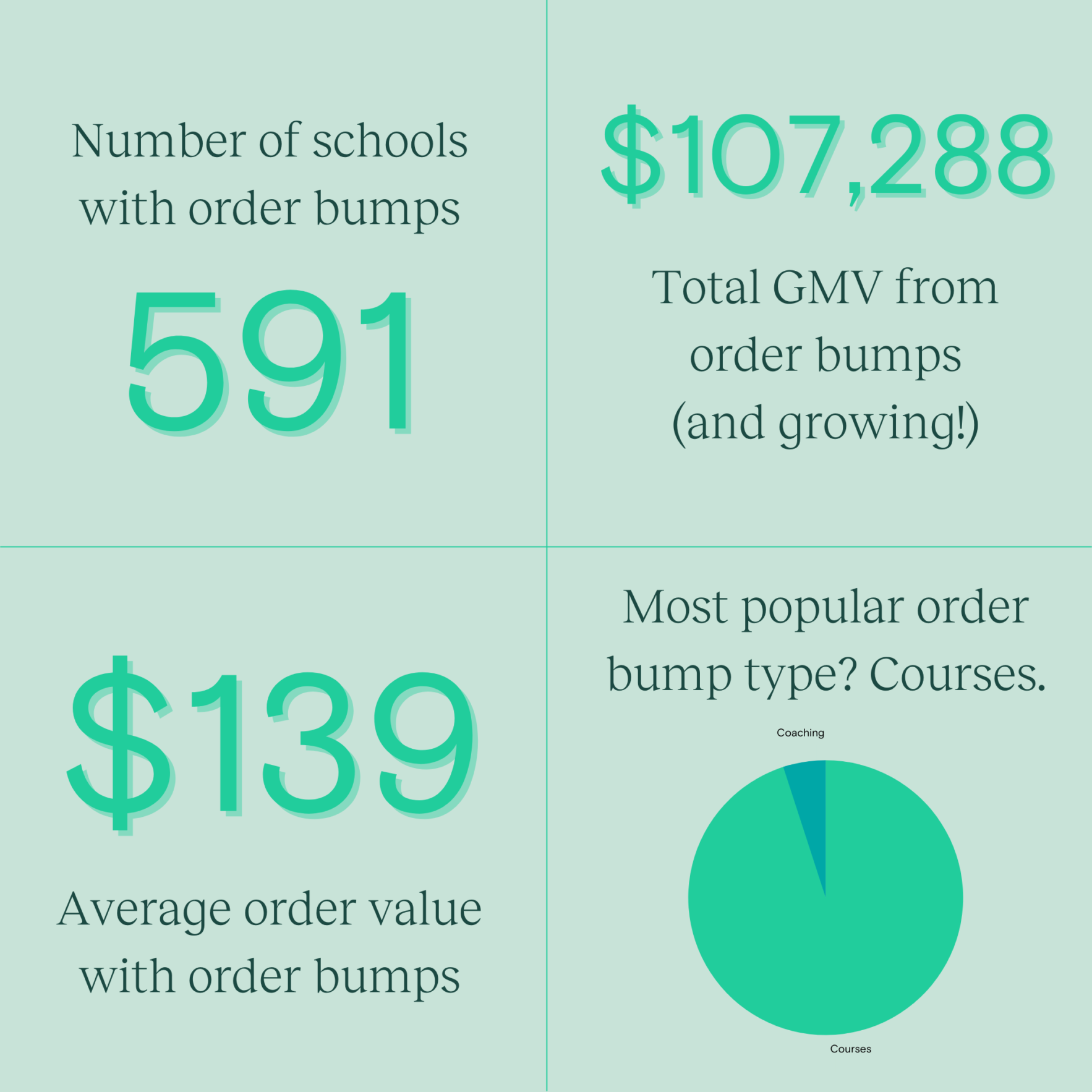
We’ll break it all down below and showcase how real data proves order bumps drive sales and lead to urgency.
When it comes to your online courses or coaching business, revenue is the star metric. Typically, creators increase this bottom line by focusing on increasing their average order value (AOV), or how much on average a customer spends on each order. But this can be difficult to do. No one wants to raise their prices or spend more energy seeking out new customers (yet).
So, we introduced order bumps as a low barrier to entry to help you increase your AOV without raising the price of your products or bringing in more customers. And so far, this new feature has been adopted by nearly 600 schools, which have seen thousands of transactions that contain an order bump go through.
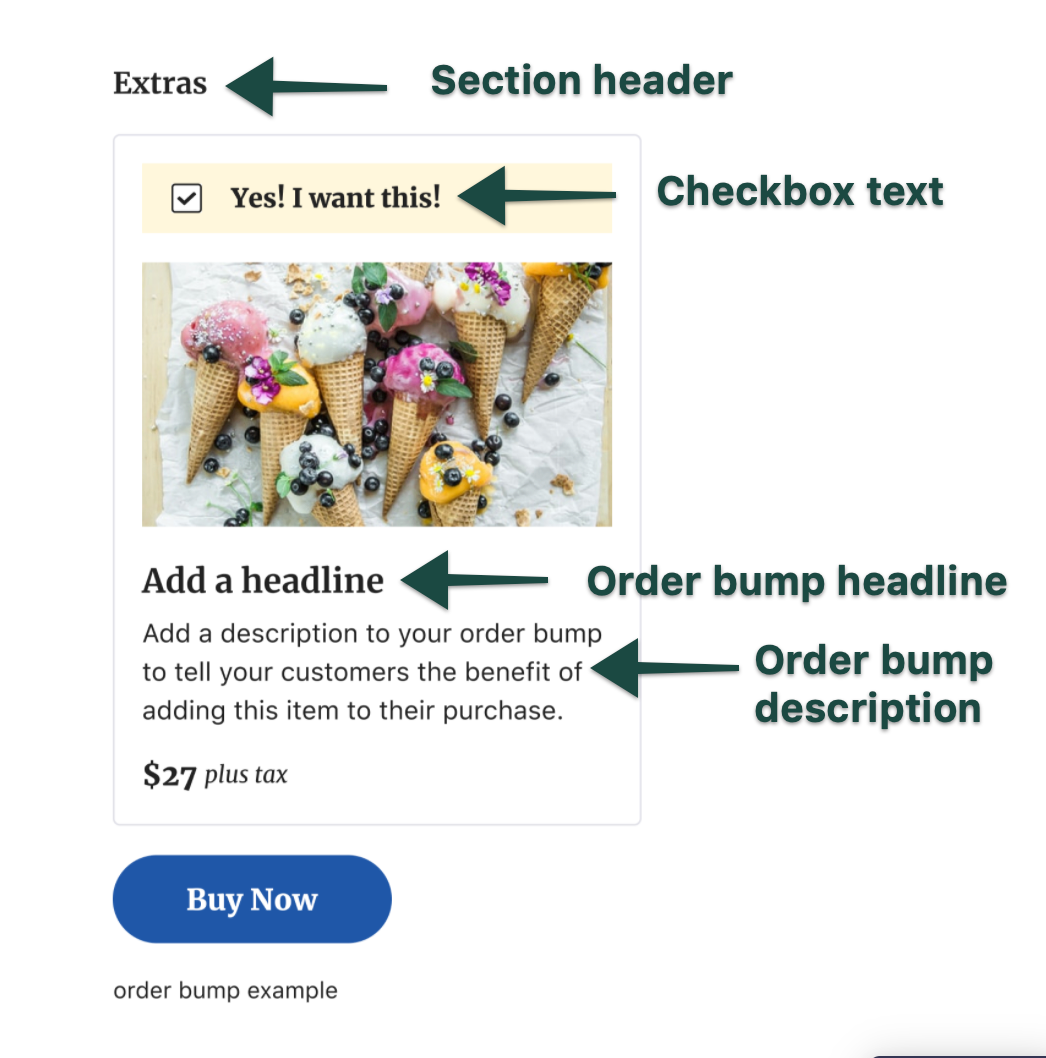
Reminder: Order bumps are products that complement your main product and are offered at checkout to customers as last-minute add-ons that add both value and increase your average order value. You want your order bump to be either the same price or slightly less than what you are selling. So for example, if you are selling a product for $37, you may offer an order bump for $19.
Order bumps drive sales and have earned Teachable creators more than $107,000 in GMV since the feature’s release. That’s a pretty big number. So, what’s the deal with order bumps anyway? Well, they cause action. And when it comes to making sales, action is what counts. Your job as a creator is to demonstrate that whatever your customer is buying is worth the price you’re asking.
Simple enough. But here’s where an order bump comes in.
An order bump is a sales strategy often used to trigger a sense of urgency with the buyer that then incites action. This urgency is typically caused by the price-to-value ratio of the order bump. Simply put: The value of the content of your order bump surpasses the extra money it adds to their order. It’s the extra side of guacamole at dinner—extremely tasty and compared to the rest of your order, a total steal.
Because a customer is already at checkout, it’s far easier to incite purchasing action. Some reasons are:
Because we understand that tapping into that FOMO brain is a great way to get sales and increase that average order value, we launched a “strikethrough” feature for order bumps. This particular feature allows you to set a “sale” price that appears below your original bump price.

This is a valuable addition to the feature for creators who want to offer sale prices, display bargain values, and you guessed it, lean into urgency.
We wrote a whole blog post dedicated to sales strategies and pricing around order bumps. We even talked to expert and Teachable creator Julie Stoian to get her insight on the matter of making money with order bumps.
Ultimately, how you price your order bump is up to you. But one thing is certain:Teachable creators using order bumps see a higher AOV. In fact, they see about 8% more AOV with an order bump than without. And the average order value with an order bump is about $139.
But there are a few key learnings:
Here’s one thing to keep in mind when pricing your order bump. If you’ve followed our pricing advice for your online course, then you’ve already priced your course with a premium price tag. And you know that a premium price tag often signals more value and commitment to students purchasing. Your order bump should be priced to convey both value and bargain. In this instance, consider a “lower” price tag for your order bump (without sacrificing too much value in your order bump’s content) to signal to your customers that they’re getting a deal.
According to our insights, most Teachable creators are opting to use courses as the type of product they offer for their order bump. However, this doesn’t mean you should feel limited to only offer courses.
On any plan on Teachable, you can now add an order bump on any course checkout page. An order bump can be:
This means an order bump can be:
Bottom line: Experiment with what order bump works for you and your business. The most successful creators are utilizing the feature strategically. They’re offering valuable content that’s priced to create urgency and demand. And that all equates to sales.

We know creating an online course is exciting and daunting. It’s a lot of work and we want to help you make sales before you even start creating! In this blog post, we’ll explore how to leverage Teachable’s features by focusing on collecting email leads even before you have a fully developed course.
Monetizing your social media audience has become a lucrative endeavor, and one of the most effective methods is through selling online courses. With the power of social media platforms at your fingertips, you can reach a vast audience hungry for knowledge and expertise. Online courses offer a scalable and sustainable revenue stream, allowing you to leverage your passion, and unique perspective to create valuable educational content.
Whether you're an expert in business, technology, fitness, or any other niche, selling online courses allows you to share your expertise with a global audience while generating passive income. Plus, with the flexibility to create courses on your own schedule and the ability to automate sales processes, it's the ultimate way to turn your social media following into a thriving online business.
Before you dive into the course creation process, it’s crucial to define your niche and ensure there’s demand for your course. Conduct market research, engage with potential students, and gather feedback to validate your idea. Use social media, forums, and surveys to understand your audience’s pain points and needs.
Utilizing Teachable’s features, you can create a visually appealing landing page for your course without having to finalize the entire content upfront. Include a deadline, sneak peeks of course content, and a call-to-action encouraging visitors to sign up for updates. Add an Email Leads Form block to collect potential customer information and build an email list.
Engage with your audience by hosting a webinar or live Q&A session, linking it to your 'Coming Soon' page. Use Teachable’s webinar integrations or provide an external link to interact directly with potential students.
For those on paid plans, Teachable provides built-in email marketing tools to nurture leads and keep them engaged. Customize your emails, share behind-the-scenes content, and offer exclusive sneak peeks or early bird discounts. Remember to comply with privacy regulations and marketing laws.
Teachable also allows you to integrate your email leads with third-party services such as Mailchimp, ConvertKit, Webhooks, and Zapier. This opens up opportunities to manage and send emails effectively. Be sure to follow the integration steps outlined in Teachable’s Knowledge Base.
Incentivize early adoption by offering exclusive early access or discounted pricing for the initial batch of students. This strategy, combined with the email leads you’ve gathered, creates a sense of urgency and motivates potential customers to take action.
Teachable provides a powerful platform for implementing a pre-launch strategy for your online course. By combining the steps mentioned above with the detailed guidance from Teachable’s Knowledge Base on collecting and managing email leads, you can create a robust foundation for your course, even before the content is fully developed.

No matter how confident of a writer you are, it can be easy to experience writer’s block once you get to the marketing stage of any large project. (And if you’re already someone who doesn’t love to write, breathe a heavy sigh of relief that you’re not alone; we’re all in the same boat.) Copywriting, or promotional writing, can feel like a chore. But with a simple reframe, it can actually be fun. Think of it as a puzzle: cramming as much information into as few words as possible. While there are places for lengthy descriptions, word choice is crucial in persuasive online copywriting.
Like we explored with website design, you only have so long to hold your site visitor/potential student’s attention. But before your groan, we’ve outlined some tips to make the process more enjoyable.
There are many different ways people go about completing a puzzle. However, for the purposes of this metaphor in our persuasive online copywriting journey, we’re going to dump all the pieces out of the box. Do so by dumping them all out onto a blank page. Begin stream-of-conscious writing (think: writing without stopping to edit or overthink word choice). Note all of the selling points and details of your new offering, even the ones that don’t seem important. When you’re done, narrow it down to the key selling points you’d like to get across.
Here’s where the fun part of the puzzle comes in. After you’ve highlighted your major selling points, decide upon your top three. Write them out. Then start to list different ways to describe them below. For instance, if you’ve created a vegan cooking course for beginners, your lists might look something like:
Cooking
Recipes
DIY
Cuisine
Food
Vegan
Plant-based
Earth-conscious
Allergen-free
Healthy
Convenient
Meal prepping
Quick-and-easy
Low stress
On-the-go
Not only will this piece of the puzzle help with finding fresh ways to say the same thing over and over again, but it can also be helpful for titles, headlines, subject lines, and placements where shorter copy is required.
Next, decide which specific marketing channels you’re going to use to promote and what information makes sense where (i.e. if you’re a story-teller, save the narrative for a blog post and/or newsletter you can link to in a shorter social media caption).
In doing this exercise, you might find that you have a number of different angles leftover that you can utilize when target marketing. In the cooking example above, if you have a module that’s all about kid-friendly baking, you can save that angle for a targeted email highlighting this course is perfect for parents who want to do something creative (and device-free) with their children.
It’s not necessarily something you need to get across in all persuasive online copywriting placements and certainly not in the main messaging, but it is relevant info you can use for specific promotional assets.
Another writing exercise is to write a personal email to someone specific in your target audience. Ideally, this is a real person. So perhaps if you’re not on a first-name basis with students or clients, write to someone you know fairly well who would be an ideal student.
You might even start by opening up a blank document and typing “Dear [name],” at the top. If you’re not sure how to start your letter, you can write “I want to tell you about…” and finish the sentence by describing your offering. This is your “what.” (In our branding basics article, we refer to the 5 Ws + 1 H of your website. This applies to persuasive online copywriting as well.)
Writing in letter format accomplishes a few things. For one thing, it allows you to be personable and conversational, as you’re speaking from your authentic voice and less likely to be pushy or “salesy.” For another, as contradictory as it might sound, the more specific you are about who you’re writing to, the more you’ll attract more clients (rather than trying to please everyone, which is impossible).
As with the previous exercise, after you’ve written this letter, you can go back and edit down to what is essential to different marketing placements. While the point of this exercise is less about sending this letter and more about developing your unique copywriting voice, you may find it ends up making a personalized newsletter you can send off to your mailing list using a custom name field.
Tip: If you’re more comfortable getting points across verbally, record all of this as a voice note, still imagining as though you were sending to someone specific. (You might even dare send this to a trusted friend or colleague whose feedback you value, offering context of the exercise, of course). You can always go back and transcribe it, hire someone to transcribe for you, or outsource to a site like Rev.com.
Ultimately, when editing down your persuasive online copywriting notes, you want to find a balance between connecting to your audience and inspiring them to take action. While you want to be personal, authentic, and even at times vulnerable, be mindful about not oversharing your story and making the offering more about you than those you’re serving.
While you want to be direct, clear, and concise, make sure you aren’t leaving your audience behind. For instance, don’t use language they may not be familiar with or jump right to your call to action before they’re ready. Imagine that your word choice is precious real estate on your various marketing channels. Here are some ways to make each word count:
Why are you promoting this particular offering, in this particular marketing format (i.e. landing page, newsletter, social media post, etc.)? If your reason why is “because I have to” or “because I need to make money,” try tapping into an abundance mindset before proceeding.
Consider the following: What lights you up about this offering? How will this serve your ideal students or clients? What made you want to start your business or passion project in the first place? What inspires you most about the work you’re doing? What’s your favorite module or part of your offering that you can draw inspiration from?
Why you’re writing something matters. And if the only reason is need or feeling like you have to that will come across to your readers. On the other hand, if you’re writing from a place of intention and inspiration, readers are more likely to feel inspired, too.
Copywriting, especially persuasive online copywriting, can feel like one more thing on a never-ending to-do lists. But, only if you let it. Ultimately, it can be an opportunity for creative expression, connecting with audiences, or solving a puzzle.