Thank you! Your submission has been received!
Oops! Something went wrong while submitting the form.
MENU


While Madonna famously sang, “We are living in a material world, and I am a material girl,” it’s quite possible that we have entered a new world: a digital world filled with digital creators and influencers. In the material world, the marketplace was saturated with physical goods and services. In this new world, there is a greater demand for virtual goods and services, as well as hybrid offerings and innovative ways to make money online. If you’re wondering what a digital creator is, if you are one, or how to become one, read on. We’ll get you up to speed, so you can thrive in this new, tech-centric era.
{{guidecreatoreconomy-component="/blog-shortcodes/blog-popup"}}
As its name suggests, a digital creator is anyone who creates digital content. That digital content can be social media posts, blog posts, images or graphics, podcasts, videos, etc. Depending on the type of content, as well as which platform the content is for, a range of different skill sets might be helpful. Graphic design experience, writing, video editing, and more can all be helpful. For instance, someone creating content for a course on Teachable might lean on experience or skills with filming video. A digital creator with a blog, on the other hand, would want to be proficient in writing and editing.
As we’ve explored, content creation is usually meant to be educational, entertaining, inspiring, and engaging. More often than not, it’s also intended to influence behavior. This brings us to influencers—are they the same as digital creators? Yes and no. While there is a lot of overlap between the two terms, which we’ll explore below, it’s important to understand their nuanced distinctions.
To oversimplify these two terms, digital creators create (content) while influencers influence (their audience).
You might assume that to become an influencer you need a high number of followers, but that’s not necessarily true. An influencer is typically a social media personality and, as the title suggests, actually influences their following to make decisions. They can do this by promoting a product or service they want their followers to then purchase. In a sense, both digital creators and influencers have the aim of influencing behavior, or pursuing a certain call to action. In content creation, the specific goal is to engage with virtual material, whereas influencing is usually related more directly to conversion.
Still, some might say that their goals differ and are the same as their titles, to create and influence, respectively. And while that might sometimes be true, digital creators often have very similar motives as influencers. They want to engage with their audience, get more followers, and essentially influence or sway their audience to take an action. The true distinction lies in their function, the job they are performing, not why they are doing it.
To illustrate this point, let’s travel back in time to the “material world” and use the example of a traditional brick-and-mortar retail department store. Corporate offices hire graphic designers and copywriters to create content and marketers to sell the products. The team works together with the ultimate goal of selling retail goods, but the function of the team members is very different.
Designers are hired to design, writers are hired to write, and marketers are hired to market the products. It’s up to the marketers to assign creative content and determine how to use it effectively. Similarly, even though they might work together and have similar goals, the function of digital creators is to create content, while the job of influencers is to influence an audience. Of course, as “material world” businesses evolve and adapt to the “digital world”, they will also incorporate actual digital creators and influencers into their marketing strategy through affiliate and influencer marketing, etc.

Another example is an established brand. You might liken the function of digital creators to the work brand do to uphold of the brand’s image. Meanwhile, an influencer might be the face of the brand or spokesperson. This is typically what influencers do: brand collaborations or partnerships to promote their products or services through sponsored posts.
With this in mind, it’s important to understand that these titles are not black and white. One shouldn’t assume that creators don’t influence or influencers don’t create. In fact, content creation skills are helpful to influencers, just as generating content that’s influential benefits creators. Just as we’ve pointed out that digital creators often do influence, many influencers also create their own digital content. Finally, you might consider that digital creators generally offer more original content, while influencers can lean on curated content, as they curate their lifestyle (or a part of it, such as fitness, fashion, food, beauty, etc.) on their platforms.
As a recap, the distinction between digital creators and influencers lies in their functions: one creates, the other influences. (Pop quiz: Remember which one is which?) Even if the creator’s goal is to influence a certain audience or consumer behavior, their function is simply to create content. Being persuasive might influence how the content is created, but the function—to create—remains the same.

Now that we’ve covered what a digital creator is, as well as how it differs from an influencer, let’s explore how to become one. In another blog post, we covered how to become a content creator in eight specific steps, if you’d like a dive deeper the step-by-step process, be sure to revisit the blog post. Additionally, here are some tips for becoming a digital creator:

As its name suggests, the meaning of digital creator is someone who creates digital content. This can be social media posts, blog posts, images or graphics, podcasts, videos, etc. Depending on what type of content they’re creating, as well as which platform they’re creating for, digital creators can have a range of different skill sets. Those skills can include graphic design, writing, video editing, etc. Someone creating digital content for Teachable, for instance, might be good at making educational videos. A digital creator for a blog, on the other hand, would want to be proficient in writing and editing. Content creation is usually meant to be educational, entertaining, inspiring, and engaging. More often than not, it’s also intended to influence behavior. And yet, there are nuanced distinctions between digital creators and influencers that we explore in this blog post.
Consistency is key when it comes to building an audience and earning their trust. Meanwhile, the more experience you have creating, the more likely you will get paid for your content—whether that’s monetizing your blog, website, or social media channels, or getting hired by another company or brand to digitally create content. (You can learn more about diversifying your income here.)
Essentially, yes. Facebook recently launched Meta for Creators, a free resource for digital content creators to upload, create, post, and manage content across Facebook and Instagram channels. The platform also allows you to monetize and get insights into how your content is performing. While anyone can create content using the platform, you will need to strategize how to effectively use their tools to be a successful (depending on your goals) digital creator.


According to Oscar Wilde, “Anyone who lives within their means suffers from a lack of imagination.” Creators, even the most left-brained thinkers, are no strangers to using their imaginations. And yet, whether you’re approaching business or personal finances, saving always seems to be a bit trickier than investing. While we’re not here to encourage frivolous spending, we are here to offer some creative savings ideas to help you start saving money. Stretch your imagination—and financial goals—with these money-saving tips and tricks.
{{pricedigital-component="/blog-shortcodes/blog-popup"}}
We all have different relationships with money and the stories that go with it. Maybe the story is one that’s rooted in a lack mentality (i.e. “I don’t have enough…”, “There isn’t enough to go around…”, etc.). We’re not often taught how to save money, and the topic might even bring up feelings of fear, shame, or unworthiness. Notice what comes up for you when you have conversations about money. In the meantime, we’re here to help with 10 tried-and-true tips and more.
There is a popular quote about money: “If you can’t manage $1,000, you can’t manage $10,000.” So treat any income you receive as valuable, and budget accordingly. Building a healthier relationship with money can be rooted in trust and mutual respect. For Marie Forleo, this looks like “weird money rituals”, such as treating cash with care (from organizing money in a nice wallet to even picking pennies up off the ground!).
Before we can actually save money, we have to take an honest inventory of how much we’re spending and bringing in. Shining a light on spending habits can be uncomfortable. But the good news is that once we do, we can know how to move forward. Plan ahead for all purchases, down to your grocery lists, to see where you can cut costs.

Anticipation is healthy and a great motivator to help resource our savings. Most banks will let you easily open up a second (or third or fourth) savings account, allowing you to designate each one to something specific. For instance an emergency fund, a vacation fund, a down payment fund, one for a long-term project or goal, etc.
If you decide to take advantage of this, you can decide how much to put aside for each, rather than always depositing into or withdrawing from one savings account. This approach might not work for everyone, as it might feel too hard to move forward with different savings goals, but some may find it helpful to know exactly what they’re saving for and prioritize accordingly.
Avoid using credit cards altogether (if only to avoid paying sneaky interest rates). And try only having the cash you need on hand. To organize your cash spending and avoid pulling from your savings, you can try Dave Ramsey’s envelope method. Divide your living costs, both needs and wants (mentioned in the 50-30-20 method, below), into categories, such as groceries, gas, etc., and assign each an envelope with an allotted amount of cash. This approach can help keep you accountable, disciplined, and on track, while making it hard to overspend.
On the other hand, there is an abundance of credit and even debit cards that offer cash-back rewards for swiping, rather than using cash. It might not seem like much, but these amounts can add up! Add them to your unexpected income lists (see below), or better yet transfer them straight into a high-yield savings account. While there are also rewards specific to various retailers, grocery stores, travel purchases, etc., it’s generally a good idea to limit the number of credit cards you use. And pay them off in full or as soon as possible to avoid paying high-interest rates and fees.
Impulsive spending is often part of an emotional response. Rather than judging the impulse, notice it when it arises, get curious about why it’s arising, and see if you can yourself some space before making your purchase. Try the 30-day rule below.

If you want to start saving for the long run, avoid trying too many approaches all at once, which can lead to overwhelm. Instead, choose one simple habit to adopt. Like anything, if you try to do too much and aren’t clear on your goals or intentions, it will be easy to lose sight of what you’re doing and why. Choose one; don’t get overwhelmed by trying to do too many. While you’re at it, simplify your expenses by simplifying your routine to see where you can save more. Some examples:
Neuroscience tells us that what we practice grows stronger. For true change to occur, we have to do something, even small habits, repeatedly. In addition to keeping your savings approaches simple, as outlined above, try this:
Automate your savings: set up automatic deposits or transfers into your savings account(s), so that you don’t have to remember to do it each month (and therefore avoid making an excuse or unexpected purchase!).
Keyword: practice. Give yourself (and others) grace when unexpected expenses arise, or you don’t meet your financial goals. Know that we are living in a capitalist economy. While individual shifts can have a great impact on our personal finances, there are many systemic things, such as inflation, cost of living, etc., that are often out of our hands. What we can control, however, is cultivating a more abundance mindset, as well as orienting ourselves toward community-centered, rather than individualistic, exchanges, opportunities, and solutions.

In her infamous approach to tidying, author and professional organizer Marie Kondo warns against trying to tidy someone else’s (such as a spouse, family members, or housemate) belongings before thoroughly tidying your own mess(es). The same goes for others’ budgets. When we worry about their spending before or in addition to our own, we often project our own money stories or financial fears onto them. This can be really disempowering, not to mention cause unnecessary tension at home. If you want to get family involved, see if you can motivate each other with a money challenge, game, or a shared savings account toward something everyone will enjoy.
One popular challenge your family might enjoy is to save any 5 dollar bill you receive. Put it in a shared jar for your next family adventure. Throw in loose changes while you’re at it!
Speaking of $5… In his somewhat controversial book The Latte Factor: Why You Don’t Have to be Rich to Live Rich, David Bach shares some financial secrets passed down to him by his family. But before you assume you have to ditch your morning treats, know that this book isn’t about condemning your daily lattes. And it’s more about pointing out how, for the same cost of a latte, you can be racking up your savings. Have your beloved latte, and drink in the savings, too!
All Your Worth: The Ultimate Lifetime Money Plan author and Massachusetts senator Elizabeth Warren offers a percentage-based approach to budgeting: the 50-30-20 rule. According to this formula, 50 percent of your income should go toward your necessities, such as rent or mortgage, meals, health care, etc. Another 30 percent toward your wants, such as entertainment or luxuries; and 20 percent into savings or paying down debt (the minimum payments, however, would fall under the first category). While this solution promotes financial stability, it is only feasible if half of your income truly covers your essential living costs.
In our fast-paced world, urgency is all around us. We can “cheat the system” in a sense by taking some time and space before making big (and even small) purchases. The 30-day rule removes the emotion out of impulse buying by giving you 30 days to consider whether the big buy you have in mind is actually necessary. (As we know, a sense of urgency can be created by eliciting FOMO, fear of missing out, in potential customers—and is an effective marketing strategy!) Now, of course, if it’s a time-sensitive purchase, such as a discounted course or program that’s expiring, you can take as much time and space as you can to really think about and feel into the decision: an hour, a day, a week, etc. Set a reminder for when you need to make the decision by, then step away (shut down your devices!), and get clear on whether or not it’s something you truly need or want before committing to the transaction.

As we’ve explored before, a creative way to cultivate more of an abundance mindset—and save money in the process—is to keep track of your unexpected income, for instance a friend buying you coffee. Make a list, and next to each item, write a dollar amount that you would have spent on it:
At the end of the week, add up the cost of all your unexpected income, and put a mere 10 percent of the total amount into savings (in the list above, that would be $14). It might not seem like much in these moments, but the more you pay attention to these small acts of generosity, the more they start to add up. If you average an extra $15 in savings each week, that’s an extra $60 a month. Additionally, if you’re putting that fraction of unexpected income into a high-yield savings account, that $60 is earning even more in interest over time which could potentially add up to a lot.
Value is often conflated with how much money you spend on someone. There is usually a lot of pressure to give gifts over the holidays, as well as for birthdays, date nights, special occasions, etc.
Fortunately, there are many other, often under-utilized, ways to show love and affection. Consider love languages; in addition to gifts, the other main four are quality time, touch, words of affirmation, and acts of service. With that in mind, in lieu of gifts, you might:
Additionally, you can tune in with your loved ones to see which they would appreciate the most. Maybe they have something outside these love languages you’ve never considered. Taking the time to attune and can connect will make your intention to show love and care priceless—and potentially go further than a physical gift.

All Your Worth: The Ultimate Lifetime Money Plan author and Massachusetts senator Elizabeth Warren offers a percentage-based approach to budgeting: the 50-30-20 rule. According to this formula, 50 percent of your income should go toward your necessities, such as rent or mortgage, meals, health care, etc.; 30 percent toward your wants, such as entertainment or luxuries; and 20 percent into savings or paying down debt (the minimum payments, however, would fall under the first category). And while this solution promotes financial stability, it is only feasible if half of your income truly covers your living needs.
In our fast-paced world, urgency is all around us. We can “cheat the system” in a sense by taking some time and space before making big (and even small) purchases. The 30-day rule removes the emotion of impulse buying by giving you 30 days to consider whether the big buy you have in mind is actually necessary. As we know, a sense of urgency can be created by eliciting FOMO, fear of missing out, in potential customers—and is an effective marketing strategy! Now, of course, if it’s a time-sensitive purchase, such as a discounted course or program that’s expiring, you can take as much time and space as you can to really think about and feel into the decision: an hour, a day, a week, etc. Set a reminder for when you need to make the decision, then step away or shut down your devices. And get clear on whether or not it’s something you truly need or want before committing to the transaction.

At some point everyone finds themselves looking for support in their business, career, or life journey. And when you do, you’ll also have to learn about the differences of coaching vs mentoring. Even if you’re not there yet, there might come a time when you do need some support, so bookmark this page!
These two words might seem synonymous, they’re sometimes even mistakenly interchanged. And there is a lot of overlap and similarity between them. However, there are nuanced differences between coaching and mentoring to consider before enlisting help from one or both types of professionals.
While both are commonly employed within organizations to enhance employee engagement, it’s increasingly common for individuals to seek learning and development on their own. In fact, coaching is a career path that has grown in popularity over the past few years. Meanwhile, mentors can be guides within any industry, and many people are starting to capitalize on that new need for guidance through mentorship programs.
{{audience-component="/blog-shortcodes/blog-popup"}}
Being a mentor or a coach means the opportunity to help others reach for high potential. And both roles require a number of specific skills. The goal is to benefit the individuals being coached or mentored as well as their organizations and even the facilitators.
This blog will dive into the distinctions between coaching and mentoring, as well as the benefits of mentorship vs coaching. But first, let’s define them both so we’re working with the same definitions of a mentor vs coach.
A mentor is typically someone with the experience and wisdom to share with others who might be looking to learn from someone more senior. It’s a less formal role than coaching might be. Coaches are usually hired to achieve specific results. A mentor, on the other hand, is a person who shares their wisdom with another to support their growth and development. Mentoring relationships are typically, though not always, formed with the intention of career development. And a mentor is someone in your industry or on a similar career path.
An example of a mentor outside one’s career might be a teacher, guru, or spiritual guide. Traditionally mentors have been paid to offer their knowledge/expertise. But now many entrepreneurs are cashing in on demand for mentors. They’re doing so by adding mentoring opportunities to their offerings. While some organizations are adding mentoring programs to support their employees, their growth, and job satisfaction.

Unlike mentoring, which frequently exists within already established workplaces and hierarchies, coaching does not require the same structure. But what coaching does require is a certification for those offering professional services. Coaches can become certified by organizations like the International Coach Federation (ICF.) The ICF defines coaching as “partnering with clients in a thought-provoking and creative process that inspires them to maximize their personal and professional potential.” And they help train potential coaches to make sure they are certified and have the knowledge to be effective for their clients.
Coaching relationships are more transactional than mentoring relationships might be. And they are usually formed with specific goals for any area of one’s life. For instance, there are financial coaches, career coaches, relationship coaches, fitness coaches, and more. But what makes for an effective coach is the ability to balance. They have to balance what a client is experiencing, while encouraging them to reach their full potential. This is what makes coaching so special and something that can become a business where people sell online coaching.

There are slight differences between coaching and mentoring. We’ll cover them below.
Mentoring tends to be on a longer-term basis and functions more like a relationship. While coaching is more of a short-term relationship. Of course, this isn’t always the case. Mentoring can be short and sweet. And clients can always make the decision to extend their coaching sessions.
The aim or focus of coaching sessions is decided upon by the client and facilitated by the coach. A mentor, on the other hand, might provide more of a guiding hand. And share relevant experience and opinions on certain subjects.
Coaching can sometimes be more structured. The sessions come in the form of consistent, regularly-scheduled meetings. Whereas mentoring is generally less formal. Coaching is also nondirective. Meaning the coach co-creates or collaborates with clients to guide them in their life. Often they do this by asking open-ended questions and sharing facilitation techniques. Mentoring, on the other hand, is more experience-based chatting. It can consist of delegating their information like offering guidance through direction and advice.
Most frequently a mentor is a member of the same industry or field of study as their mentee. Or they at least have firsthand experience in the field. But no formal training or qualifications are required to be a mentor. But coaching is the opposite. Certification is required while firsthand experience isn’t always. Coaches also tend to have their own specific areas of expertise. For instance, you wouldn’t hire a fitness coach to help you reach your financial goals.
Mentorship relationships are more casual. Because mentors typically aren’t paid, they can be more casual and more conversational. Mentors and mentees might meet over coffee or chat while on a walk. But coaches have a more formal relationship with the people they coach. They probably have a laid-out plan and take notes each time they meet. And likely have a set meeting scheduled with their clients.
Coaching is performance-driven and, for that reason, can have more specific and measurable results. Mentoring, on the other hand, is development-driven and therefore it can be more difficult to measure the progress that comes from coaching.
Of course, there are always exceptions to these generalities. You might find a mentor who is more formal in their approach. Or a coach who has a general focus rather than a specific area they coach people in. But both are in demand and can be deeply valuable for the people involved.

There are clear benefits to mentoring and coaching. Everyone benefits from different teaching styles so it makes sense that some would find more value in a coaching relationship while others might want a mentor. The flexibility of both styles is key. But all sessions ideally hold individuals accountable and encourage their growth and development. They also enhance interpersonal skills and relationship-building across the board.
When deciding whether mentoring or coaching is right for you, focus on your goal first. You might want to set an intention, then see if coaching or mentorship aligns best. You can always shop around for a coach or mentor. It should be a good fit for you, your goals, and your needs. Plus, your mentor or coach needs to feel like it’s a good fit too.

No. Coaches and mentors play different roles with the people they work with. A mentor is usually someone in your field who has wisdom and experience to impart. Plus it’s usually a much longer-term relationship for those involved and can span many years. Being a mentor also doesn’t require any kind of certification and isn’t usually paid. While coaches are usually paid for a set period of time and need a certification which is one of the bigger differences between coaching and mentoring.
Yes. Because of the inherent overlap, namely helping others reach for high potential, a coach might offer mentoring techniques, while a mentor might offer coaching techniques. To make these subtle differences even more complex is that, in today’s demand for both approaches, there can be slight variations among styles of mentorship vs coaching, leading to a lot of exceptions and similarities between the two. There are infinite benefits to mentoring and coaching, as either or both can be very supportive teaching styles for different individuals.

Here at Teachable, we’ve seen a lot of call-to-action examples, so we know a good one when we see one. You can have the most well-thought-out course content and a beautiful presentation, but without compelling calls to action (CTAs) consistent across your marketing campaigns and channels, all your effort runs the risk of not gaining any traction. To support your small business, we’ve created some helpful copywriting tips, plus rounded up some of the most effective CTAs, to keep your audience engaged and your click-through rates high.
According to Bryan Eisenberg and Jeffrey Eisenberg, authors of Call to Action: Secret Formulas to Improve Online Results (2006), the call to action definition is “a hyperlink that moves your visitor through your sales process.”
This word or phrase tells your target audience what you want them to do (or, if you’re really strategic, what they want or need) and inspires them to act—perhaps by buying digital products, scheduling an appointment, or signing up for a course.
Often, this kind of call for action is represented on a CTA button, which adds a visual emphasis to the hyperlinked text, draws attention, and makes it more clickable.
It’s important to know where you want to go—or rather, where you want your audience to go—so you can show them how to get there. What is the desired action you would like your audience to take when they encounter your:
It might seem pretty basic, but start from where you’d like them to go and work your way backwards. To do this, it’s important to consider your marketing funnel. Rather than pointing them in many different directions, what is the ultimate action you want them to take? From there, you can start to funnel them in. Consider this general marketing funnel example: social media > lead magnet > newsletter > website or landing page
Calls to action can be found on each of these digital assets. While some CTAs might be the same or very similar, more often than not CTAs will differ depending on where they live in your marketing funnel. For instance, with this funnel example, your social media CTA would direct your audience to your lead magnet, perhaps a newsletter sign-up or pop-up, while your newsletter CTAs would direct your audience to your website to sign up for a course or purchase digital products.
Meanwhile, there can be many different CTAs throughout your website, pointing site visitors to different sections and pages. You can also monetize a blog by embedding different CTAs throughout your posts. On a sales landing page design, on the other hand, it’s a good strategy to have the same CTA repeating to close the deal, or reinforce the action you want the visitor to take.

The three essential ingredients for an effective CTA are: value proposition, urgency, and clarity. Another way to look at these three elements is what, when, and how:
Tip #1: Keep it simple
Be short and sweet. You don’t have to have all of the elements mentioned above in your CTA. In fact, the more concise you can keep your copy, the better. A lot of the information can be inferred from your supporting text, for instance in your header and descriptions. The more you can say in fewer words, the better.
Tip #2: Be (pro)active
Active verbs are ideal because the action they’re prompting is very clear. If it’s not clear where a CTA button or link is taking you, visitors are less likely to click on it. Meanwhile, a good CTA will anticipate your audience’s wants or needs. For this reason, many marketers suggest writing in the first person (“Sign me up” rather than “Sign up”). To take it even further, try to weave in power words that elicit an emotional or psychological response whenever possible.
Tip #3: Create a sense of urgency
An obvious way to do this is adding “now” to the end of a CTA (i.e. “Sign up now”). Depending on where your CTA will live, however, you might also add in an expiration date or limited availability verbiage. For instance: “Use code XXXX for 50% off thru Thursday,” “Claim your rewards before they expire,” etc.

Tip #4: Add a personal touch
When copywriting your CTAs, keep your personal branding in mind. Consider what your typical tone of voice is. How do you talk to your audience? How do you want them to feel when they engage with your brand? Maybe you’re big on puns or word play, maybe you like to highlight your values and customer service, and maybe you’re somewhere in between. Whatever your brand voice is, CTAs are an extension of it and an opportunity to write creatively (and persuasively).
Tip #5: Give a choice
Two is better than one: having two CTAs can keep your audience engaged longer by offering two different experiences. A common example of this is with a subscription service or app. Visitors can choose to pay for enhanced features or use the free version. If you have the tech resources, you might also consider testing out different CTAs via A/B testing to see which resonate with your target audience more.
Tip #6: Make a list
As a creative writing exercise, list out as many potential CTAs as you can. You can even time yourself (to add urgency!). Research shows that your first headline is never the best option, but if you make a list of potential headlines, you’re bound to generate more compelling ones. The same can be true with CTAs. We’ve gotten you started with 41 tried-and-true call to action examples. See how many more you can come up with.
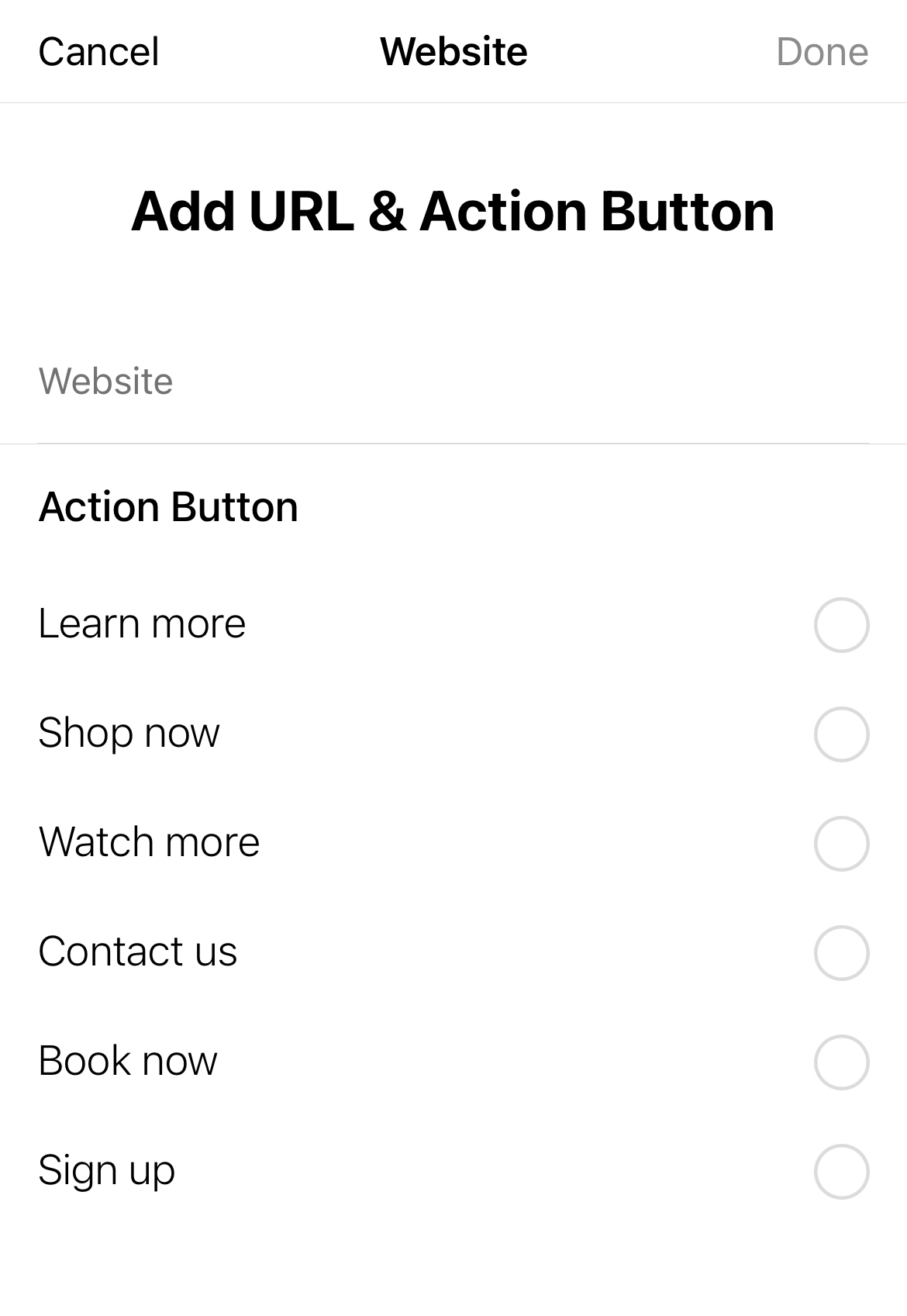
If you are creating a paid ad on Facebook or Instagram, CTAs are pre-selected. If your goal is to direct users to your website, the CTAs you can choose from are: Learn more, Shop now, Watch more, Contact us, Book now, and Sign up.
However, if you are simply posting to direct followers to your website or lead magnet, you can get creative and weave CTAs into your caption. For instance, if you mention at the end of your caption, you might say something link:
Instagram:
Facebook:

Generally, a website will have many different CTAs because different sections of your website will highlight different information. This is especially true on different landing pages. Website CTAs might include:

Your pop-up is generally where you offer lead magnets, free resources or pieces of content you offer in exchange for website visitors’ email addresses. Or, it might simply be a place for list building. Here are some examples:
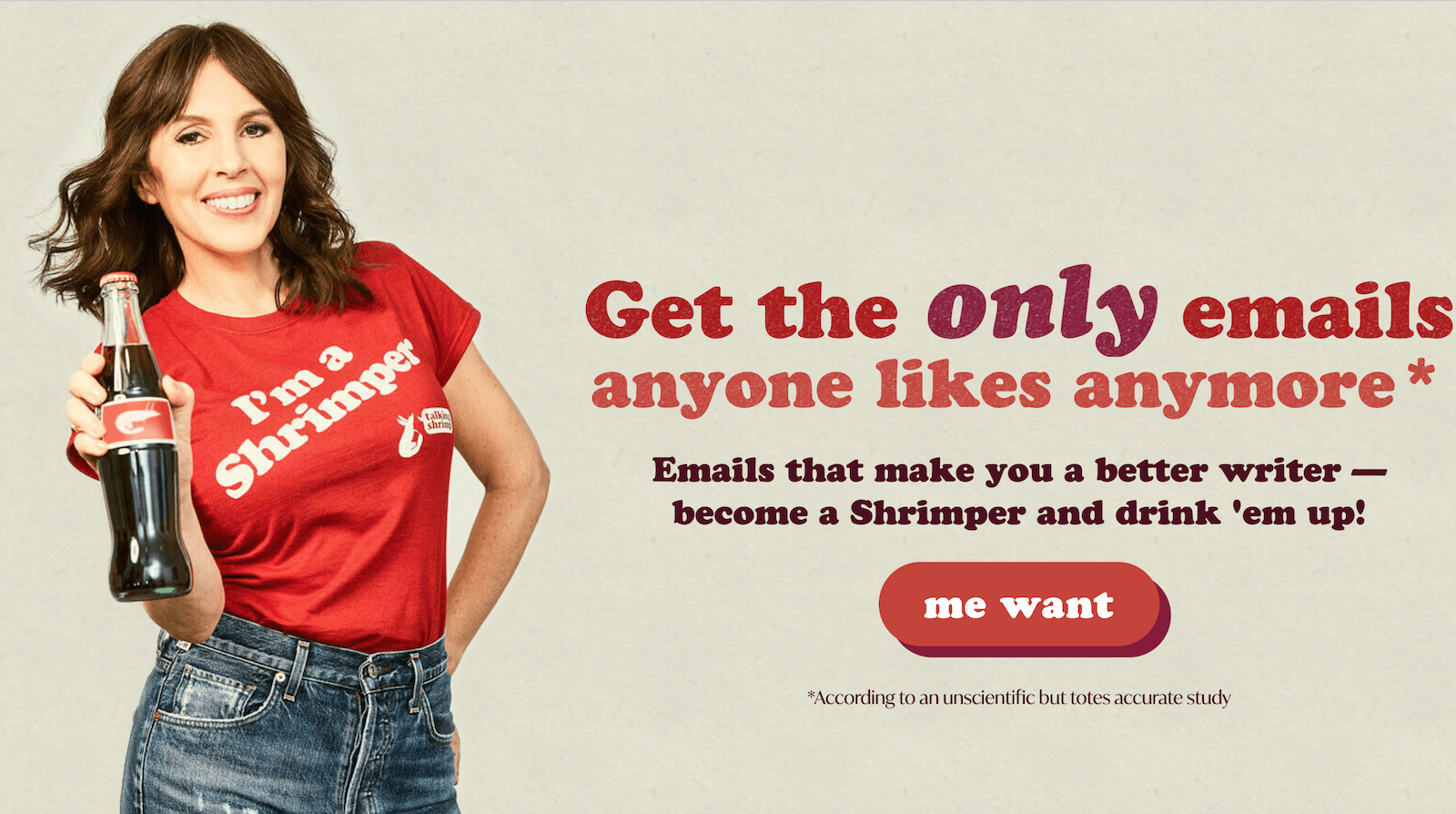
Depending on the content of your newsletter, many of the above CTAs can be used in newsletters as well. That said, if you have a regular newsletter schedule (and you should!), you won’t always need your CTAs to be part of a funnel or sales strategy. Instead, you’ll want to come up with creative ways to keep your audience engaged.
“Even when you’re not writing to sell or promoting anything, give your readers something to do,” explains Laura Belgray, copywriter and founder of Talking Shrimp. “People love to be helpful, and they love to engage. The more they interact with you and your emails, the stronger a connection they’ll feel.” She suggests CTAs such as:
The CTA meaning is call to action, and it’s “a hyperlink that moves your visitor through your sales process,” according to Bryan Eisenberg and Jeffrey Eisenberg, authors of Call to Action: Secret Formulas to Improve Online Results (2006). A CTA is generally a button or link that motivates someone to take action during a marketing campaign. Call to action buttons can be found on websites or landing pages, newsletters or email marketing, social media posts, and more. Some of the most common call to actions include “shop now,” “add to cart,” “learn more,” “sign up,” etc.
The three essential ingredients for an effective CTA are: value proposition, urgency, and clarity. Another way to look at these three elements is what, when, and how:

Considering different teaching styles is important because everyone has a different learning style too. If you want to engage students and increase participation and retention, it’s important to consider different approaches that will resonate with them. Those various approaches will also help you get through to them.
Plus, depending on what you’re teaching, different subject matters are better suited for certain teaching styles. While most teachers have a personal model, it’s important to be flexible and try different teaching styles to find an approach that will reach all of the needs of your current and potential students.
The relationship between a teacher and student is a special one. Think back to one of your favorite teachers growing up. What was something you loved most about them? Maybe it was how they encouraged or challenged you, or perhaps it was their passion for the material. Whatever it was about the style the teacher presented that landed for you, chances are their approach to teaching was compatible with your learning style.
Some common student learning styles include:
To accommodate these different learning styles, an effective teaching style would incorporate a blend of audio (i.e. lesson), visual (i.e. presentation), and kinesthetic (i.e. hands-on activity) materials and/or exercises.
Find out whether you should create a cohort-based course or a self-paced course.
For effective teaching to occur, students should ideally feel encouraged, respected, and acknowledged. We can’t always guarantee our classroom—whether physical or virtual—is a safe space. That’s because as teachers, we don’t always know what personal experiences students have gone through. But what we can offer is a brave space for learning, as Micky ScottBey Jones describes.
It’s important to understand that if a student feels put down or shamed during their learning process, the part of their brain that retains information shuts down. They actually can’t learn in that type of environment. This is perhaps not as common in online learning spaces, but certainly, something to be aware of. Especially for teachers who lean more toward authoritative styles, which we’ll cover below.
Before we dive into various teaching styles, as well as the pros and cons for each of them, let’s look at two different approaches to teaching:
Imagine walking (or tuning) into a class, and the teacher follows their lesson plan to a tee, never going off script. They take on the role of authority. Passing on information through direct instruction, while students merely listen and absorb. This is an example of a teacher-centered approach to teaching. While this type of teaching is generally considered the most traditional, it isn’t necessarily always the most effective.
On the other hand, you have a student-centered approach. For this one, imagine you walk (or tune) into a class, and the teacher checks in with their students to see where everyone is at. They ask if anyone has any questions and connects with the class to start. Then, the teacher tailors class time to meeting students where they are. This is an example of a student-centered approach to teaching. This offers space for building trust and fostering connections with students.
It’s important to note that neither approach is good or bad, nor right or wrong. Each can work in different settings and with diverse audiences. It is, however, a good idea to try to incorporate both approaches. Finding a balance between the teacher-centered approach’s structure and the student-centered approach’s flexibility is ideal. This is not a one-size-fits-all undertaking and, most likely, will differ with each new group of students or cohort.

{{audience-component="/blog-shortcodes/blog-popup"}}
We’re going to cover five different types of teaching styles.
Related post: Backward design lesson plan

There are pros and cons to each teaching style. So what those styles look like really depends on your subject matter and what will keep your particular group of students engaged. All groups of students are different, so it’s important for teachers to be prepared and adaptable. This might mean experimenting with what will support all students learning.
For instance, lecturing is ideal for a large audience and for covering a lot of material quickly. However, it doesn’t involve active learning or student participation. In addition to college lecture courses, this is also the most common approach for pre-recorded courses, as students can watch at their leisure and engagement is minimal.
Examples:
With an online course, you can apply demonstrator teaching methods by offering a community space, such as a discussion board, Facebook group, etc., where students are asked to participate and share responses to different prompts or assignments.
Or, if the subject matter you’re teaching has to do more with showing, not telling, you can utilize video. Exercise classes, art classes, and anything else that involves action can be a great course to use demonstrations for.
Examples:

A hybrid style strikes a balance between a student-centered and teacher-centered approach. The teacher offers the structure of a traditional classroom, as well as the flexibility to incorporate class activities and meet students where they are. One way to do this for an online course specifically is to offer both pre-recorded and live lessons.
Examples:
Both the facilitator and the delegator styles are most likely to require live sessions rather than prerecorded ones. Although with the latter you can oversee small group activities that take place outside of class in a community space. Teaching strategies that support these teaching styles might include Zoom break-out rooms, relational work through small group or partner exercises, and facilitating discussions that offer space for all students.
As the saying (attributed to Joseph Joubert) goes, “To teach is to learn twice.” To be an effective teacher requires trial and error, and experimenting with different approaches to see what will best support each new group of students. When you find yourself going back to the drawing board, or simply wanting to connect more with your students, refer back to this handy article to consider the approaches again.
Examples:

There are pros and cons of each teaching style, so it really depends on your subject matter and what will keep your particular group of students engaged. For instance, lecturing is ideal for a large audience and covering a lot of material quickly, however, it doesn’t involve active learning or student participation. A hybrid style, on the other hand, is ideal because it offers a balance of both a student-centered and teacher-centered approach; the teacher offers the structure of a traditional classroom, as well as the flexibility to incorporate class activities and meet students where they’re at. All groups of students are different, so it’s important for teachers to be prepared and adaptable, experimenting with what will support all students learning.
Considering different teaching styles is important because everyone has a different learning process. If you want to engage students, it’s important to consider different approaches that will resonate and help you get through to them. Plus, depending on what you’re teaching, different subject matters are better suited for specific teaching styles. It’s important for teachers to be adaptable and try different teaching styles to find an approach that will reach each of their students’ needs.

Creatives shy away from their about pages and mission statements for the same reason engaged couples often put off writing their wedding vows: It’s daunting to start writing something so deeply personal and, most likely, not something that will come out right on the first try. Fortunately, unlike marriage vows, a brand mission statement isn’t just a one-time declaration but rather a narrative that can evolve. You get to continue to refine as you grow.
No matter what field you’re in, people want to know who you are, what you care about, and why they should work with or learn from you. A brand mission statement offers potential clients or students a glimpse at your core values, as well as your commitment to your craft. A well-defined manifesto can even serve as your true north. This becomes the foundation for your website, content, and offerings, which everything else—including that tricky about page—branches out from.
If we’re looking at the 5 Ws (+ 1 H) of website design or copywriting, your mission statement is your why. It’s the heart of your business. It answers the big questions like:
Your about page, on the other hand, tells site visitors who you are and how you’re qualified to bring your mission to life. Often, creatives tend to either say too much here (perhaps believing they have to justify or oversell themselves, thanks to negativity bias). Conversely, they’re too modest and don’t say enough. Fortunately, once you hone in on your why, it’s much easier to discern what to share about who you are.
Creatives dare to walk the road less traveled, a path that involves the fear of uncertainty, putting yourself out there, etc. What brought you to that point? There must have been some defining moments that caused you to choose the wilderness of creativity and entrepreneurship. Within those pivotal crossroads lie some clues of what your core values are. While you’re there reflecting, think about your brand’s origin story, how it’s evolved, and your vision for the future.
Whether you’ve already given these statements some thought or this is the first time you’re thinking about them, it can be helpful to pay attention to what brands and creators you admire and how they approach their brand mission statements. Do a little research on brands in similar fields, as well as companies you encounter on a regular basis. Whose values do you align with? What resonates?
Equally important, what doesn’t? Where are their core values lacking? Pay attention when you feel an aversion or judgment arise. Feeling judgmental doesn’t feel good, but it can quickly point us in the direction of our values by showing us what they are not. For instance, if you notice a brand cite sustainability as one of its core values, yet notice that many of its services or products aren’t so ethical, you might come to realize that environmental-consciousness and transparency are two of your core values. While it can be easy to get stuck in judgment, especially in today’s world of cancel culture, allow judgment to fuel your mission, rather than shame others.
{{homepageguide-component="/blog-shortcodes/blog-popup"}}
Ask trusted colleagues, peers, clients, or students what they love about working with you. Find out what they think you bring to the table and what they believe your core values are, simply from interacting with you. It might feel a little uncomfortable at first. However, allow yourself to be seen and see what they mirror back to you. Besides, reaching out might lead to valuable quotes or material for testimonials. If you feel comfortable, you can ask for their honest feedback on your drafted about page and mission statement. And of course, you should use testimonials on your course sales page.
You might also call on the counsel of a clear mind for guidance. Give yourself some space, away from your busy work week, deadlines, emails, and everyday routine, to relieve the pressure of the task at hand. That might look like going on a walk in nature, spending some time outdoors, or sitting in meditation. Take intentional time to focus on your business, away from your business. Be sure to have a notebook handy to jot down whatever ideas come to you, no matter how insignificant they seem. Pay attention to any recurring themes.
Understandably, sharing your heart with someone via wedding vows or sharing the heart of your business with the world can be terrifying. Know that what you have to offer is not going to be right for everyone, so you can release any self-imposed expectations of having to please or appeal to everyone. The more you align with your core values, the easier you’ll attract your ideal clients and students and write a brand mission statement that’s true to you.