Thank you! Your submission has been received!
Oops! Something went wrong while submitting the form.
MENU

Competitive analysis for creators, coaches, and online entrepreneurs is just as important as it is for big businesses. In today's creator economy, it's not enough to just create, you need to find ways to differentiate.
Whether you're building a course, membership site, coaching program, or digital product, chances are your audience has seen similar things before. So, how do you make your offer the number one choice?
That's where competitive analysis comes in.
Performing market research is not about copying others. It's about understanding your niche and space, identifying opportunities, and crafting a unique angle that helps you achieve two things: connect with your audience and set you apart from your competitors.
A strategic look at your competitors can unlock clarity in your creator strategy. Let's dive into how to do market research for creators the right way.
In short, competitive analysis is the process of evaluating others in your niche to better understand how they serve your target audience, what the gaps are in their offers, and how you can use that to your advantage to serve the audience even better.
For online course creators, coaches, and online entrepreneurs, competitive analysis means:
Market research for creators is essential. It helps you spot trends, surface content gaps, and refine your own niche analysis in the process. After you conduct the competitive analysis, you're in a much stronger place to create an offer that speaks more clearly to your audience and addresses the pain points they have.
To perform a basic competitive analysis, you don't need a fancy setup or expensive tools. You can get started with your laptop and a simple Google Sheet. However, using the right tools can make your process smoother and more actionable. Plus, you may be able to perform the market research much quicker.
Here's a list of tools that are worth considering to help make your process more efficient and easier:
So, how do you run an effective competitive analysis campaign? It's actually easier than you think. Here's a structured step-by-step process to guide you through the whole process:
The very first step is to clarify your goals and unique angle:
Answering these questions will give you a solid ground to build on. To make this step-by-step process easier to understand, let's use an example.
Let's say you're a certified yoga teacher who wants to launch an online course as a way to diversify income and scale your business. Here's how your answers to the questions above might look:
The next step in the process is to look for creators who serve a similar audience to your target audience and do something similar to what you want to do. That includes:
How do you find these people? Well, it's fairly simple. Use Google, YouTube, TikTok, Instagram, or Teachable course discovery to identify your competitors.
Let's come back to our yoga instructor example. Because you want to create an online course, let's go to Teachable's course discovery to see what's available.
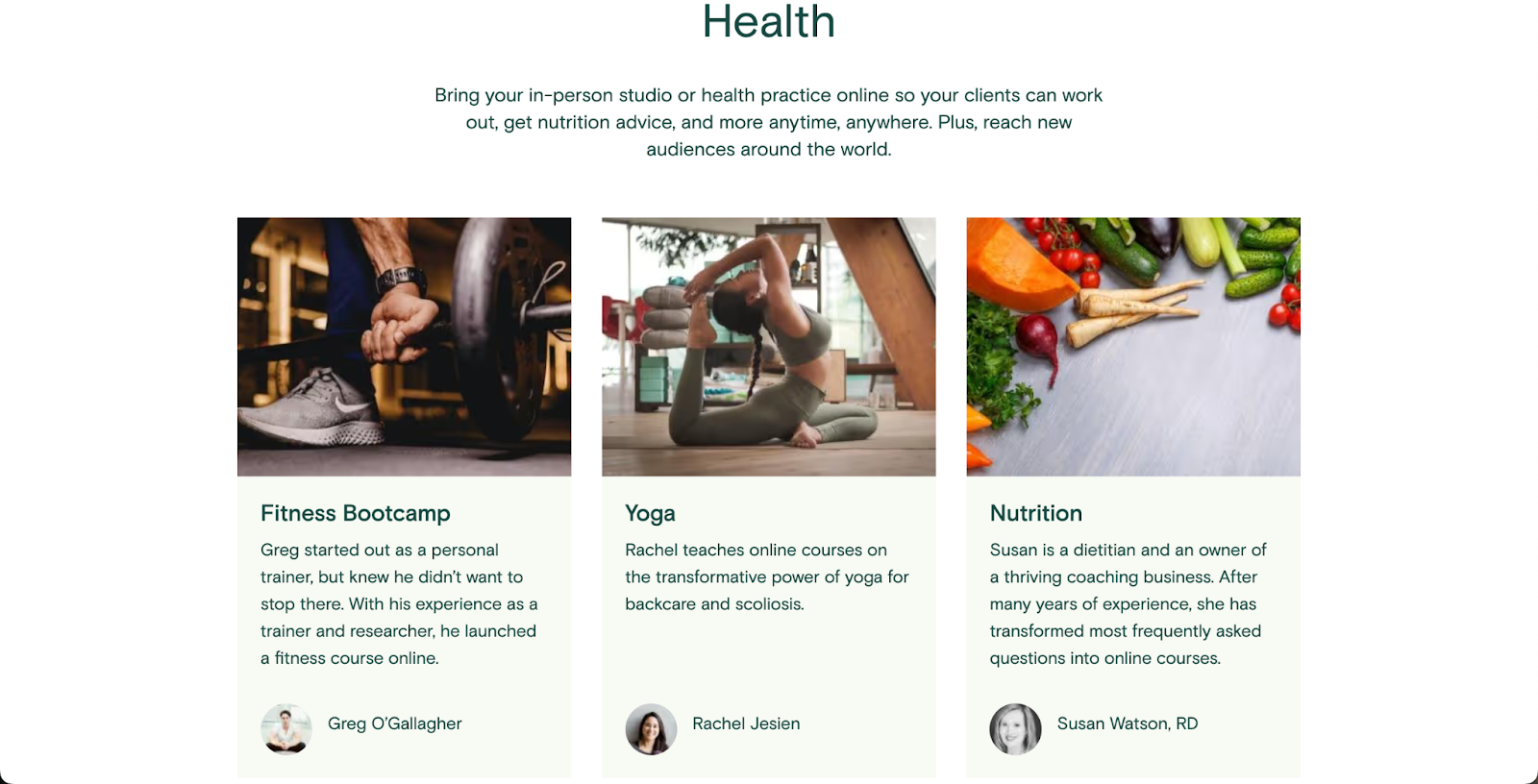
And here's your first competitor—Rachel Jesien, who already has multiple courses on yoga. If you Google her name, you can find her Instagram.
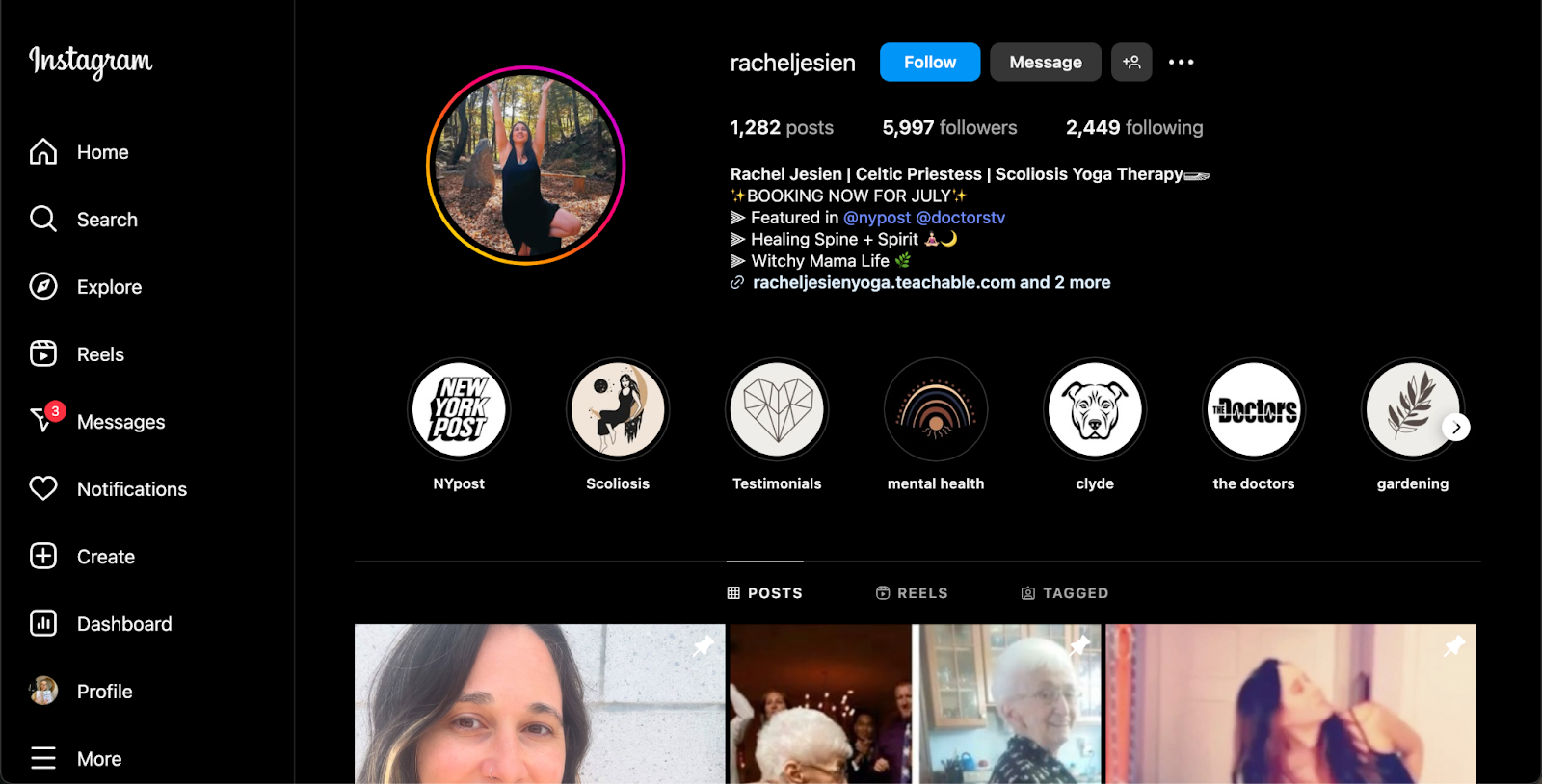
After reviewing the posts, you may see that while you're in the same niche (yoga), your audience and business approach may not align. So, you put Rachel into the "adjacent competitor" list.
While you're on Instagram, utilize it to search for direct competitors. In the Search bar, type in "yoga for moms" and see what comes up.

While Instagram search is not the most refined, you can still see what some accounts pop up, like this one that offers yoga for toddler moms:
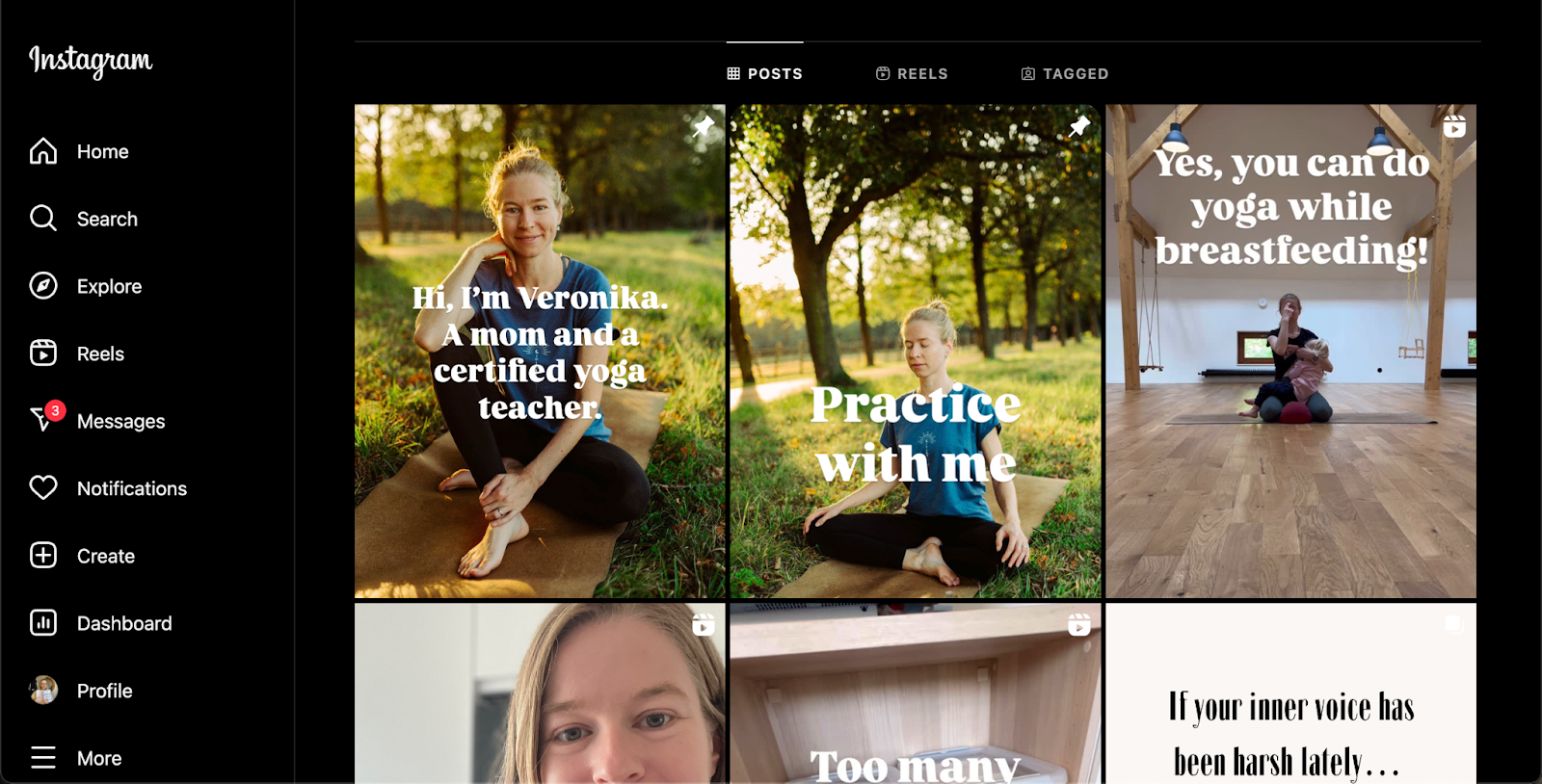
This account offers yoga practice tips for busy moms with small kids, you have a very clear audience overlap. So, add this account to your "direct competitors" list.
Next, let's see what YouTube has to offer. It's a good place to do your competitive market research because there are a ton of yoga teachers posting their classes online.
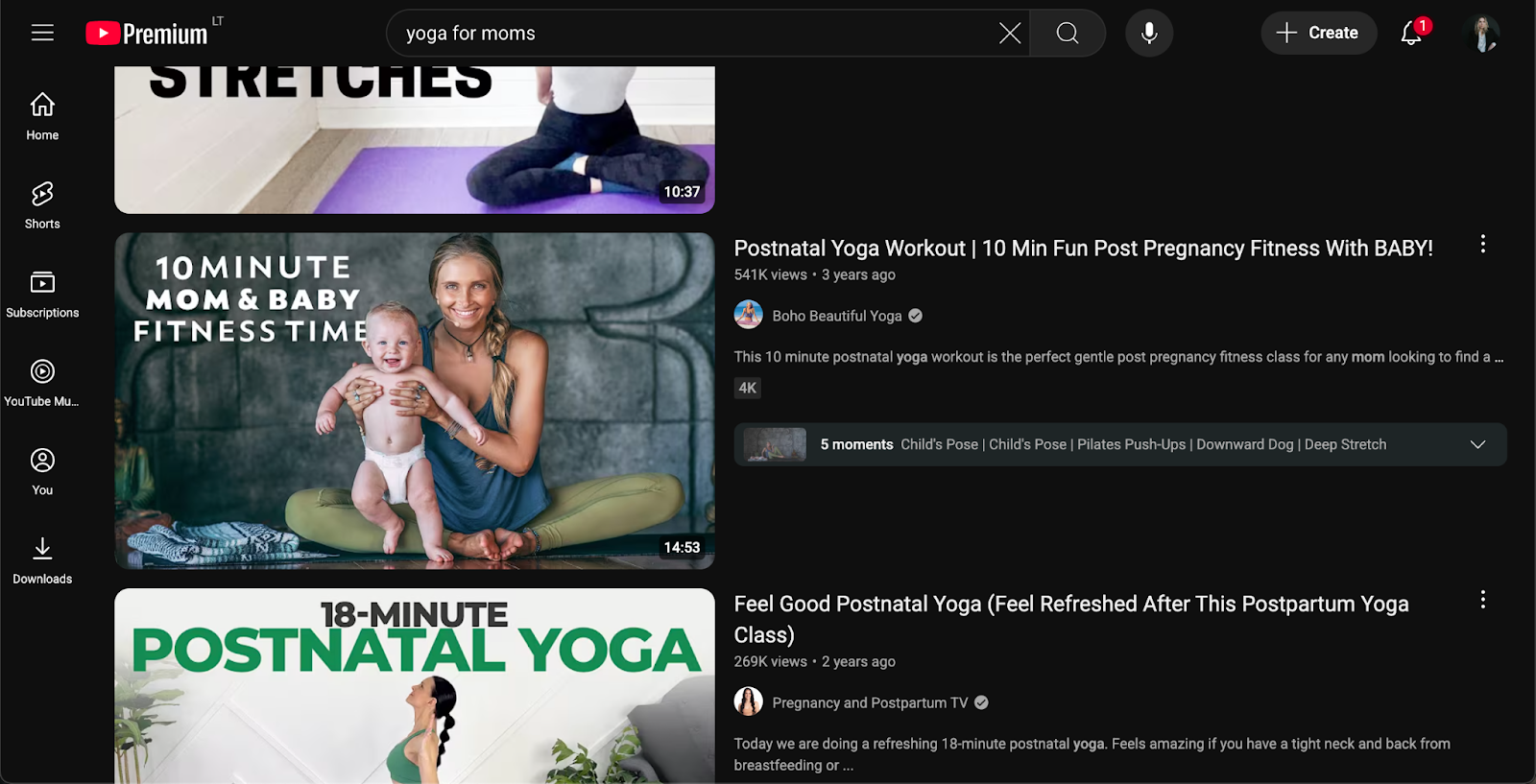
After searching for "yoga for moms" on YouTube, you can find tons of channels. Not all will target your target audience, but some might. Like this channel, "Boho Beautiful Yoga."
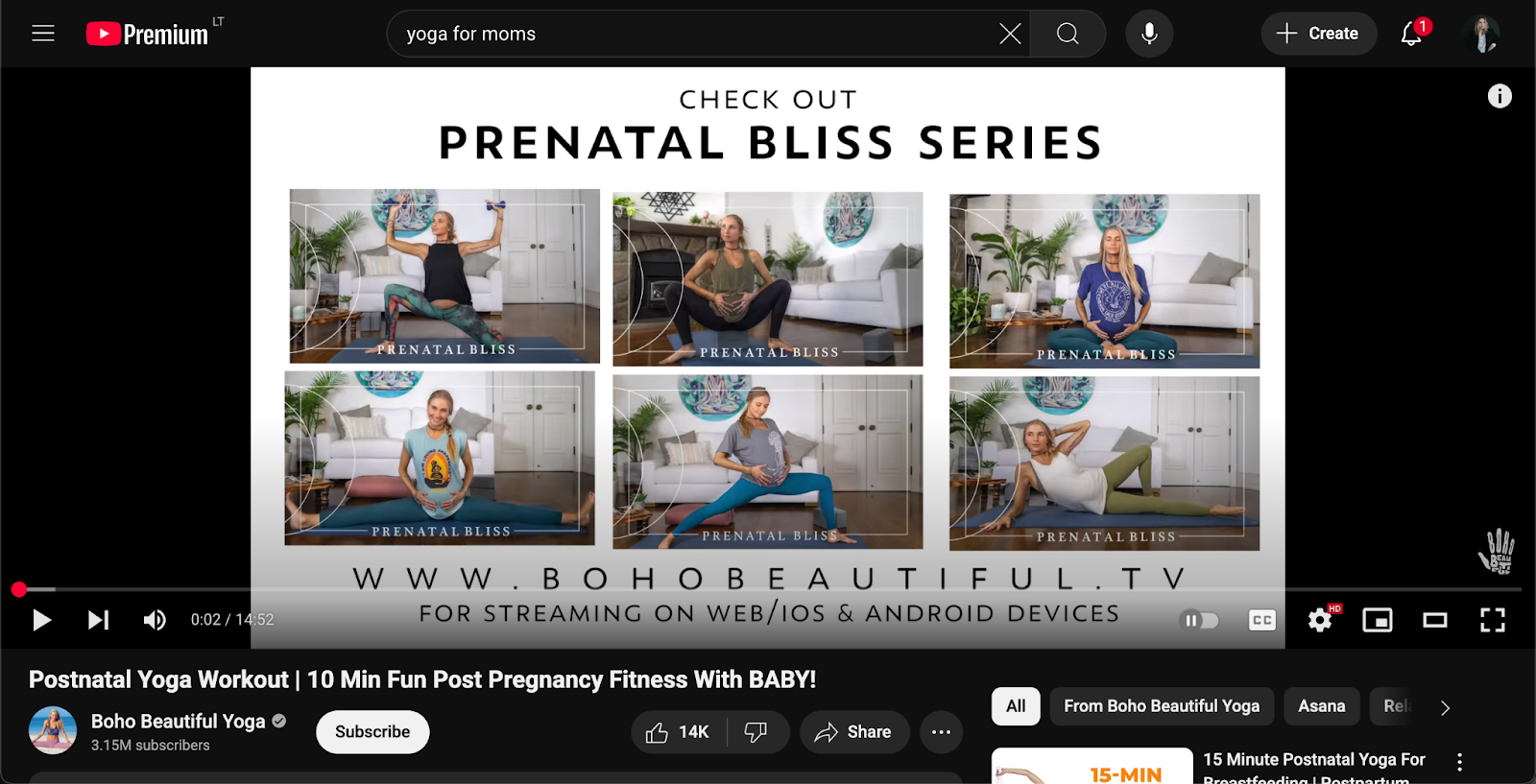
This is a large channel with millions of subscribers that has offers you want to sell, too, and a very clear target audience overlap. You can save this competitor to your "aspirational competitors" list.
Using this method, go through various platforms to compile a solid list of relevant competitors.
All right, the third step is to take a better look at the competitor list you made and evaluate their offers. For each competitor, answer these questions:
This is where having a running Google Sheet or Notion database comes in handy to keep track of all the different competitor analyses at a glance.
Circling back to our yoga instructor example—let's analyze the offer of one of the direct competitors we found while doing research earlier, the "Yoga for Toddler Moms" Instagram account.
The creator has a link in their Instagram bio that leads to a professional-looking Linktr page, which tells us they have two offers:
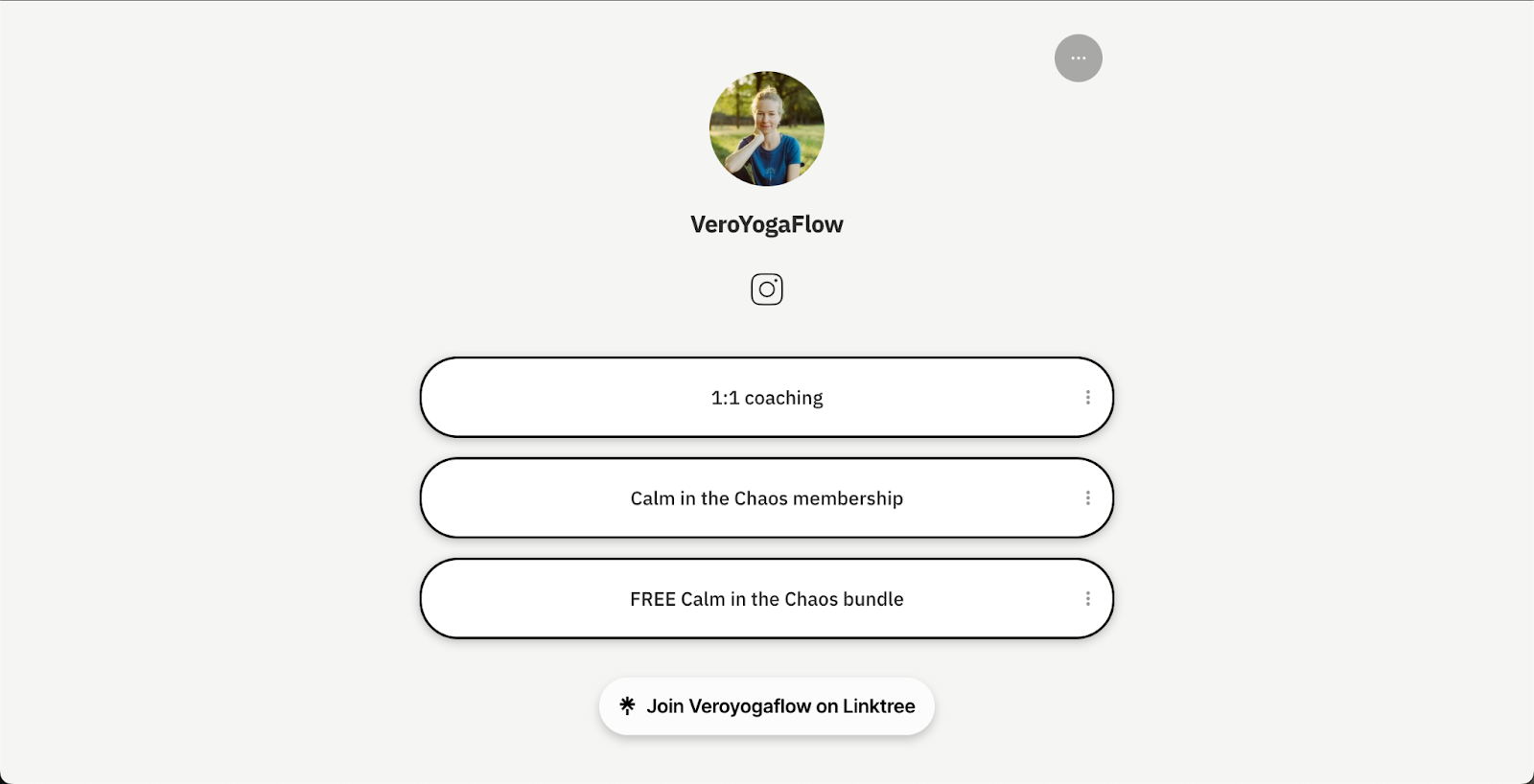
Let's run a quick analysis of what appears to be the main offer:

Once you have a solid breakdown of your competitor's offers, it's time to take a look at their messaging and content strategy to see what works and what doesn't.
Break down their brand voice, values, and key differentiators:
This is where you can use tools to help you perform an in-depth social media content analysis.
Let's get back to our previous yoga instructor example and examine the Instagram account of the hypothetical direct competitor "Yoga for Toddler Moms":
Once you've analyzed everything there's to analyze in terms of their content strategy, it's time to take a deeper dive into your competitor's marketing funnels.
Consider going through the buyer's journey when possible:
As you go through these funnels, take notes on which elements feel polished, generic, pushy, or helpful. What resonates with you and entices you to purchase? What's missing? What would you do differently?
Let's return to our yoga example. Our hypothetical competitor for yoga practice courses, "Yoga for Toddler Moms," has a pretty good funnel set up. They offer a free bundle for stressed moms that offers valuable tools for their target audience in exchange for an email address:
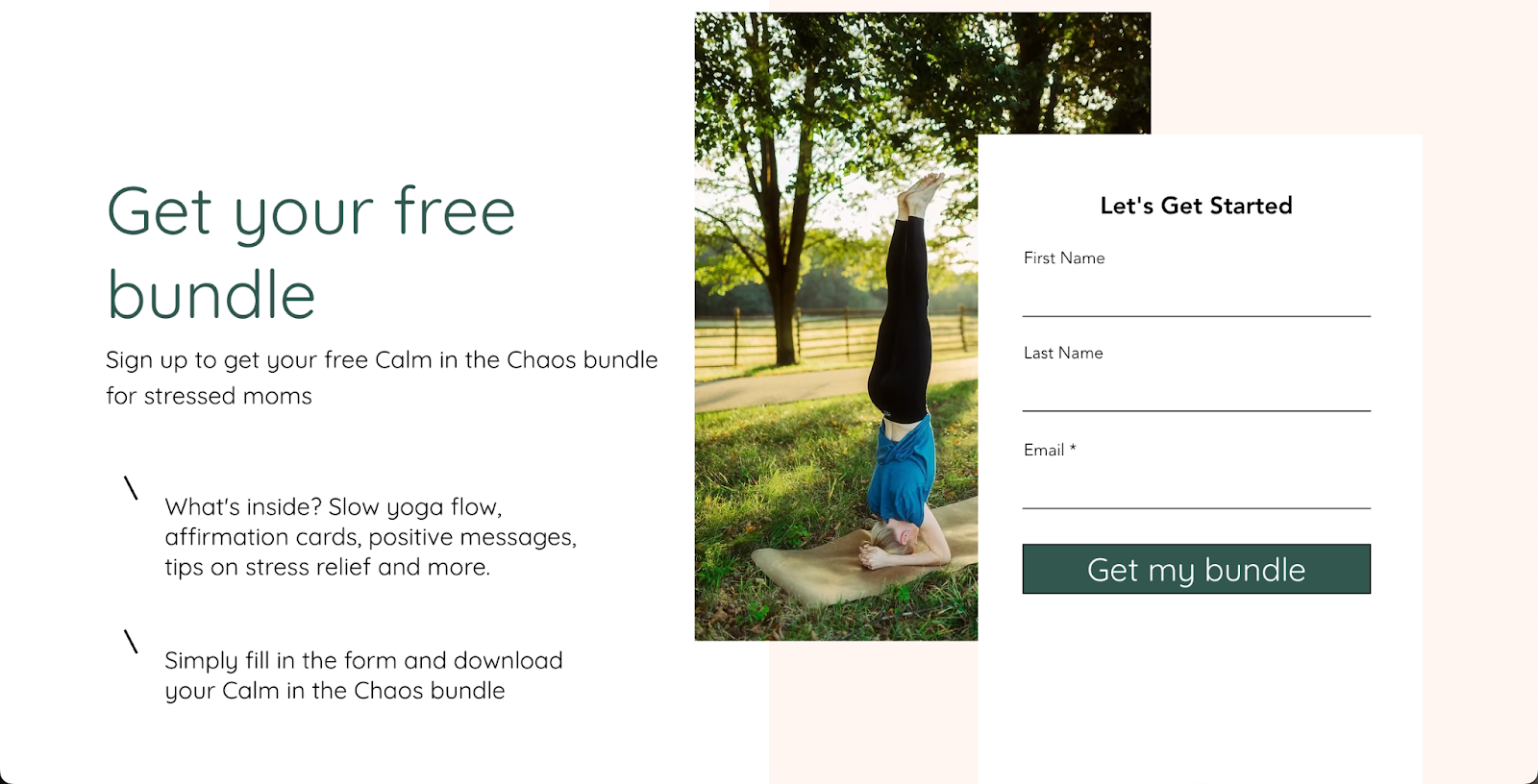
The landing page is designed professionally, and the offer is clear and communicates the value people will receive if they choose to sign up.
The last and final step in your competitor analysis journey is to review all the research you've done so far, spot the gaps, and identify opportunities in those gaps. Ask yourself these questions:
This is the step where your creator strategy takes shape. Use all the research you've done to sharpen your angle, not copy someone else's.
Let's see what gaps and opportunities we can spot in our hypothetical yoga practice competitor, "Yoga for Toddler Moms":
Manual competitor analysis can be time-consuming. The good news is that current AI tools can help you speed up the process and analyze a lot of content quickly. Here are some prompts to try:
Pro tip: If you use the Pro version of ChatGPT, make sure to take advantage of their "Deep research" feature, which performs a much more in-depth research and can offer much more insights into your competitor analysis.
Competitive research helps you identify gaps and opportunities in the market, and Teachable gives you the tools to fill those gaps and take advantage of those opportunities quickly and efficiently.
Here's how Teachable can help you stand out:
Are you ready to take your business to the next level? While competitive analysis may look intimidating, it doesn't have to be a hard process. Don't believe us? Well, here's the plan of action on how to run a competitive analysis for creators in the next five days to help you see what's possible:
Dedicate one hour to:
Spend two to three hours (use AI tools to help you save time) to:
Dedicate two hours to:
Two hours is all you need to:
Dedicate one hour to brainstorm:
In five days and less than ten hours of work, you'll have a solid content strategy to help launch or boost your online business. Now, it's time to start building.
Level up your strategy and use Teachable to deliver offers your competitors can't match.
