Thank you! Your submission has been received!
Oops! Something went wrong while submitting the form.
MENU

Many will agree that taxes and admin that come with being self-employed are the least fun part about creator business. In fact, some people completely forgo their dreams of being a professional content creator purely because they feel overwhelmed with the business side of things and have no clue how to set up a company and do their taxes.
So, if you're feeling unsure about how to set up your creator business legally and which company structure is the best option for you, know that you're definitely not alone. That's why we're here today–we want to help you better understand how to set up your creator business structure and show you that it's not as hard as it might look so you can start living your professional content creator dreams today!
The Internal Revenue Service (IRS) requires everyone who runs a business in the United States to identify as one of the five available business entities:
Depending on what business structure you choose to register, the way you file taxes and run your business will differ. For example, as a sole proprietor, your personal assets are not separated from your business assets, while as an LLC, these are separate. You'll have to fill out different tax forms and even might pay more or less taxes depending on your business structure.Some business structures are easier to navigate and can be fully handled without hiring an accountant to help manage taxes, while others (like an S-Corp) might require a professional to handle taxes and other aspects of the business.
Which business structure will be right for you also depends on whether or not you're operating alone. You might want to choose one business structure over another if you have a business partner to protect yourself and share the profits and responsibilities equally to avoid conflict.
Also, if you want to raise money for your creator business via grants, business loans, angel investing, or other ways, certain business structures make it easier to do so and increase your chances of getting funded. That's something to keep in mind when you're forming a company, especially if you're a B2B creator.
To help you make an informed decision on which business structure to choose, you need to understand the basics of the most common business structures for professional content creators. These are:
Let's take a better look at each of these three business structures so you understand the basics.
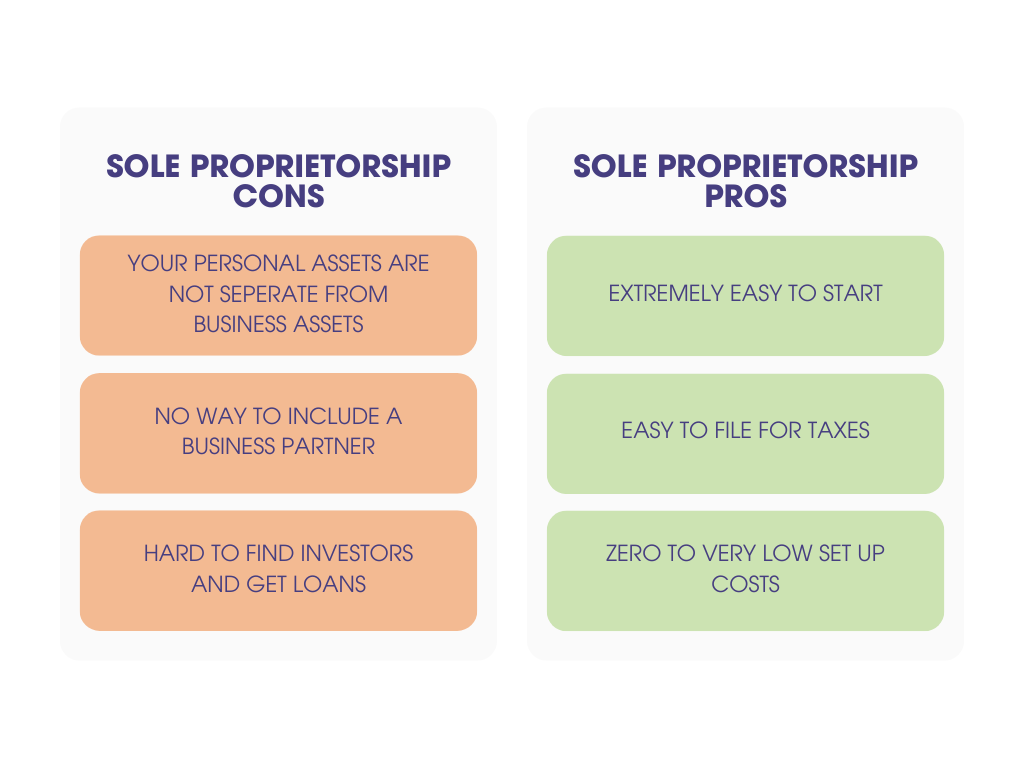
A Sole Proprietorship is the easiest and most common business structure. You're automatically considered a sole proprietor if you're earning income on the side of your day job (for example, from your side hustle) or you are self-employed.
Sole Proprietorship is run by a single person (you), and you bear the full responsibility for everything in your business. Your personal assets are not separated from your business assets, which means that if something happens (let's say someone sues your business), you'll be personally held accountable for your personal assets. As a sole proprietor, you have full control over your business.
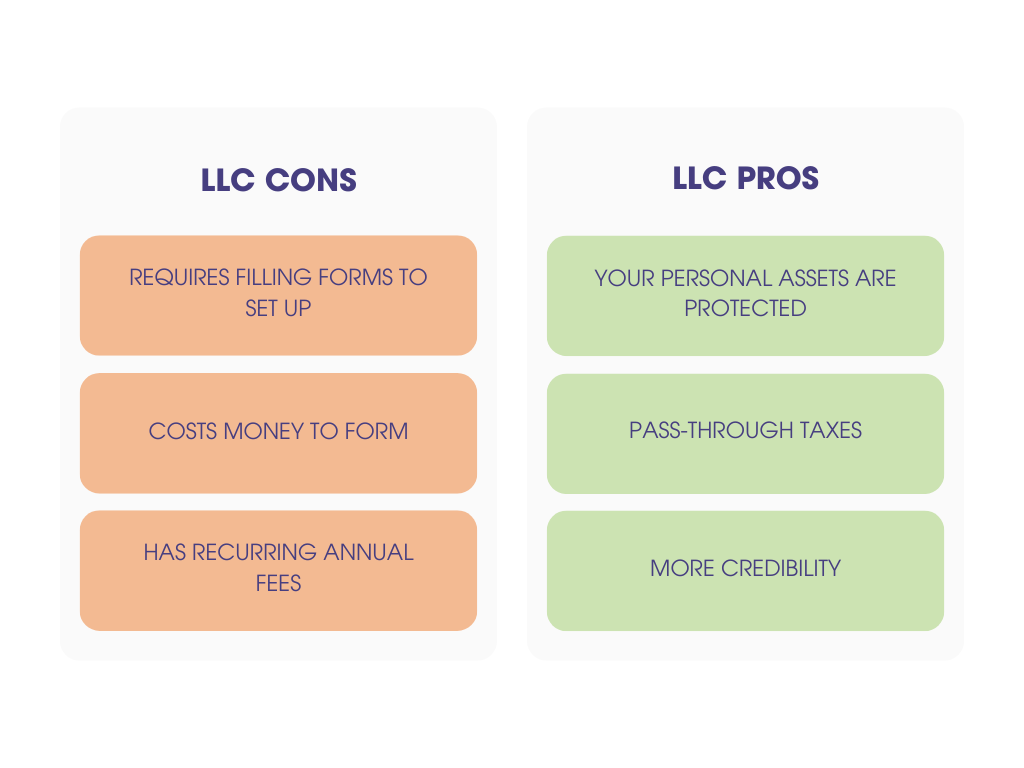
A Limited Liability Company, otherwise referred to as LLC, is a business structure that offers the best aspects of a corporation and sole proprietorship in one. When you form an LLC, your personal assets are separated from business assets, which offers protection. LLC is still easy to set up, and if you're a single-person LLC, then you're taxed as a sole proprietor, which is super easy to handle.
Running an LLC, even as a sole person, offers more credibility in the business world, which might be important for B2B creators. Clients, suppliers, and lenders all might take you more seriously if you're an LLC.
Also, the moment you form an LLC, your business starts building a credit history. That's incredibly important if you want to borrow money to invest in your business. Lenders will be much more inclined to offer you loans and lines of credit if you have a business credit history.
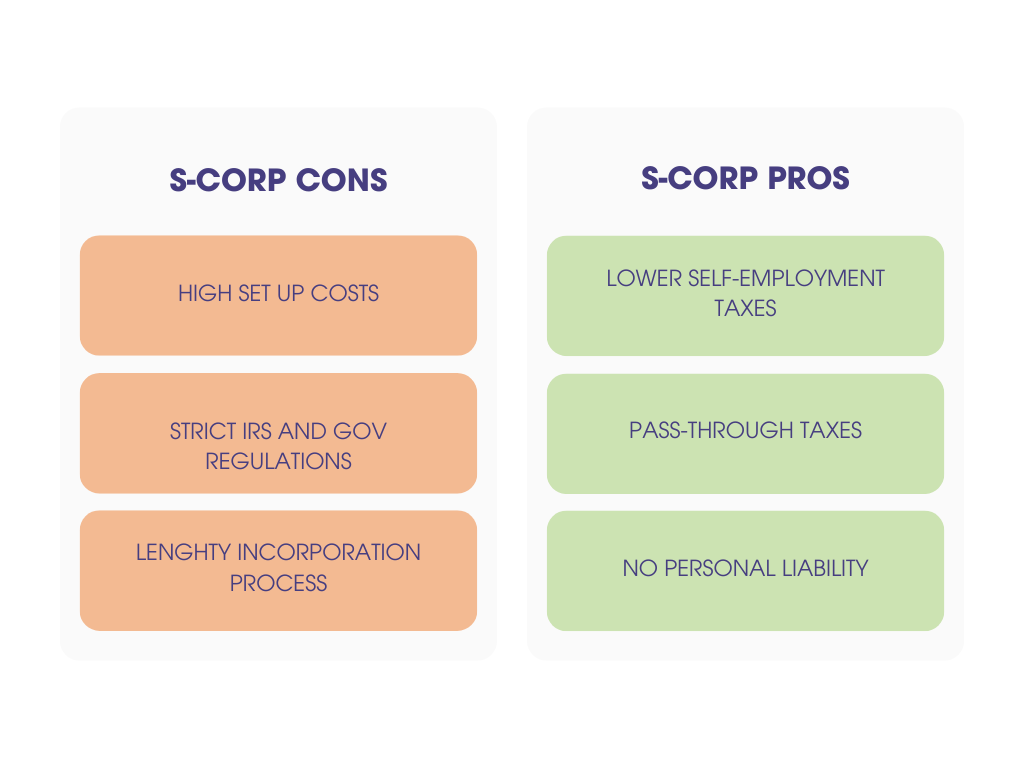
An S-Corp is a business structure that's essentially a less complex type of a corporation. It's the best for small to medium-sized businesses and is taxed as a pass-through business as long as it has less than 100 shareholders. That means that all the profits go directly to the business owner instead of being taxed double as in a traditional corporation.
An S-Corp is a combination of a corporation and an LLC, and for some creators, it might actually allow them to pay less taxes. In an S-Corp, you are considered the employer and the employee. You have to pay yourself a salary and taxes on it. However, the caveat is that you can lower those taxes by taking part of your income as distributions.
After learning the basics, you might be wondering, how do these three business structures compare to each other? Well, let's find out!
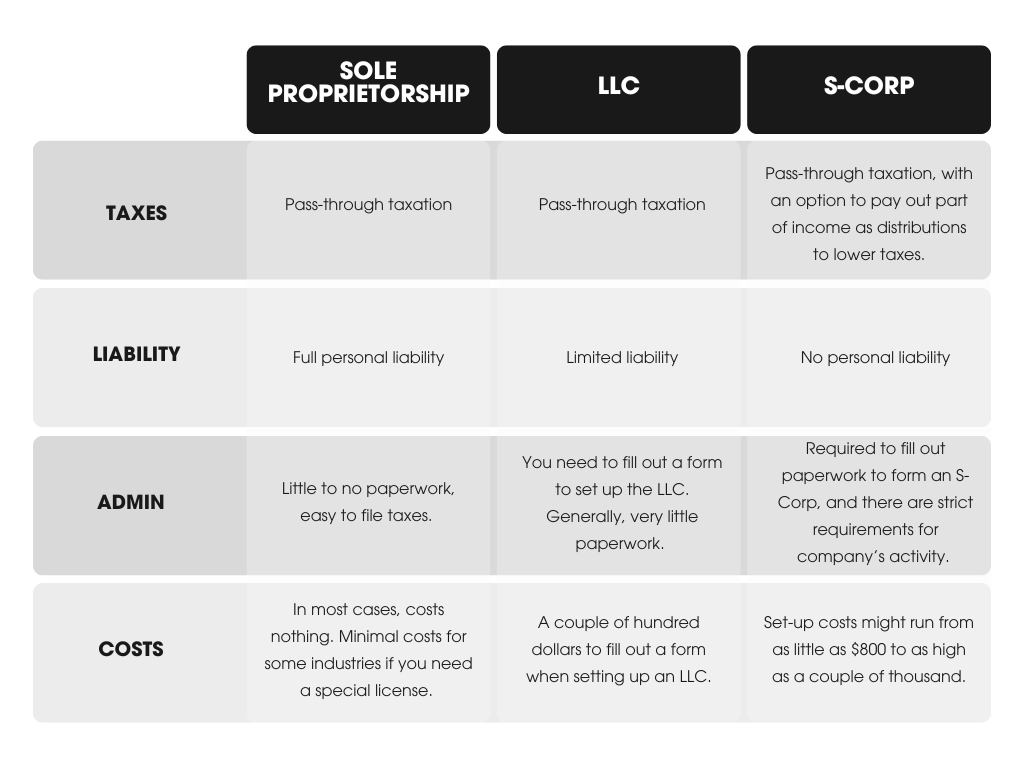
Now that you know the differences between all three business structures, it's time to choose which one works best for your business. We do believe that small business formation doesn't have to be hard! So, to help you choose the right business structure for your business, here are some things you want to consider:
If you're new to self-employment full-time, or you are not even a full-time creator yet and are just running your online course business as a side hustle, you might want to start simple and set up a Sole Proprietorship. It's the easiest company structure to set up and run–you don't even need to do anything to start!
As a new content creator, you want to make it as easy for yourself as possible. While you are just getting into the grove and figuring out the ropes of your business, being a sole proprietor will be easy and simple. You don't have to worry about filling out forms or having to pay fees to set up a business.
Filing for taxes at the end of the year is easy. You might do it yourself, or you might hire an accountant to help you. Apart from filing for taxes at the end of the year, you might need to check if you need a license to run a business. That will depend on your industry and what you do, and you can easily find that out on the government's website when you start your business.
Once you start growing your creator business, it might be time to form an LLC. As your product library grows and you deal with more and more customers all over America, you might want to separate your personal assets from your business assets and make sure you're protected.
An LLC offers the protection of your assets while still giving you the flexibility to make money and pay taxes without a huge headache. It's a very convenient business structure, and you can start building your business credit history so that if you ever need a loan or a line of credit to expedite your growth, you have better chances of securing funding from lenders.
LLC vs. S-Corp for creators–which one is better? Well, the answer is simple. If you're a huge creator with a team and large yearly revenue that goes into high six figures or even seven figures and above, then an S-Corp might be the better option for you.
As an S-Corp, you can still have the flexibility and protection that you have with an LLC, but you have more options for optimizing your taxes and how you run your business. An S-Corp is good if you want to grow your business through funding–an S-Corp makes it easier because you can have up to 100 shareholders without having to pay complex taxes.
Also, as an S-Corp, you can lower the self-employment taxes you have to pay, which means that you can take more money home than you would otherwise.
Are you ready to make it official? Here is how to set up each business structure for your creator business:
Starting a business as a sole proprietor doesn't require you to fill out any forms or register with the government. If you start earning money as a creator, you are automatically considered a sole proprietor. However, there are certain things you might want to consider, such as your business name or DBA (Doing Business As).
A DBA allows you, as a sole proprietor, to operate your business under a different name than your legal name. While it's not a necessity to have a DBA, you might be useful for some. The fees and procedures for filling for DBA vary from state to state, and even city to city, so make sure to check in with an advisor who can walk you through the process.
Depending on what type of activities you do as a sole proprietor, you might need a license permit. To figure out if that's applicable to you or which license you need to get, check out the IRS website that outlines all the information and how to apply for any permits as a sole proprietor.
It might be a good idea to find a local small business advisor who can help guide you through all the tax forms you might need to file as a sole proprietor. Plus, they can help you figure out if you need a permit or a special license so that you can avoid the hefty fees that you might acquire if you operate your business without the correct permit. U.S. Small Business Association can help you find a local advisor.
Generally, the process of forming an LLC is pretty straightforward and shouldn't take you long:
It's important to know that regulations, processes, and fees for forming an LLC vary from state to state. So, make sure to check with your state to see if you're following the correct process.
Forming an S-Corp is a little more involved than starting a sole proprietorship or an LLC, but the process is also pretty straightforward:
So, how much does it cost to form each type of business structure, and what forms do you need to fill out? Here's a quick guide to help you get started:
No matter which business structure you choose, it's important to have all of your paperwork in order for tax purposes and in case you need a loan to close your business or deal with any issues. Always have your documents organized and on hand:
If you're unsure about what paperwork you need to have on hand as a creator and business owner, it might be a good idea to check with the IRS–they have all the forms listed on their websites for Sole Proprietorship, LLCs, and S-Corps. Also, you might want to seek out a business advisor's help or reach out to an accountant who can guide you on how to organize your business paperwork efficiently.
