Thank you! Your submission has been received!
Oops! Something went wrong while submitting the form.
MENU
Strategies for reaching the right learners, building trust, and growing your following over time.
The following is a guest post from Teachable creator, Kelly Casanova. Kelly is a self taught weaver with a big passion for sharing the timeless art of weaving with others through her Teachable courses. Kelly is known for her calm and slow teaching style and she bases her classes on how she would have liked to have been taught. She designs all of her own projects and caters for levels from beginner to intermediate. In honor of Teachable’s Creator Month, in which we celebrate and share the expertise of creators everywhere, Kelly shares how to use free content for success.
The concept of free content can be a bit of a stumbling block to online course creators. It seems counterproductive to spend hours, days, weeks working on projects that don’t necessarily have any immediate monetary gain. And yet I consider free content one of the key foundations to building a successful online business.
The idea of sharing what I know for free comes fairly naturally to me for a number of reasons.
In case you’re wondering exactly how I implement free content within my online business, let me share a few examples with you.
When someone signs up to my mailing list, they receive a free weaving pattern in the form of a digital download. The pattern was designed to be very attractive but not too advanced. I have a lot of absolute beginners who visit me online for inspiration and guidance, so it’s very important that they are not intimidated by a project that is beyond their level.
In conjunction with this pattern, I also made a YouTube tutorial so that anyone who downloads the pattern can also see me weaving it.
Last year when the pandemic hit, so many people were stuck at home and ready to learn something they had always wanted to do. In the initial weeks, we were constantly being told to “wash your hands.” I released a free project for participants to weave some gorgeous and soft hand towels. This project was also at beginner level, as so many were taking up weaving at that time.
The PDF pattern is published and downloadable on my blog, along with a lengthy article discussing materials to use and helpful techniques. I made a two-part series on how to weave these towels from start to finish on YouTube. I also uploaded these videos plus the PDF pattern to my Teachable school as a free class and many have accessed it there.
The project became extremely popular. Over a year later, this free content is still being constantly used. I’ve received hundreds of comments from grateful weavers who appreciate that I released such detailed free content at such a difficult time.
I was sharing videos on YouTube before I even knew what an online course was! I can honestly say that if it weren’t for my YouTube channel, I would not be running an online weaving school.
I’ve never had an uploading schedule—I just do it when I can. Most often, when I am working on filming a new class, I will use a technique or little segue to film an additional video for YouTube. This method has the benefit of not being a lot of extra work because I’m already set up and in the filming zone, and also allows me to promote the project I’m working on within the YouTube video.
By the time the new class is ready for release, I usually have a handful of YouTube videos to go along with it. More often than not, I will use the YouTube videos to construct blog posts.
{{minicourse-component="/blog-shortcodes/blog-popup"}}
When you start out online, it’s very unlikely that you will have all the skills you need to really hit the ground running. Free content allows you to practice without heavy expectations. Any content creator who utilizes video will tell you that your first video may not be as professional as you would like. Naturally, as you practice and release more content, your skills will improve.
And because you are not charging any money for this initial content, you don’t have the pressure of higher standards.
One of the most challenging things about starting out is getting people interested in what you do. Providing free content showcases what you do so that you can start building that all important mailing list. You can also test ideas to see who responds and in which way. This is really crucial in giving your business direction.
People are not likely to invest in you if they don’t trust you. And, how can people trust you if they don’t know you? The best way to build rapport is to give value from the beginning, without asking anything in return.
This is crucial! My free content is constructed to show my audience my teaching style and what they can expect when they purchase a course or membership from me, but I also make it clear that the free content is more limited.
This means that when a new student arrives in my weaving school, they are there because they have accessed my free content and already like my style. Most of them are thrilled to find that the courses are beyond their expectations and provide huge value for money. My free content translates to lots of happy students!
Again, I believe this is crucial. My free Facebook groups are lively, happy, inspiring, and they drive traffic to my online school. The groups help to promote my products because the group members talk about the class they’re doing and show photos. Word of mouth has been a game changer for my business! I have never done any paid advertising and my school is thriving.
Although I’ve spent all this time singing the praises of free content, I do want to point out an important fact: free content makes you money! In fact, it can make you lots of money.
Once you have enough subscribers, you can monetize your channel. You then start to earn revenue through ads. For most YouTubers (myself included), this is a fairly minuscule part of overall income, but it’s nice to have.
For every video I post, I make a point of talking about and linking to one of my products, usually my online weaving school. I leave a lot of links below the video to make it easy for viewers to click.
I never write a blog post without including at least one link. The link is always relevant to the post topic, so it never feels like a sales pitch. My blog also makes a small income from Google AdSense and affiliate links.
I frequently share tips, techniques, and my processes on social media. Again, these social media posts are often directed towards a particular product I have available. It’s another way of increasing interest by providing value rather than just saying “look at me!”
Free content can be the building blocks to success in so many ways. I hope my points today may help you to consider how you could make free content work for your business.

The following is a special essay from software developer, freelance tech writer, and Teachable contributor, Nahla Davies. Before devoting her work full time to technical writing, she was a lead programmer at an Inc. 5,000 experiential branding organization. In honor of Women’s History Month, Nahla penned an essay on her experience making the transition to being a full-time writer and the best entrepreneurship advice for women looking to do the same.
There were many things that I wish I had known before I made the transition from corporate life to being my own boss. I was tired of sacrificing time away from my children and hobbies, but I was still passionate about my work. I wanted to find a way to have it all: the career, the family, and sanity.
As a software developer, I worked in numerous environments where I was the only woman in a sea of men. There were many times I tried to become “one of the boys,” but no matter how many after-hours I attended, I never found myself fitting in. It wasn’t because of the chummy boys club or sexism in the workplace, although I did experience plenty of it.
I quickly realized that I couldn’t quite relate to my colleagues because I was simply not built for the nine-to-five grind. I was craving a different challenge. And more freedom.
The corporate world consists of people from all walks of life trying to get ahead. Many of them do very well for themselves, and I was one of them. Working long hours, forgetting to eat, and missing out on family events became routine as I continued to surpass my career and financial goals. Making money and becoming a successful female lead programmer for an Inc. 5000 company fed my ego and kept me from seeing a side of life that I was missing.
It wasn’t until I suffered an injury that I began to feel the pressure building while I was busy at work. I tried to keep up, but it was nearly impossible to code with my injuries. And I was falling behind, being surpassed by my peers, and feared the worst. I was past my prime.
I started spending more time at home to recover, and I couldn’t believe everything I was missing grinding away at work. I found that I barely knew my kids, I had lost my sense of self, and I started to miss my husband while I was climbing the corporate ladder. So I decided to take some time off to heal and regain some clarity before making the most significant decision of my life: Quitting my corporate job to pursue entrepreneurship full-time.
It hasn’t been an easy journey. I had to build my side gig from the ground up until it became a full-fledged business. Now that I am consulting and writing full time, I would like to share some tips with other women who want to trade in their day job for the freedom of a career in entrepreneurship.
Now more than ever, people are turning to online courses to learn how to take steps forward in their career, learn a brand new skill, and even provide others with valuable information. If you’re just starting on your journey towards self-sufficiency, then teaching courses online is a great way to build a solid foundation to build your own business. Not only can it provide a stand-alone income, but it can also be scaled up or down to a side gig or a full-blown empire.
Before we get in too deep, I should remind you that there is no magic pill, no easy button, and no one else to blame but yourself if you fail. If you want to become an entrepreneur, you have to have the drive, commitment, and belief in yourself to make your dream life a reality.
I believe that anyone can transition from working for “the man” to working for themselves with the right mindset.
Whether you have had a long corporate career or you are jumping into entrepreneurship head first, here are a few things you need to know (no matter what gender you are) to transition into self-employment with confidence:
The fact is that branching out on my own after many years of being comfortable with my corporate life was nerve-wracking. Starting a business, even a small side hustle, implies a certain amount of risk. When the realization that your success or failure is solely your responsibility sets in, you may want to run to your boss and beg for your job back.
My advice? Push through the fear. Get out of your comfort zone, keep going when someone tells you it’s not possible, and find an alternative route to the roadblocks that get in your way.
I remember there were times I was working from home, kids screaming in the background, and I wondered if I had made the right choice. The problem was that I expected my home life to improve after starting my own business. That was a lie.
I learned that I have to stay diligent when juggling all my roles: wife, mom, dog lover, sister, and friend. To spend the amount of time I wanted to spend with the people I love, I had to adjust my schedule and stay flexible.
Every day will be different. Prioritize whatever it is that makes you happy and think of your entrepreneur journey as a means of living your best life instead of running your life.
Many women find themselves working in a male-dominated industry and have experienced what it’s like to give everything you’ve got, know you’re outperforming your peers, and still not get the recognition that you deserve.
News flash: That doesn’t go away when you start your own business.
This is something I struggled with as a female programmer throughout my career. And it didn’t change all that much when I transitioned to entrepreneurship. I had to dig deep, find my purpose, and stay the course despite those who doubted me. My point is you have to stay focused on your goals and tune out the noise when it comes to people who question your career path or business decisions. You’re the boss.
The best-case scenario is you have positive relationships with your many well-connected family and friends who can help get you in front of the right people and agencies. This wasn’t the case for me, and I don’t think it’s the experience of most people.
How can you build a support network without any connections? One of the best things I did for my career was joining a few female entrepreneurs and freelancers associations. Find a group of people like you who share your interests and are in your industry. There are organizations out there for everything, so get to Googling!
Create a business plan, then have a plan B, C, and maybe even D. Funding is one of the most significant barriers that face anyone trying to enter into a life of entrepreneurship. Fortunately, many investors are looking for something they can believe in to put their money behind.
Why couldn’t that “something” be you?
Make a list of all your funding options and prioritize it based on the simplest to the most complicated process. Then start making phone calls. If you don’t qualify for a traditional loan, look for alternative financing methods that suit your needs.
One of my biggest regrets is not charging more for my services when I first started my consulting business. I had an idea of what I wanted to make, and I knew how much other consultants in my field made, but I wasn’t sure if I was worth that kind of money.
As a result, I charged 25% less than the average and got a lot of business. Too much business. Since my fees were so low, I was inundated with appointments. I was happy to be working so much, but I wasn’t bringing in enough to make it worth my time, which was the whole reason I made my side gig my full-time career.
To avoid burnout, I suggest pricing your services appropriately and never selling yourself short.
{{entrepreneur-component="/blog-shortcodes/blog-popup"}}
As women, we often find ourselves caring for others more than ourselves. I felt guilty for not spending time with other people when I wasn’t working, so I never took any time to myself. Then one day, I read that according to recent research, self-employed women are at higher risk of mental health issues. Factors such as gender obstacles, isolation, and increased pressure play a role in making matters worse.
Take better care of yourself. Learn how to say no, get a massage now and again, meditate, or work out to keep your mind clear and motivated. Aim for one hour of “me time” every day.
As a self-employed woman, you will have to do some online and in-person sales work to meet your goals. The core of a successful sales campaign is to build meaningful relationships with your customers, clients, and prospects.
Consider creating an email list to keep your customers up to date with your business, start a blog where you can share valuable content with your audience, and utilize social media to create a community.
You should also ensure that all your customer-facing tools and services are secure by monitoring your website. It’s important to track changes so that you can secure vulnerabilities before compromising your or your customers’ information as well as your reputation. Customer loyalty is a powerful thing. If you want to see your customers turn into brand evangelists, you have to have relationships with your audiences from the start.
Many young women learn to downplay their achievements to meet the status quo in society and family life. When I would go into a meeting with a new client, I would feel embarrassed “bragging” about my many accomplishments in the corporate world. I started watering down my self-pitch, and as a result, I was booked less often.
I also learned about the power of speech from one of my mentors (Pro tip: All female-identifying entrepreneurs should have a mentor). She told me that when I spoke about my accomplishments, I said things like: “we reached our goals,” or “my team worked together to create,” instead of saying “I did that.”
As unscientific it sounds, your words do help shape your thoughts. Give yourself credit when credit is due and be empowered by your achievements.
Oh yeah, it’s cheesy. But it’s true. I see women all the time trying to fit the mold of an entrepreneur. There’s a lot of pressure to be masculine, competitive, aggressive, or even harsh to meet expectations. But women operate differently, and our strengths may not always match what traditional entrepreneurship ideals spell out.
When you look at some of the most influential people in the world, you’ll notice that they all have that special something, that je ne sais quoi.
I believe that something special is you. It’s what makes you who you are, what you think, and why you run the kind of business you run in the first place. The moment you lose sight of that, you put your goals, success, and well-being at risk.
Have confidence in who you are and all the hard work you put in to get where you are today. Being a woman and being an entrepreneur is highly challenging. But the bigger the challenge, the greater the reward.

When creators first start their YouTube channels and work hard to grow them, YouTube demonetization is probably the last thing on their minds. Most people focus on monetizing their videos and making money from ads, but not many think about what happens when you lose the ability to monetize your channel.
More creators than you know probably have run into an issue of YouTube demonetizing one or more of their videos. It's part of being a YouTuber. So, what do you do if that happens to you? Let's talk about what YouTube demonetization is, why it happens, what to do if it happens, and how to foolproof your business.
{{recordgreatvideo-component="/blog-shortcodes/popups4"}}
So, what does “demonetized” mean? Well, YouTube demonetization is a process when a YouTube channel loses the ability to earn money from the ads shown on the channel's YouTube videos. YouTube might demonetize one or a few of the videos, or they might demonetize the whole channel.
All YouTube channels that qualify for the YouTube Partner Program are allowed to run ads on their videos and earn income that way. Just because you qualify for the Partner's Program and are able to monetize your videos is only just the tip of the iceberg. To make money, those videos have to adhere to pretty strict advertiser-friendly content guidelines, or those videos and the whole channel might be at risk of being demonetized.
Demonetized YouTube channel creators can completely lose their income. And if it's the creator's only or primary income source, then it can be a terrifying experience. In some cases, YouTube might completely remote the YouTube channel from their platform.
So, there are two main reasons why certain videos or a whole channel might be demonetized by YouTube:
As we've mentioned earlier, in order to earn income from ads shown on your videos, your videos have to follow the advertiser-friendly content guidelines. Those guidelines are pretty strict, and there is a lot to be aware of. But YouTube outlines them on their website to help creators understand what's allowed better:
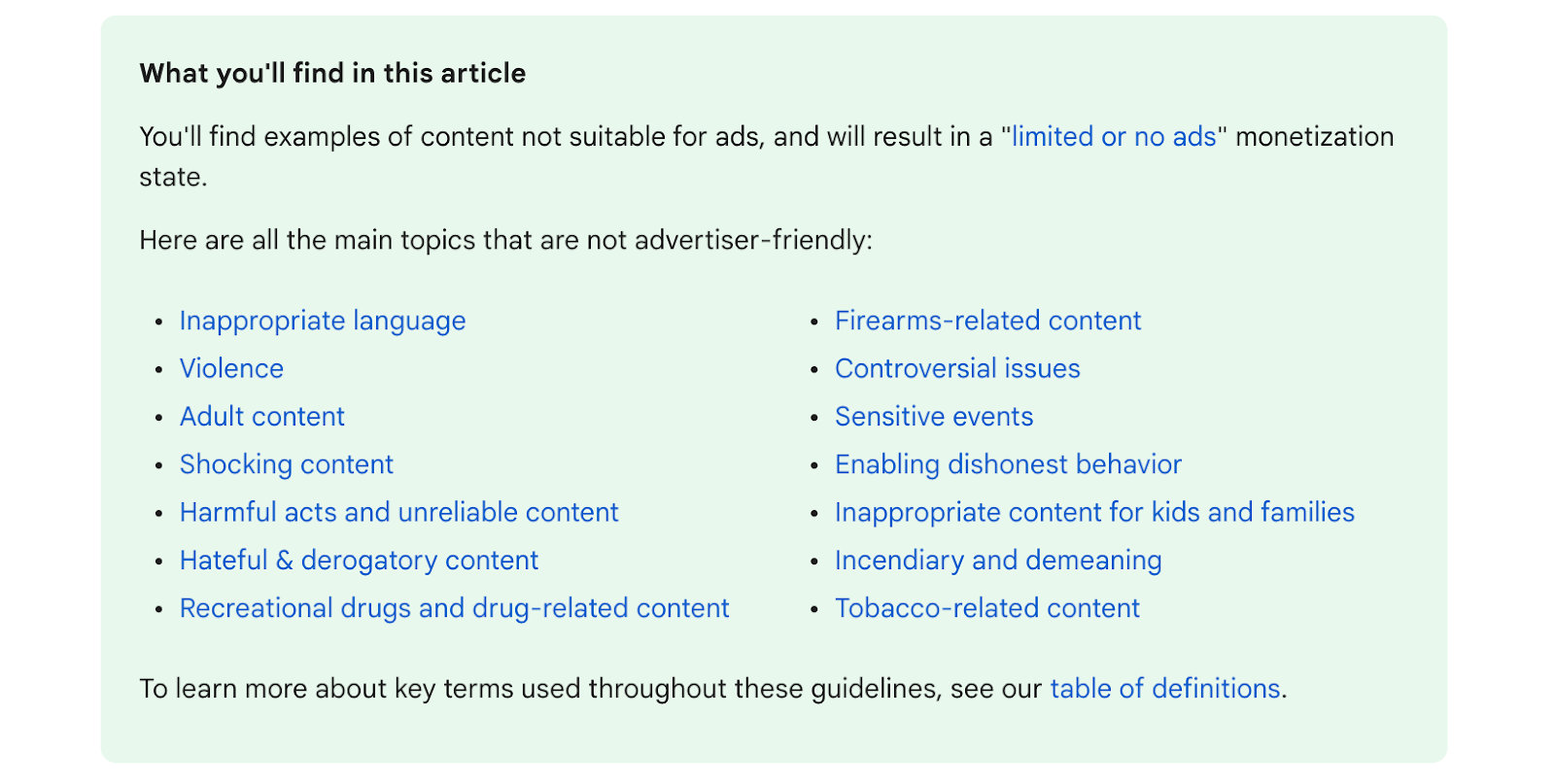
Now, even if your videos comply with advertiser-friendly content guidelines, you also have to ensure that your videos follow YouTube's community guidelines. It's their internal set of rules you aren't allowed to break if you want to have your channel eligible for monetization.
YouTube aims to create a respectful and safe space for everyone on its platform, so it doesn't allow spam or misleading content, nudity, sex content, content that puts children at risk, or violence and crude content.
YouTube also pays attention to the content and whether or not it's original to the creator. So, it's important to use copyright-free content (like a soundtrack) and avoid using borrowed content because it might increase the chances of your videos getting flagged by YouTube's video review system.
So, you have a YouTube channel, you are a part of their Partner's Program, and your videos are monetized. You received a notice from YouTube that one or more of your videos are not going to be monetized anymore. What do you do now?
Here's a simple step-by-step process to help you resolve the demonetization issue:
First, you'll want to figure out why your video was flagged by YouTube's system and demonetized. If YouTube sends you an email, it might outline the reasons for you. It should also show up on your YouTube Studio.
Before you do anything else, review your video to identify the issue outlined by YouTube yourself. That's important because you must know whether it was a mistake or whether your video violated guidelines.
Once you have reviewed your video, you want to review the guidelines. Diligently review the advertiser-friendly content guide and YouTube's internal guidelines and evaluate where and why your video might have caused an issue.
If you notice where your video content violates the rules after reviewing it, fix it. Remove any copyrighted sounds, vulgar words, and other sensitive content. Even the smallest thing might set off YouTube's review system; removing it can help you resolve the issue quickly.
If you have yet to find any issues with your content, and you think it was YouTube's mistake, then skip to the next step.
Finally, the most crucial step in getting the monetization back for your YouTube channel is to contact their Creator Support team and submit an appeal. Once you do that, YouTube will manually review the videos (or videos) that were affected to determine whether your content truly violates their guidelines.
You can contact Creator Support through your YouTube Studio, and waiting times can vary greatly, so be prepared to be patient. After the review, your video should be back to normal, and if it's not, you can repeat the process and re-submit your appeal.
Some creators get lucky and get the monetization put back into place super quickly. Others have to jump through a lot of hoops to get their channel monetized again. In those more complex cases, creators often go public with their demonetization issues, which might not be a bad idea.
YouTuber Tyrone Magnus got his channel demonetized, and when he couldn't solve the issue himself, he turned to his subscribers and asked them to help him by contacting YouTube support on his behalf. Having multiple people contact YouTube might be a way to get noticed quicker and help you resolve the issue.
{{minicourse-component="/blog-shortcodes/blog-popup"}}
Just because YouTube demonetized your channel doesn't mean it'll be this way forever. In some rare cases, when the channel or a video severely violates YouTube policies, you may not be able to turn the monetization back on.
If the violation wasn't severe or it was a mistake on YouTube's part, and if you are willing to put in the time and effort, you can follow the process we outlined above and try to get your channel monetized again.
Be aware that it might be a long and challenging process that requires a lot of patience. YouTube is known for taking the time to address these matters and making mistakes that cost the creators time and money.
Even if your YouTube channel is thriving and all of your videos are successfully monetized, it's worth being aware that YouTube might change its mind at any time. So, the best way to protect your income is by diversifying it. Here are some of the most effective strategies for monetizing your YouTube channel without relying on ads:
Ali Abdaal is a YouTuber with over 5 million subscribers. He creates videos about productivity, business, and creating the life you want. Despite his large subscriber number and advertiser-friendly content, his main income stream is not AdSense but his online course, Full-Time YouTuber Academy, which does multiple millions in revenue every year.
Create an online course you sell and market it on your YouTube channel. Online courses require little monetary investment to create, they have great margins, and if you use platforms like Teachable, the whole process is quick and painless.
Leila is a small YouTuber who recently quit her job to pursue her passion for personal finance. She makes videos on personal finance, budgeting, and investing, which are all advertiser-friendly topics. Due to the size of her channel, she only makes a little money from ads. Instead, she focuses on her coaching services, which she often promotes to her viewers in her videos.
Offering coaching is super easy. There is probably a topic you're knowledgeable about that you can instruct other people on—anything from fashion, business, weight loss to personal finance.
YouTube is one of the best ways to find, build, and nurture a community. Even YouTube itself offers a new monetization option that allows you to create a community and charge a fee so people can access exclusive content. Many YouTubers use this feature, but you can create a community even outside the platform. An online community or a membership site can be lucrative for many different niches, from personal finance to wellness.
Sarra Cannon is a YouTuber, author, and online course creator. She is the perfect example of diversifying YouTube income to make the best out of it. While her channel is modest in size, she doesn't focus on AdSense income but rather uses her channel to promote her digital products—one of which is digital printable planner templates for authors.
If an online course feels like too much or doesn't align with your business vision, a great alternative is to create and sell digital downloads. You can create PDFs, worksheets, templates, ebooks, and so much more.
Some YouTubers opt to sell physical products like Raisa Martin. She's a small YouTuber and business owner from Canada. She creates personal finance and luxury goods videos, which help promote her small stationery business, which sells budget templates and physical planners.
There are many different physical products you can sell, and they don't have to be complicated. The easiest and most popular amongst YouTubers who have loyal audiences is merch. If it aligns with your brand, you can design and sell merch to your audience, which can further deepen the sense of community.
{{coursepricing-component="/blog-shortcodes/blog-popup"}}
If you have one or more of your videos demonetized, know that you're not alone in this. Many creators have faced this issue, and many have overcome it and still have thriving channels to this day. Let's look at some of those examples:
Tolu is a small personal finance creator who was demonetized out of the blue last year. While YouTube ads weren't a significant income source, it still jarred the creator, who had worked so hard to grow her channel and monetize it.
Of course, she submitted the appeal to YouTube, and while she waited for the answer, she decided to focus on things she could control that could help her be better prepared in the future if something like this happens to her channel again. So, she doubled her efforts in building an email list and growing her blog.
Renee is a small YouTuber with just over 100K subscribers on her channel, which suddenly got demonetized in September 2023. She wasn't specifically told which videos were flagged, but her whole channel was demonetized, and she couldn't make money from the ads anymore.
Of course, she contacted Creator Support and appealed YouTube's decision. It took her three months, but she finally managed to get her channel monetized again. Since then, she has grown her channel to 100K and continued to make videos and build her community.
MxR Plays is an adult comedy and commentary channel created with a large subscriber base and massive views on their videos. Their channel was demonetized last year, and it wasn't the first thing that happened to their channel.
The couple asked their community to contact YouTube on their behalf so that YouTube would actually look at their appeal and help get it sorted sooner rather than later. Their YouTube subscribers helped, and the channel was monetized once again within a matter of days.
One thing that MxR Plays emphasized in their video to their community and that helped them survive the unexpectedly lost ad revenue was their Patreon. Because they had income coming from their Patreon, and they weren't relying on YouTube ads alone, it helped them get through the whole situation without worrying about their livelihoods.
Let's answer some of the most frequently asked questions about YouTube demonetization.
Yes, absolutely! Having one or more of your videos demonetized doesn't mean you won't be able to make money from ads ever again. You can always review your content and contact the Creator Support team to appeal their decision and get your videos monetized once again.
Be aware, though—in some cases where content severely violates YouTube's guidelines and policies, it might not be possible to monetize it again.
All appeals for demonetized videos and channels go through manual review by the YouTube team, so it's hard to say how long it might take. Some creators had ads put back on their videos within days of submitting the appeal, while others had to wait weeks, if not months, for YouTube to review their content and make the decision.
The great news is that there are many alternative income streams. You don't have to rely on YouTube ad income alone. Some other alternative income streams include Patreon, selling online courses or digital downloads, offering coaching services, selling physical products like merch or stationery, and so much more.
So, every channel on YouTube that meets the requirements can apply to the YouTube Partner Program, which allows creators to put ads on their videos and earn an income from all the ads that people view.
For the video to be eligible to run ads, it has to adhere to advertiser-friendly content rules from Google and YouTube's internal community guidelines. If a YouTube video doesn't follow these policies and guidelines, it gets demonetized, which means that the creator loses the right to make money from ads that run on their videos.
The demonetization policy on YouTube is pretty straightforward but strict. All videos that are eligible to run ads have to adhere to Google's advertiser-friendly content guidelines and YouTube's community guidelines. If a video violates any of those rules, it is not eligible for monetization.
The answer is—it depends. Recently, YouTube introduced new policies that require all creators to mark their videos with a tag that shows the viewer that some (or all) of the video was created with the help of AI.
YouTube doesn't have monetization policies for AI video content specifically. However, some of their other monetization eligibility guidelines often make AI-generated content ineligible to make money from ads, like duplicate and repeated content or using copyrighted materials.
If your channel is demonetized, all your earnings from ads shown on your video will remain in your Partner Program account until your channel is monetized again. While your channel is demonetized, you can still upload videos and grow your subscribers, but during that time, no ads will run on your videos, and you won't make money.

If you’ve ever been to a party where you didn’t know anyone, you’ve probably experienced the awkwardness of standing on the sidelines. Usually, what determines if you end up heading home early or sticking around is simple: whether or not someone makes an effort to invite you into the conversation. Online communities are no different. Read on for tips on how to write engagement copy for your online community.
When your members first join, they’re similar to that lone guest at a party—except sometimes, none of them know each other. As the community builder, or “host,” you can help your members get situated by being that friendly face who invites them into the fold.
This is usually done through prompts: short-form engagement copy posted by the online community builder to help set the tone and invite new voices into the conversation. There’s a bit of an art to writing engagement prompts, and in this article, we’ll break down some of the core elements that make great ones.
The tone you use when writing your blog or newsletter for your business versus texting your friends is different. Just like any medium, writing prompts will require you to hone a particular tone you’ll use when writing in that channel. This can vary depending on the context of the community, but usually a casual, conversational, and positive tone is appropriate.
If you’re an experienced writer, you may find it easy to switch between writing in different tones. If not, it can be challenging to spot the elements of writing that influence tone. Here are a couple of examples of how you can keep your writing friendly and conversational:
With practice, you’ll get the hang of writing in this style, and it’ll start to feel natural. Remember—this writing style should feel approachable and inviting but not immature. Avoid leaning on things like excessive emojis, exclamation marks, or informal acronyms.
Short-form engagement copy for your online community should always include some context to help members get situated before they respond. This can also help members who aren’t up to speed. Think of this as if you were chatting to someone new, and you wanted to ask them a question about a TV show you were watching. You’d first ask them if they’d seen the show. If not, you’d probably explain the plot before moving on with the conversation.
Giving context can be as simple as providing a couple of sentences of information in your own words before asking a question, or it can mean linking to a short article or video that members should look at before responding. Just remember to keep the context short—they should be able to read the post and be ready to respond within a minute or two.
Linking to long or complicated context, or introducing totally new ideas in your prompts may cause members to get lost or confused. If you find yourself wanting to do this, that could mean it’s a great candidate for a workshop or guest speaker within your community.
You’ve probably heard of a “CTA” or “call to action”—the button on a page or email that asks readers to take some action (like subscribing to your newsletter or buying your product) after providing valuable information. The best community engagement posts have this, but we refer to them as a “call to connection.” Basically, a call to connection is just a question you ask members to invite them into the conversation. A call to connection should specify how you would like members to respond (i.e., by commenting, creating a post, or registering for an event).
As a rule of thumb, community posts usually have a single call to connection. Many community builders make the mistake of asking members a long list of related questions in a single post. This will usually overwhelm members and cause them to lose interest. Try to pick the most relevant or engaging question, and save the others for future posts (Pro tip: Keep a spreadsheet of questions or topics you’d like to post about that you add to continuously).
Your goal with any engagement copy for your online community is to draw people into a conversation. But, don’t forget that the goal of engagement is to create value for your members and your business. Don’t try to to garner engagement for engagement’s sake. Many community builders accidentally fall into the trap of “stirring the pot” in their communities. Or they create controversial, “click-bait-y” prompts that may be designed to get lots of interaction, but don’t deliver actual value.
A good way to avoid this is to imagine what the thread you’re starting would look like if only five people respond. Is there enough to discuss with a small number of people? Does the prompt leave room for responses that are relevant enough that a member who doesn’t respond might find value from reading them? Using open-ended questions (like “what do you think about x?” or “how would you approach y?”) are more effective than closed questions with single answers.
Now that we’ve explored some best practices for creating engagement prompts for your community members, let’s take a look at an example prompt. In this example, we’ll imagine the community manager is trying to start a conversation around email marketing.
Hey, folks! Happy Friday. I wanted to start a conversation about something I hear you talking about a lot here: email marketing. Email marketing is a really important way to build an audience for your online course and help them get to know you before you try to sell anything, but it can be hard to get subscribers.
A strategy I know a lot of you use is lead magnets (or, giving something valuable away for free in exchange for an email address). Today I wanted to ask you to share your most popular lead magnet in the comments (plus, why you think it’s so successful). Excited to read through these and see what patterns emerge!
Let’s break down this example a bit:
Now that we’ve walked through how to create effective engagement copy for your online community, you may be wondering how often you should be posting things like this. The answer is a bit flexible—it depends on how frequently you want members to visit your community. Usually, especially near the inception of a new community, your posting cadence should mirror the habit you want your new members to build.
However, before you assume that every community wants members to visit daily, return to what we learned about leading with value. Don’t just focus on garnering a high volume of engagement for its own sake. Instead, think about what type of engagement style will add the most value.
There are many scenarios where a community’s membership may be extremely busy. In this case, it might be helpful to assume they’ll visit the community once a week. On the other hand, some communities require daily practice of a new skill, where you might expect members to visit more often.
Overall, it may be helpful to keep in mind that it’s absolutely OK to take breaks from your posting schedule. Most communities display noticeable seasonality in their engagement patterns. For example, they’ll tend to slow down during the summer or around the holidays.
As a community leader, letting your members know you’re taking a break to recharge with your family, and encouraging them to do the same can actually be a powerful way to build trust and a genuine connection with them. “Always on” isn’t realistic for anyone, and our communities should reflect that.
Lastly, it’s important to keep in mind that every prompt you create is a small test that can help you learn more about what resonate with your community. If you do these multiple times a week, you can learn a lot. In addition to these practices, you’ll also be testing what topics interest them. This could give you some great, pre-validated ideas for your next course launch. Good luck, and happy engaging!
The following is a condensed and edited interview from creator and Instagram marketing expert Carole Bardasano. She’s a Miami-based marketing expert with experience working internally at Fortune 500 companies like Warner Brothers and NBC turned business owner. Through her small business, The Digital Buzz, she originally taught social media marketing courses to executives in person and has since moved completely online. This post is part of Creator Month where we are using our platform to showcase creators who are doing what they do best: sharing what they know!
I spent 16 years working in corporate for large brands like Warner Brothers, NBC, Viacom, and Swatch Group. When this whole digital marketing thing started evolving back in 2014, “digital” marketing was a very exciting term—but not a lot of people were doing it.
I was head of content at MTV, and I left my job to go study digital marketing. I took a year off and I went to San Francisco to get a degree in digital marketing. And when I came back, I wanted to explore it as a career. So I got hired at Swatch Group, which was just moving the entire group of brands from New York to Florida.
I was hired as head of digital marketing and I was sort of assigned the title of “in-house trainer” for digital marketing for the executives of the company. I had never taught in my life because I was doing marketing! Because I was training people on how digital marketing works and social media, I started putting these little trainings together. And while I was a Swatch, I thought to myself, “Maybe there’s something here. I’m just going to take a leap of faith and leave corporate, leave my nine-to-five after 16 years, and launch my own business called The Digital Buzz.”
Because I had worked in corporate for so long, I started getting a lot of corporate clients. I was doing in-person trainings, and so developed a program called the Digital Marketing Bootcamp for executives. It taught executives everything they needed to know about digital marketing in just two days. And the program was very successful! I started pitching it to different companies in Florida, and they started hiring me. I would go to their offices set up in their boardrooms, and I would train their departments.
I did that for two years. When 2020 started, all the work that took me two years to build, the social proof, and the referrals, everything completely disappeared, vanished. No one was doing in-person trainings. So every single thing got canceled. And I had no business practically—by March everything was gone.
I had been doing three or four trainings a month. I had always thought about doing online courses, thinking I should learn them. But it felt like a huge mountain to climb.
While I loved the interaction [of in-person courses], I was getting exhausted. Doing the same training 16 hours week after week—I was almost tired of my own training! And then you can only make so much money because you’re one person.
I was by myself because I had left corporate and I didn’t want to hire anyone. So I knew I needed to learn online courses.
I enrolled in Melyssa Griffin’s course. I bought her course and I learned everything I needed to know at the time: How do you record things? How do you structure modules? How do you do your courses online?
If you haven’t done both in-person and online courses, you don’t know how different it is. You have to structure everything completely differently. So I created the first course, which was the Digital Marketing Bootcamp. I transferred everything over online and it did amazing. It took me three months to record, edit, and structure it.
After the first course, I was so hooked that I completely canceled any in-person trainings. To this day people call me to do the live training, saying, “We’ll pay you whatever!” But it’s not only about the pay for me. It’s more that I don’t want to stand up for eight hours doing a training when the course is right there online.
I went from training groups of 12 to 15 in a classroom. Now my last course was around 200 people.
I am relaunching in the fall with a different course called, “How to run your Instagram like a CEO.” I know that a lot of business owners struggle with how to get Instagram to work for them without being glued to the platform or having to post seven times a day doing crazy Reels, and all that stuff. So with this course, I teach more digital marketing so that students can drive business with more effective strategies.
I used to do consulting. I used to run ads for people. And I canceled everything and only do courses now. Freedom has been something I don’t want to give up. I now spend three months creating and marketing the course. And then after that I can go back to the daily grind. I have total respect for a nine to five. But at this point, now that I did all the work of putting the courses together, it feels nice to breathe.
I have packed my coaching business that I used to charge six figures for right into the course. I used to deal with huge budgets with Fortune 100 companies and I want to make this information accessible for everyone.That part has been super rewarding and being able to impact students from all over that I could have never dreamed of. It’s not possible without an online course. It’s the only way you can do that.

People have short attention spans. So short, in fact, that if they aren’t hooked on an article within eight seconds, they close it.
So why, in the age of social media platforms like Twitter and TikTok, are marketers still debating between long-form and short-form sales pages? If you’ve been on any marketing team or forum, you’ve probably heard something along the lines of:
And on the other side:
There are valid arguments and proof that both long-form and short-form sales pages can indeed improve your conversion rates. What it comes down to is how you use long-form and short-form sales pages and the content in each page.
A sales page is a landing page created for the purpose of convincing someone to purchase something you’re offering. So, when do short-form sales pages typically perform the best?
Let’s imagine this. If you were trying to sell someone a product in person, when would you choose to do a quick pitch instead of a deep dive? The most likely scenario for a quick pitch is when someone comes up asking you about a specific model instead of a general item.
Let’s say someone comes up to you and asks: “Can you show me the Macbook Pro 13 inch?”
At this point, you wouldn’t want to waste their time explaining all the other products you offer. In fact, to seal that sale, you’d want to give them exact information they are looking for—the best qualities of the product and the cost.
That’s exactly what a short-form sales page will do for you. It provides your audience with straightforward, “need-to-know” information that will allow them to make the purchase. Here are some other scenarios where opting to use a short-form sales page might be more effective:
Warm leads refer to an audience who is already familiar with your product or brand. You’ve built a relationship with them through social media or via a newsletter. They trust the content that you put out, and they know who you are. They don’t need to do additional research to find testimonials about why they should learn specifically from you.
You’ve already laid the foundation, so a short, direct sales page will do the trick to convert them into a paying customer.
The product you are promoting is a simple course. It’s a simple offer—no additional PDF download, bonuses, community access, or weekly coaching calls. All they need to know is if the course is for them, what they’ll learn, and the outcome they’ll achieve.
With a simple product, all you need is a straightforward short-form sales page.
When you’re offering a course in the $30-$50 range, there is typically less to consider. It’s not a large investment that might require a discussion with your family, or extended research for you to commit.
If your course—like your mini-course or introductory course—is low cost and low commitment, there are less objections you have to address, and you can accomplish that with a short-form sales page.
Remember, what method you choose always comes back to who you are trying to target. Think about and find out what your audience’s buying behavior is like. It will help guide a lot of your marketing writing, not just your sales pages!
A long-form sales page still has the same purpose as a short-form sales page—to convince someone to buy—but includes much more written content.
The tricky thing about long-form sales pages is that they can very easily be used incorrectly, leaving an overwhelmed and frustrated audience who will disengage and click away. Imagine a customer walked up to you this time and asked: “Which laptop should I buy?” Now, you’re in for a much longer sales pitch with different packages you may want to offer.
Here are a few scenarios where long form sales page can outperform short form ones:
Cold traffic refers to your website visitors who have never heard of you before. They may have clicked through to your sales page because of an ad, social media post, or a mention in an article.
Use the long-form sales page to earn their trust. Tell them why they should specifically learn from you, how you’ve helped other people reach their goals, and why you can do the same for them.
When you’re running a big launch campaign, it’s not uncommon to add in additional bonuses to sweeten the deal. It can include one-time bonuses like additional ebooks, one-on-one Q&As, or accountability partners.
While the bonuses can sweeten the deal, it can be too much for your audience to understand the true value without further explanation. You want to explain to your audience how all these bonuses complement the course that you offer, and how each of those bonuses can help you reach your goals.
Depending on your audience, this could mean a course in the $500-$1,000 range or more. You hit the threshold where your audience will consider this a hefty investment. Because of that, your audience may have more concerns:
Am I worth it? Am I ready?
Can I achieve my goals with this course?
Do I have the time and support to do this?
The more objections and pain points your audience may face, the more content you will need to produce to help them overcome these roadblocks. Use the content in a long-form sales page to directly address these pain points to shift their beliefs and help them take action. Provide them with the vision on how you’ll be able to help them solve their problems and make the transformation they are looking for.
So, which type of sales page should you write? It depends! It’s not a one-size fit all solution, because who you are writing to is way more important—it dictates what and how much you write.
Here’s a graph that Copyhackers made to illustrate the point:
{{salespage-component="/blog-shortcodes/blog-popup"}}
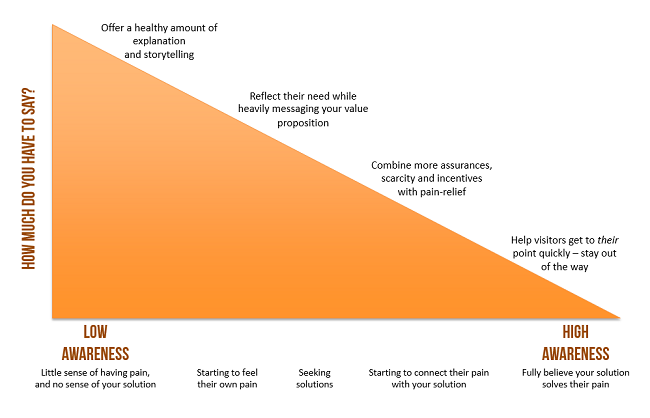
It’s all about where they are in your marketing funnel, and which of your audience personas they fall under. Identifying both will be key to helping you write targeted sales page copy that will convert.
If you don’t know which page will perform and want to try both out, you can do so now by creating additional sales pages for your course!

While we often hear the terms “content creator” and “influencer” used interchangeably, there’s actually a stark difference.
We’ll dive deeper into the differences, but one of the biggest is that a content creator is more known for the content they make, while influencers are more known for who they are and their overall “influence.”
Learn even more about what these two career paths have in common, as well as what sets them apart—plus, discover how brands can work with both content creators and influencers.

A content creator is someone who, for lack of a better description, creates content. There are many different types of content they might make, like:
A content creator might work only for themselves, building up their own audience by offering valuable informational content. Or, they might also create content for brands.
One great example of a content creator is Matt Shirley, or @mattsurelee on Instagram. He creates fun, colorful charts that he shares on Instagram, and has amassed a following of over 400k by doing so.
Here’s one of his charts:
He even created a book out of his charts that his followers can purchase:
However, Matt has also started partnering with brands to create charts in his recognizable style that they can share on their own social media platforms.
Here’s an example of a chart he created for HubSpot:
Content creators work to build up their own audience who enjoy the content they create. This then makes it valuable for brands to partner with content creators—they get great content for their own marketing purposes while also appealing to the content creator’s existing audience.

An influencer does also create content—hello, photoshoots, lifestyle curating, Instagram/TikTok videos, and more. The key difference is that an influencer focuses more on building an audience around their lifestyle rather than around their content.
Influencers, well, influence. They build up an audience by sharing their lives with their followers. The connection is more between the influencer and their followers, rather than between the content and its consumers.
Danielle Carolan, @daniellecarolan on Instagram, is an influencer with over 250k followers. She regularly posts lifestyle content, like this Reel showcasing what she does on Sundays to prep for her week:
However, Danielle also partners with brands to promote their products. Here’s an example of a sponsored post from a collaboration with Brooklinen:
Influencers build up their audiences through a genuine connection. They then partner with businesses to promote said business’s products on their own social media platforms.

The difference between a content creator vs. influencer is that a content creator’s job is to write, design, and make content to build an audience while an influencer’s job is to showcase their lifestyle and other passions to build an audience.
Both career paths are heavily reliant on social media. The use of social media platforms is invaluable for sharing their content or lifestyle and building up a large following.
However, content creators also have the advantage of bringing other platforms into the mix. Many content creators have their own websites they use to host some of their content. They use tools like Teachable to house online courses and other digital products. Many also have their own email list they’ve built to send out a recurring email newsletter.
There are also differences in how brands work with content creators and influencers.
When working with a content creator, the end goal is typically to have some piece of content created for the business to use for their marketing purposes. When working with an influencer, the goal is to boost awareness and increase sales of a product from that influencer’s audience.
There are also similarities between influencers and content creators. One of those is how they go about building up their audiences.
As I mentioned, both are heavily reliant on social media. They tend to utilize several social media platforms to share a lot of content, engage with other users, and build up their audiences. The only difference here is the types of content they’re sharing.
Another similarity is that both work with brands. Content creators and influencers both want to partner with brands in order to bring in additional income. The difference here is the way each one will work with a brand. Let’s get into that a bit more.
When it comes to partnering with a content creator and influencer, it’s not an “either/or” type of decision. Both can be equally beneficial depending on your brand’s needs.
When working with a content creator, the goal is to have a piece (or multiple pieces) of content created that your brand can share on its website, blog, social media, etc.
This could be a video to share on YouTube or TikTok. It might be a podcast episode or a blog post with educational information about your business and its product/service. It could be a chart, like we saw in our example from Matt Shirley, or high-quality product photos.
When working with an influencer, your goal is to showcase your product or service to an additional audience. Instead of working together to get a piece of content for your business, you’ll provide the influencer with your product/service and they’ll showcase it on their own social media platforms.
Influencer partnerships help to build brand awareness, improve trust in your brand, and reach a wider audience. If you provide the influencer’s audience with a discount code, you might even be able to bring in new sales from the partnership.
Working with content creators and influencers do different things for your business. You can easily find a number of content creators and influencers that you decide to partner with to both create content for your business and promote its products or services.

Influencers typically get paid based on how much promotion your brand wants. They’ll usually create packages that will vary in cost and outline what you’ll get.
For example, the packages might look like:
They’ll vary based on which platforms the influencer uses and how long it takes to create each type of post.
Content creators are typically paid based on the projects they create. They’ll often have their own rates outlined, in which they may choose to charge by the project, word, or hour.
Brands can reach out to content creators in order to outline what kind of project they’re looking for and get a quote from the creator based on the project’s scope.
Absolutely! While the differences outlined throughout this article are generic, sometimes they overlap. For example, Cassey Ho from Blogilates started out as a content creator, creating pilates videos, healthy recipes, and other content on her website and YouTube channel.
She’s since amassed a huge following and has started to promote other brands alongside creating her own brand and branded products.

Creating engaging content starts with an idea or vision. A creative brief template can help put those ideas onto paper and set the foundation for successful creative projects.
Creators commonly use creative briefs when:
Creative briefs outline every step of a project—goals, timeline, stakeholders, deliverables, and more. A well-written creative brief organizes projects, streamlines processes, and gets everyone on the same page.
To help you write effective creative briefs, we’ve put together this guide covering the most important elements. You can also download the creative brief template and apply it to your own business projects.
A creative brief is a dynamic one or two-page document that outlines the scope and focus of a creative project. Creative briefs are useful when collaborators from different companies or departments are involved in a project. A copywriter, designer, marketer, or developer may review the brief to understand the project vision, expectations, and more.
For example, a marketing team that outsources copywriting and video production can use a creative brief. A self-employed creator who works with freelance writers can share a creative brief to outline the project.
The best creative briefs include details about every component of the project and help minimize confusion.

Each creative brief varies depending on the project. That said, they share these basic components.
The title of your project should be simple and descriptive. Don’t worry about crafting a catchy project title. Instead, focus on naming your project something that everyone will understand. For example, let’s say you want to promote a new product launch or online course with paid ads. You could title the project as the name or topic of your course and the type of campaign.
The project overview introduces and summarizes your project. It concisely summarizes the project and gets collaborators and stakeholders excited. In a few sentences, it should cover:
When in doubt, keep it simple. The project overview should clearly and concisely state what you want to do, how you’ll do it, and why it is important.
When you’re working with external partners—freelancers, agencies, or other brands— include a company background section. This may include your brand’s mission, or how it generates revenue. You might also include company history details like years in operation, milestones or achievements, or noteworthy campaigns and products.
Many companies have a “boilerplate” that they include on most or all marketing materials that give the company’s history and background in one or two paragraphs. If you’re not sure what to include in the company background section, you can repurpose some of your boilerplate copy.
The goals or objectives section answers the basic but valuable question of why. Why is it a priority and why will it help your business?
There isn’t one correct answer to this question, but it’s still important to answer. The goals and objectives are a “north star” for your creative team. If everyone understands the purpose and measurable goals, they’ll have a more clear picture of what success looks like.
Your goals and objectives should always be specific, measurable, attainable, relevant, and time-bound. Good examples of goals are:
The goals are specific. They include deliverables and outline metrics for success. A bad example of a goal would be to get more people to sign up for your new online course.
When in doubt, get more specific. Can you add any numbers or dates to clarify what you want? The more you include, the more prepared your project collaborators will be.
Your audience for the creative brief is the group of people that you hope will consume your product or piece of content. If your creative message is an arrow and your creative brief is the bow, then the audience is the target you’re trying to hit.
One common mistake that many make with a creative brief is targeting an audience that is too broad. If you try to market your product or service to everybody, you could end up reaching no one. Instead, focus on the people that are most likely to convert. If you already have students or clients, look at them for guidance. What are their shared interests and characteristics? Do you have power clients—these can be big spenders or advocates for your brand.
Here are a few examples of target audience descriptions for a creative brief.
The audience portion of the creative brief template describes where, or toward whom, you are directing your message. The tone and voice describe how you speak to your audience.
The voice describes what the brand “sounds” like. Like in the real world, a voice usually reflects the person (or brand) who’s speaking. A voice can be stuffy and formal, relaxed and casual, high-energy and exciting, or slow and soothing.
A tone can be persuasive, offended, delighted, or lethargic—think of it as the “mood” or emotion behind the voice.
Using emotional language, or adjectives and descriptive words, to describe your voice and tone helps your project collaborators understand what the creative piece should sound like. Here’s an example of a good voice-and-tone description.
You should also use examples of messages that portray your tone and voice. For example, Hulu includes a “tone of voice” section in its brand guidelines.
One way that Hulu describes its tone of voice is “Delightfully Human”. To convey what that means, Hulu explains what that means and provides an example of copy that embodies it.
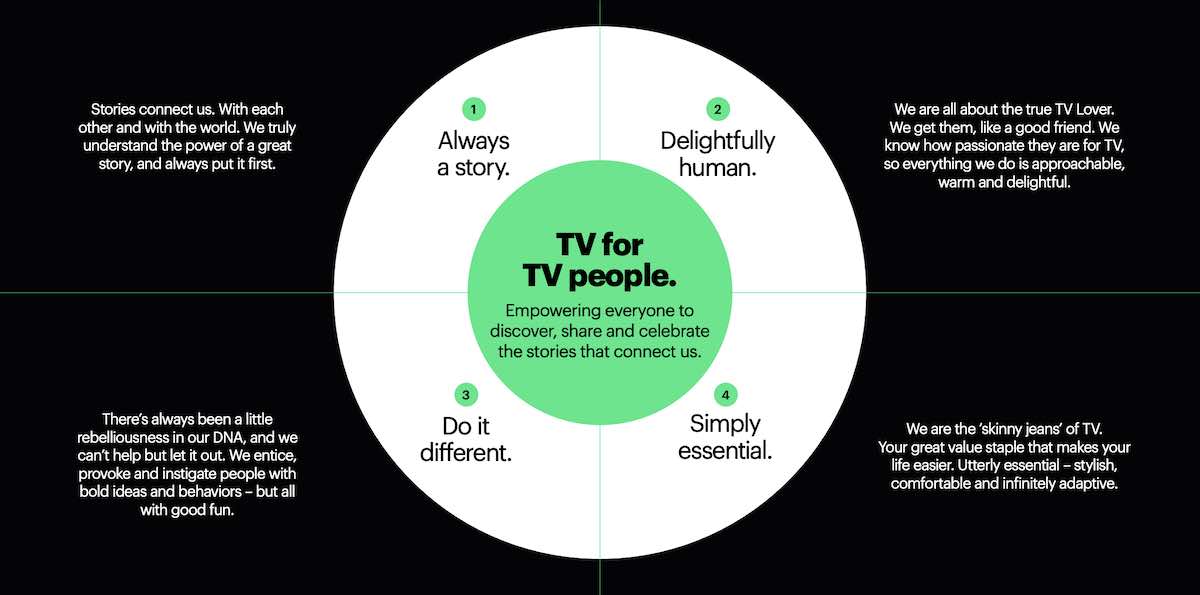
In your creative brief, include a few examples or link your brand book for more in-depth guidance.
Your deliverables are the specific items that you plan to create. A creative brief might have one deliverable, especially if it’s a large piece of content, such as an ebook, or several. For example, a blog post might require both written and visual deliverables.
For example, a landing page for a 30-day, interactive coding challenge might include the following deliverables.
How much money do you have available to spend on this project? The budget section of your creative brief should provide a need-to-know overview and a breakdown of different line items.
Outlining your budget from the start will help you avoid overspending and guide your decision.
Consider who needs to know what when you’re putting together the budget in your creative brief. A freelance writer or photographer will want to know how much you’re willing to pay them for their part of the project, but they don’t necessarily need (or want) any insight into the total project budget.
Alternatively, your accounting department might be most concerned about how much you’re spending. They may also require the granular line-item details from the creative brief.
When do you need deliverables done so that you reach your goals? The timeline keeps everyone on track. It can also help break down large projects into more manageable milestones.
There are two ways that most project managers build timelines. One is to start from the current date and determine how long it will take to execute. Then create a timeline moving forward from today.
The other is to choose a date when you would like the project to be ready to launch. Then work backward from the launch date to figure out how long you can take for each step.
Each method of creating a timeline has its own benefits and drawbacks. The most important consideration to create a timeline is to make sure it is realistic. If you have a target launch date that is three months away, consider the workload and timeline for each collaborator.
Some creative briefs don’t include any details about competitors. However, in marketing and advertising, it’s common to include a competitive landscape.
The competitor section should cover the company’s biggest market rivals and any relevant information about competitive campaigns and products. It should be fact-based and stick to only the information that the creative team needs.
Here’s an example of what a competitor section may include.
The key messages section outlines exactly what you want to say. Focus on one core message first.
If you include too many messages at once, you’ll likely confuse audiences and impede decision-making. By narrowing it down, you direct your audience’s focus to the most important information. It can also help reduce anxiety and influence your audience to take action. According to American psychologist and author of Paradox of Choice Barry Schwartz, giving audiences fewer choices or messages helps them make a decision.
If you have more than one key message, then consider if they are related or could stand on their own. If they aren’t, make a separate creative brief for them.
To help you craft your own, here are examples of key messages for various companies.
Ready to write your own creative brief? Here’s a creative brief template you can use to kick off your next project.
Tip: Include the type of content that is being produced—video, blog post, online course—in the project name)
Who or what is asking for this piece of content or creative work? The company background should include details about how the company generates revenue.
(Company name) was founded in (year). We produce (product/service) for (target audience).
We are producing this (content type) to meet (general goals). Specifically, we want to generate (number) of (sales/visitors/impressions/follows) in (timeframe).
The target audience for this creative work is (age), has (education or career background), and makes (income level) per year. They consider themselves part of (lifestyle/group). Their likes are (activities or qualities), and their dislikes are (activities or qualities). They hope this product will help them (goal or aspiration).
Our company voice is (adjective). The tone of this piece will be (emotion).
(Example of copy or creative that embodies your tone and voice.)
Project deliverables are:
Our budget for this project is (total amount). We expect this to include:
The project launch date is on (DATE). Due dates for different deliverables are as follows:
Our biggest competitors in this space are:
To fully differentiate our product, please focus on (benefits) and use (tone).
The key message we should convey:
You might think a creative brief is unnecessary if your team is experienced, but nothing could be further from the truth. In fact, there are lots of important reasons to draw up a creative brief for every campaign or creative project.
For starters, creators may find clients and brand partners expect a comprehensive creative brief before they provide a down payment or sign off on a project. Plus, internally, your team may need a creative brief before they can begin working with any confidence. Creative briefs are also important because they:
Creative briefs are used across industries and are very common tools, particularly among successful creators/advertising firms. Here are just a couple of types of creative briefs you might need to draw up depending on your niche and client’s requirements:
That said, creative briefs can come in all types, sizes, and varieties. If you regularly complete projects for your clients or partners, whether with an online business on Teachable, a small family business, or in person, and whether you work alone or with a team, writing a creative brief will only provide you with benefits in the short and long terms.

Generally, a creative brief is made by a project manager, account manager, or supervisor in traditional work environments. They’re the people who work closely with clients and designers to produce creative projects, like advertisements, marketing campaigns, etc.
However, any project lead—or in our case, creator—can make a creative brief, as can anyone on your team. Some teams may even have multiple members draw up briefs to compare against each other so the team can choose the brief that feels like the best roadmap to success.
In addition, a brief can be produced by multiple people working simultaneously. For example, you may need the following teams to put together an effective creative brief:
Even if you’re a creator with a limited team (or no team at all), a brief can help narrow down the scope of the work and cause you to think strategically.

Do you need some inspiration for drawing up your own creative briefs? Here are just a couple of examples to show what you should try to emulate and the benefits that creative briefs can provide:
Remember, the visuals for a creative brief can vary heavily. Your briefs don’t have to look exactly like these examples, but they are good places to start.

With this creative brief template and tips on how to write a creative brief, anyone can plan successful collaborative projects. You may even tweak or adapt it to suit different types of projects for your brand.
Starting your creative projects with a brief will help you align with everyone from employees to brand partners and other collaborators. With Teachable’s digital downloads feature, creators like you can build and monetize templates, online courses, coaching, and more on a single platform.
{{audience-component="/blog-shortcodes/blog-popup"}}
The purpose of a creative brief is to provide inspiration and guidance to your creative team so they can produce the best project possible. It’s also intended to provide your client with a timeline and budget framework so they know what to expect.
A good creative brief should be comprehensive, easy-to-read, and descriptive of your project’s goals, target audience, and hypothetical results. It should also be interpretable by third parties who may come into the project late.
A creative brief usually includes a breakdown of the brand, a description of the project and its goals, the steps by which the project will come to fruition, and budget estimates. The exact contents of a creative brief can vary from project to project.

TikTok built its brand focusing on short-form content, but now the company is shifting tactics slightly to reward content creators who make longer videos.
Despite its massive customer base, content creators have long complained that TikTok doesn’t give content creators a way to financially benefit from the Creator Fund. So now, TikTok is trying out a new way to compensate content creators that have become key to the platform with a new program called the Creativity Program. The company’s beta testing it in the U.S., France, and Brazil. And right now, participation is on an invitation-only basis but it’s a good time to build up your audience because, eventually, it’ll open up to everyone on the platform.
TikTok hasn’t shared a ton of details on the new program but Zachary Kizer, a spokesperson for TikTok, told The Verge that payments weren’t going to be tied to ad revenue sharing. Instead, they’d be calculated on qualified views and RPM.
In a statement announcing the fund, TikTok said it would give content creators an opportunity to “generate higher revenue potential and unlock more exciting, real-world opportunities.”
To start earning, TikTok said content creators must create and publish high-quality, original content that’s longer than one minute. The focus on the length of the video plays to recent efforts by TikTok to get creators to focus on longer content; this is one way of rewarding those who do. Once enrolled in the program, creators will have access to an updated dashboard that will give them access to information about video eligibility, video performance metrics and analytics and estimated revenue to be earned.
When the program opens up to all content creators in the next few months, TikTok will have several requirements for people wanting to take advantage of it.
It’s exclusive to content creators that:
While TikTok didn’t explicitly say what the minimum follower and video requirements would be, it’s possible it could be more exclusive than the current Creator Fund. The Creator Fund requires content creators to have at least 100,000 authentic video views within the last 30 days and have at least 10,000 followers.
According to The Information, TikTok leaders discussed setting the minimum follower threshold at 100,000, which would be significantly higher than the requirement for the Creator Fund. However, TikTok hasn’t confirmed this requirement and it’s possible the threshold could be much lower.
TikTok hasn’t laid out guidelines for applying for the program, aside from letting us know that applications will open up “within the coming months.” Those who are currently enrolled in the TikTok Creator Fund will be able to switch to the Creativity Program and those who aren’t already enrolled in the Creator Fund can apply to the Creativity Program when it’s available.
However, The Verge noted that people can’t switch back to the Creator Fund once they make the switch.
TikTok hasn’t said whether the Creativity Program will replace the Creator Fund once it’s fully implemented, but it’s possible. So it’s best to continue growing your audience and developing high-quality videos that drive engagement.
We’ll update this post when new information about the program becomes available.
Related post: How to make money on Tiktok