Thank you! Your submission has been received!
Oops! Something went wrong while submitting the form.
MENU
.avif)
Consider alternate title: Willa Workshops has grown into the largest art school on Teachable—while staying deeply committed to artist-led teaching, care, and creative permission.
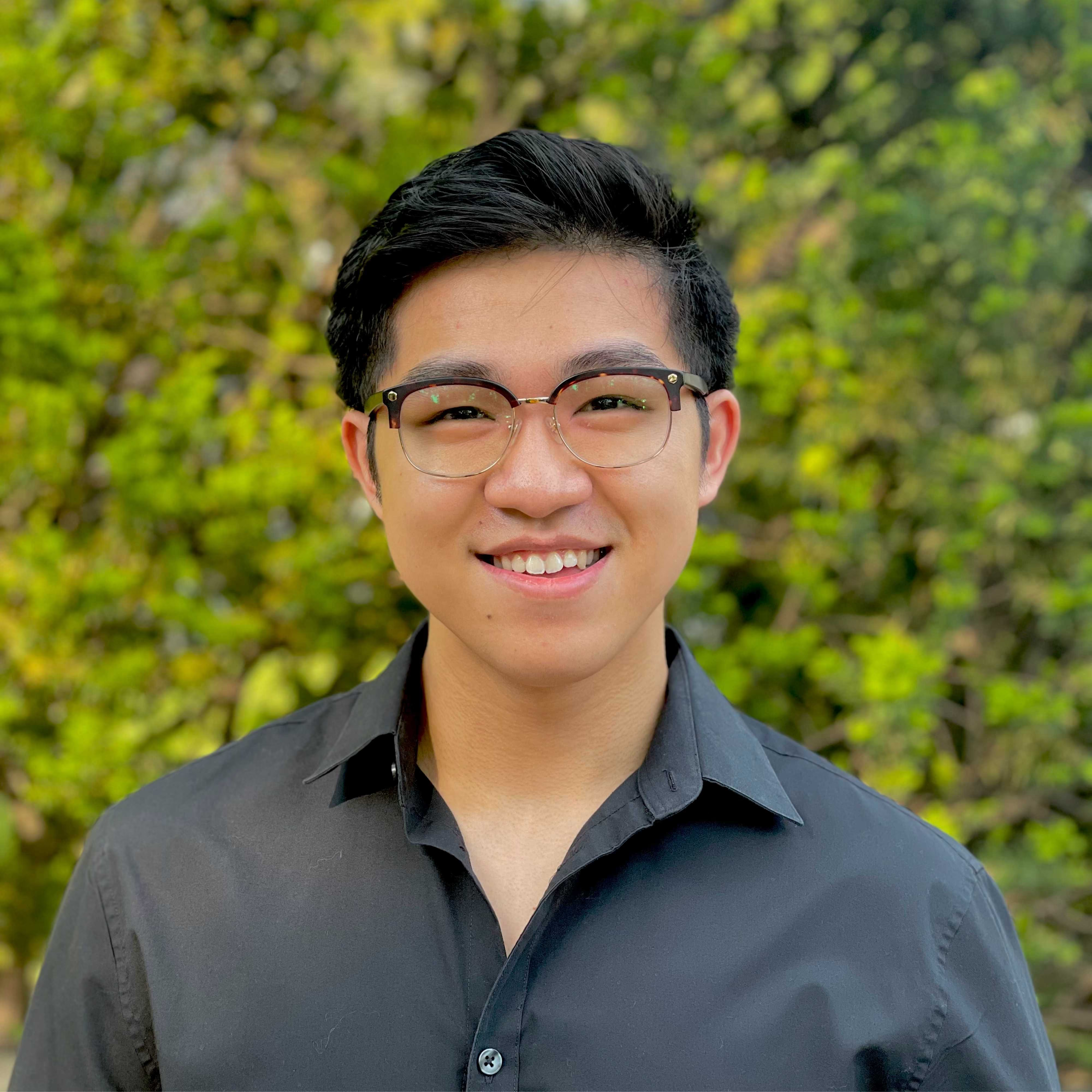
By the time Wendy Solganik graduated from UCLA School of Law, she knew he would never practice.
The pull toward creativity was too strong. She spent her mid-to-late twenties as a production potter, then co-founded and ran a high-end invitation and stationery manufacturing company for 15 years.
Art education started almost by accident. A calligraphy class at Santa Monica College led her to The Society for Calligraphy of Southern California, where exposure to hand letterers and bookmakers from around the world planted seeds for what would eventually become Willa Workshops.
When her three children needed her more at home, Wendy stepped back from the stationery business.
She rediscovered making art for pleasure and remembered how essential working with her hands was to her emotional health. People on social media started noticing the handmade journals she posted.
The same question kept coming up: "Will you ever teach an online class?"
The pandemic gave her the time to finally say yes.
Today, Wendy runs Willa Workshops on Teachable, teaching watercolor painting, hand lettering, handmade book and journal making, and collage and mixed media art to mostly middle-aged and older women around the world.
She brings in guest instructors she wants to learn from, creating a school where competitors become collaborators and teachers get fairly compensated for their work.
"I consider myself more of a peer than a teacher. I'm learning as I go as much as I am teaching. I'm just really sharing that learning experience with other people in my unique way." —Wendy Solganik, Founder of Willa Workshops
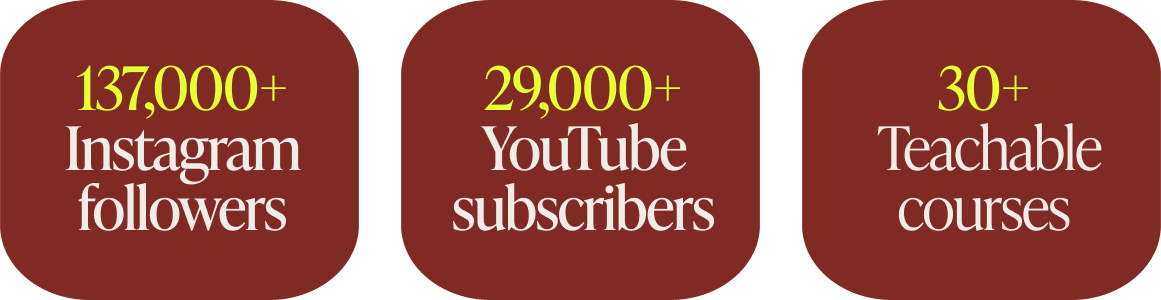
Before launching her own school, Wendy was a student of online art education. She noticed a pattern in the industry: schools built on affiliate marketing models where teachers could pour enormous energy into creating content without knowing what they would be compensated for their time, energy, and effort.
One experience crystallized the problem. She was teaching for another online art school that sold courses to consumers before allowing its own teachers to sell to that same audience. The consumer market overlapped completely, which meant teachers were competing against the platform that employed them.
"It awoke in me a personal challenge to see if I could create a different model that could work for both the teachers and the school owner." —Wendy Solganik, Founder of Willa Workshops
Running her own school became a challenge that felt compelling. Building Willa Workshops forced her to put on blinders and focus on what she actually wanted to create. Many of the artists whose courses she had been purchasing used Teachable. She experienced the platform as a student and knew it worked. Her first course, "Willa Journals," grew directly from audience demand and sold well from the start.
"The course sold really well right from the start... like really well. I knew there was a lot of potential to build a business." —Wendy Solganik, Founder of Willa Workshops
Wendy built Willa Workshops by rejecting the standard playbook for online art education. Instead of racing to the bottom on price or relying on affiliate marketing, she did her best to turn competitors into collaborators (let’s be real... it doesn’t always work out, be she tries!) and positions art as emotional health rather than perfection.
Here's how she built a global art school from her spare bedroom.

Rather than creating every course herself, Wendy brings in other experts she's interested in learning from and spotlights them as teachers. A lot of what she does with her Teachable school involves featuring guest instructors alongside her own courses.
Teachers receive a percentage of net sales no matter who drives the purchase. Whether Wendy markets and sells the class or the teacher does, the teacher gets paid the same. This eliminates the conflict she saw at other schools where teachers competed against the platform that employed them.
The model attracts talented artists who might otherwise see her as competition. Instead, they become collaborators. The result is a richer learning environment that no single teacher could build alone.
Take action: Consider whether your expertise could grow faster by partnering with other creators. Structure revenue sharing so teachers have no conflict between promoting their own work and promoting yours.
Willa Workshops doesn't promise to turn students into professional artists. The pitch centers on something deeper: the importance of creating things with our hands to our wellbeing.
"Just because you didn't go to an official art school doesn't mean that you shouldn't or can't make really satisfying art!" —Wendy Solganik, Founder of Willa Workshops
This philosophy attracts students who might feel intimidated by traditional art instruction. Wendy positions herself as a peer learning alongside her students, not an authority demanding perfection. She corrects one misunderstanding constantly: that students need to know a lot of techniques or understand a lot before they can get started.
In her school, students can start with little to no knowledge and make things beyond what they believed they were capable of. The focus on emotional health rather than gallery-worthy output removes the pressure that stops most people from ever picking up a paintbrush.
Take action: Identify the deeper benefit your courses provide beyond skill acquisition. Students often buy outcomes like stress relief, creative expression, and community rather than just techniques.
The online art education market has fierce competition that drives pricing toward rock bottom. Wendy made a deliberate choice: charge a bit more than competitors and invest in a world-class user experience.
She brought on other people to help run the school well, which requires real investment. The result is production quality and customer service that competitors racing to the bottom can't match.
Her product catalog spans every price point with mini technique courses, core skill courses, year-long flagship programs, and comprehensive bundles. Free content including a Mixed Media 101 course, printables, a podcast called "Show Up or Shut Up," and regular YouTube videos brings new students into the ecosystem. Once they trust her teaching style, moving up the price ladder feels natural.
Take action: Map your product suite by price point. Do you have entry-level offers that build trust? Mid-tier courses that deliver specific transformations? Premium programs for your most committed students?
Fodder School, Wendy's signature program, runs for a full twelve months with projects from different instructors. The program includes live Zoom sessions where Wendy shares personal stories and students connect with each other and the teachers.
Students find themselves reflected in what Wendy shares during these sessions. The connection goes beyond technique instruction. Alumni return for subsequent years, creating a loyal core audience that grows the community organically.
This long-form format builds relationships that short courses can't replicate. Students don't just learn skills. They become part of a creative community that sustains them through difficult times.
Take action: Design at least one signature program that creates ongoing engagement rather than one-time transactions. Live components build connections that recorded courses alone cannot replicate.
The feedback that means most to Wendy comes from students who were afraid to even make art before taking her classes. After going through Willa Workshops courses, they realize they can do it too.
One student wrote about discovering Willa Workshops during a mentally difficult year:
"I had a very rough year and I am going through a lot of problems and a mentally hard time but doing creative things is so much helping me and bringing me joy, just doing things with my hands. Beforehand I was collaging and doing scrapbooking etc. but since I discovered Willa Workshops I am so excited! I learned so many new things." –Willa Workshops student
Another student's story captured how Wendy's work connects to deeper personal history. Her grandmother was a watercolor artist who lived to 103. Losing her felt devastating. Watercolor had always felt too intimidating to try until she stumbled across one of Wendy's journal pages on Instagram.
"I was completely mesmerized by your color choices and inspired by everything you shared about life and creativity. I decided to take the plunge and sign up for Watercolor for Relaxation, then Willa Journals and Invitation to Play. After that, I jumped into a few more courses and finally went all in." –Willa Workshops student
This student found herself reflected in what Wendy shares during Zoom sessions. The connection goes beyond technique instruction:
"When I read the line in your newsletter, 'I'm going to keep showing up and creating art', I felt that deeply. I wanted you to know that I'll keep showing up for you too. I'll keep taking your courses, reading your newsletters, and cheering you on from the sidelines." –Willa Workshops student
Wendy approaches teaching differently than most online educators. She resists calling herself a traditional teacher and instead positions herself as a peer who happens to be a few steps ahead on the path.
Her core belief: the importance of creating things with our hands to our wellbeing often gets overlooked. Making art isn't about producing gallery-worthy pieces. It's about the process, the materials, and what happens in your body and mind while you create.
This philosophy shapes everything about Willa Workshops. Courses emphasize exploration over perfection. Students are encouraged to experiment without judgment. The "coffee break with a creative friend" atmosphere makes learning feel less like work and more like play.
The ripple effect extends beyond individual students. Wendy is helping demystify art education for people who never thought they could be creative. Her students discover that making things with their hands can be a form of self-care, meditation, and emotional processing.
Willa Workshops continues expanding its course catalog while deepening the programs in its core areas: watercolor, mixed media, handmade books, and art journaling.
New seasons of Fodder School release annually, each featuring fresh instructors and projects. The multi-teacher model means the school can offer more variety than any single creator could produce alone.
Wendy sees the rise of AI as an opportunity to emphasize what technology can't replicate: authentic human connection, cultural context, and the encouragement that comes from a real teacher who remembers struggling with the same challenges. Her courses deliberately include elements that AI wouldn't think to add.
Explore Wendy's courses: Visit Willa Wanders to browse Willa Workshops' catalog of mixed media, watercolor, and handmade book courses. Start with the free Mixed Media 101 course to experience Wendy's teaching style, then explore Fodder School for a full year of creative exploration.
Connect with Wendy: Follow @willa.wanders on Instagram for daily creative inspiration. Listen to the "Show Up or Shut Up with Wendy Solganik" podcast. Subscribe to the Willa Wanders YouTube channel for exclusive updates and free resources.
Try Teachable yourself: Ready to build your own multi-teacher school or creative community? Start your free Teachable trial and see how creators like Wendy turn expertise into thriving online education businesses.