Thank you! Your submission has been received!
Oops! Something went wrong while submitting the form.
MENU
%2520(1).avif)
Even though the year is wrapping up, buyer intent isn’t slowing down. December remains one of the strongest sales periods for creators: people are using remaining budgets, buying meaningful gifts, finishing what they started, and planning who they want to become in January. This unique mix of urgency and future-focus creates opportunities to drive real revenue now and build momentum for the year ahead.
Throughout December, we’re hosting a series of webinars to help you understand these seasonal behaviors and turn them into practical, low-lift strategies inside Teachable. This blog will be updated after each session with the key insights and actionable ideas—whether you joined live or are catching up here.
Below are the highlights from our first December webinar:
Most creators assume that the sales spike ends with Black Friday, but that perspective leaves money on the table. In this session, we dug into platform-wide data, narrative angles and structures that can increase conversions at the end of the year.
Why December still converts
December consistently delivers strong results for course creators, often much stronger than expected. Teachable data shows:
These patterns show that demand doesn’t taper off after Black Friday—it changes shape. Buyers remain active, but their motivations shift toward end-of-year budgets, gifting, goal setting, and finishing what they started. When your messaging reflects these priorities, December becomes a high-intent month rather than an afterthought.
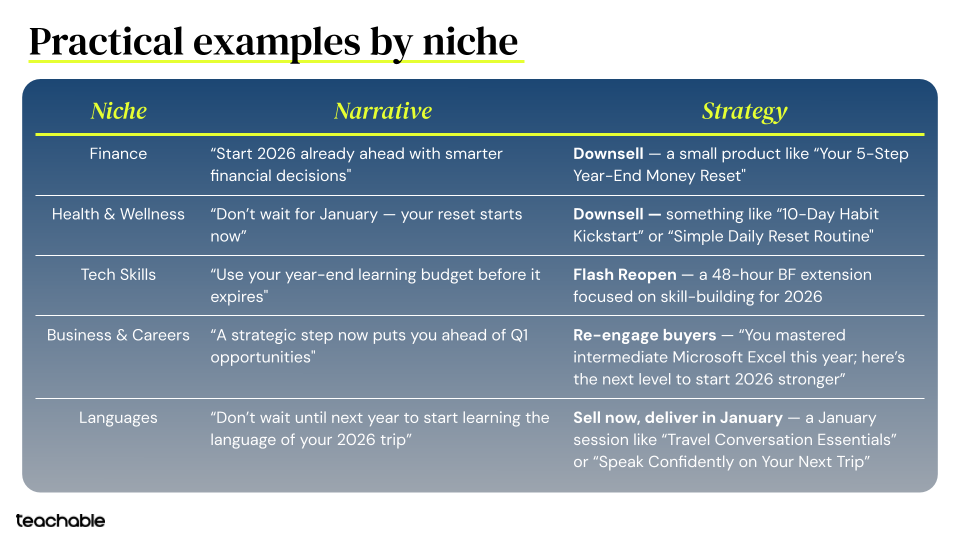
December buyers can be motivated by different sets of seasonal priorities. When your offer speaks directly to these motivations, sales become significantly easier, without requiring heavy discounts or new product launches. These five narratives can perform well across niches.
Here are 5 winning strategies top creators are using to make the most of December sales.
Many professionals need to use remaining learning or development funds before they expire on December 31. Reminding them of this deadline creates urgency that feels natural, not manufactured.
How to leverage Teachable:
December shoppers want thoughtful, clutter-free gifts, especially ones that feel personal. Courses fit this mindset perfectly because they support a person’s goals rather than add another physical item to their home.
How to leverage Teachable:
Buyers are already thinking about the new year and looking for structures that help them begin January with clarity. They want to secure their spot now, even if they don’t start right away.
How to leverage Teachable:
December naturally pushes people to finish what they started. Many students want to complete partially finished courses to enter the new year with a clean slate.
How to leverage Teachable:
A large portion of buyers regret missing Black Friday or expect a second-chance offer. Meeting that expectation with a short, intentional promotion captures warm leads without rebuilding a full campaign.
How to leverage Teachable:
Read this blog post to learn more about the End of Year narratives.
These simple sales plays require minimal setup but align perfectly with December buyer behavior. They’re designed to help you act quickly, and see results quickly.
Turn one module, template, or resource into a standalone lower-ticket product. This gives hesitant buyers an easier entry point without diluting your flagship offer.
Buyers who purchased earlier in the year are already familiar with your work. A clear “next step” offer often converts well because it meets them mid-journey.
Reintroduce your Black Friday offer for 24–48 hours with a simple two-email sequence. No need to re-explain the offer—buyers already know it.
Pre-sell a January workshop or cohort. This captures December motivation while giving learners a clear starting point for the new year.
December demand isn’t fading, it’s shifting. When your messaging aligns with how buyers actually behave this month, even small adjustments can turn the final weeks of the year into a high-intent sales window and a strong foundation for January.
Click here to watch the full webinar recording.
Pricing is one of the most powerful levers creators have, not just to increase revenue, but to signal value, improve conversion, and attract the right buyers. In this session, we focused on how to evaluate your current pricing and make strategic updates heading into 2026.
Before getting into strategy, we looked at how the Top 50 creators on Teachable actually price their offers. A few patterns stand out:
Top creators price higher across the board
Top creators build portfolios, not single offers
Format matters more than niche
The takeaway: higher revenue isn’t driven by volume or heavier discounting, it’s driven by intentional pricing, stronger formats, and smarter packaging.
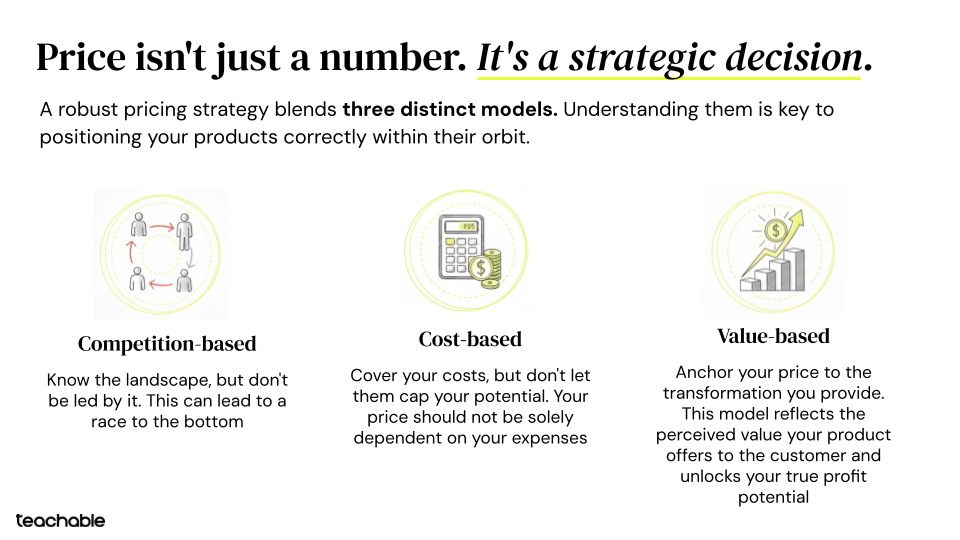
Many creators assume they have a demand problem, when the real issue is price positioning. These signals usually indicate pricing needs an update:
When traffic and engagement are healthy, pricing- not demand - is often the constraint.
Buyers don’t evaluate price based on content volume. They evaluate it based on outcomes and effort saved.
Higher-performing offers tend to emphasize:
This is why shorter, more structured programs often outperform longer, cheaper ones.
Rather than simply raising prices, the session highlighted ways to repackage value more effectively:
The strongest pricing strategies going into 2026 won’t compete on being cheaper. They’ll compete on clarity, fit, and outcomes.
Top creators:
Small pricing adjustments—when paired with the right structure—can unlock meaningful revenue growth without rebuilding your funnel.