Thank you! Your submission has been received!
Oops! Something went wrong while submitting the form.
MENU
Guidance on how to price your courses, structure offers, and build a business that generates consistent income.

Maybe you’ve had that hobby or interest for your whole life, or it’s something you’ve picked up more recently. Either way, it’s an endeavor that you love to do, and you’ve invested the time and effort into learning a lot about it, and getting really good at it. At this point, you’re so well-versed in it, you could teach someone else about it.
It’s usually at this moment that the question starts to arise: how do you know when it’s time to turn that passion into a side-hustle? This is an important question to explore before you take the leap into showing others how it’s done, so we’ve compiled the top five indicators that you’re ready.
Related: 30 easy side hustles ideas to start from home
Whether they want your help with learning for themselves, or they ask for recommendations relating to that hobby, you’re seen as a trusted source when it comes to this topic. If you’re well-versed in something that’s very niche, like how to paint rainbow murals, they may not be asking you for insight directly, but they know you’re an authority when it comes to this. They would recommend you as a resource and expert to others that might be seeking your services or to learn the same skills.
This isn’t just an activity you picked up as a whim last weekend—you’ve dedicated time and energy into this passion, and have really built up your understanding and experience with it. However, that’s not to say you need to know every single aspect of it. You just need to be well-versed enough to show people who are a few steps behind you in the process, and you know you have the expertise to do that.
Even though the courses, content, and guidance you may be offering to others will cover aspects of your passion that you’re already proficient in (like the basics), you’re still excited to learn more about your hobby. Showing others how it’s done requires a deeper level of understanding than just knowing how to do it yourself. It’s essential that you have a willingness to learn even more and truly perfect your knowledge of what you’re going to teach.
As with any passion, there is a story behind it, and it’s likely that you learned much more than just the skill itself in the process. What led you into this hobby? Even if your story is that you were naturally drawn to it since you were a kid, what’s the “why” behind why you stuck with it? How did it help you, what has it taught you? Having a strong “why” helps you feel grounded and connected to that passion, especially when things get challenging in the learning process. If you have solid answers to these questions, it’s an indicator you’re far along enough in your process to share it with others.
Looking back on your journey, you can see how dedicating yourself to this passion resulted in some kind of transformation. Whether that was feeling more self-sufficient by growing your own food, gaining confidence as you learned an instrument, or anything in between, you recognize the potential for inner transformation that this hobby can bring. You want others to be able to access and reap the benefits of this passion just as much as you have.
So, how did your answers stack up? It doesn’t have to be a firm “yes” for every single one, but if you said yes to at least two of them, this is a strong indicator that it’s time to shift your passion into a side-hustle. Keep in mind that many of these can develop in tandem. Maybe you have a strong “why”, and you’ve put in the hours, but you feel unsure about how this hobby that you're passionate about has transformed you. That’s okay—now can be a great time to do some inner reflection about that.
At the end of the day, if you’re passionate not only about partaking in the activity itself, but about how awesome it is, and you believe that others can benefit from learning it, too, then it’s time to start sharing that. You can start small by creating a downloadable, or a mini course, or go all in with offering community and coaching. Whatever you choose, your future students (and your bank account) will be sure to thank you for sharing your passions with the world.
Ready to start hustling? Download our free guide to becoming an online entrepreneur below!
{{entrepreneur-component="/blog-shortcodes/blog-popup"}}

In recent years, more people have started their own businesses. In fact, a report from the Commerce Institute shows that there were about five million new businesses started in 2022. If you’re looking for low-cost business ideas with high-profit potential, you’re in the right place. We’ve compiled a list of 34 opportunities with low startup costs.
There are many low-cost business ideas that you can start online. We’ve compiled a list of the most profitable options with information on how to begin, startup costs, and earning potential.
Many Teachable creators earn money by selling digital products and downloads. And if you have something to teach others, you can sell a digital product.
For example, Darnell Brown is a business coach. He’s been using Teachable for years to create digital downloads to help his clients start and grow their businesses.

Tips to get started:
Startup costs: With Teachable, creating and selling your digital products is easy and affordable. And you can join at no cost, then select from various pricing plans to fit your needs. Whether you’re selling courses, coaching, or digital downloads the no-code platform means you can start now.
How much money can you make: Earning potential for selling digital downloads depends on your products, audience, and topic. Some creators make up to six figures annually.
{{firstdigital-component="/blog-shortcodes/blog-popup"}}
Copywriting is one of the best low-cost business ideas with high potential profit because it’s versatile.
Most companies need copywriters to craft landing pages, social media posts, advertising copy, blogs, video scripts, and more. And they also prefer working with freelance writers because they can save on overhead costs.
Tips to get started:
Startup costs: If you have experience copywriting for brands, you can start at no cost. But, if you’re building skills, then a copywriting course usually costs about $300. Creating a portfolio website will cost about $0 to $65 per month.
How much money can you make: Many freelance copywriters charge per word, hour, or project. So your earning potential also depends on the type of content you write.
When it comes to blogs, highly experienced writers charge $100 or more an hour, or anywhere from .25 to $1 per word. If you write 10,000 words per month, you can earn $2,500 to $10,000 monthly.
Because online businesses are booming, the demand for virtual assistants is higher than ever.
Tips to get started:
Consider taking a course to learn virtual assistant skills. Then, create a website to display your services, which usually include:
Startup costs: Similar to copywriting, startup costs are low for virtual assistants. You’ll likely spend anywhere from a few hundred to a thousand dollars on courses to learn the necessary skill set and create a website to market your services.
How much money can you make: Your income as a virtual assistant can vary depending on your services and experiences. Many virtual assistants charge up to $100 per hour.
Like with many other low-cost business ideas with high-profit potential, if you have the knowledge to share, you can host workshops. Workshops might be in-person or online and last anywhere from an hour to a few days.

Tips to get started:
Startup costs:
There are various costs to consider when hosting a workshop.
How much money can you make: If you only host one workshop per month and charge 30 people $250 per workshop, you can make $90,000 per year.
Online courses are an excellent way to share your knowledge with others from the comfort of your home. With platforms like Teachable, it’s easier than ever to get started with an online course business and generate significant profit. Courses are even one of the top five sources of income for bloggers today.
Tips to get started:
Startup costs: Teachable makes creating and selling courses simple and affordable. Various plans range from $0 to $375 per month.
How much money can you make: It’s possible to earn upwards of $200,000 per year selling online courses. Thousands of Teachable creators earn a comfortable income from online courses. For example, Julia McCoy earned $150,000 from one online course.
{{coursecurriculum-component="/blog-shortcodes/blog-popup"}}
You can create low-content books in little time and easily sell them online. Low-content books don’t require much writing on your part. They usually have pages that the person buying fills in, similar to workbooks.
Examples of low-content books include:
Tips to get started:
Startup costs: You can create content on Canva and join Teachable at no cost. It’s free to sell on Amazon, but you pay for printing and shipping after you sell a book.
How much money you can make: Low-content books usually sell for $4 to $15. If you sell 300 low-content books per month, you can make up to $4,500. That said, 60% of that usually goes to Amazon for printing and shipping.
If you enjoy shopping and are looking for a low-cost business idea, try clothes flipping.
Tips to get started:

Startup costs: You can begin clothes flipping at no cost by starting with items you already have. And once you start earning money, you can buy new-to-you items to grow your inventory and increase sales.
How much money can you make: Your earning potential depends on where you find and sell your items and how much time you put into it. The casual thrifters make around $300 per month on average.
More devoted thrifters earn as much as $70,000 to $100,000 dollars per year. This couple earned $12,000 to $15,000 monthly as full-time clothes flippers and sellers.
Do you enjoy teaching and have a subject you’re passionate about? If so, you might want to start an online tutoring business that costs little to nothing to start.
Tips to get started:
Startup costs: If you already have a computer, you should only need noise-canceling headphones and a microphone to get started. This means you can start with less than $100.
How much money can you make: Online tutors can earn $35-$150 per hour. If you tutor for one hour each week, you’ll earn $1,400 to $6,000 monthly.
If you’re passionate about fitness and looking for low-cost business ideas with high profit potential, consider becoming a personal trainer.
Tips to get started:
Startup costs: This is one of the easiest and most affordable businesses to start because the only investment you’ll need is a personal training certification for less than $100.
How much money can you make: On average, private personal trainers earn up to $70,000 annually. But, running a personal training business can be more lucrative. If you start doing 10 personal training sessions a week at $150 each, you’ll make $1,500 monthly.
Becoming a freelance illustrator is one of the best jobs for artists and costs little to start. While many illustrators attend art school, this is optional.
Tips to get started:
Startup costs: Art supplies and tools like Adobe Illustrator will cost anywhere from $200 to $500. A website costs less than $100 monthly.
How much money can you make: Beginner illustrators typically charge $25 to $100 per hour. However, most experienced illustrators charge per project. Ultimately, you should price your services based on how complex each project is and how much time and effort it takes to complete.
You can also package several illustrations into a bundle price. Some illustrators charge anywhere from $500 to $5,000, so don’t be afraid to negotiate higher prices.
Do you enjoy social media, connecting with others, and getting creative? As influencing and social media marketing are rising, so is the demand for social media managers. A recent report shows the market will grow from $17.5 billion in 2022 to $51.8 billion in 2027.
Tips to get started:
Startup costs: Social media managers need a website to share their services and portfolio, which usually costs $0 to $65 monthly.
How much money can you make: Social media managers charge $25 to $250 per hour, depending on experience and services. Like many other online businesses, you can increase your earnings by generating passive income through digital products. Specifically, you might create social media templates that brands can buy.
Photo editing is as important as ever, with a high need for visuals to promote businesses, services, and products. While a photography business requires startup money for cameras, lighting, and other equipment, photo editing doesn’t.
Tips to get started:
Startup costs: A website costs less than $100 monthly, and the popular Adobe Lightroom for editing starts at $9.99 monthly.
How much money can you make: Photo editors can make $40 to more than $100 per hour. On the low end, you can earn $1,600 monthly. On the high end, $4,000 monthly.
Event planning is an excellent low-cost business idea with high profit potential for those with organizational, multi-tasking, and planning skills.
Tips to get started:
Startup costs: Event planning startup costs usually only include a website ($0 to $65 monthly). But, you might also hire a professional photographer or videographer to record content from events for your marketing.
How much money can you make: Earning potential depends on what kind of events you plan and where. Private event planners charge between $50 and $150 hourly. You can also earn a commission from event vendors.
Website developers create and maintain websites to help companies meet their goals, and they’re in high demand.
Tips to get started:
Startup costs: Web design courses usually cost $100 to $1,000, while a website costs less than $100 monthly.
How much money can you make: The average cost to build a website for a small business ranges from $5,000 to $20,000. However, more complex web development projects cost more.
In your first few years of running a web development business, you can earn $80,000 to $250,000 or more.
If you like traveling and are good at planning, why not earn money by becoming a travel planner?
Tips to get started:
Startup costs: Around $0 to 65 monthly for website costs.
How much money can you make: Although travel planners that work for an agency don’t earn a high salary, you have more opportunities running your own business.
If you charge $30 to $100 hourly and work at least 10 hours a week, you’ll earn $1,200 to $4,000 monthly. You can also increase your earning potential by creating passive income with a blog, travel guides, and more.
Learning how to start a blog and make money is how many creators begin their business journey.
Tips to get started:
Startup costs: To start a blog, you need a website. This costs $0 to $65 monthly.
How much money can you make: With so many ways to monetize a blog, a blogger’s earning potential is high. For example, Lauren McManus and her business partner have two blogs and make six figures per month.
Bloggers in the most profitable niches earn between $5,000 to $9,000 monthly.
If you enjoy helping others, consider becoming a life coach. The life coaching industry brought in $1.5 billion in 2022, with an expected annual growth rate of 4.85%.
{{freetoday-component="/blog-shortcodes/call-to-action"}}
Tips to get started:
Startup costs: Coaching programs start at about $1,000.
How much money you can make: Freelance life coaches usually charge $75 to $250 per hour.
Graphic design is one of the top low-cost business ideas for creatives. There’s ample opportunity for graphic designers because every industry has design needs.
Tips to get started:
Startup costs: You can make designs using software like Adobe Creative Cloud, which is about $60 per month.
How much money you can make: Graphic designers can charge up to $200 per hour, but usually set rates by the project. For example, you might charge $500-$1,500 for a logo and upwards of $2,500 to $10,000 for a full brand identity package.
Another low-cost business idea for creatives is upcycling furniture. Once a popular side hustle, people now find it a lucrative full-time job.
Tips to get started:
Startup costs: You can start at no cost by cleaning up and selling items you already have. When you start making money, buy used items and materials for flipping.
How much money you can make: Furniture flippers often make up to $500 per piece. If you upcycle and sell 10 pieces of furniture per month, you can earn $5,000.
Are you passionate about fashion? If so, you could be a fashion consultant and offer clients style advice.
Tips to get started:
Startup costs: A fashion consultant can start by creating a website for under $100.
How much money you can make: Fashion consultants usually charge an hourly fee of up to $100 or a daily rate of about $1,000.
The dog walking industry has grown in recent years and has an expected growth rate of 11.52% from 2022 to 2030. Dog lovers who enjoy staying active can start their own dog walking business.
Tips to get started:
Startup costs: You can start walking dogs for people you know at no cost.
How much money you can make: Dog walkers usually charge up to $50 per hour.
If you’re tech-savvy and organized, you could offer data entry services and update online records for companies.
Tips to get started:
Startup costs: You can learn data entry skills for free or take a course starting at a few hundred dollars.
How much money you can make: Freelance data entry clerks charge up to $50 per hour.
Influencers or digital content creators are experts on a specific topic and share their content to earn money.
Tips to get started:
Startup costs: Most influencers don’t pay anything to start.
How much money you can make: Earning potential varies based on different income sources. That said, some influencers report earning a few thousand dollars per post. So, if you share five branded posts per month, you could make $15,000.
With many companies relying on video for marketing, video editing jobs are booming. This is the ideal low-cost business idea because it requires little equipment or startup costs.
Tips to get started:
Startup costs: You can create a website with your portfolio and services for less than $100.
How much money you can make: Video editors usually earn $50 to $150 per hour.
The global yoga industry was $105.9 billion in 2022 and expects to hit $177.6 billion by 2028. If becoming a yoga instructor is on your bucket list, now’s a perfect time.
Tips to get started:

Startup costs: Yoga teacher training programs usually cost a few thousand dollars. Most of them offer payment plans.
How much money you can make: Yoga instructors usually charge about $20 per class. If you teach 10 classes to 10 students each, you can earn $2,000 per week.
Another lucrative business idea for creatives is designing print. Print designers use digital software to create visuals for physical items, including
Tips to get started:
Startup costs: Adobe Creative Cloud costs about $100 per month. A website costs $0 to $65 to start.
How much money you can make: Print designer rates are similar to graphic designers. You can earn anywhere from $25 to $150 per hour, but it depends on the project.
Search engine optimization (SEO) helps companies increase traffic to their sites and get more potential customers to view their products and services. It can be a lucrative way to make money online, especially if you’re familiar with technical SEO.
Tips to get started:
Startup costs: There are no costs to get started. You can find various free SEO courses you can take and get your first clients on platforms like Upwork.
How much money you can make: If you know technical SEO, you can charge $1,500 to $5,000 for a basic SEO audit. You can earn $2,000 to $5,000 monthly.
Being a songwriter is one of the best low-cost business ideas with high profit potential for musicians.
Tips to get started:
Startup costs: You can take songwriting courses for free and create a portfolio for free.
How much money you can make: As a new songwriter, you can charge up to $500 per song and increase this as you gain experience.
If you have a camera and take good photos, selling stock photography is an easy, low-cost business opportunity.
Tips to get started:
Startup costs: You can join stock photo sites for free.
How much money you can make: You can usually earn up to $40 for one image.
With an expected growth of 10.36% by 2027, the IT support industry offers excellent earning potential.
Tips to get started:
Startup costs: IT support courses usually cost $0 to $1,000. You can start your website for free.
How much money you can make: Freelance IT support providers charge an average of $100 per hour.
If you’re looking for an in-person job and like working with children, childcare offers excellent opportunities.
Tips to get started:
Startup costs: You can take a CPR and first-aid class for less than $100.
How much money you can make: Earning potential depends on your experience and where you live. Many freelance childcare providers charge up to $40 per hour.
App development is one of the fastest-growing industries, offering ample job opportunities.
Tips to get started:
Startup costs: If you take a course, it’ll cost up to $100.
How much money you can make: Most app developers charge $5,000 to $10,000 per project.
Beauty consulting is a great low-cost business idea with high profit potential for skin, hair, or nail experts.
Tips to get started:
Startup costs: Supplies to start can cost up to $500. You can create a portfolio at no cost.
How much money you can make: Beauty consultants can earn up to $50 per hour.
Because all industries produce written content, there’s always a need for editors and proofreaders.
Tips to get started:
Startup costs: There are many free online courses. A website costs $0 to $65 per month.
How much money you can make: You can charge up to $100 per hour.
With so many low-cost business ideas with high profit potential, there are several ways you can choose the best option:
If you choose a job you already have the skill set for, you’ll save on startup costs and time. Make a list of your skills and interests to help you pick your business idea.
To start a business that aligns with your personal and career goals, use these questions to guide you:
After you answer these questions, consider jobs that allow you to meet these goals.
Startup costs for the businesses on this list vary based on these factors:
Determine what your budget is to get started. Here are some high-profit job ideas based on various budgets.
Budget of $100:
Budget of $500:
Budget of $1,000+:
Once you narrow down business ideas, check their demand to ensure there’s earning potential.
Use social media and other online communities for market research. You can also do keyword research at no cost using Semrush Keyword Magic Tool to see what industries people are searching for.

Consider who you want to work with by thinking about your target audience.
With so many low-cost business ideas with high profit potential, there are many ways to earn money without a significant investment.
Thousands of Teachable creators have started lucrative businesses for little to nothing. Start today with a free Teachable account.

TL;DR: This guide covers 25 ways to make money online in 2026, from quick, low-skill gigs like paid surveys and microtasks to high-earning, scalable businesses like online courses, coaching, and digital downloads. Most methods need no upfront investment, just time. If you already have expertise or an audience, courses, coaching, and digital downloads offer the highest income ceiling, and teaching what you already know is usually the fastest path to income that keeps selling once it's built. Teachable brings course sales, coaching, and digital downloads together in one platform, so you can start selling without stitching together separate tools.
The internet has made it possible to earn a real income without a traditional job, a physical storefront, or a large startup budget. Some methods pay immediately. Others take months to build but generate revenue that runs without trading time for every dollar.
Below are 25 ways to make money online in 2026, from quick side income to full-time businesses. We have organised them roughly by how fast you can earn and how high the income ceiling is. Teaching, coaching, and selling knowledge get the deepest coverage here, since they carry the highest income ceiling of anything on this list.
These methods can generate cash fast but rarely scale past a few hundred dollars a month without significant time investment.
Survey platforms like Prolific, Swagbucks, and Survey Junkie pay you for your opinions, typically $2 to $15 per hour depending on the platform (Prolific tends to pay more than Swagbucks or Survey Junkie). It requires zero setup and pays immediately, but it's a starting point, not a strategy.
Platforms like Clickworker and Amazon Mechanical Turk pay for small data labelling, transcription, and content moderation tasks. The work is simple and immediate, but the per-hour rate is low, typically $3 to $8 per hour.
UserTesting pays $10 for a standard 20-minute screen-and-voice usability test, with live
sessions paying $30 to $120. Sign up, complete a sample test, and get placed on projects that match your profile.
These methods pay more per hour and can grow, but they require a marketable skill and some setup time.
If you have real expertise, in fitness, finance, languages, coding, design, or any hard skill, packaging it into an online course is one of the highest-leverage things you can do. A course you record once can sell indefinitely.
The income range is wide: some creators earn a few hundred dollars a month; others build six-figure businesses. What determines the outcome is the specificity of the problem you solve and the size of your audience.
You do not need a large following to start. A small, engaged email list is often enough to
validate and launch a first course.
Teachable lets you build, price, and sell a course without writing a line of code. Payments, tax remittance across 45+ countries, and student management are handled automatically. Start a 7-day free trial and have a live, purchasable course ready before it ends.
Coaching is the fastest way to monetise expertise without building a full course. You sell your time, attention, and guidance directly to a student or client, typically in one-on-one video sessions.
Coaching rates range from $50 to $500+ per session depending on the niche and your track record. Finance, business, fitness, and career coaching consistently command higher rates than general life coaching.
The advantage of coaching over courses is speed: you can book your first client this week using nothing more than a scheduling link and a payment form. The disadvantage is that it does not scale beyond your available hours unless you eventually productise the knowledge into a course.
Teachable's coaching product lets you sell one-on-one or group coaching sessions directly from your school, with scheduling, video calls, and payment handling built in, so you are not managing separate tools for booking and billing.
Digital products (templates, ebooks, guides, Notion dashboards, Lightroom presets, spreadsheet tools) sell once and deliver automatically. There is no inventory, no shipping, and no manual fulfilment.
The best digital products solve one specific, annoying problem. A "financial tracking spreadsheet for freelancers" sells better than a "personal finance template" because the audience and the pain point are both specific.
Teachable's digital downloads feature lets you sell PDFs, files, and templates alongside or instead of a full course, on the same platform with the same payment processing.
Freelancing means selling a specific service (writing, design, video editing, web development, social media management, bookkeeping) directly to clients on a per-project or retainer basis.
The fastest way to get started is to list on Upwork or Fiverr, or to reach out directly to businesses in your network that might need what you do. Most freelancers earn $20 to $75 per hour, and specialists with niche skills and a proven track record charge $75 to $150+.
The ceiling on freelancing is your available hours. Many freelancers eventually transition into consulting, productised services, or teaching what they know.
Virtual assistants (VAs) handle administrative tasks for business owners: inbox management, scheduling, data entry, research, social media posting, customer support. The work is flexible and remote, and demand is strong.
Starting rates run $15 to $25 per hour for general VA work. Specialised VAs, those who handle podcast editing, launch coordination, or bookkeeping, earn $35 to $75 per hour. Platforms like Fancy Hands, Time Etc, and Belay are common starting points.
Small businesses consistently struggle to maintain a consistent social media presence. If you understand how platforms work, you can charge $300 to $1,500 per month to plan, create, and schedule content for a single client.
Start with one or two local or online businesses in your network. A short case study from your first client is all you need to land the next one.
Content writers produce blog posts, articles, and educational content. Copywriters write sales pages, email sequences, and ad copy. Both are in demand and can be done entirely remotely.
Content rates start at $0.05 to $0.15 per word for general topics; specialist writers covering finance, legal, medical, or technical subjects earn $0.20 to $0.50 per word. Copywriting rates are project-based and higher: a sales page can command $500 to $3,000+.
Logo design, brand identity, social media graphics, presentation decks, and infographics are all marketable design services. Tools like Canva have lowered the barrier for basic design work; professional designers use Adobe Illustrator, Figma, and Photoshop for more complex projects.
Beginners can start on Fiverr at $50 to $200 per project. Experienced designers working with
established clients charge $100 to $250 per hour or set project rates.
Online tutoring platforms like Wyzant, Preply, and Varsity Tutors connect you with students
who need help in academic subjects, languages, or professional skills. You set your rate, choose your availability, and work entirely via video call.
Rates range from $20 to $80 per hour depending on the subject and your credentials. STEM subjects and language tutoring (particularly Mandarin, Spanish, and English as a second language) command the highest rates.
These methods require building an audience first, which takes time, but once the audience exists, the income can scale significantly beyond what your available hours allow.
YouTube pays creators through the YouTube Partner Program (ads), which requires 1,000 subscribers and 4,000 watch hours to access. Ad revenue alone is modest: most creators earn $1 to $5 per 1,000 views. The real money comes from layering in sponsorships, affiliate links, and course or product sales once an audience is built.
The fastest-growing YouTube niches in 2026 include personal finance, productivity, AI tools, fitness, and language learning, all areas where a knowledge-based course is a natural next step.
Email newsletters are the most direct connection between a creator and their audience. Platforms like Substack, Beehiiv, and ConvertKit let you publish and monetise a newsletter through paid subscriptions, sponsorships, or product sales.
The email list is the one business asset that does not disappear when an algorithm changes. Most creators who build sustainable online income treat their list as the core of their business, not a side channel.
Affiliate marketing means earning a commission every time someone makes a purchase through your unique tracking link. You recommend products or services you already use, embed the links in content (blog posts, videos, emails), and get paid when someone buys.
Commissions range from 2% to 50%+ depending on the product category. Software products and digital services pay the highest affiliate rates, often 20% to 30% recurring for subscription products.
The prerequisite is an audience, or at least a content channel (a blog, a YouTube channel, a newsletter) that can direct traffic to your affiliate links. Without that, affiliate marketing does not work.
A paid membership charges subscribers a recurring fee, typically $15 to $100 per month, for access to exclusive content, a community, live Q&As, or a combination. The appeal is predictable, recurring revenue instead of the launch-and-wait-for-the-next-launch cycle.
Memberships work best when the audience has a recurring problem that benefits from ongoing guidance: fitness accountability, a professional learning community, a writing group, or a business mastermind.
Podcast advertising pays $15 to $25 CPM for pre-roll placements and $25 to $40 CPM for mid-roll, with finance and business podcasts often commanding $50 CPM or more. A podcast with 5,000 downloads per episode can earn $75 to $200 per episode from a single mid-roll sponsor.
Podcast sponsorships are most accessible once you have a consistent audience and a clear
niche. Advertisers pay a premium for highly targeted audiences: a finance podcast attracts finance
sponsors; a parenting podcast attracts family product brands.
A blog earns through a combination of display advertising (Google AdSense, Mediavine), affiliate links, sponsored posts, and your own products. Blogging takes 12 to 24 months to generate meaningful traffic from SEO, which makes it a long-term play, but a blog that ranks for high-intent informational queries can generate income for years with minimal maintenance.
These methods turn a physical or licensable asset into recurring or one-off sales, with margins and
effort varying widely by category.
Print-on-demand services (Printify, Printful, Redbubble) let you design custom merchandise (t-shirts, mugs, phone cases, tote bags) and sell it without holding inventory. When a customer orders, the supplier prints and ships directly. Your margin is the difference between your retail price and the supplier's base cost.
This model requires no upfront investment, but margins are thin (typically $2 to $8 per item) and standing out requires either a strong brand or a very specific niche audience.
Buying underpriced items on Facebook Marketplace, Craigslist, estate sales, or thrift stores and reselling them on eBay or Amazon is a legitimate side income with no ceiling beyond the time and capital you put in. Furniture, electronics, collectibles, and sneakers are reliable categories.
Photographers and videographers can upload content to Shutterstock, Adobe Stock, or Getty Images and earn a royalty every time a buyer licenses the image. Rates are low per download ($0.25 to $2 for photos, $15 to $50 for video clips), but a large, well-tagged library can generate consistent revenue that runs without trading your time.
Voice-over actors record narration for explainer videos, audiobooks, e-learning modules, and advertisements. Platforms like Voices.com, Voice123, and ACX (for audiobooks) connect voice actors with clients. A decent USB microphone and a quiet recording space are the main startup costs.
Rates start at $150 to $250 per finished hour of audio for newer voice actors; experienced professionals can reach $400 or more.
If you have a background in finance or accounting, bookkeeping for small businesses is one of the highest-paying remote service businesses. Rates run $25 to $75 per hour for general bookkeeping; CPAs charge $150 to $400 per hour for more complex tax and audit work.
Demand is steady and clients are often long-term, making this a recurring-revenue service business rather than a project-based one.
Translators who work in high-demand language pairs (English-Mandarin, English-Spanish, English-German) earn $0.08 to $0.30 per source word for general content and $0.20 to $0.60+ per word for legal or medical documents. Transcriptionists typically earn $1.00 to $3.00 per audio minute for professional human transcription, depending on audio quality and turnaround time.
Platforms like Rev, TranscribeMe, and Lionbridge are standard starting points.
Consulting is coaching's higher-priced cousin. Where coaching focuses on guiding someone through a process, consulting means being hired to diagnose a problem and recommend or implement a solution. Consultants typically work with businesses rather than individuals, and rates reflect that: $100 to $500 per hour is standard for business, marketing, operations, or technology consulting.
The transition from freelancer to consultant is mostly a positioning shift: you stop selling hours and start selling outcomes.
The honest answer is that the best method depends on what you already know, how much time you have, and how quickly you need income.
Creators who reach consistent monthly revenue fastest are rarely the ones who wait until everything is ready. Launching early, selling to a small audience, and using that feedback to improve tends to outperform waiting for a "ready" product. On Teachable, creators already earning $100,000 or more a year are growing that income by 10% or more year-over-year, evidence that revenue keeps building once a course, coaching offer, or digital download is live.
Start a 7-day free trial on Teachable and have a live, purchasable course ready before it ends. See the pricing page for plan details.
How do I make $100 a day online?
Reaching $100 per day online ($3,000/month) typically requires either a service business (freelancing, coaching, virtual assistant work) or a product business (online courses, digital downloads, affiliate marketing) that is past its initial launch phase. Freelancing and tutoring are the fastest ways to reach $100 per day because every session pays immediately; courses and digital products take longer to set up but can hit $100/day without requiring your active time once the audience is in place.
What is the most profitable way to make money online?
On a per-hour-invested basis, online courses and coaching have the highest income ceiling for knowledge workers. A course that takes 40 hours to build and sells for $300 to the right audience can generate $300 per sale indefinitely. The most profitable approach is usually to combine a course (for revenue that runs without trading your time) with coaching (for premium, personalised income), a pairing Teachable's own Bundles feature is built to support.
Can I make money online without any experience?
Yes, but the ceiling is lower without experience. Survey completion, microtasks, and print-on-demand require no prior experience and pay immediately. Freelancing, tutoring, and virtual assistant work require some baseline skill but are accessible to most people. Courses and coaching require real, demonstrable expertise: you need to have actually done the thing you are teaching.
How long does it take to start making money online?
Surveys and microtasks can pay within 24 hours. Freelancing and virtual assistant work typically pays within 1 to 4 weeks of actively applying to platforms. An online course can generate its first sale within days of launching if you already have an email list; without one, expect 1 to 3 months of content and audience building before your first sale. Affiliate marketing and blogging typically take 3 to 12 months to produce meaningful income.
Is selling online courses still profitable in 2026?
Yes. Selling courses directly from your own platform means you set your own pricing and control your own discoverability, instead of competing inside a marketplace's algorithm and fee structure. Courses that solve a specific, painful problem for a defined audience continue to perform well.
Digital product: A downloadable or online-only item like a course, ebook, template, or app, sold without shipping or physical inventory.
Affiliate marketing: Earning a commission by promoting someone else's product through a personal tracking link, paid only when a sale happens.
Recurring revenue: Income that repeats on a set schedule, such as a monthly membership or subscription, instead of requiring a new sale each time.
Print-on-demand: A production model where a supplier prints and ships a custom product, like a t-shirt or mug, only after a customer orders it.
Gig economy: The market for short-term, flexible work booked through online platforms, such as surveys, freelance projects, or virtual assistant tasks.

TL;DR: Hobbies make money three ways: selling what you make, selling your time as a service, or teaching the skill through a course, coaching or digital downloads. Teaching scales best, since one course can serve many students without trading more time per sale. A hobby is teachable when beginners would pay to skip your years of trial and error, like photography, graphic design, writing, baking, gardening or crafts. The table below shows which of these 25 hobbies translate into a teaching business, and which only pay for your time. Check demand first by searching your hobby plus “course” or “class.”
Do you have any hobbies that make money or could be a source of extra income? While we tend to have hobbies to help us relax, escape from the daily routine or fulfill our creativity, some hobbies can be turned into profitable businesses.
If you’re already doing something you enjoy in your free time, why not start making money while doing it? So, if you’re interested to earn extra cash with your passion, we have a list of 25 lucrative hobbies that have the potential to be a business.
Sometimes, a lot of our hobbies can actually translate nicely into an online course or coaching business. You don’t need formal credentials to teach a course on one of your hobbies, but you do need real skill and results you can show. Everyone from artists to musicians to coders to gardeners to marketing experts have found success with online courses on our platform.
Our course builder, checkout, payments and tax handling sit in one place, so your time goes into teaching rather than setup. No matter what niche area you’re interested in, you can find success and make a profit sharing what you know. Our guide shows how to launch an online course or start coaching based on one of your hobbies.
A hobby makes a good course when it has a skill people struggle to learn alone and a result they can see, like a finished painting, a first sourdough loaf or a working website. Here’s what you could teach for the hobbies on this list:
Service and gig hobbies like dog walking, driving and grocery delivery pay for your time, so they don’t usually turn into courses.
Social media can be a very profitable hobby. Billions of people are using it to socialize with friends and with brands. You can become an influencer and build your own audience, which you can later monetize.
Influencers have many monetization options, from affiliate marketing to brand sponsorships. It’s also one of the most sought-after careers now because you have a chance to make money while sharing your life or things you’re passionate about.
Consider choosing a niche to accelerate your growth:
Another way to make money with social media is by working as a social media manager. Most brands now have an online presence and teams that run their social media profiles.
If you’re good at noticing trends and creating good quality content, you might approach brands and offer your services as a freelancer or online coach. Your best bet when getting started is to approach small businesses and offer to work for free to build up a reputation and portfolio of successful social media campaigns. Teaching social media through an online course is another way to earn from what you know, without trading every hour for client work.
Graphic design and illustration are lucrative hobbies and skills to have. If you have good knowledge of software like Adobe Illustrator and can create logos and visual art, then you can offer freelance services to brands.
Graphic design is versatile because you can work on a whole range of projects:
You can start looking for clients on online marketplaces like Upwork or 99Designs.
If working with clients isn’t for you, consider creating digital products and selling them online. You can create posters, prints, fonts, and website designs, graphic details and upload them to market places like Society 6 or Creative Market for sale. Have a passion for teaching? Share your favorite techniques and tips with an online course as well. You can build the lessons in our course builder, or have our AI curriculum generator draft a first outline from a short description.

If writing is your hobby, you can make money online by working as a freelance writer. There are many different types of freelance writing you can do, depending on your skillset:
Choose what type of writing you want to do. Then, create a blog or start writing on Medium to build your portfolio before you start approaching clients and applying to jobs.
Once you have a decent portfolio, you can start looking for a writing job on websites like ProBlogger. Alternatively, you can Google businesses in your niche and cold pitch them your services.
Writing for clients is not the only way to monetize your writing. If you write fiction and are a fast writer, you can write books and self-publish on Amazon. It does require investment in the professional cover and editor, and you’ll have to market your books, but you can turn this into a profitable business.
Now, not all self-published books sell well. It highly depends on the niche. Here is a list of the most profitable self-published book niches for fiction authors:
Another hobby with high earning potential is photography. It’s a skill that can be utilized in many different ways, and there is always a demand for visual content.
Here are a few ways you can turn your photography hobby into a profitable business:
Every business needs a website these days. If you have an eye for design and understand the code, you can make a lot of money designing and building websites.
There are multiple ways you can monetize your hobby:
Blogging is still one of the most fun hobbies to have. And it’s also one of the best business ideas for women, particularly stay-at-home moms, with the biggest potential for making a lot of money from the comfort of their own homes.
You might already have a blog where you share your favorite recipes, travel destinations, or outfits. Or you might only be thinking about how to start a blog. Either way, if you want to make money, you need to consider who your audience is and what they want to read.
Consider niching down and writing about one topic at the start, allowing you to establish yourself as an expert quicker. You can always grow and expand later down the line. Here are the seven most profitable niches according to Themeisle:
Blogging also offers you a plethora of different ways to monetize your hobby:
If you’re a retiring art teacher or have secretly dreamed of being an artist for years while busy with life, you might want to turn your art hobby into a profitable small business.
You can teach art online in the comfort of your own home by creating an online course with video classes. Or do live masterclasses and webinars for people interested in learning to paint or draw.
On our platform, you can build a sales page, organize your curriculum and take payments in one place. This way, you can focus on sharing your art online to find an audience.
Selling or re-selling antiques and second-hand items can be a hobby that makes money if you have a passion for thrifting. Re-selling vintage clothing has become a popular side hustle since the rise of Nasty Gal almost a decade ago. But you can re-sell much more than vintage Levi’s.
Visit your local flea markets and thrift stores to find antiques and interesting old items and furniture. You might also drive around your neighborhood and look for furniture left on a curb. While it might be damaged, it’s always for free, and you can always upcycle it before you sell it.
A more time-efficient way is to browse Craigslist or Facebook Marketplace, where people sell their used household items and furniture. Sometimes, you can find really good antique items for a good price when people are moving or trying to get rid of unwanted items.
Once you have an inventory, put your items online. A great place is Etsy or Instagram. But you might also want to create your website for your antique store.
Pro tip: You can monetize your expertise and eye for thrifting or antiquing with a course or digital guides. Create digital downloadable guides on your best thrifting tips, upcycling ideas, and pricing guides. You can even teach other antique lovers and sellers how to run a business online. The options are endless.

Pottery can be turned from a hobby to a profitable small business. You can put your creations on marketplaces like Etsy. People go on Etsy to look for handmade things, so you don’t have to work on attracting the audience to your website.
You might also opt to teach other people how to work with clay through online courses, online masterclasses, or in-person lessons.
You might want to consider selling your art if you’re a painter. You can sell the original canvas, offer custom painting services where you take orders from people, and sell print copies of original artwork for a lower price.
Social media platforms like TikTok are great for attracting an audience interested in your work. You can share your process behind the scenes of what it takes to get from a sketch to a final piece and much more.
Cooking and baking are useful hobbies and are also perfect for monetizing. Everyone loves food, either eating it, looking at it, or making it. So if you’re a skilled baker with secret recipes for mouthwatering brownies or chocolate cupcakes, take advantage of it!
You can create an online store where you sell baked goods. You can take orders for special events or choose to teach people how to bake their own sweets at home.
Just with everything, certain food trends come and go. During the lockdown, many people turned to learn how to bake bread at home. Many small businesses appeared online, teaching people how to bake sourdough bread.
So, see what recipes you can utilize to attract attention from most people and start baking! A number of bakers and chefs on our platform have found success sharing their tips, recipes, and expertise online through coaching or courses, including a sourdough baker who turned years of recipe testing into a full course.

Knitting is a relaxing hobby that can produce wonderful things. If you know how to knit, you might want to consider selling your goods to people online.
You can set up an Instagram account or an Etsy store and sell your products there. Or, you can take custom orders from people working on a 1:1 basis.
Pro tip: Create downloadable patterns as free lead magnets to offer to your shoppers to grow your email list. When you’re ready to launch a course or knitting academy, you’ll already have an email list that’s ready and eager to learn!
The beauty industry has been growing rapidly in recent years. If you love making your own soaps and organic facemasks, think about turning your hobby into a money-making machine.
Quite a few organic skincare brands started as a one-person team, making organic products in the kitchen for personal use and later turned into profitable businesses.
You can specialize in one product, like a whipped soap or a sugar lip scrub. Or, you might create a whole line and sell different products for the body and face. Here are a few ideas to help you get started:
Candlemaking is relaxing, and it’s also a great way to make extra money. Every year when September comes around, many people worldwide want to snuggle up with a blanket and light a candle in the evening, so take advantage of that!
Also, there are tons of different niches for candlemaking, so you can target a specific niche depending on what you like to make:

Gaming has a poor reputation, but it can be an extremely profitable hobby that makes you a lot of money. And it’s also a very lucrative money-making hobby as you can do it from the comfort of your own home.
Gamers like Ninja had made millions of dollars by simply playing their favorite games and streaming for other people to watch. So, you can start by streaming your gaming on platforms like Twitch.
You can get subscribers who pay a monthly fee, and viewers might tip you money or digital currency during your streams. You might also monetize your streams with ads or get sponsors as your audience grows.
If you’re extremely good at your chosen game, you might even want to consider entering e-sport competitions. These ventures are competitive, but most offer huge cash prizes, especially for the most popular games like Fortnite.
Do you enjoy creating and tinkering with websites? Or maybe you’re good at SEO? Well, then you can make money online by turning your hobby of website creation into a profitable business.
Website flipping is a lot like house flipping. You buy an already existing website that needs to be updated, and you work on improving it and making it shine. Then, sell it for a profit. Use a marketplace like Flippa to find a website for your first project.
If you’re a green thumb and love spending time outdoors, you can turn your favorite hobby into a small business! It might look like gardening is a hard hobby to monetize, but it couldn’t be further from the truth. There are so many different ways to make money with gardening:
All of this is highly valuable knowledge that a gardening or plant-loving audience would pay for. Consider honing in on a niche subject such as “flower drying” and building an entire course around it.

If you love pets and are great with dogs, walking other people’s dogs is a great way to make money on the side. You can do it after work, or on the weekends.
It’s a great hobby if you love dogs but can’t have one for whatever reason, as you get to spend time and play with dogs. And, walking dogs means getting in those recommended 10,000 steps which also has tons of health benefits.
You can put an old-school advertisement in your apartment building to let your neighbors know you offer dog walking services. Or, you can put up a local ad on Craigslist. Alternatively, you can join dog walking companies online that specialize in connecting dog walkers with dog owners.
Here are a few recommended dog walking companies to get you started:
Another opportunity for pet lovers is pet sitting. It’s a bit more involved than dog walking as you’ll usually need to look after people’s pets for longer than a walk.
If you already have pets, it might be a great way to socialize your pets with others and make money enjoying fun company while you babysit someone’s pet while they’re on holiday.
You might want to try registering with pet sitting companies that help connect pet sitters with pet owners. Here are a few popular options to help you get started:
Do you find yourself strolling at Target on a random Saturday afternoon fairly often? If the answer is a yes, you might want to consider turning your shopping hobby into a side hustle by shopping for groceries for other people.
You can join companies like Instacart, where you’ll take orders from people, do grocery runs for them, and then deliver their goods to their homes.
What’s great about it is that you can work whenever you want or have a free minute. Pay varies by city and order volume, so check the current rates in your area before you sign up.
Some people love driving. If you’re one of those people who often go for a drive when you want to relax or when you’re bored, then consider joining Lyft or Uber and make extra cash by driving people.
These companies make it easy to apply to be a driver, set up your account, and start earning money immediately.
If you’re an avid book lover and reader, consider turning your fun hobby into an easy side hustle. Yes, you can read books and get paid to express your opinions about them!
One way is to create your own book blog and review books there. As you build your audience and credibility, you’ll be able to start charging for book reviews and other book-related services. This way, you’ll get free books from publishers, which is every book lover’s dream!
If you want something simpler and more instant, you can join book review companies that hire reviewers and pay them a small fee to read and review books. Most of these companies are easy to join and get started earning extra cash.
Here are a few recommendations for book review websites/publications that pay their reviewers:

Generative AI continues to explode in popularity, making it a highly profitable hobby turned business. Content creators are monetizing their knowledge of tools like ChatGPT, Midjourney, and Adobe Firefly by teaching prompt engineering, AI-driven storytelling, and marketing automation.
Key Stats:
Live shopping has become a popular way for hobbyists and creators to monetize their passion for fashion, beauty, tech, and more. Hosting engaging live streams, product demonstrations, and exclusive sales has become highly profitable.Gary Vaynerchuk is shouting from the roof-tops about what he thinks of the future of live shopping and the new 'attention economy'. Creators, heed the video below:
Key Stats:
Here’s the best example of live shopping Gary gave, Mary Ruths Organics. How can you take your TikTok obsession and couple it with your shopping hobby into a money making opportunity?
The rise of cozy video games, those that emphasize relaxation, creativity, and low-stress environments - has opened new avenues for hobbyist game developers. Creating games that focus on building, farming simulations, or gentle adventure appeals to a broad audience seeking comfort and escapism. Developers can monetize these games through direct sales, in-game purchases, or by offering workshops on cozy game development.
If you want to make money from your hobby, here are the steps you want to take:
Before you pour your time and money into your hobby, do market research to validate your idea. See if there is a demand for what you’re offering and how your product/service fits into the market.
A business plan will help you stay on track and be organized about growing your business. If you’re not getting investors involved, it will only be for your eyes, so keep it short and to the point.
Think about what makes your business stand out in a crowd. Why it’s special, and how can it change people’s lives or make them easier? Then, come up with a name that resonates with your brand’s mission and is easy to remember.
While you can start a business without fancy setups in place and register it only when it starts generating revenue, it might be easier to legitimize your business from the start.
Choose a business structure, register it with your state, pick an accounting and invoicing software and ensure you have everything you might need set up.
Now it’s time to work on making your product or service ready for the market! That will look different for everyone, but it might include polishing your skills, hiring help, and getting beta testers.
When you’re ready, let the world know you’re in business! Build a website for your business, launch your social media profiles, and start running a coordinated marketing campaign to build an audience interested in your products and services.
No matter what hobbies you have, realizing that anything you’re passionate about can be a viable way to make money is key. At Teachable, we believe in the power of knowledge, and what’s more, we believe that everyone has something to share. Many of the hobbies above, whether skill-based or hands-on, can become a course, coaching program or digital download. Courses, coaching and downloads all sell from one school on our online course platform. Start a 7-day trial and build your first course before committing to a plan.
What hobbies can earn money?
Tons of different hobbies can make you money, and most fall into three profitable categories. Skill-based hobbies, like photography, writing, editing, audio production, voice acting or dancing, can be turned into service-based businesses. Product-based hobbies, like knitting, sewing, jewelry-making, pottery and painting, let you sell what you make on marketplaces like Etsy. Teaching hobbies, like yoga, meditation, piano and language, can become a business where you teach others the skill itself.
How can I make money from my hobby?
Research the demand for your hobby, then write a short business plan and pick a name that fits your brand. Choose a business structure, and get your legal and accounting basics in order if you plan to sell long-term. Refine your product or service with early customer feedback, then start marketing through your website, social channels and a steady promotional push.
Can a hobby turn into a profitable business?
Yes. If you have a hobby for which there is a demand, it can definitely become a profitable business. Before you dive head-on into turning your hobby into a business, spend some time researching the market to see if there is an audience interested in what you are offering. If you see that your hobby is in demand and that people would benefit from your products/services, you can start taking it more seriously.
Building a business, big or small, takes a huge amount of dedication, patience, and time. So, be prepared for your venture to take up much of your time and attention if you want it to be profitable, and be patient! Remember, Rome wasn’t built in a day.
What's the easiest hobby to monetize online in 2026?
The easiest hobby to monetize online in 2026 is creating and selling digital products, such as downloadable templates, checklists, or guides. With us, you can sell templates, checklists and guides as digital downloads, on their own or bundled with a course.
Can live shopping be profitable as a hobby in 2026?
It can be. Live shopping combines entertainment and e-commerce. Creators hosting live shopping streams can earn through product sales, brand sponsorships, and affiliate commissions.
Which hobbies can you teach online?
Any hobby with a learnable skill and a visible result: photography, painting, graphic design, writing, baking, knitting, pottery, gardening, web design and social media are among the most common. If beginners would pay to avoid your years of trial and error, you can teach it as a course, coaching or a set of downloadable guides.
Teachable skill: a hobby with a learnable technique and a visible result, the kind beginners will pay to shortcut.
Side hustle: work you do alongside your main income to earn extra money, often starting small before it grows.
Niche: a specific, well-defined focus within a broader hobby or market that helps you stand out and attract the right audience.
Monetize: to turn a hobby, skill or piece of content into a source of income, whether through products, services or teaching.
Digital download: a downloadable product, like a template, pattern or guide, sold once and delivered instantly with no physical shipping.
TL;DR: Making $10k a month online is realistic, but it rarely happens fast, and the method you pick determines how quickly you get there. Service-based paths like coaching, consulting, freelancing, and tutoring pay the fastest since you charge premium rates for your time, while scalable paths like online courses, digital products, and memberships take longer to build but keep earning long after you make them. The strongest approach combines both: a service that pays now and a product that compounds over time. Pick one or two methods that match your skills and audience, go deep instead of spreading thin, and route repeat buyers into a course or membership so the revenue keeps compounding instead of resetting every month.
Making $10,000 per month might seem like a pipe dream if you work a 9-to-5, but if you're an online entrepreneur with the right strategy, it is achievable.
E-learning is one of the most accessible digital income streams to build today. Whether you want to sell online courses, build a membership site, run a coaching business, work from home as a freelancer, or turn a side hustle into a bigger income stream, there are dozens of paths to five figures a month. This guide covers the realistic ones, who each suits, and roughly how long it takes.
Below are 24 proven ways to reach $10k per month, from methods that pay fast to ones that build income you keep earning long after the work is done.
Creating an online course is one of the most scalable and durable ways to build recurring income. If you have expertise in a particular field (like marketing, knitting, fitness, dog training, or a variety of other topics), there's likely an audience out there that can't wait to learn from you. The beauty of online courses is that once you've created the content, it can sell over and over again without much extra effort on your part.
Teachable Tip: With our course builder, it's easy to turn your knowledge into a repeatable income stream. We provide the tools you need to set up your course, promote it, handle payments, and manage your students. And you don't need to be a tech genius to use any of it.
As the longtime bread and butter of online entrepreneurship, digital products are an excellent way to build revenue that keeps selling after you make it once. E-books, design templates, printables, downloadable software… these are all products you can create once and sell indefinitely. The trick here is to find a niche audience that needs what you're offering, and then price your product accordingly. And since you'll have no inventory to maintain or shipping headaches to endure, you can essentially just create, upload, and let the sales come in over time.
Teachable Tip: Did you know that you can easily sell digital products alongside your courses on Teachable? It's true, whether you bundle them together or sell them on their own, it's a smooth process that makes monetizing your expertise easy.
If teaching to the masses isn't your thing, one-on-one coaching might be more up your alley. In high-demand fields like business strategy, fitness, and life coaching, people are willing to pay premium rates for personalized, tailored advice. By charging premium rates for your time and expertise, you could quickly start to see significant returns. Coaching pays faster than most methods on this list, which makes it a good way to hit 10k a month while you build slower, scalable income alongside it.
Teachable Tip: If you're looking for a one-stop shop to build a lucrative (and hassle-free) coaching business, we have your back with our coaching tools. Easily integrate your coaching services with online tools that manage scheduling, payments, and even your coaching materials.
Want to reach more people with your coaching, but don't want to work 24/7? Consider launching group coaching programs. Instead of working with each client individually, you can guide a group of people through your program, maximizing your time while still delivering valuable, personalized guidance. Group coaching lets you earn more per hour, and it also helps you serve more clients in the same hour, which means more engagement and better results for your group.
Teachable Tip: Our platform is built for managing group coaching programs, you can upload resources, run live sessions, and keep all your students on track with built-in progress tracking and communication tools. It's a win-win for you and your clients.
If you're not familiar with what a membership site is, think of it as a digital gathering spot where people pay for ongoing access to premium content. This could be exclusive articles, tutorials, courses, live events, or even just a private space for like-minded people.
The beauty of membership sites is the recurring revenue. Instead of one-off sales, members pay monthly or annually to stay in the loop, which creates a predictable income stream and makes $10k a month far easier to sustain.
Teachable Tip: If you're already using Teachable, it's easy to transition into a membership model. You can offer your courses and digital products on a subscription basis, creating steady income that grows as your member base expands.
Did you know that you can make money without having a product of your own? That's the entire model of affiliate marketing, which involves promoting other people's products, and when someone buys through your link, you get a commission. It's a great income stream because it's low maintenance and you don't need to create products or handle customer service, you focus on sharing great products with your audience.
Teachable Tip: If you've already got a course or an audience, you can integrate affiliate marketing. Recommend tools, products, or services that complement what you're already teaching, and create another income stream for yourself.
YouTube remains one of the top platforms for content creators to share their expertise, grow their audience, and earn money. Whether through ad revenue, sponsorships, or promoting your own products, YouTube offers plenty of ways to monetize. The main thing, though, is that you've got to be consistent, posting regular content, optimizing it for SEO, and engaging with your audience can turn a simple channel into a real income stream.
Teachable Tip: Link your YouTube videos to your courses on Teachable. It's a great way to funnel your audience from free content to paid offerings, giving them more value while boosting your income.
Blogging may seem old-school, but if you're passionate about a topic and can write about it consistently, a blog can bring in ad revenue, affiliate commissions, and product sales. By choosing a specific niche and creating valuable, SEO-optimized content, you can attract both an audience and income.
Teachable Tip: Use your blog to promote your Teachable courses. Offer free content that leads naturally into paid courses or resources. Your blog can be a great top-of-funnel tool to build trust and eventually convert readers into students.
Podcasts are booming, and they are not slowing down anytime soon. Whether you're interviewing experts, sharing your own insights, or just chatting with a co-host, podcasts offer a personal way to connect with your audience. Monetization comes in the form of sponsorships, affiliate promotions, podcast network deals, and of course, promoting your own digital products.
Teachable Tip: Promote your courses within your podcast episodes by offering exclusive discounts or additional content to your listeners. You can even create a mini-course as a lead magnet to grow your email list from your podcast audience.
Freelancing gives you the freedom to set your rates, choose your clients, and work on projects that excite you. Whether you're a writer, designer, or developer, there's always demand for skilled professionals. The downside? Freelancing is tied to your time, so you'll need to balance client work with building scalable income streams.
Teachable Tip: If you've built up expertise in your freelance field, why not teach others how to do the same? You can create a course on how to succeed as a freelancer, offering templates, tips, and workflows that have worked for you.
Print-on-demand (POD) products let you sell custom merchandise without ever having to deal with inventory. Whether it's T-shirts, mugs, tote bags, or whatever else you can design, POD companies handle the printing and shipping for you. All you have to focus on is the design and marketing, which makes this a fairly low-risk way to earn extra income.
Teachable Tip: If you're running a course, why not create branded merch that ties into your teaching? POD products can help boost your brand visibility while adding another revenue stream to your business.
If you have software development skills, consider creating a Micro SaaS (Software as a Service) product. Micro SaaS products are smaller, niche solutions that cater to a specific audience, so developing one can be a steady source of income, especially if you offer it as a subscription service. Think project management tools, budgeting apps, or customer service chatbots.
Teachable Tip: As you build your Micro SaaS product, why not also teach others how to build one? You can use your SaaS product as a case study for your Teachable courses, teaching others how to develop and scale their own software solutions.
In the age of Instagram, TikTok, and YouTube, being an influencer is a legitimate career path, and it's no longer just for mega-celebrities. Micro and niche influencers do well by partnering with companies and promoting products to their highly engaged audiences. So if you've built a strong personal brand, you can monetize through sponsorships, affiliate deals, and even selling your own products.
Teachable Tip: Use your platform to drive traffic to your courses. Influencers who can sell their expertise through Teachable courses are doubling up on their revenue streams.
Dropshipping allows you to sell physical products without needing to hold onto any inventory. You set up an online store, and when a customer places an order, the supplier ships the product directly to them. So with the right products and a solid marketing strategy, a dropshipping business can bring in consistent revenue while keeping your overhead low.
Teachable Tip: If you've mastered dropshipping, consider creating a course on Teachable to teach others how to get started.
Virtual assistants (VAs) are in high demand as more businesses and entrepreneurs go digital. From managing emails to handling social media, VAs can provide valuable services remotely. So if you're organized, good at multitasking, and know your way around admin tools, offering VA services can be a solid income stream. Not only can you choose your clients and set your rates, as your client base grows, you can scale by outsourcing tasks to other VAs.
Teachable Tip: Once you've got experience as a VA, why not package your knowledge into a course? Teach others how to break into the VA industry, build their client base, and manage their workload effectively.
If you're skilled in photography, videography, or music production, selling stock content can be a strong way to build income that keeps earning after the upload. High-quality stock photos, videos, and music are always in demand by marketers, businesses, and content creators. Once you upload your content to stock platforms, it can be purchased and downloaded over and over again.
Teachable Tip: After you start bringing in revenue in the stock content business, consider creating a course that teaches others how to do the same. Share your tips on how to create and market high-quality stock content, and build an audience of creatives who are eager to learn from you.
Website flipping involves buying underperforming websites, improving them, and then selling them for a profit. (It's kind of like house flipping, but without the hammers and nails.) By optimizing a site's content, SEO, and design, you can increase its value before selling it.
Teachable Tip: Once you become a pro at flipping websites, consider creating a course that teaches others how to do it. Share your process for identifying undervalued sites, improving them, and selling them for a higher price.
Online tutoring is booming, and if you're an expert in a particular subject (like math, science, languages, or coding, for example), you can offer your services to students around the world. And with video conferencing tools and digital whiteboards, online tutoring has never been easier to set up. Plus, you can set your rates and schedule to fit your lifestyle.
Teachable Tip: Supplement your tutoring services with digital resources on Teachable. Create courses, guides, or additional materials that students can access on their own time to reinforce what they've learned.
The mobile app market is booming, and if you've got the skills, developing and monetizing apps can be a lucrative business. Whether you create a game, a productivity tool, or a niche-specific app, there are many opportunities to generate revenue through in-app purchases, ads, or a subscription model.
Teachable Tip: Teach others how to develop mobile apps with a course on Teachable. You can offer lessons on app development, coding, and even marketing strategies to help new developers succeed in the competitive app market.
Subscription boxes are popular, offering customers curated products delivered right to their door. From skincare to snacks to hobbies (and everything in between), people love the excitement of receiving a box of goodies every month. The beauty of this business model is the recurring revenue, making it a stable and scalable option for entrepreneurs.
Teachable Tip: If you find that you've got a knack for building a subscription box business, create a course to teach others how to do it. You can offer advice on product curation, sourcing suppliers, and marketing strategies to build a loyal customer base.
Digital marketing is a skill that's always in demand. Whether you specialize in SEO, social media management, or pay-per-click (PPC) advertising, businesses are constantly looking for experts who can help them grow their online presence. The best part about offering digital marketing services is that it's scalable, you can start small with a few clients and grow into a full-service agency if you choose.
Teachable Tip: Package your digital marketing knowledge into an online course to teach small businesses how to handle their own marketing. By offering step-by-step guides and templates, you can provide actionable insights that help your students succeed.
Consulting is similar to coaching, but it's typically more focused on providing specific, actionable advice to businesses or individuals. Whether you're offering business strategy, marketing plans, or financial advice, consulting can be highly profitable, especially if you focus on high-paying clients.
Teachable Tip: Combine consulting with your Teachable courses. Offer packages that include both course access and personalized consulting calls for a premium offer that gives your clients the best of both worlds.
Workshops and webinars are a strong option for those who want to teach but prefer live interactions. These sessions allow you to engage directly with your audience while offering valuable, in-depth content. You can charge for access, or use webinars as a way to promote your courses and other digital products.
Teachable Tip: We don't have a built-in webinar feature, but our Zoom integration lets you schedule and host live sessions right inside your course. Sessions record automatically, so you can offer the replay as an evergreen lesson afterward.
If you're already teaching in a field where credentials matter, like coaching, compliance training, fitness instruction, or technical skills, packaging your expertise into a certification program lets you charge a premium over a standalone course. Students pay to prove they learned it, not just to learn it, which is a different value proposition entirely, and one that supports higher price points.
Teachable Tip: Our course builder includes certificates you can issue automatically once a student completes your program, so credential tracking is built in rather than something you set up separately.
Making $10k a month is realistic, but it is rarely fast. Service-based methods like coaching, consulting, and freelancing can get you there in a few months because you charge premium rates for your time. Scalable methods like courses, digital products, and memberships take longer to build but keep earning after the work is done. The strongest approach is to run one of each: a service that pays now, and a product that compounds.
Pick one or two methods that match your skills and audience, go deep rather than spreading thin, and route repeat buyers into a course or membership so the income compounds instead of resetting every month.
And we're here to help every step of the way, from course creation to payments and tax handling.
Start a 7-day free trial and join more than 150,000 creators who use Teachable to make a real impact and earn a real income.
How much can you realistically make per month online?
It varies widely. Service-based paths like coaching or freelancing can reach $10k a month within a few months at premium rates, since you're paid directly for the time you put in. Scalable paths like courses and memberships take longer because you're building the product before the income compounds, so budget for sustained effort over multiple months rather than a fast payoff. The methods on this list are proven, but none are guaranteed, and the numbers depend on your skills, audience, and consistency.
How fast can you make $10k?
If you need $10k quickly, service work is the fastest lever: coaching, consulting, freelancing, and virtual assistant work pay as soon as you land clients. Product-based income (courses, digital products, stock content) is slower to start but keeps earning after you build it. Most people combine the two so they earn now and compound later.
How do you make an extra $10k a year?
An extra $10k a year works out to under $850 a month, a lower bar than the $10k a month goal covered above. Lighter-lift options like freelancing, tutoring, affiliate marketing, or a small digital product on the side can get you there without a full-time content or launch strategy. If you already have some audience or skill to start from, one focused method is usually enough.
How do you make $10k a month online from home?
The most common home-based routes are selling online courses, offering one-on-one or group coaching, building a membership site, and freelancing. All four run entirely online, need little or no startup inventory, and scale from a spare-room setup. Courses and memberships are the ones that keep earning once they are live.
Can you make $10k a month as a student?
Yes, though usually through time-flexible methods that fit around study: freelancing, tutoring, virtual assistant work, or selling digital products and stock content. These let you set your own hours and scale as your skills and portfolio grow.
How much money do you need to start?
Most methods here need little upfront: a course, a coaching offer, a blog, or digital products can start for the cost of a hosting or platform subscription. Higher-cost routes like dropshipping, subscription boxes, or app development need more capital for inventory or development.
Recurring revenue: Income that repeats without you having to make a new sale each time, like a membership fee or a subscription to digital content. It's the reason paths like memberships and courses can sustain $10k a month more reliably than one-off service work, since the same customer keeps paying instead of you constantly finding new ones.
Scalable income: Revenue that grows without a matching increase in your time or effort, typically because you build something once (a course, an e-book, a stock photo library) and sell it repeatedly. It's the opposite of service-based income, which is capped by the hours you can personally work.
Digital product: Anything you create once and sell an unlimited number of times without inventory or shipping, such as an e-book, a template, a printable, or downloadable software. Digital products are one of the most direct ways to build income that keeps selling after you make it once.
Affiliate marketing: Earning a commission by promoting someone else's product or service through a unique link, rather than selling something you created yourself. It works well alongside an existing course or audience, since you're recommending tools you already use rather than building anything new.
Membership site: A site where members pay an ongoing fee, usually monthly or annually, for continued access to content or resources. Because the revenue repeats every billing cycle instead of resetting to zero, membership sites are one of the more predictable ways to hit $10k a month consistently.
TL;DR: Digital products, like courses, ebooks, templates, and coaching, are made once and sold repeatedly, which makes them a low-cost way to turn existing skills into income. The 23 ideas below cover a wide range of formats, and the most profitable one is usually the one closest to your existing skills and audience, not the trendiest option. You can sell through a marketplace like Creative Market or Canva, which brings built-in traffic but takes 50 to 65% of each sale, or through your own site, which keeps more of each sale after payment fees. With us, you can sell courses, coaching, and digital downloads from one place, so you can start with a single product and add more as you grow.
Choosing digital products to sell is one of the most direct ways to turn a skill into income. Digital products come in many different forms from ebooks and lead magnets to templates and checklists. Selling digital products is attractive to creators because of their convenience for customers, as they are easy to access, easy to consume and a way for customers to take immediate action. Also, the creator economy, which Goldman Sachs values at roughly $250 billion today and projects will nearly double to $480 billion by 2027, is here to stay. One easy way to tap into the creator economy is by offering digital products. Below are 23 of the best digital products to sell online, with real examples and guidance on where to sell each one.
A digital product is anything you can make and distribute online. Digital products aren't physical products but they can become physical products as customers have the option to print some forms. For the most part, digital products are intangible items. For example, a Notion template is a digital product. You can't hold it in your hands but it has value and exists electronically. Examples of digital products range from software and online courses to streaming music and TV.
There are a number of reasons why you should create digital products to sell. Here are five of the most important ones.
One of the biggest perks of selling digital products over physical products is that there's no inventory to store. If you sell physical products, you may need to pay for a space to store them before potential customers buy them.
With digital products, you don't have the same issue. Not only does this save you space, but it also makes it easier to work from wherever. You don't have to spend time or money shipping items, and it's better for the environment.
Selling digital products, such as digital files or digital downloads, on an ecommerce platform requires a fairly low investment. You can make money selling digital products, without the startup costs or risks that come with physical products.
Often, you can start selling online for free. Your main investment is your time. If you've got the time, then you can create digital products to sell. Simply investing your time can lead to a strong return on investment, as the digital product you create once can be purchased by customers again and again.
Once you've created a digital product, it can generate revenue for years to come. Once it is built and automated, a digital product does not require a lot of daily maintenance on your part. Even with little daily effort, the payoff can add up.
The same way James Patterson or J.K. Rowling earns royalties or residuals years after writing a book or making a film, you can continue earning money on the digital product you create years later. After creating and automating your content, you can focus on promoting your product or making new ones that customers request.
Another reason to sell digital products is that they are easy to add to online courses. With us, digital downloads are a built-in feature. When you create a course with us, you can also create coaching services and digital products at the same time.
Whether an automated delivery of a downloadable item or library of content, or online services, such as coaching, digital products are appealing to customers because they can be accessed anywhere. Spending on digital goods runs into the hundreds of billions of dollars a year and continues to grow.
There are many possibilities when it comes to creating a digital product. We've compiled a list of the most profitable digital products to sell with examples and guidance to help you create your own.
The online learning industry is worth hundreds of billions of dollars and continues to grow. If you're not already selling online courses, this is your sign to get started. An online course is one of the best digital products to sell online because you get to share what you're passionate about.
You don't need to be an expert or have a degree in something to be able to make a course and share your knowledge. People create courses on everything from baking bread to investing. Most importantly, they find enjoyment and success in doing so.
For example, Mark Dawson's Self-Publishing Formula has helped thousands of aspiring writers turn their writing into a course business.
Another type of digital product to sell if you've got a passion or expertise is an ebook. You can create an ebook that people can buy, download, and read online. If you use us, you can now add and sell your ebook from your school.
An ebook can be as little as 5,000 words to a few hundred pages. How much you write is up to you. Many authors start publishing bestselling ebooks on Amazon first, before working with a publisher. For example, Pat Flynn of Smart Passive Income has published several ebooks through Amazon.
In addition to ebooks, you can offer workbooks. They are similar to ebooks but are more interactive. Examples of digital workbooks include:
These are a small sample of digital workbooks you can create. Jenna Kutcher of the Goal Digger Podcast sells a daily reflection journal as a physical product. It can be easily sold as a digital product. Customers could print the pages or write in the journal online.
Feel like you've figured out the key to success in your field? Write a guide on it.
Guides focus on how to recreate a process, step-by-step. You can look at them like mini-courses in written form. They can package together templates, visuals, tools, and expert advice.
Here are a few examples of guides that you can create:
Some creators monetize guides, while others use them as a free lead magnet. Determine what your goal is before creating a guide. For example, if your goal is to build your email list, then offer the guide for free.
Digital files include digital art that you can sell online. Your customers can choose what size they want to print or add other customization.
Here are examples of digital products that you can sell.
Remember, if you already use us or sign up, you can offer ebooks, guides, digital files, and more. It's as simple as adding a course or coaching service. Here's a step-by-step guide to selling digital downloads that walks you through how to upload downloadable products.
While coaching isn't quite a downloadable product, it's still a digital product. You can offer your coaching services either as a group or individual coaching.
The ability to coach online has created millions of opportunities for people to connect with coaches who can meet their needs. It has also helped coaches find the right clients too. An example is Luisa Zhou's business coaching services. Luisa is an entrepreneur and investor that mentors others on how to run and grow their online businesses.
Online coaching is a digital product we can help you easily set up and offer, and you can offer more than one type. For example, a career coach might have multiple products. One may be a one-hour interview preparation session for job seekers. Another may be a more general 30-minute session for clients that aren't sure what career coaching needs they have yet.
By offering more than one, you can reach new audiences and add another stream of revenue.
Selling access to a membership site is a great digital product to sell. One of the major benefits of memberships, such as a premium content library, is recurring revenue. Unlike a one-time purchase, subscription-based memberships can generate revenue for you each month.
Then, whatever you want to make "member exclusive" could be part of the membership too. It can include access to gated content or exclusive resources. Tech Ladies, a job board and network of over 150,000 women in tech, has free and paid memberships. Paid subscribers get access to exclusive features and benefits. Their founding membership paid offering includes exclusive perks like private networking events and members-only content.
With us, you can offer exclusive members-only access to digital products like content or coaching.
A podcast where you speak with experts and share your own insights is another digital product idea. You don't need a ton of equipment to create a podcast so it's a low risk that could have a high reward. Podcasts are another example of content you can gate or make member exclusive.
There are other ways to monetize podcasts too. Many will sell ad spots and get revenue from brand sponsors. Finance expert Tiffany Aliche of The Budgetnista co-hosted the podcast Brown Ambition for several years. Podcast episodes like these often feature ads for companies in financial services, since that fits the show's niche.
Like podcasting, you might be able to sell your music or audio online. Most businesses and influencers need music to use in ads and social media posts. Consider selling stock music or audio access as a digital product.
Marketplaces like Envato Elements make it easy to upload and sell audio, including sound effects, meditation music, songs, and more.
You've got information to share. Why not put it in a newsletter and offer it as a digital product to sell? Your customers and audience want to hear from you and you can create a monthly or weekly newsletter to connect with them. If you want to make your newsletter gated content, you can use a platform like Substack or Beehiiv.
Anything can be a profitable digital product to sell if it makes other people's lives and jobs easier. Graphic design templates are great digital products. They make it easy for others to buy and edit or customize for their own needs. For instance, many designers monetize their graphic design templates on Canva.
Canva compensates creators by paying them either 35% of every content license purchase or a percentage of royalties from subscriptions. To have more control over how your design templates are sold (and get more of the sales revenue), offer digital downloads on your website.
You can create design templates for anything. The possibilities are limitless, but these ideas will get you started.
Your photos could be the art someone else frames and features in their home or office space. Offer your photos online as a digital product for download.
You can use photos to promote on social media too. High-quality images grab attention and draw in new followers and potential customers. Some stock photo sites also pay you for your photography, which can be another form of licensed digital content. This means that not only would customers pay for your artwork, they would have the right to reuse it.
Like photography, your digital art could be perfect for someone's space. Selling it online as a digital product could get them the art they've been looking for, and you a little extra cash in your bank account.
For career coaches, resume reviews and templates are invaluable digital products. Resumes are easy to create even for those who don't have a lot of design experience. They also showcase your skills and knowledge and are highly engaging pieces of content for job seekers.
You can charge a fee for your resume templates or use them as a free lead magnet for courses or coaching. An example that you can take inspiration from is HireClub. Their career experts offer a one-on-one coaching session where they provide personalized advice to improve each client's resume.
If you do have a knack for design, you can create social media templates. Many graphic designers start out offering their social media templates on sites like Canva. This may include:
The creative studio Dragonfly Ave takes the last approach. First, it curates an entire Instagram feed, so the design is consistent. Each design template is part of a broader theme, so customers may be interested in bundling their templates to a full brand package.
You can also offer templates on your website. Marketplaces like Canva have a lot of site traffic and can get more eyeballs on your digital products. However, they take a large chunk of your sales too.
There are several platforms that will plug into your site. We have a built-in digital downloads feature. If you want to or already have courses or coaching, it's easy to add digital downloads too.
A font is one of the best digital products to sell because it generates revenue with little ongoing work. Once you create the font, all you need to do is upload it to your site or a marketplace. There are many marketplaces that creators can use to sell fonts. Creative Market and Envato Elements are two of the most popular. Again, as a marketplace, they will take a percentage of your sales.
If you're passionate about creating fonts, add them to your digital online store too. Designers and businesses will pay to download them and use them with the proper commercial licenses.
Everyone from entrepreneurs to students needs well-designed presentations. But, not everyone has the skills, time, or desire to create a polished presentation deck from scratch. You can create presentation templates and sell them online as digital products for people who want more than the usual Powerpoint options.
Here are a few ideas for presentation templates to get you started.
One of the easiest digital downloads to sell is a spreadsheet. You don't need design skills to do it either. An example of this is HerFirst100K's budget spreadsheet.
Spreadsheets are ideal for a financial coach or course creator. They are the tools of the financial world, but many other industries use spreadsheets. Other downloadable spreadsheet ideas you can create and sell are:
A web extension is a software app that plugs into and customizes your browsing experience. If you're able to build it, you can sell it. An extension can do anything, from tracking your time to finding shopping discounts.
Most software applications create browser extensions. For example, Grammarly has more than 39 million users on Chrome. It's free but it raises awareness for its paid offerings.
Since Google Chrome is the most popular browser, start there first. To sell an extension, you'll need to set up a developer account and follow the Chrome Web Store's rules for publishing.
Again, there are many different types of digital products to sell online, especially if you're technically skilled. If you know how to build a mobile app, you can sell it as a digital product. You could monetize a mobile app in a number of ways including charging a subscription fee, in-app purchases, or selling ad space.
Similar to coaching, consider your niche or area of expertise and what online services you can offer to customers one on one or in a group setting. For instance, web design templates and services are other digital products you can sell. Selling a template like a landing page or full website theme is more hands-off. Your customers would handle implementing it on their sites. Making a unique website isn't the easiest but it's in high demand. If you have experience as a web designer or developer, you may also offer those services at a higher price.
Most web designers master building templates for one or two platforms like Shopify or Webflow first. With a little creativity and critical thinking, digital products and online services can translate to most niches.
For those who love cooking, creating recipes and selling them as digital products online is a good possibility to explore. You can promote them on social media with photos of the finished food, or a reel on Instagram of you making it.
A live webinar or workshop is a digital product you can sell without building a full course. Pick a specific problem you can solve in 60 to 90 minutes, price it as a one-time ticket, and record the session so you can resell the replay afterward as an evergreen product.
We don't have a built-in webinar feature, but our Zoom integration lets you schedule and host live sessions right inside your course, and sessions record automatically so you can offer the replay as its own digital product.
While we've already discussed selling licensed digital content, such as stock music or images, you can sell your art for its entertainment value and without licensing, or offering others the right to reuse. You might consider packaging your artistic talents, such as stand-up comedy or poetry, into a library that customers can access by purchasing as a digital product.
When it comes to where you should sell your digital products, there are a few different avenues to explore.
There are many marketplaces that you can use to sell digital products. Here are a few of the most popular ones.
Marketplaces tend to have a lot of traffic and users, so there's already an audience. The major downside is that commissions vary widely by platform, from itemized fees on sites like Etsy to a straight 50% to 65% cut on sites like Creative Market and Canva, in exchange for listing your products. They can also be highly crowded, so you're competing for attention against many other creators and digital products.
One of the best places to sell your digital products is on your own website. For one, you aren't giving up a percent of your sales (minus transaction and payment processing fees).
To easily create, upload, and sell digital products on your site, use a creator platform like ours, which offers a number of ways to sell digital products online.
Simply plug it into your existing website, whether you use Webflow, Shopify, WordPress, or something else, and get started. If you don't have a website, you can also host one with us.
The major advantage our platform has over marketplaces is that it offers creators more flexibility and control.
Also, you don't have to choose either option over the other. When you are starting out and don't have an audience of your own yet, marketplaces can help. Since they often get a lot of traffic to their sites, it can help you promote your products and build awareness. Eventually, you may want to focus on growing your personal brand and website so you own more of your sales.
Etsy is a common starting point, and its fees are a useful benchmark when you compare a marketplace to your own store:
Here's how these platforms compare by product fit and commission fee:
You'll also want to consider the type of digital products you're selling and if the platform fits your niche. It also helps to use a single platform that keeps track of everything you're doing in one place. You can easily sell digital products with us, and we offer the flexibility to expand.
Now that we've explored some examples of digital products, as well as where to sell them, you might be wondering what the best-selling digital product really is. And while we wish we could give you a simple answer, the truth is it's nuanced. There is no one-size-fits-all digital product, and it really depends on your area(s) of expertise and skill sets as a creator. The good news, as mentioned above, is that digital products and online services can translate to most niches.
If you're an online course creator, then you have a head start on monetizing and creating digital downloads. To come up with your course idea, you likely brainstormed, researched, and validated it with your target audience.
You can take a similar approach for digital downloads and other digital products, from coaching services to design templates. Here's a step-by-step guide on how to create and sell any type of digital product, and earn.
Write down a list of experiences, skills, or hobbies that you know in-depth. Narrow your list down to a few ideas that you can see yourself teaching others. Once you have that, you will narrow it down even further to go after the most profitable idea.
Audience research can help you understand if there is a market for your idea. Through it, you can learn:
However, to conduct this research, you need to talk to your target audience. Join Facebook groups, subreddits, or other communities where your audience is active. For example, if your digital products focus on houseplants, then look for and join plant groups.
How do you know what type of digital product to create? You can always test out a few different types and measure what your audience engages with or buys the most. You'll also want to pay attention to average order value.
Let's say you create a 6-week course that sells for $499. Then, you also sell a meal tracker spreadsheet for $25. There are pros and cons to each. Developing a course curriculum, recording videos, quizzes, and more can take more time than one spreadsheet.
But, the price per sale is higher. Ten orders can generate nearly $5,000. Selling 20 spreadsheets would generate the same revenue as one course. Since they are at a lower price point, they tend to be easier to sell quickly.
Don't limit yourself to one type of product like courses or digital downloads. You can always do both and make more money online. Once you know what works for your audience and your financial goals, invest more time creating those products.
No matter how you feel about it, artificial intelligence is here. Check out how we integrate AI technology into our features, so you can create and launch your offerings faster. As you create your digital products, lean on the support of AI to make your job even easier.
To sell products online, you need a shop. Hosting digital products on your site gives you more flexibility and control. You can make more per sale when a purchase is made on your site versus a marketplace.
It is easy to add us to your site, no matter the hosting platform you use, by using our integrations or public API. You can also create a site and host it with us. For more guidance, here's a detailed website set up guide.
Digital products can become a real online business. Like any business, you need marketing to build awareness and increase sales. There are many different marketing strategies that you can use to promote your products.
You aren't limited to selling your products on your site. Discoverability can be one of the challenges online creators face. Marketplaces like Etsy can help you get your products in front of an audience that is ready to buy. If you sell enough products to exceed your revenue goals, it might be worth it.
Offer a free product or service to customers as a lead magnet. It gives them a taste of the value that you provide. Since you didn't ask for anything in return, they are more likely to engage. Once they find your products helpful, they'll likely return and be more open to making a purchase.
Graphic design templates, photos, and digital art are some of the best digital products to promote on social media. Share what you create on Instagram, Pinterest, TikTok, and other channels. Once you've built a social media presence, you can use it to help people find and buy your products.
Ready to turn one of these ideas into your first sale? Start your free 7-day trial and build, price, and publish your first digital product with us before committing to a plan.
What is the most profitable digital product to sell?
The most profitable digital product is usually the one closest to your existing skills and audience. In practice, online courses, memberships, and templates tend to have the strongest margins because you build them once and sell them many times, but a well-matched ebook or spreadsheet can outperform a course in a niche you know well.
What is the easiest digital product to sell online?
Spreadsheets, templates, and printables are the easiest digital products to start with. They take little design skill, are quick to make, and sit at a low enough price point that people buy them without much hesitation, which makes them a good first product while you build toward higher-value offers.
What can I sell to make extra income online?
You can sell any of the 23 digital products above, from courses and ebooks to templates, presets, memberships, and coaching. The right one depends on your skills and audience: pick something you can create well and that solves a clear problem for a group you can reach, then add more products once one is working.
Where is the best place to sell digital products?
You can sell on a marketplace like Creative Market or Canva, or on your own site. Marketplaces bring built-in traffic but take 50 to 65% of the sale, while your own site keeps more of each sale (minus payment fees) and gives you more control. Many creators start on a marketplace for reach, then move sales to their own site. With us you can sell courses, coaching, and digital downloads from one place.
How do I start selling digital products?
Brainstorm ideas from your skills, validate demand by talking to your target audience, pick a format, then set up a place to sell. You can add digital downloads to a Teachable site and start with a single product, then expand into courses or coaching as you learn what your audience buys. Join more than 150,000 creators who use us to sell courses, coaching, and digital downloads.
Digital product: An item you create once and sell online without shipping anything physical, such as a course, ebook, template, or coaching service.
Digital download: A digital product a customer receives as a file to keep, like a template, printable, or font, rather than an ongoing service such as coaching or a membership.
Lead magnet: A free digital product, such as a guide or checklist, offered in exchange for an email address to build an audience before selling a paid product.
Recurring revenue: Income a digital product keeps generating after the initial work is done, such as monthly membership fees or ongoing sales of an evergreen course.
Transaction fee: A percentage a marketplace or platform takes from each sale, on top of any subscription cost, which is why the same digital product can net more or less depending on where you sell it.
TL;DR: This guide ranks the 21 most profitable YouTube niches for 2026, from personal finance and tech reviews to gaming and beauty, each with real creator earnings examples. Niche choice sets your income ceiling, since finance, tech, and education content typically earns more per view than entertainment or vlogs. Broad niches like tech reviews and beauty are crowded, so narrowing your angle, not avoiding them, is how new creators compete. Ad revenue is the floor, not the ceiling: the highest-earning creators in these niches also sell a course, membership, or digital product directly to the audience their niche brings them.
A niche on YouTube is the specific topic your channel is known for, the subject your audience comes back to you for. Picking the right one is the single biggest lever on how much a channel earns, because niche is what decides your ad rates, your sponsors, and what you can sell. Below are the 21 best and most profitable YouTube niches in 2026, with real creator earnings and ideas to help you choose.
The most successful channels almost all have a clear niche, and it has never been more important than in 2026 if you want a profitable YouTube channel.
Most successful YouTube channels on the platform have a niche, and their audience knows and loves the creators because of the value they create in their niche.
YouTube has been growing non-stop as a platform, and it shows no signs of stopping. Many creators have found a way to build a successful YouTube channel, and some have turned their YouTube channels into full-blown businesses.
It's definitely not too late to start a YouTube channel if that's something you've been thinking about. To maximize your success, we recommend picking one of the profitable YouTube niches or niche ideas below to maximize your YouTube earnings and increase your chances for success. New to the platform? Read our guide on how to start a YouTube channel first, then come back to pick your lane.
Nowadays, there is so much educational content on YouTube that you can learn almost anything by watching a couple of videos. Many people do just that, and that's why the education and tutorial niches are so profitable, and many creators find success within these niches. Profitable tutorial content includes things like how-to tutorials, online courses, and general educational content on a certain topic, like gardening.
Blippi is one of the biggest educational YouTube channels for kids, with over 20 million subscribers and 100K+ views on each of their videos. Their channel is estimated to make between $31K and $500K per month from their YouTube channel.
One of the most profitable tech niches on YouTube is technology reviews. Everyone owns a phone, a computer, and plenty of other gadgets. Before people commit to buying an expensive phone, tablet, microphone, or other technology gadget, they tend to seek out reviews to help them make a decision. Tech is also one of the highest paying YouTube niches, because advertisers pay a premium to reach buyers who are about to spend money.
With all the new shiny tech things coming out every year, there is a huge demand for these videos, and tech review YouTube channels are racking up millions of views every month.
Marques Brownlee is one of the biggest tech review YouTubers, with an audience of 20+ million subscribers, and his videos get millions of views.
If your interest is in music or entertainment, these two niches can be extremely profitable on YouTube. Music YouTube channels get hundreds of thousands of views, and many artists were able to build their music careers by posting song covers on the platform.
Music is not the only thing that pays big bucks, as the entertainment niche has a ton of potential too. Profitable entertainment content includes things like entertainment news, participating in challenges, and going out of your way to make people laugh.
MrBeast is one of the biggest YouTubers in the world, with over 500 million subscribers and 100M+ views on every video he posts. His estimated monthly earnings from his YouTube video ads alone are anywhere between $700K to $12M
Food and cooking channels are also extremely popular on YouTube. Profitable food content includes recipe videos, cooking tutorials, food reviews, city food guides, and mukbangs.
Joshua Weissman is a food and cooking enthusiast with one of the biggest cooking YouTube channels that has over nine million subscribers. His videos get millions of views, and his estimated monthly earnings are between $10K and $160K.
Gaming YouTube channels can be super profitable. There are so many games out there that have huge fan bases interested in gameplay and game-related news. Profitable gaming content includes things like Let's Play, new game reviews, gaming tutorials, and even live streaming.
So, how much do gaming YouTubers make? Well, LilSimsie is a gaming YouTuber who posts The Sims 4 content on her channel and has two million subscribers. Her videos get a couple of hundred thousand views and her estimated monthly earnings are $2.6K to $42.3K.
The health and fitness industry is worth $22.4 billion, and the demand for health and fitness-related content is definitely on YouTube, too. Fitness YouTube channels share workout videos that have millions of views, but that's not the only popular content. Profitable health content can be wellness tips, health challenges (like 75 Hard), weight loss stories, "What I eat in a day" videos, and supplement routines.
Sanne Vloet is a health and fitness YouTuber (amongst other things) with a channel that has over 1.7 million subscribers. Her videos get a couple of hundred thousand of views, and her estimated monthly earnings are between $250 and $5K.
Personal finance is one of the most profitable niches on YouTube. Many finance YouTubers have shared that their CPM (cost-per-thousand views) is much higher on ads than other niches, so if you have a strong interest in finance and investing, YouTube is the perfect platform for you. Alongside tech and business, finance is consistently one of the highest paying YouTube niches per view. Many finance YouTube channels share profitable finance content such as budgeting tips, smart investment strategies, and general financial education advice.
Nischa is a personal finance YouTube creator with over a million subscribers. Her videos get between 50K and 500K views on average. According to Social Blade, her channel makes between $1K and $17K per month.
Beauty and fashion are other profitable niches that you might want to consider. Beauty YouTube channels are highly in demand because the beauty industry is booming, worth over $698 billion, with many consumers looking for beauty-related content like makeup tutorials, product reviews, and first impressions of new products to watch on YouTube. Fashion is not far behind. Profitable fashion content includes things like clothing hauls, capsule wardrobe tips, styling advice, and more.
Tati is a beauty YouTuber with over eight million subscribers. Her videos get at least 100K views, and her estimated monthly earnings are between $300 and $5.7K.
People love good DIY and craft content, which is why it's one of the most profitable niches on YouTube. Profitable craft content includes tutorials, project ideas, fun craft challenges, and craft tips. Many DIY YouTube channels niche down even further, choosing to create content exclusively about sewing, knitting, or home decor.
The Sorry Girls are a Canadian group of women who are masters at DIY and craft content in the home improvement and design space. They have over two million subscribers, their videos get around 200K+ views, and their estimated monthly earnings are between $1.1K and $18K.
Travel YouTube channels are also very profitable, and feature content such as travel guides, destination reviews, safe and/or budget travel tips, and sometimes simple travel vlogs. People who are curious to learn about traveling, or are choosing their next destination find a lot of value in these videos.
Daily vlogs are another profitable and very popular niche. Profitable vlog content has to be engaging and unique, really showcasing your authentic personality and views.
Emma Chamberlain is a very successful vlogger with over 12 million subscribers. Each of her videos gets a couple of million views, and her estimated monthly earnings from ads shown on her videos are between $500 and $9.3K.
Who doesn't love watching animal and pet videos? Profitable animal content can be anything from funny pet videos, pet care videos, and educational animal videos to pet product reviews. Many people who are interested in getting pets are looking for advice from pet YouTube channels. And there are just as many people simply curious to learn about the animal kingdom.
Paul Cuffaro is an animal lover with over two million subscribers on his YouTube channel. His animal videos get over 200K views, and his estimated monthly earnings are between $8K and $120K.
Real estate YouTube channels are huge, and YouTube is the perfect medium to show off beautiful homes. However, property tours are not the only thing that's popular on YouTube. Profitable real estate content like real estate advice, market analysis, and personal real estate stories all have the potential to rack up hundreds of thousands of views.
Graham Stephan is a real estate and personal finance YouTube creator with close to five million subscribers. His videos get 200K+ views on real estate and personal finance content, two of YouTube's highest-CPM niches.
Parenting YouTube channels are doing very well on the platform. Many people seek out videos on parenting tips, child development advice, and fun and heartwarming family vlogs.
The Trench Family shares profitable family content such as fun family vlogs, and challenges with their 8.8 million subscribers. Their videos are super popular and get over a million views, and their estimated monthly earnings are between $60K and 1.2M.
Unboxing videos, product comparisons, and reviews are extremely profitable on YouTube, with some of the biggest unboxing YouTube channels getting millions of views on each video. People are always curious to find out more about certain products, and YouTube is the perfect platform to show every detail of a product to consumers.
Hope Scope's channel has over four million subscribers and features product hauls, reviews, and unboxings. Her videos have millions of views, and her estimated monthly earnings are between $7.3K and $124K.
Motivational speeches, self-help tips, and personal development content do very well on YouTube. It's one of the most universally consumed types of content that speaks to a large audience. Profitable self-improvement content is also a very wide niche that can include things like sharing your personal success stories, other people's success stories, productivity tips, spirituality, and everything in between.
Motivational YouTube channels like Ali Abdaal are doing very well on the platform. Ali has over five million subscribers, and most of his videos get at least 200K+ views.
Ali has even reported on his website that he makes $27,000 a week from his online courses and other products and reported total earnings over $4.5M in business income in 2021.
People like to see nice things, and nice cars are not an exception. Automotive YouTube channels that share profitable car content such as car reviews, maintenance tips, and automotive news are doing super well on the platform. So, if you have interest in cars, or you're curious to learn more about them, it could be a great niche for you.
Cleetus McFarland has a YouTube channel dedicated to everything cars. His channel has over three million subscribers, and all of his videos have over a million views. His estimated monthly earnings are between $7.5K and $119K.
Photography YouTube channels are doing quite well on the platform too. There is a huge interest in learning photography and videography, and YouTube is a great platform to teach people a skill. Profitable videography and photography content includes things like tutorials, gear and tech reviews, and creative tips on how to take better photos and videos.
Peter McKinnon is an OG photography YouTuber with over five million subscribers on his channel and 200K+ views on his videos. His estimated monthly earnings are between $1K and $16K.
DIY home projects, gardening tips, and renovation ideas are blooming on YouTube. The love for home improvement moved from TV to YouTube, and home improvement YouTube channels are attracting hundreds of thousands of views. If you're into renovation or gardening, then definitely consider making YouTube videos about your interests.
Garden Answer is a great example of finding success in creating profitable gardening content on YouTube. Her channel has 1.9 million subscribers, and each video gets 150K+ views. Her estimated monthly earnings from YouTube videos are $1.6K and $26K.
Mental health YouTube channels as well as wellness channels can have a huge earning potential on the platform. The rise in wellness industry that's worth $5.6 trillion globally definitely reflects on YouTube, with profitable wellness content like mindfulness tips, and wellness routines racking up thousands of views.
Therapy in a Nutshell is a YouTube channel created by a licenced therapist Emma McAdam, with over a million subscribers and thousands of views on her videos. Her estimated monthly earnings are between $2 and $20K.
Are you a sports and fitness fan? Well, then, you'll be glad to hear that it's a very profitable niche on YouTube. Sports YouTube channels that share and discuss sports news are extremely popular, and they can gain a lot by reporting the most relevant stories. But that's not all, as workout routines and fitness challenges are profitable fitness content, so if you're a personal trainer or have an interest in fitness, YouTube is the platform for you.
Goal 90 is a YouTube channel dedicated to everything football-related, and they have over 300K subscribers and thousands of views on their videos. Their estimated monthly earnings from YouTube are between $200 and $6K.
Last, but certainly not the least are science and technology niches. Science YouTube channels that feature science experiments and other type of educational content are very valuable and popular amongst all age groups.
Science Max covers a huge array of science topics and experiments on his YouTube channel, which has over 300K subscribers and thousands of views per video. His estimated monthly earnings are between $200 and $4K.
Ad revenue is the floor in these niches, not the ceiling. The creators who earn the most in the highest paying YouTube niches almost always sell something of their own on top of AdSense: a course, a membership, or a digital product. An online course is the natural fit for most of the niches above, because the audience is already coming to you to learn.
A fitness channel can sell a training program. A finance channel can sell a budgeting course. A photography channel can sell an editing masterclass. You teach the same thing you already make videos about, once, and sell it repeatedly to the audience your niche brings in. That is why creating and selling an online course is one of the most reliable ways to grow income beyond ad rates, and it works in almost every niche on this list.
Ready to put your niche to work beyond ad revenue? Start a 7-day trial and build your first course before committing to a plan.
Which YouTube niche pays the most?
Personal finance, tech reviews, and business or making-money content pay the most per view, because advertisers bid highest to reach viewers who are about to spend money. These niches routinely see CPMs several times higher than entertainment, gaming, or vlogs at the same view count, which is why they sit at the top of the highest paying YouTube niches.
What is a niche on YouTube?
A niche is the specific topic a channel is known for, such as budget tech reviews, personal finance, or home cooking. A defined niche tells the algorithm who to recommend your videos to and tells viewers exactly what they will get, which is what builds a loyal, returning audience and, in turn, higher earnings.
Are the most profitable YouTube niches too oversaturated to start now?
Broad niches like tech reviews or beauty are crowded, but you compete by narrowing down, not by avoiding them. A specific angle such as budget tech for students or sustainable beauty carves out an audience the big general channels do not serve directly. It is not too late to start in any niche on this list if you niche down far enough.
Can you make money on YouTube without a lot of views?
Yes, especially in high-value niches. A smaller finance or business channel can out-earn a much larger entertainment channel, because ad rates and sponsor budgets are higher in high-CPM niches and because a focused audience buys courses and products. Views matter less than niche and audience intent.
How should I choose a niche if I'm interested in multiple areas listed (e.g., tech and personal finance)?
Prioritize niches where your passion, audience demand, and monetization potential intersect. You could also blend niches (e.g., "tech for budgeting" or "financial tools for gamers") to create a unique angle, ensuring content stands out while catering to specific viewer needs.
How can Teachable complement a YouTube channel to boost income beyond ad revenue?
We allow creators to monetize expertise by selling online courses, memberships, or digital products directly to their YouTube audience. For example, a fitness YouTuber could offer workout plans or nutrition guides with us, diversifying income beyond YouTube ads and sponsorships.
Are niches like tech reviews or beauty oversaturated? How can a new creator compete?
While competitive, niching down further (e.g., focusing on budget tech for students or sustainable beauty products) can help. Emphasize unique storytelling, in-depth expertise, or interactive content (e.g., polls, Q&A) to differentiate your channel.
Besides YouTube ads, what other revenue streams work well in these niches?
Affiliate marketing, sponsored content, merchandise, and selling digital products (e.g., courses, eBooks) through a platform like ours are effective. For example, a DIY channel could partner with craft supply brands or sell exclusive project templates.
How specific should my niche be? Is "tech reviews" too broad?
Narrowing your focus (e.g., "smartphone reviews for photographers" or "budget gaming PCs") helps attract a dedicated audience. The article highlights creators like Marques Brownlee, who started broad but now dominate specific tech segments.
Niche: The specific topic or audience a YouTube channel is known for, such as personal finance, tech reviews, or home cooking.
CPM: Cost per thousand views, the amount advertisers pay for every 1,000 ad impressions a video generates.
AdSense: YouTube's built-in advertising program that pays creators a share of the ad revenue their videos generate.
Sponsorship: A paid partnership where a brand pays a creator to feature or mention its product in a video.
Course: A structured, paid learning product a creator sells directly to their audience, often built and delivered through a platform like ours.

Starting your own business is an exciting venture that can transform your life. However, business owners also face several challenges to grow a successful company. For one, many aspiring business owners struggle with how to start a business with little to no money.
Startup costs are a reality for entrepreneurs, especially if you need to invest in physical products, inventory, stores, employees, offices, and other costs to operate. According to the Small Business Administration, the average micro-business (under 10 employees) costs around $3,000 to start. Online businesses cost anywhere between $2,000 and $5,000.
That said, it’s possible to start a business with little money. In this post, we’ll go over how to start a business with $500, $1,000, or less.
If you’re wondering how to start a business with no money, then look at what you already have—expertise, skills, and knowledge. Time is another investment that you can put towards starting a business when you’re low on startup funds.
For example, online and service-based businesses ranging from coaching to design can have low startup costs and high profits. The biggest investment is your time and expertise.
Not all online businesses are created equally though, and depending on your goals, what works for one person might not work for another.
Below, we’ll break down online business ideas that you can start for cheap. We’ll go over upfront costs, difficulty, and how much you can make from each. (If you’re looking for more inspiration, check out these business ideas for women.)
Online businesses cost little to start and can be incredibly lucrative. Here are a few you can start with $500 or less.
Online coaching is great for people who want to work hands-on with their customers. Coaches help people solve problems or improve certain areas of their clients’ lives. As a coach, the biggest investment that you make is your time. If you book one-on-one coaching sessions, you’re limited in the number of clients that you can take on, but you can also charge premium pricing.
Let’s say you host two hourly sessions with each client a month. If you only work with eight people a month (16 hours of coaching), that could easily translate into $5,000 monthly.
How to get started:
Approximate startup costs: $0-$50 to set up your coaching sales page.
What you need: A website or platform for clients to book coaching sessions.
Getting started coaching can be challenging because you need to establish yourself as an authority in your niche. As you build up your reputation though, you’ll gain more traction and can charge higher prices for your time.
Ideally, the best business to start with little money will also require less of your time. Online courses are an excellent way to make money online without having to be actively working the whole time.
How to get started:
Approximate startup costs: $0-50
What you need: Expertise in your course topic, a sales page, and course material
There are many types of digital products to sell online. You could even consider online courses a digital product since it’s something that you sell electronically. It’s not a physical good like a t-shirt or mug.
Many Teachable creators sell digital products as downloads—content and files that someone downloads online. Some examples of digital downloads that you can sell on Teachable include:
How to get started:
Approximate startup costs: $0-$50
What you need: Content for a digital download and a landing page to collect sales.
Something to keep in mind with these three business ideas is that you don’t have to choose just one. For example, Teachable creator Mallory Rowan offers all three—courses, coaching, and digital downloads. You can easily transfer the knowledge from a course to coaching or a downloadable and vice versa.

If you have a way with words and a wallet crying out for some extra cash, you might want to consider becoming a freelance writer. Freelance writing simply means you write for multiple brands without being tied down to any of them.
The average full-time freelance writer makes $42,000 a year, or $3,500 a month, which is just under the median earning wage for employed adults in the United States.
How to get started:
Approximate startup costs: $0
What you need: A website or portfolio of your writing projects.
Like writing, businesses also need design and development resources. However, many prefer to outsource or freelance them because they may not need help year-round. Instead of hiring in-house designers, they’ll opt to work with an agency.
Often, when a client needs help designing their branding and website, they also need development help to implement it. You can combine both if you have the expertise or focus on one or the other.
You can begin as a freelance designer or developer and get clients through referral or platforms like Upwork and Freelancing Females. Eventually, you may want to register your business as a LLC, or limited liability company. Registering as a business entity like LLC helps protect your personal finances from professional costs. It also impacts your taxes.
How to get started:
Approximate startup costs: $500-$600 for annual costs of Adobe products. Figma and Procreate you can use for free.
What you need: Design tools like Figma, Procreate, Adobe Photoshop, or Illustrator.
User-generated content (UGC) includes videos, images, or any content that a person rather than a brand creates. Typically, it happens naturally. For example, let’s say you bought a new suitcase. You loved it so much that you shared videos of you packing and traveling with it on social media. That’s an example of UGC.
UGC has been incredibly valuable to brands because people tend to trust content from another person over a company. Around 90% of people say that UGC influences their buying decisions more than any other content, including brand emails and search engine results. Brands also want UGC because it helps them supplement their in-house content creation and can increase conversions by 8.5% or more.
The best part about UGC is that you don’t need a huge following or to be an influencer to get started.
How to get started:
Approximate startup costs: $0
What you need: Your phone to record videos and some editing tools.
YouTube isn’t for everyone, but if you’re interested in being in front of the camera, you could turn it into a source of revenue.
To make money from YouTube, you’ll need to build your audience until you get your first 1,000 subscribers. Then, sign up for YouTube’s Partner Program (YPP). You need at least 1,000 to sign up for YPP, which is how YouTubers make money from ads. However, YouTube recently announced that it’s lowering the eligibility to 500 subscribers.
The key to being successful on YouTube is to be consistent and create high-quality content. Even the people who seem to have been overnight successes usually have been working at it for months and finally have a video go viral.
Unlike with online courses, you probably can’t get away with just filming on your webcam. But, a high-quality cell phone camera can make the cut.
How to get started:
Approximate startup costs: $0-$500
What you need: Video equipment (cameras, editing software, lighting, etc.)
With affiliate marketing, you recommend products and services to your audience and make a percentage of each sale that’s made through your affiliate tracking links. How much you make varies depending on the brand you’re working with, and your audience size.
For most creators, affiliate marketing is a side hustle. However, you can make a full-time income from it if you have a large enough audience that’s also engaged.
It can be a good fit for those that already have over 10,000 subscribers on YouTube or other social media or bloggers that have around 10,000 page views monthly. Of course, you can get started with affiliate marketing before you hit these milestones. But, you’ll likely make more money once you have a larger audience size.
How to get started:
Approximate startup costs: $0-$50
What you need: An engaged audience, a blog or social media presence, and affiliate tracking links.
If you have some money saved, there are businesses that you can start for relatively cheap.
Selling physical products can get very expensive. As a business owner, you would have to invest in developing a product and buying items in bulk with no guarantee they’ll sell. Not to mention, if you store the inventory, then you’re also on the hook for packing and shipping it.
One way to sell products without incurring the costs and risks associated with them is to start a dropshipping business.
With dropshipping, you don’t store any of the products but work with a third-party wholesaler. You’re responsible for getting the orders, but they store and ship products on your behalf.
Like most businesses, you should still find your niche. For example, if you’re passionate about fitness and weightlifting, you might sell products like workout apparel, home gym equipment, or protein powder.
How to get started:
Approximate startup costs: $500-$1,000
What you need: A website and a dropshipping supplier. You may also need to invest in marketing to get your products in front of potential customers. Since you’re selling physical products, you should also register your business.
If you really bootstrap and build your website on your own, you could start for less than $1,000. However, if you don’t have web design or development experience, it’s best to budget for startup costs. You might also want to budget for ordering samples of your products before you sell them.
If you have design skills, you can make money by selling products that feature your designs. Like dropshipping, print-on-demand business models make it easier to start a business without investing a lot of money.
Instead of making products without knowing whether customers will buy them, you can create them when you get orders.
Sites like Printful or Printify will print, pack, and ship products to your customers.
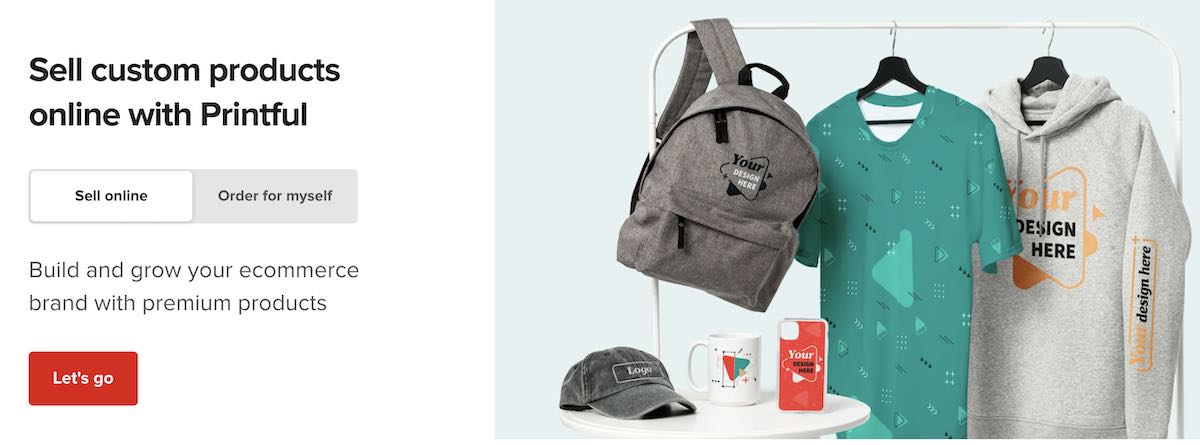
Print-on-demand companies don’t always charge an upfront fee for their services but usually take a percentage of shipping costs and other fees. So, you’ll want to review their pricing models and compare to find the right arrangement for your business.
How to get started:
Approximate startup costs: $500-$1,000
What you need: Designs, a website, and a print-on-demand supplier.
Another option for selling physical products at a low-cost is to focus on handcrafted or upcycled goods. For example, if you know how to crochet or sew, you could create items without needing to invest money in or work with a supplier. Although, it will take some time to create items and you’ll need supplies and equipment to get started.
The cost of starting a business selling handmade items will depend on what you make. Another option is to buy secondhand furniture and other items at a low price, upcycle them, and sell them for a higher price.
Both options can require slightly less than developing a mass-produced product that might require expensive equipment and suppliers. However, it will take more time to source secondhand items and create handmade items.
How to get started:
Approximate startup costs: $1,000 or more
What you need: Supplies to make or upcycle and money to purchase furniture and other products to upcycle.
Unlike the other businesses on this list, you’ll have some inventory. Although it’s less than you would if you were mass-producing items, you’ll still need to store, pack, and ship your items.
You don’t need a lot of money to start a business, although it can help. When you’re low on startup cash, there are other investments that you can make to get your business off the ground.
Let’s break down how to start a business and make money—specifically the foundation you need to establish to get started.
To start a business, there are some tips that can help you set up shop, including:
Is there an audience interested in your business and are they motivated to buy at your price point? One starting place is to look at research tools like Exploding Topics. You can discover products and topics that are trending and how many people search for them each month to gauge demand.
A relevant and recognizable name can help potential customers easily understand your business and remember it. Come up with a list of short, catchy keywords that help describe your business. Then, check if those are available as a website domain and on social channels.
You may also want to search the United States Patent and Trademark Office (USPTO) database to see if a name is taken.
If you’re taking out a small business loan, then you’ll need a detailed business plan. However, for a low-cost business that you’re bootstrapping, you don’t necessarily need one.
That doesn’t mean you shouldn’t plan out some key elements like your product pricing and expenses. At least, calculate the income you need to make to cover all your expenses and then some. Then, set your pricing to align with your financial goals and market.
Registering your business makes it official, and helps you legally protect yourself from legal issues. You’ll also need to register your company to set up a business bank account, get insurance, and hire employees. Some suppliers may also require you to have a registered business.
In most cases, you’ll start by registering your business name on a state level. For taxes, you’ll also need to get a federal tax ID.
When you register your business, you’ll need to choose the structure. Most small businesses opt for (limited liability companies) LLCs. Freelancers are often considered sole proprietors since they don’t have other employees.
To get started, you don’t need an expensive logo or brand design. However, it can help your brand look more professional and gain the attention and trust of new customers.
If you have $2,000 to $5,000 to invest in design, you can hire a graphic designer to build out a logo, brand colors, font, and even a website. Of course, the cost depends on the person and their experience. Spending a little extra might save you money in the long run by hiring someone that’s cheaper but doesn’t deliver what you want.
Teachable makes starting a business and handling transactions easier. You can create a beautiful sales page without having to fuss with a lot of technical know-how. With a Teachable account, you can create and sell everything from digital downloads like ebooks and journals to online courses and coaching services.
We have the tools, but you have the skills. Our free plan is the perfect place to start flexing those skills. Sign up today to share what you know (no credit card needed).
Businesses that you can start under $500 include freelancing, coaching, courses, and digital products. They tend to have few startup costs because you’re selling a service or your expertise. You don’t need to buy and store physical products, hire employees, or lease an office or store.
There are pros and cons to different online businesses, and it really depends on your strengths and preferences. The top three ways to earn money online with a minimal investment are: selling your own online products or services, building an audience on YouTube, and developing an online coaching business.
{{coursecurriculum-component="/blog-shortcodes/blog-popup"}}

Landing a side hustle means you owe it to yourself to invest in the tools and products necessary to do your job and do it well. After all, a workspace wired for productivity is a recipe for success. And with so many other moving parts and daily responsibilities, such as a primary career, a family, and much-needed personal time, it’s important to surround yourself with the things that allow you to operate more efficiently and effectively.
We’ve rounded up 10 of our all-time favorite tools for anyone who’s decided to pursue a passion and/or make a little cash on the side. These aren’t the standard tech gadgets such as laptops, cell phones, and noise-canceling headphones that any ol’ freelancer already possesses. Instead, we’ve thought a bit outside of the box so that you can arm yourself with items you’ve likely never thought of before.
We’d be remiss to not include Teachable on this list. If you’re an expert in your field and want to share your knowledge with the masses, the best thing you can do is utilize our no-code platform to build courses, coaching programs, and digital downloads. You are also in complete control of your materials and can get direct access to our other Creators whose content you admire.
{{pricing-component="/blog-shortcodes/blog-cta"}}
While the majority of your work may be done on the computer, a good pen is still a necessity for scribbling notes, signing contracts, and addressing envelopes. An engraved pen is even better, notifying others in your household that the fancy writing instrument is meant to be used by you and you only. Selfish? No — not everything needs to be shared it’s time you treat yourself, especially if you’re caught in a stage of doing so much for other people.
The early 2000s called to remind us all that digital cameras are having another moment. But these high-tech gadgets aren’t just used to snap photos and selfies — they’re multi-purpose content-capturing machines (like this 4K option from Amazon) that are designed specifically for shooting YouTube videos, field reporting, and recording special events and conferences.
A sweet-smelling workspace is a productive workspace. Choose your favorite essential oils and blends and allow the odors to calm, invigorate, or simply mask the deskside leftovers you consumed for lunch. Aroma360 is a certified leader in this industry with ultra-modern, wired and wireless diffuser models suited for homes and rooms of any size. They also offer an extensive line of fragrances inspired by the familiar scents from iconic hotel lobbies and designer beauty brands, allowing you to bring a little slice of vacation into your home office to manifest peak productivity and relaxation.
Research suggests that live plants not only liven up your living space, but also your overall mood. It doesn’t take a green thumb to keep the almighty succulent alive, so a box of the sturdy cacti, aloe, and more makes a wonderful addition to any desktop as a happiness-enhancer and beautiful piece of carbon-capturing and oxygen-producing decor.
You can be the best at what you do, but if your mental health suffers, no side hustle will be worth the time, effort, and energy. Set aside moments to journal so that you can get your thoughts on paper, reflect, and, most importantly, take a break from the noise of everyday life. This simple practice can help you become more in tune with your emotions so that you can make clearer, more well-informed decisions that will ultimately better yourself.
Keep all of your desktop belongings organized and compact with this monitor stand, complete with a wireless charging station and USB ports. Not only will it provide an easy way to prevent desk disarray and build-up, but it will also raise your monitor or laptop higher to reduce the tension you’re placing on your eyes and shoulders.
Managing multiple responsibilities at once calls for constant caffeine to get through a typical day. But nothing is more off-putting for the palate than cold coffee or tea. This smart beverage heating plate will remedy the common beverage offense by keeping liquids piping hot…and automatically! Simply set it to the desired temperature and let it do all of the work without any second-guessing or manually turning on and off.
Once you’ve purchased an Amazon Kindle (a freelance necessity to download e-books and draw inspiration from others), download Michelle Goodman’s thoughtful guide to taking on freelance work (especially as a woman). The subtitle of How to Survive and Thrive as a Creative Professional for Hire could not be more true with her expert tips, advice, and how-tos on leaving the corporate world behind and investing in yourself and your unique skills and talents. It may just be the motivation you need to turn that side hustle into a full-time gig.
Extra work typically means extra long hours. When the work day is over, the last thing you’ll want to do is cook dinner, especially if you have multiple mouths to feed. Fear not! Subscriptions to meal kit companies such as Factor make evenings a breeze with health-minded, pre-made, and dietitian-designed entrees such as smoky gouda chicken, garlic filet mignon, and ancho lime salmon that can accommodate practically any dietary restriction or preference. They also arrive fresh and never frozen so that you know that each and every bite is chock-full of the protein, vitamins, and minerals you’d expect from a home-cooked recipe.