Thank you! Your submission has been received!
Oops! Something went wrong while submitting the form.
MENU
Systems, processes, and practical advice for managing the behind-the-scenes side of your education business.

The start of a new year is a prime time to reflect, realign, and set fresh goals for personal and professional growth.
For creators, this moment is an opportunity to elevate their businesses, expand their reach, and deepen their impact.
If you're ready to embrace 2025 as a year of transformation, read on for actionable steps and inspiring ideas tailored to Teachable creators.
Did you know that over 50 million people consider themselves creators?
In fact, Influencer Marketing Hub reported that not only do people identify themselves as creators in the traditional sense, but they’re also making money. According to the report, 43% of surveyed creators made over $50,000 annually from monetizing their passions online.
If one thing’s for sure, it’s that many have turned to making money online from their skills through various avenues. Needless to say, turning passion into profit is working well for many.
And the creator economy, as the phenomenon is dubbed, is only going to grow from here.
Before we get into how you can enter the creator economy in 2025, let’s define the buzz term first.
Simply put, the creator economy is a sector of business where those creators make a living online from monetizing their presence, passions, and talent. From musicians who create an online fanbase and earn money from music streams (vs. a traditional record deal) to influencers who monetize their online presence through sponsored content, there are many ways to enter the creator economy and make a consistent living from it.
If you have a skill set or talent that you’re passionate about, chances are you can find a way to make serious money. Keep reading for some ways to join creator economy if you’re considering betting on yourself in the new year.
{{todolist-component="/blog-shortcodes/blog-popup"}}
If you’re reading this, you’re probably already familiar with online course creation. You may already have a course available through Teachable. Teaching people online about something you’re an expert in is one of the best ways to make money online from your passions. Don’t underestimate how eager someone may be to learn something new that comes second nature to you. Click here to learn more about the endless possibilities of teaching online.
Blogging is one of the oldest profitable creator mediums. However, it’s not entirely that old (the oldest recognized blog dates back to 1994 and the first blogging platform, Open Diary, launched in 1998). It’s one of the more common ways to enter the creator economy. Launch a blog that features content about topics that you’re passionate about within your niche.
There are many ways to monetize a blog, including publishing ads with platforms such as , sponsored posts, and affiliate marketing. Like most platforms, making money from blogging won’t come overnight. You’ll have to post high-quality content consistently to get traffic and eventually be approved for advertising and affiliate networks. It’ll also take time to get the attention of brands willing to pay you to feature them in your content. However, the multiple revenue streams that can come from blogging make it worthwhile way to enter the creator economy.
Long gone are the days when you have to find a publishing house to get your book idea off the ground. You also no longer need to write an excruciatingly long body of work to be respected as an author. If you have an expertise or skill that you can put into a book, using a self-publishing platform such as Kindle Direct Publishing is a great way to teach people what you know and monetize in the process.
If running a blog or writing an e-book isn’t quite right for you, another great route is launching a newsletter. Traditionally newsletters were looked at as a means to support an online community such as a blog, but more and more creators are using newsletters to generate income on their own.
For starters, you can incorporate affiliate links into your newsletter. This way you can promote commissionable products or services within your niche. Additionally, you can create a subscription-based newsletter with platforms such as Substack to generate income from your newsletter alone. Tipping platforms such as Buy Me A Coffee can generate a profit in your newsletter so people can show their appreciation through small donations.
YouTube is the second largest search engine behind Google. TikTok is one of the fastest-growing social media platforms. If you’re talented with a camera or are passionate about something that you can teach or entertain people with, you should seriously consider venturing into these two powerful platforms.
Specifically, there’s a lot of potential to make money through Google Adsense (once your channel meets monetization requirements). There are also sponsored videos and affiliate linking to products and services. TikTok also offers a ton of earning potential through sponsorships and affiliate marketing, but also through TikTok’s Creator Fund, which essentially pays you to create engaging content on the platform.
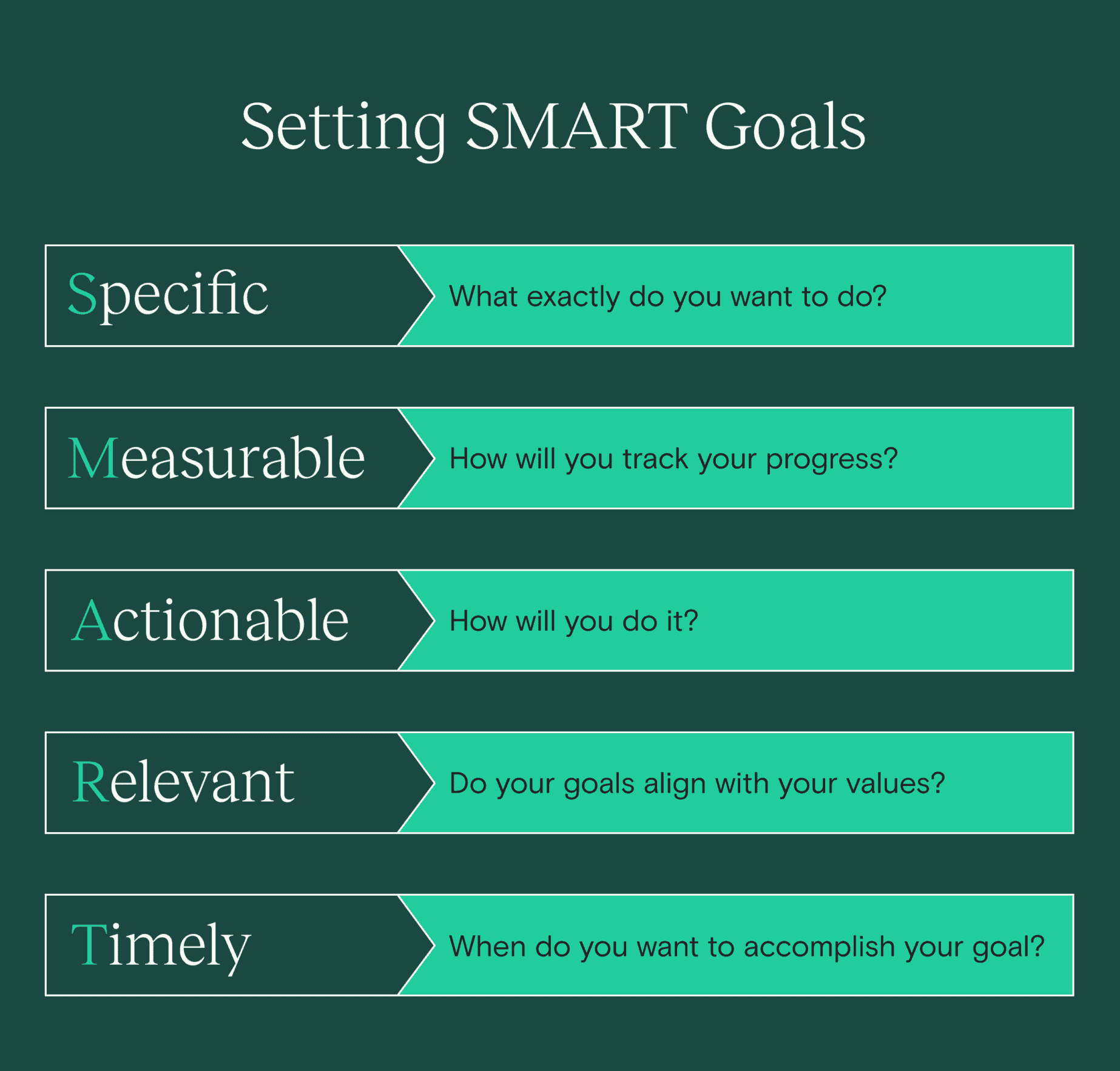
Setting goals is crucial for staying on track and achieving growth, but not all goals are created equal. Use the SMART framework to create goals that are:
Let's break down each of these in more detail.
A goal should be clear and precise, leaving no room for ambiguity. Specificity helps you understand exactly what you want to achieve and why.
Examples for Teachable Creators:
Actionable Tip: Break down larger goals into smaller milestones. For example, to grow your email list, focus on creating one high-value freebie and launching a social media campaign to promote it.
To know if you’re succeeding, your goal must have measurable criteria. Use numbers, percentages, or deadlines to quantify progress.
Examples for Teachable Creators:
Actionable Tip: Use tools like Teachable’s analytics dashboard, Google Analytics, or email marketing platforms to monitor and evaluate your progress.
While it’s important to stretch yourself, your goals should also feel achievable given your current resources and circumstances. Unrealistic goals can lead to frustration and burnout, while attainable goals keep you motivated.
Examples for Teachable Creators:
Actionable Tip: Assess your current bandwidth, skills, and resources. If a goal feels daunting, break it down into incremental steps or delegate parts of the process to tools or collaborators.
A realistic goal takes into account your personal commitments, resources, and the external environment. Ensure your objectives match your capacity and avoid overcommitting.
Examples for Teachable Creators:
Actionable Tip: Perform a quick audit of your available time, budget, and support systems. Use this to set achievable timelines and expectations.
Without a deadline, a goal is just a wish. Adding a time element ensures you stay focused and motivated to achieve your objectives within a reasonable timeframe.
Examples for Teachable Creators:
Actionable Tip: Work backward from your ultimate deadline and set smaller deadlines for intermediate steps, such as completing research, creating content, and launching marketing campaigns.
Here’s how you can combine all elements of the SMART framework into a cohesive goal:
No matter where you are right now, there’s still time to find your place in the creator economy. We encourage you to share your skills and explore that in the new year.

Pursuing your passion to create is one thing. Getting paid to share it is another. Launching a small business is often a one-stop shop in the start—from the obvious product creation to marketing to finances. Learning business finance for beginners is a skill set that can set you apart from the rest of the online course community.
Understanding the art of managing your own business’s finances is essential for small business owners. However, it’s also a great way to understand revenue opportunities, cut overhead costs when possible, and discover opportunities to scale.
With these five helpful tips, we’ll lead you through small business finance for beginners. In turn, it will help to build a solid foundation for your business to grow in the future.
At first, it may seem unnecessary to open up a professional business bank account. However, it’s a crucial step in small business finance management—especially when it comes to keeping personal and business finances separate.
Once you have your Employer ID Number, open an account. You’ll use your Employer ID Number during tax season, and it will act as your business ID. Start by opening a business checking account and add a savings account. This will aid in organizing funds and planning for taxes.
However, be sure to shop around for accounts. Business checking accounts have higher fees than individual accounts. It’s important to compare fees closely when shopping for a bank to meet your business needs.
Separating your business expenses on their own account or credit card make them much easier to track. This also isolates business expenses, which may be tax-deductible come tax time.
Mixing personal and business expenses can get messy. It’s possible to even lead towards legal disputes if you don’t uphold the corporate veil, so it’s best to simplify things. But always consult a lawyer and financial expert when dealing with matters of personal and professional liability.
You’ve got to spend money to make money—or, in this case, spend money to build credit. Everyone has a personal credit history, which lends to your personal credit score. For a small business, having a business credit score is just as, if not more, important if you have plans to make purchases that require financing to further your business’s future.
Your business credit score will determine whether you are deemed fit of credit worthiness and will help lenders determine whether, essentially, you’re able to pay back what you’ve borrowed. If you do have a poor credit score, it could make opportunities like purchasing insurance, finding real estate, and scaling your business a little more ominous.
Your best bet may be to focus on establishing your business’s credit early on in your business plan so you can raise that credit score to an acceptable level.
Owning and operating a small business may seem idyllic from the outside, and in many ways, it is when it’s your passion. However, there are also the unseen tasks to owning a small business, such as bookkeeping and budgeting, that can seem intimidating or time consuming, especially when it comes to tackling finance for beginners.
Budgeting may seem like an overt suggestion, however, there is a reason it’s recommended by so many financial experts in the game. Knowing where your money is going allows you to simultaneously see where you can save or cut corners.
Make a spreadsheet and start budgeting conservatively with additional slack. Always factor in some level of the unknown because there will undoubtedly be factors and unexpected elements—like a global pandemic—that you could never account for. When the time comes when you need to cut costs, consider categories that could be controlled to a large degree.
And don’t forget to shop around for both services, tools, and supplies because more than likely businesses will fight for your business (and, of course, save you some money).
Ultimately your budget is more than a set of numbers to fill in each month. It is a guiding light that allows you to see opportunities to make more revenue, save, and even expand.
Outsourcing bookkeeping to accounting professionals is an obvious option. However, if you are just starting out it may be a slight stretch for your budget.
So if you have to start on your own, start with some basics like what exactly is bookkeeping. Bookkeeping is the process of recording and managing all financial transactions—sales, purchases, payments, etc.—for your business.
You can choose accounting software like Quickbooks to keep track or even something as simple as Excel or Numbers on a MacBook. Basic things to consider keeping track of are: assets, liabilities, revenues/income, expenses, and equity.
Although each business’s bookkeeping process won’t look exactly the same, these are methods commonly used based on your business needs. Always consult your accountant or financial advisor before making any major financial decisions.
You may be solo for a second, however, once it’s time to hire help you’ll have payroll perfected—from setting a payroll schedule to ensuring you’re withholding the appropriate amount of taxes. Also, don’t forget to include yourself in the payroll. Yes, you read that right.
Once sales start, you’ll need a way to accept those sales with a merchant account (an account that allows your business to accept credit card payments from customers) or via a third-party processor. Should you pick a third-party processor, just be sure to do your research as some processors charge flat fees for transactions, while others have a monthly membership model.
Those using either of Teachable’s custom payment gateways, Monthly Payment Gateway or Teachable Payments, can opt-in to BackOffice, which provides services such as automatic author/affiliate payouts. So if hiring an employee is out of the picture, start small and simple with a robust affiliate network. With Teachable Payments and BackOffice, we manage affiliate payouts for you every month and even make sure they have their tax forms in place, so you don’t have to.
{{tpay-component="/blog-shortcodes/blog-popup"}}
If you’re a Teachable creator, you have several options for how you handle getting your payments from your courses and each one can work for you. But, when selling anything, it’s important to consider the matter of taxes. If you opt for your own custom gateway, you’re responsible for collecting and remitting VAT taxes on your own. But why make things complicated? You have a business to run.
That’s where we come in. We listened when creators say they don’t want to be bothered with tackling some of the more difficult aspects of small business finance for beginners, like taxes. Teachable’s custom payment gateway, Teachable Payments, takes away some of this stress. Those creators using Teachable Payments will automatically collect and remit VAT and sales tax—and help put money back into your business faster.
And if you’re concerned about tackling your own taxes, make sure you’re up to date on the independent contractor requirements for your location. And as always, consult your tax advisor to see what is best for you and your business come tax season.
You’re not expected to be a finance pro from your first sale. But, you can take some small steps now to help set you up for success in the future. The sooner you understand the ins and outs of small business finance for beginners, the sooner you’ll feel more in control of managing your passion from every aspect.
Editor’s note: This is not financial advice. Please consult your accountant or financial advisor on any financial decisions regarding your business or personal finances.

The holidays are a wonderful time to reflect on a successful year and appreciate what actually matters: friends, family, loved ones, and dark chocolate peanut butter cups (or your favorite decadent treat of choice). But the holidays are also a wonderful time for a mental burnout as year-end work deadlines loom. Compounded by an overwhelming number of social engagements and frankly, it’s enough to turn anyone into a certified Grinch.
To prevent a seemingly inevitable downward spiral, we solicited the expertise of Dr. Marty Cooper, licensed psychologist and founder of New York-based Cooper Mental Health Counseling.
“There are many reasons why people can experience burnout during the holidays,” he says, revealing that “practical” and “emotional” challenges tend to dominate our minds most in the months of November and December. “Adults may need to navigate end of year tasks at work, [but also] loneliness and lack of family, family history, and feeling othered during this season.”
“Some individuals may not have family or may have a family that they do not experience as functional, which can result in feeling lonely,” he adds.
That said, there are a handful of or preventative measures anyone (and especially content creators) can take to make this the year that they put themselves and their feelings first.
“If you know the holidays are difficult for you, start thinking about this early,” advises Cooper, noting that most clients come into therapy as a result of feeling like they’ve taken on more than they can handle. You can be a bit proactive by reflecting on what may have helped in years past, such as hiring an assistant or not working with a specific client, and then integrating these tried-and-true solutions months in advance.
Sometimes you’re only as strong as the people you surround yourself with, and it’s OK to ask for help. Rely on friends, family members, and significant others to build you up if you feel like you’re losing a grip on reality. “Let them know that this can be a hard time and that you need their support,” adds Cooper, who stresses that feelings of isolation and loneliness are most prominent during the holidays.

“When we enter into a period that may be challenging for us, we sometimes rely on ineffective coping strategies like ignoring emotions,” says Cooper, who also points out that emotions are temporary and can change. “Pay attention to your mind and body to track if they are feeling overwhelmed. If this is the case, we can use some simple self-soothing techniques like meditation or listening to soothing music.”
You may need to block off some necessary “me” among a sea of responsibilities and obligations. Activities like yoga, massages, hiking, or even napping should also come with back-up times in case something more pressing pops up and interferes with what Cooper calls “intentional experiences.”
“While this sounds simplistic, our breath is a very powerful tool and we can use it anytime and anywhere,” says Cooper. “If you find yourself feeling overwhelmed, take a moment to take a deeper breath and, as you exhale, find muscle tension that can be released.” This can help to immediately relax something as small as your temples to as large as the lower half of your body.

Still struggling to find effective coping mechanisms? If so, you shouldn’t underestimate the power of therapy by seeking the assistance of a mental health professional.
“The commitment to taking care of yourself can go a long way in feeling less stressed,” says Cooper. “A professional can help you identify your feelings and think about situations from multiple lenses. It can also be a helpful place to think about any family dynamics that may be a concern with the upcoming holidays.”
The first step is to contact your insurance company for a list of participating providers. If your needs are more gender, sexuality, or trauma-specific, local community centers can also be a great resource, with some organizations offering complimentary services and sessions as a launching pad.
A less anxious you is the best version of you. Give that gift to yourself this holiday season and your 2024 will inevitably start with a bang that rivals New Year’s Eve fireworks.

Starting a new business endeavor or enhancing your personal brand can be quite the life-defining experience. And, organization can fall by the wayside, making the excitement of opportunity feel more like the burden of chaos. This is more common than you think. While it’s entirely too easy to develop a few bad habits, it’s just as easy to break them and focus entirely on rearranging your life and priorities. The good news is that you can easily pluck yourself from a disorderly environment and keep focused. Here are five easy tips on how to stay organized in business.
A daily agenda can do wonders for anyone who is struggling to stay organized. Whether you tackle it the night before or first thing in the morning, it’s essential that you list out every single task that you’re hoping to complete that day (while also being mindful of deadlines in the near future). This will ensure that everything on your plate is top-of-mind and never forgotten.
Feel free to tailor this document or calendar around your personal preferences. Some organizational ideas that have proven to be successful include a section for personal versus work responsibilities, an entirely separate section for meeting times and appointments, and some sort of color-coding or symbol to flag urgency and/or task type.
Always remember to write down additional tasks throughout the day as soon as they come to mind. This habit will ensure you don’t drop the ball on something you agreed to do and will save you from future headaches and procrastination.
If you’re a business owner, you’re probably knee-deep in emails for most of the day. Take advantage of your email client’s archive feature that allows you to save important messages while also removing them from your inbox. They’ll also become searchable for easy access when you need them.
The goal here is to only leave emails in your inbox that demand a reply. Delete anything and everything you no longer need. The feeling of “crossing things off a list” will inspire a sense of efficiency and productivity. It will also keep things neat and tidy so you know exactly what requires your immediate time and attention.
Cleaning out your actual workspace is equally important for how to stay organized. For a wonderful list of tips, be sure to check out our comprehensive guide.
This bit of advice is obviously much easier said than done when it come to how to stay organized in business. But pushing off projects to the last minute can have detrimental effects on both your mental health and the quality of your work. Also, the more you procrastinate, the more things add up, which can lead to a premature burn-out that prohibits you from finishing anything at all.
Set daily goals in your to-do list (with just a little wiggle room, because life happens) and hold yourself accountable. You can and should tack on rewards to these goals as something to look forward to upon completion. For example, finishing a blog post may earn you an hour of TV time before bed. Don’t underestimate the power of little incentives. They may be just the motivation you need to finish things quicker.
{{todolist-component="/blog-shortcodes/blog-popup"}}
Disorganized people tend to bite off more than they can chew and are reluctant to ask for help. But asking for help and trusting the talents of those around you can allow for you to focus on bigger-picture projects that demand more of your energy.
Give others the opportunity to take things off your plate so you can narrow your focus and not feel like you’re running around. There can be a bit of a learning curve with allocating assignments (especially if you’re used to doing things yourself). But you should always set the same deadlines and expectations you have for yourself onto others. This trickle-down effect will help to keep them organized, as well, and allow you to worry less about ineffectiveness and disarray. You’ll soon realize it’s a key element in mastering how to stay organized in business.
Setting aside time to be mindful will give you permission to take a breath, clear your head, and compartmentalize your thoughts and feelings. If done consistently, you’ll be aware of not only every pending task, but also how much of an emotional and mental impact they have on you in that current moment.
The result: knowing exactly what is a priority and not overreacting when it comes to the insignificant. Mindfulness is synonymous with awareness—the more in tune you are with your brain and emotions, the more cognizant of everything you need and want to do, both in the short and long-term, and the steps required to get there.
Take 15 minutes out of your day to find a quiet space and practice breathing exercises. Apps like Calm and Headspace can be fantastic guides for those who are beginners or are having a difficult time detaching from the stresses of everyday life.
Nobody likes to admit when they are spiraling or becoming overwhelmed, especially if they feel like it’s a result of simply not staying organized. By taking an hour out of your day to complete these tips, you can concentrate on what really matters: bringing your next big idea to life.

Every online course creator reaches a point in their business when it’s time to raise the prices of their online courses. As your brand grows and you build up your reputation as an expert in your field, your pricing will have to increase as well. If you’ve reached a point in your business where you feel ready to raise your prices and charge more to help people reach their goals, then you’ll want to know five key things to do before to make sure your transition goes smoothly.
The first step before you raise your prices is to do market research. The chances are that you already know your market as you had to do market research before launching your business. However, it’s always good to renew your knowledge and make sure that you know the newest market trends of your industry.
So, look at other creators at the level you aspire to be and compare their programs with yours. And also, look at what they’re charging and why. The goal of this exercise is not to compare yourself with other creators but rather to better understand what you need to offer to increase your rates.
Once you know how much other entrepreneurs are charging and what the difference is between their course material and yours, you can begin working on the next step.
Before you raise your prices, you need to get clear on your revenue and income goals. Once you set yourself a goal (always make sure that it’s a little bit more than feels achievable) and calculate how much you’d like to make from your business, you’ll be able to better decide what your prices should be to achieve that revenue goal easier.
For example: Let’s say you’d like to make $100,000 per year from your online pilates courses. Right now, you charge $100 per course, but you’d like to charge more because you have a decade of experience as a pilates instructor and believe that your course can change people’s lives.
To reach that $100,000 per year goal, you’d need to sell 1,000 courses per year. Depending on the size of your business, the number might look intimidating. If you increased your prices to $250 per course, you’d only need to sell 400 courses per year to reach your revenue goal. If your business has a few thousand followers and email subscribers, selling 400 courses per year is not as intimidating as selling 1,000.
As you can see, having a clear revenue goal in mind makes it easier to calculate how much you should charge with the current size and resources of your business.
Once you’ve done your market research and got clear on how much money you want to make with your online courses, the next step before you raise your prices is to create a plan. To successfully execute a price increase, you’ll want to ensure that your current audience understands why the increase is happening.
Having an execution plan will help you explain to your current and prospective audience how your business is changing going forward. So, you might want to go over your curriculum and update it or refresh it. If you have something new and valuable to add, add extra modules.
Once you know what your new curriculum will look like, you’ll also want to create a small re-launch for your course. You’ll want to plan a marketing campaign to inform your current audience how the course is changing. And it’s also the best time to attract a new audience with the refreshed online course.
Before you raise your prices, a crucial step is letting your current audience know about the increase way in advance. You might want to announce it up to a few months before the increase happens. And, if you want to take it a step further, you can run a campaign where you encourage people to buy the course now before the prices go up.
This sales tactic can be very effective in bringing in new business because people will be more inclined to buy when they have a chance at a discounted product. And, despite the common fear that increasing your prices means losing customers, announcing the pricing increase can attract better students who are more inclined to start and finish the course due to the higher up-front investment.
Higher course price encourages students to finish the course, which leads to better course completion rates and helps your business in the long term.
Raising your prices is an occasion worth celebrating. So, prepare for a small re-launch that will allow you to present the refreshed online course to your audience. Also, this is the perfect time to target a new audience that’s willing to pay a higher price for a quality product.
So, for your re-launch week, consider doing these things:
It’s natural to be worried about increasing your online course prices. There are always risks involved, and you might see that some people will leave. However, you’re an expert in your field and your knowledge and time are worth the price you put on it.
So, don’t let the fear of the unknown discourage you and charge what you’re worth with your online courses. Always remember that your ideal audience will be happy to pay the higher price because they’re looking to buy from you.
{{coursepricing-component="/blog-shortcodes/blog-popup"}}

So you want to start a podcast? Great! It’s likely that you’re already an expert in a subject area and want to share this knowledge to the masses. Or maybe you’re just downright hilarious and are hoping to offer a little entertainment.
While podcasting can be a golden opportunity to expand your personal brand, it can also be a bit intimidating. Despite recording podcasts in advance, the process can sometimes feel like a sudden foray into public speaking. Minus the live audience to help lighten the mood by reacting in real-time to what you have to say.
There are a few things that can help quell the nerves and, as a result, allow your personality to shine through to its fullest potential. Even if you’re discussing more serious subjects like true crime, current events, or world history, your listeners are still going to want to hear from a genuine you. And are listening for the unique way you tell stories or relay information.
If you hope to maximize your podcasting personality’s potential, consider the five quick and easy tips below.
Are you an information giver? A jokester? A storyteller? You can, of course, be a hybrid of all three, but it’s important to hone in on one primary role. Figure out why people are listening to you in the first place, and make that your focus. Diving into complex subject matters or more profound topics will require different parts of your personality at different times (i.e. you probably don’t want to lead with a joke to discuss the economic impact of COVID). It’s critical to maintain a heightened level of self-awareness that allows you to inject more personality when appropriate.
Another great exercise is to jot down a list of personality traits that your friends and family would use to describe you. From there, highlight a few that represent you best and keep those attributes in mind as you record and plan segments. You can then embody these characteristics as you speak and they will help to define what makes you uniquely you in the crowded podcasting space.
Treat your podcasting hour like a stand-up routine. Prepare the recording by researching in advance, and take a moment to flesh out any personal anecdotes or jokes that will help to make the content more interesting or relatable. This will also come in handy if you need to fill a lull in the conversation and keep the dialogue moving. The last thing you want is for listeners to think you’re uncertain or unable to control the pacing. Having a short list of cues will remedy any potential hiccups along the way. Do not memorize these stories verbatim, though. The bulk of your material should be improvised to sound conversational and free-flowing in tone. Remember: Structure is great; a script is not. You want your podcast personality to feel authentic, not like acting.
While it is important to approach a podcast with clear intentions and an overall mission (i.e. having some sort of takeaway or learning), don’t be afraid to experiment with the format. It can’t be too much of one thing. Sure, there is something to be said for consistency and giving your audience exactly what they want. But it’s also important to keep things fresh and inventive, which you can do by varying your approach to different episodes. Your personality is dynamic, multi-dimensional, and not one-noted and this should be reflected in how you treat the episode. Keep evolution in mind to reflect any evolution you may have in your own life. Redundancy can become stale and you want the show to grow with you.
Don’t be afraid to also ask for listener feedback. They are typically very honest (almost brutally so) and you can make minor adjustments to bring out the best version of you.
You can tape individual segments and — thanks to the power of editing — piece them together until it makes up a full hour. Keep in mind that audiences are super sensitive to abrupt pauses or a lack of continuity. So these transitions should be flawless until you can go a full hour without any sort of break.
But whether you’re pre-taping multiple parts or one episode from start to finish, use this opportunity to listen back and flag any moments that you like or don’t like. If there is a story or a part where your personality really shines, you can use this to inspire themes for future tapings.
This may be the corniest advice of the bunch, but podcasting should not feel like a chore. Instead, it should feel like a celebration and an opportunity for you to connect with people you may not meet in everyday life. If you love what you’re doing, this enthusiasm should relay naturally and not feel forced. If you’re struggling, maybe it’s wise to reconsider your approach or topics. Or maybe podcasting isn’t the right medium for you, at least for now. And that’s entirely okay! Only you know how you are feeling and whether or not you’re bringing your most authentic self to the microphone.

Creating a course and launching it publicly is a unique experience. It can help to set realistic goals, especially when you’re working on your first course. Those goals will look different than they might for other professional goals you’ve set in the past. To help you navigate these waters, we’re going to help you figure out how to set realistic goals as a first-time course creator.
You’re more likely to achieve your goals when you set realistic ones. One of the best ways to set goals is using the “SMART” method. This means making your goals specific, measurable, attainable, realistic, and timely. Making a goal realistic means taking stock of what you’re willing to do to meet the goal and whether you’ve got the means to do so. Consider the amount of time you’ve got, the resources available to you if applicable, and any other dependencies for completing the goal.
Be sure to also make your goal something actionable and know what actions need to be taken to reach the goal. That can mean making the goal highly specific and setting multiple smaller goals sometimes. Make sure that your goal is also measurable so you can see your progress and know when you’ve reached it. Write all of this down for your reference to keep you on track.
One study found that when participants wrote down their goals, and their actions, and then provided weekly progress updates to a friend, 76% of them reached their goals. This is significantly higher than the group in the study with unwritten goals, where only 43% reached their goals.
{{todolist-component="/blog-shortcodes/blog-popup"}}
Now that you know how to set goals and keep them realistic, you can dive into how to set those goals specifically for first-time course creators. The goals below are great steps to creating and launching your first successful course.
There is so much information and knowledge just waiting for you in teachable:u (if you’re on a paid plan.) There, you’ll find courses designed for people just like you who are starting their course creator journey. The courses cover everything from choosing your course topic to creating your course to building your audience.
The courses in teachable:u will help you start from scratch or help you fine-tune that existing course idea. Plus, in taking the courses you’ll see exactly what courses on Teachable look like and get an idea of the user experience of any students who take your course. One potential goal you could set for this would be completing a course a week or a course a day, depending on what your timeline looks like and how soon you’re trying to get your course up and running.
Through taking the courses available on teachable:u, you should learn how to write your sales page, what to include in your creator bio, and how to write your course description. Plan in some time to set goals and complete any tasks from the courses. This is a great way to create your school’s pages while the best practices are fresh in your mind.
If you have the means to, consider setting a goal of writing your bio first, then later updating to a video intro. Having a video introduction can help increase the conversion rate of the students who purchase your course.
Before you launch your school to the general public, it can help to share it with a smaller group of people for testing. Set the goal of doing a “soft launch” of your school and course by a certain date. Then ask for feedback from the group by another set date. Having these two goals in place can help keep you on track for your regular public course launch.
Once you’ve got feedback, revise your course! Incorporating the feedback you get from your soft launch can improve your course and clear up anything that might be confusing for potential students. While feedback can be difficult to accept sometimes, remember that suggestions are meant to help you improve. The end goal is for your school to be in the best shape possible for students. Feedback from others can help get it there.
Remember: Revising your school is an ongoing goal. Set timelines for yourself to review it on a regular basis and update and revise anything necessary.
We already covered the benefits of teachable:u and teachable:hq but there are even more features for you to take advantage of. We’ve worked hard to create our own payment gateway, teachable:pay, for customers to simplify everything finance for you. Plus we offer an affiliate program for our creators as well.
Once you’re up and launched a great goal to set can be learning about the referral program. Make your first step to learn about referrals in a certain amount of time. Your second goal could be to reach out to potential referrals to work with. And your third could be to have one referral partner by a certain time, like one year after launching your course.
Above all else, remember any successful creator started right where you are as a first-time course creator. The only way to become a seasoned and successful creator is to work at it. Setting goals is one of the clearest paths to get there. Now you know what goals to start with and how to set them for yourself!

So you’ve chosen to take on a side hustle to pursue a passion and/or make some extra cash? Great! Deciding to move forward is half the battle.
Now that you’ve mustered the enthusiasm and a base level of commitment, you’ll need the tools to take your business and/or services to the next level.
Keep in mind that life is all about balance and you don’t want your new gig to take up *too* much of your precious time. (It’s called a side hustle and not a main hustle, after all.)
To get your started, here are five completely free apps to consider as you embark on this new, yet exciting journey. Each is aimed to make your calendar more organized and streamlined so that you can also manage personal interests, the responsibilities of your day job, as well as this endeavor.
If the idea of taking on additional work sounds appealing, but you’ve yet to land said work, an app such as Upwork helps to connect freelancers to remote job opportunities from around the country. Users can search, save, and apply for gigs, as well as limit all communication with employers to the app itself. This means that the ability to chat, save files, share progress, and even receive payments can be carried out in one place, all without having to rely on a portfolio of other apps. Another highlight includes the ability to bid on temporary projects without the awkwardness of negotiating either over the phone or via email.
Life can be overwhelming while managing a full-time job, personal responsibilities, and a side hustle. An app like Trello is essential to organize every aspect of your daily itinerary with cards, checklists, and boards that help to identify and prioritize important tasks. You can assign due dates, rearrange priorities, and highlight assignments that require extra attention. It’s completely customizable and designed to cater to individual organizational preferences. Turn on notifications for looming deadline reminders and even add locations so that you can plan ahead for events that require off-site attendance.
Should you run a side hustle that requires clients to book their own appointments, there is no scheduling app better than Calendly. Not only will you be able to view upcoming meeting details, but you can also set very specific guidelines on availability and communication preferences. The app also allows invitees to video call directly from the app so that you’re not relying on other services to step in and assist. Ultimately, if you’re looking for peak productivity without having to give a second thought to behind-the-scenes operations, Calendly acts as the executive assistant we all could benefit from having in our careers.
While side hustle income may be supplemental, it’s still important to monitor payments for personal and tax purposes. Wave allows users to send invoices, upload receipts, monitor business expenses, and add optional credit card and banking information to track deposits from clients. This also makes a wonderful app for any person who simply wants to put more of an effort into their finances so that they can save up for major purchases or investments. Consider it adulting 101, but presented in a manner that’s simple, easy, and even educational for the self-proclaimed money-saving newb.
Your work is only as good as your mental health. Take a break, set intentions, or simply clear your mind with the most-used meditation app in the world (which also happens to be free!). Guided meditations and talks are led by experts, neuroscientists, psychologists, and teachers from institutions such as Stanford and Harvard. There are also thousands of music tracks provided by major artists to help “calm the mind, reduce anxiety, manage stress, sleep deeply, and improve happiness.” In addition to a built-in timer to accommodate your specific needs, there are also thousands of discussion groups and community features so that you can post about pain points and successes with a like-minded, wellness-forward community.

For many online creators, the positives of being a digital entrepreneur certainly outweigh the negatives. However, stress is common and natural, especially when you’re taking care of an entire business. For creativity to be present, there needs to be the classic work-life balance that’s frequently tossed around. The reality is that it can be incredibly difficult to strike that delicate balance. But, implement a few small strategies can make all the difference. Read on to learn five effective ways on how to prevent creator burnout.
Creativity is a finite resource without proper planning and rest. It’s something that needs to be managed and replenished. In fact, Small Biz Trends’s research shows that more than three out of four small businesses said they feel the impact of burnout. And, data shows that millennials—those from the age of 18 to 34—report a burnout rate of 94%.
According to a 2021 study by Vibely, 90% of content creators are dealing with burnout. Their investigation of 150 different creators shows just how prevalent burnout occurs in the industry. In fact, 71% of the participants reported they have considered quitting content creation altogether.
However, there are strategies that you can adopt to help prevent creator burnout and avoid the exhaustion that comes with it.
Burnout is just as much physical as it is mental. Whenever we get stressed out or overwhelmed, it takes a toll on our bodies. Creativity also relies on our physical well being. But, sometimes when things get especially tough, we can forget to take care of ourselves even in the most basic sense. Ask yourself and seriously consider these questions, despite how simple they may seem.
Effective boundaries are vital for keeping a balance between professional and personal. Without set boundaries, it can be difficult to know when work stops and starts. Replenishing your creative energy is just as important as using it. Set strong boundaries by:
Generally, burnout can occur from overworking. But, it can also come from not delving into works that fulfills you. It can be helpful to be proactive and add a hobby or side project into your life that doesn’t have anything to do with work. According to Dr. Fio Dossetto, author of Contentfolks, an effective strategy for navigating burnout is to “have a creative side project.” This can actually relieve some of the stress from your normal work hours. Implement a hobby or project that’s meaningful to you.
When you’re under constant stress, your mind and body aren’t in optimal states to create. And, it can be difficult to know where to start or how to manage creative tasks. One thing that’s important to remember is to not force yourself to create. Along with this, you should allow yourself to prioritize quality over quantity, even when quantity seems enticing at the moment. Ultimately, putting quality first is what will turn your audience into a loyal community. You’ll produce content that’s worthy of both you and your community’s time and effort.
Whether it’s “digital paper” or physical, it’s crucial to write down specifics when it comes to planning and prioritizing. When you’re looking at a sea of seemingly endless to-dos, it helps to have a simple and effective way to manage all of it. Get specific and write down what exactly you need to accomplish in your day. Chunking time blocks can also be helpful in formulating a schedule that you can stick to. Think of what’s a short-term task and what are more long-term goals.
When it comes to learning how to prevent burnout, the biggest thing to remember is that it happens to us all. Forcing productivity or creativity will only lead to the weight of burnout. Accept this facet of life and take small steps to combat it when you can. Success will follow!