Thank you! Your submission has been received!
Oops! Something went wrong while submitting the form.
MENU
Strategies for reaching the right learners, building trust, and growing your following over time.

Using your knowledge and skills to build an online course can be an incredibly exciting endeavor. While so much focus and attention goes into creating the actual content of your course, that’s really only half of the process. Being visible and sharing about what you have to offer is the integral other half of the process if you really want to make an impact in your field. Using different social media platforms is a potent way to do this.
The “need” for using social media and all that it entails when it comes to publishing a course can be enough to stop some people in their tracks. Being uncomfortable posting videos of yourself speaking, feeling unsure of what to post, or losing momentum due to lack of engagement are some big mental hurdles that course creators face. It can also just feel like a huge, endless task to keep up with the ever-shifting trends of different social media platforms. As well as the constant creative output required to make enough content to post regularly.
Consistency is incredibly important, and is probably the number one piece of advice you’ll hear creators with large social media platforms talk about as it relates to growing your audience and expanding your reach. But what do you do when you feel like you just don’t have the energy to keep up with posting on various social media platforms every day, or you have tried it and didn’t see results?
If this sounds familiar, read on to find out how you can be more intentional in making these platforms work for you instead of being in the time suck of having the never-ending “post on Instagram” on your to-do list.
The last thing you want to do is to post just for the sake of posting. In a world where there is endless content to consume, you don’t want to just be another feed post that your audience scrolls past without second thought. Ideally, you’re sharing content that is valuable, educational, inspirational, and/or humorous. It’s better to share that once or twice a week rather than fluff posts every day! You’ll have higher engagement as a result and won’t have to produce as much content.
Oftentimes, there’s a misconception that you need to post daily or even twice a day to see results. “Consistent” in this case just means more often than not. Decide what an achievable consistent cadence looks like for you, and stick with it. That might mean only twice a week for you! There’s no correct schedule for this, only you can decide that.
Be intentional with what you’re posting. Ask yourself, “does my audience need to hear this right now?” If you’re having trouble answering that question, refer back to who your ideal client is. Oftentimes, your ideal client has elements of a past version of you. Before you gained all the skills and knowledge you had in your field, would this content have been relevant to you? Use this as a quick check-in before you post!
Find ways to repackage your content so your creative output is less. Take the message you shared on your stories and make it into a carousel, or take shorter clips from a Live video that you did and add captions to turn it into a reel. You can do this with your email list content as well, and even repost content you’ve already posted (although make sure it’s at least a year old before doing that!)
Have you ever opened up the app to post, and then find yourself reading about a life update from an old college friend that you barely even talk to anymore? Don’t sweat it—these apps are literally designed to vie for your attention. If you’ve experienced this before, then make sure you set your intention and get present before opening the app. What are you doing here, and for how long?
Responding to comments and chatting with your audience is a potent way to make connections and build trust. Even if you’re not posting every day, make it a point to hop on and meaningfully engage for ten minutes. This can sometimes go a longer way than posting daily, because you’re nurturing the relationships that could later turn into students (and/or return students) instead of constantly trying to draw new people in. And, it takes less time and effort than creating a post!
Not every single piece of content you make is going to go viral or be valuable to every single person in your audience. And that’s okay! If all you have to give today is 80%, then that’s enough. It’s better to show up with the knowledge that not every post is going to top the charts rather than let perfectionism stop you from posting at all. (Or taking way too much time in the pursuit of crafting the “perfect” post!)
Sometimes the best content is something as simple as a quote on a plain background. Don’t get too caught up in the visuals of it or become attached to how this post will alter the look of your page or grid. Remember that it’s the actual message of the content that people are going to feel pulled too—it doesn’t have to look like it was professionally designed for it to leave a lasting impression with your audience. If you find yourself get caught up in every detail, ask yourself “how can I get this message across in the easiest way possible?”
Batching content is one of the oldest tricks in the books, and there’s a reason for that. Instead of feeling the pressure to create content fresh everyday, planning time to create all your content at once is more time efficient and can ensure that you’re creating from a more intentional space. Light a candle, do a short meditation, and put away distractions so you can really dive in.
Whether you’re consuming or creating, taking time away from social media is helpful for your creative flow and can make your audience excited for what’s to come. Make sure you communicate when you’re going to take a few days or weeks away—it keeps your people in the loop and also makes you relatable. (Everyone needs a break sometimes!)
Overall, it’s important to create content from a heart-centered place and to know that no one is paying as close of attention as you are. If you don’t post for a period of time or feel like your content isn’t always quality, give yourself grace and release the guilt as you navigate more consistent posting. Whatever you do, refrain from comparing yourself to other “big” creators. Most of those people have teams of people who are creating and posting for them. People want to see the authentic you, and that can come naturally for all of us over time.

If you type in “how to become an influencer” in the search bar on YouTube, you’ll find millions of videos of young influencers sharing their knowledge of how they did it. With brands in all industries continuing to use influencer marketing and turn to influencers to help market their products, the demand for this career path is still high.
While the influencer career is lucrative, just like with many other creative career paths, everyone’s journey to the top will look different. But if you aspire to be an influencer, we have a step-by-step guide to help you streamline the process.
Before we get into the nitty-gritty of how to become a social media influencer process, let’s go over the basics that you should know if you choose to pursue becoming a full-time influencer.
In simple terms, an influencer is someone who influences others. In digital marketing, an influencer is a person who is highly authoritative and popular in their industry or niche and has the ability to influence potential buyers to purchase a product or service by promoting it on social media.
Sometimes, the influencer does more than simply entice their audience to buy a product or service. For example, highly successful and popular influencers like Kim Kardashian can set trends for beauty standards, fashion, and other parts of peoples’ lifestyles.
In B2B, influencers can also be people to who their work peers go for advice and guidance on various matters

Like most other creative careers, influencer income varies greatly depending on the size of their brand, how engaged their audience is, and what monetization methods they use.
Joe Gagliese, a co-founder of an influencer management agency Viral Nation, estimates that micro-influencers with 10,000-50,000 followers can make a few thousand dollars per post on Instagram. And some larger influencers (1+ million followers) charge up to $250,000 per branded post.
As an independent creator, diversifying your income is key to a successful long-term career. Here are some of the most popular ways that social media influencers are making money:
More recently, some social media apps started rolling out programs that allow their influencers to get paid directly by the app, depending on the views.
On TikTok, you can join the Creator Next program if you meet certain criteria to get tips and gifts from your audience and get paid by the app directly for the views:

Every social media influencer will tell you a different story if you ask them how they got started. Let’s look at a few examples of different influencers and their stories:
Step 1: Start niche
Step 2: Choose the right platform
Step 3: Know your audience
Step 4: Have a content strategy
Step 5: Optimize your profile
Step 6: Engagement over following size
Step 7: Consistency is key
Step 8: Be authentic

The easiest way to start your journey as an influencer is to pick a niche and grow your following in that one niche. When you’re choosing a niche or an industry, ask yourself these two questions:
Answering these questions is important because you’ll be creating a lot of content for a long time, and it’s important that you’re knowledgeable about the topic or you’re passionate about it, so you never run out of steam.
These are very broad niches that have many influencers already established within them. It will be hard to grow your personal brand when you choose a broad topic at the very beginning. If you choose “beauty,” it’s best to be more specific so you can reach a particular audience, even if it’s smaller.
For example: If you’re looking to become a beauty influencer, you should niche down to something like “lipsticks” or “hair products for curly hair.” Having a niche like that still gives you plenty to talk about while being narrow and specific enough to allow you to be found easier among the sea of other beauty influencers.
Also, being specific with your personal brand and only talking about lipsticks instead of all things beauty will allow you to become an expert in the topic and, with time, the number one place where people looking for lipsticks go.
And don’t worry—as your following and personal brand grow, you’ll be able to expand and broaden your horizons to more topics under the beauty umbrella.

Next step once you know your niche will be to decide on which social media channels or mediums you’re going to use to grow your personal brand. There are so many different platforms you can pick:
At the start, it will be easiest to pick one platform and stick with it until you completely master it and establish yourself as an influencer. “Pick a platform and niche down on the platform. And completely become obsessed with that platform and use that as a foundation to launch more brands and become popular on other mediums,” influencer Lauryn Evarts Bosstick says.
Which platform you’re going to choose to start with depends on what type of content you want to create and where your audience spends the most amount of time.
For example: If you’re a travel influencer passionate about video making, then YouTube might be the best platform for you to grow. You’ll have the skills to edit videos, and travel videos do very well on YouTube because people are constantly looking for inspiration and travel tips. Once you’re comfortable on the platform and have amassed a decent following, you can slowly start branching out and playing around with other platforms.
{{guidecreatoreconomy-component="/blog-shortcodes/blog-popup"}}
Instagram is still one of the most popular social media platforms. It’s a great platform for sharing visual content, so it’s great for:
To maximize your growth on this platform, ensure you utilize all Instagram features when creating content: Instagram stories, posts, reels, and lives. Also, this platform heavily relies on hashtag use for you to be discovered, so spend some time creating hashtag collections in your niche.
TikTok is the hottest social media platform right now and has been for a while. And for a good reason! It uses an algorithm that gives people content they want to see and allows even the smallest creators to find their audience.
When posting on TikTok, ensure you utilize the trending sounds and hashtags (even if they don’t fit your niche). Participate in the trends and engage with your audience by answering their questions to boost your overall engagement and improve your chances of going viral.
Most people consider YouTube a social media platform, but it’s a search engine, just like Google. YouTube honors creators who are consistent with their uploads and know their audience. You might wonder, how does YouTube know if you know your audience? The answer is simple: keeping your videos in one niche.
When you’re just first getting started, focus on optimizing your videos with keywords, so you have the chance of ranking in search. Use tools like TubeBuddy to help determine which keywords are the most optimal.
To become an Amazon Influencer, you’ll need an active audience on one or multiple other platforms. Amazon Influencer program is perfect if you want to monetize your current audience and want to do it efficiently in one place.
Once you create your account, you’ll be able to create a storefront with all of your favorite products that you already recommend to your audience. Having everything in one place will make it easier and more efficient to manage with your other platforms.

Knowing who your targeted audience is is crucial for business owners and influencers. You can create relevant content when you know who you’re talking to and what they want. Try to answer these questions when you think about your ideal audience:
This is a place where you want to be as specific as possible. Having all these details will allow you to find things over which you can connect with your audience through your content.
Also, knowing your audience intimately will make working with brands easier. Because you know who your target audience is and what they like, you can choose to promote their products you know they’ll like, ensuring high engagement with the brands.
Once you know who your audience is and what type of content they want to see from you, it’s time to create a content strategy. All content you share has to be unique, high quality, and offer value. And it’s easier to create this type of content when you prepare and plan.
It’s a good idea to check out other influencers in your niche to see what they’re posting. The goal here is not to copy their content but to get a sense of what type of content people like to see in your niche. Once you know the standard, you can start creating your content plan.
First, you might want to create a file where you brainstorm ideas for future posts. It can be a running document in Google Docs that’s easy to access when you want to jot down some ideas.
Use time-batching to dedicate certain days of the week for taking photos/filming videos and other days for editing content and writing captions. Having your content creation workflow mapped out will help you stay consistent without burning out. If it helps, create a content calendar and plan when you post content a few weeks or months in advance. This is particularly useful when you’re doing brand sponsorships because, most often, brands will approach you way in advance to collaborate on a post.
Utilize tools like Later to see how your feed is going to look. And then use tools like Tailwind or Buffer to schedule your social media posts in advance.

Optimization is key in getting found on social media platforms, and it’s also crucial to help people know what your account is all about and what they can expect. So, ensure your profile picture is on-brand and of good quality. Choose a handle that’s either your name or something easy to spell and remember. Then, ensure to include any relevant keywords in your profile bio that allows your profile to appear in search when people are looking for people in your niche.
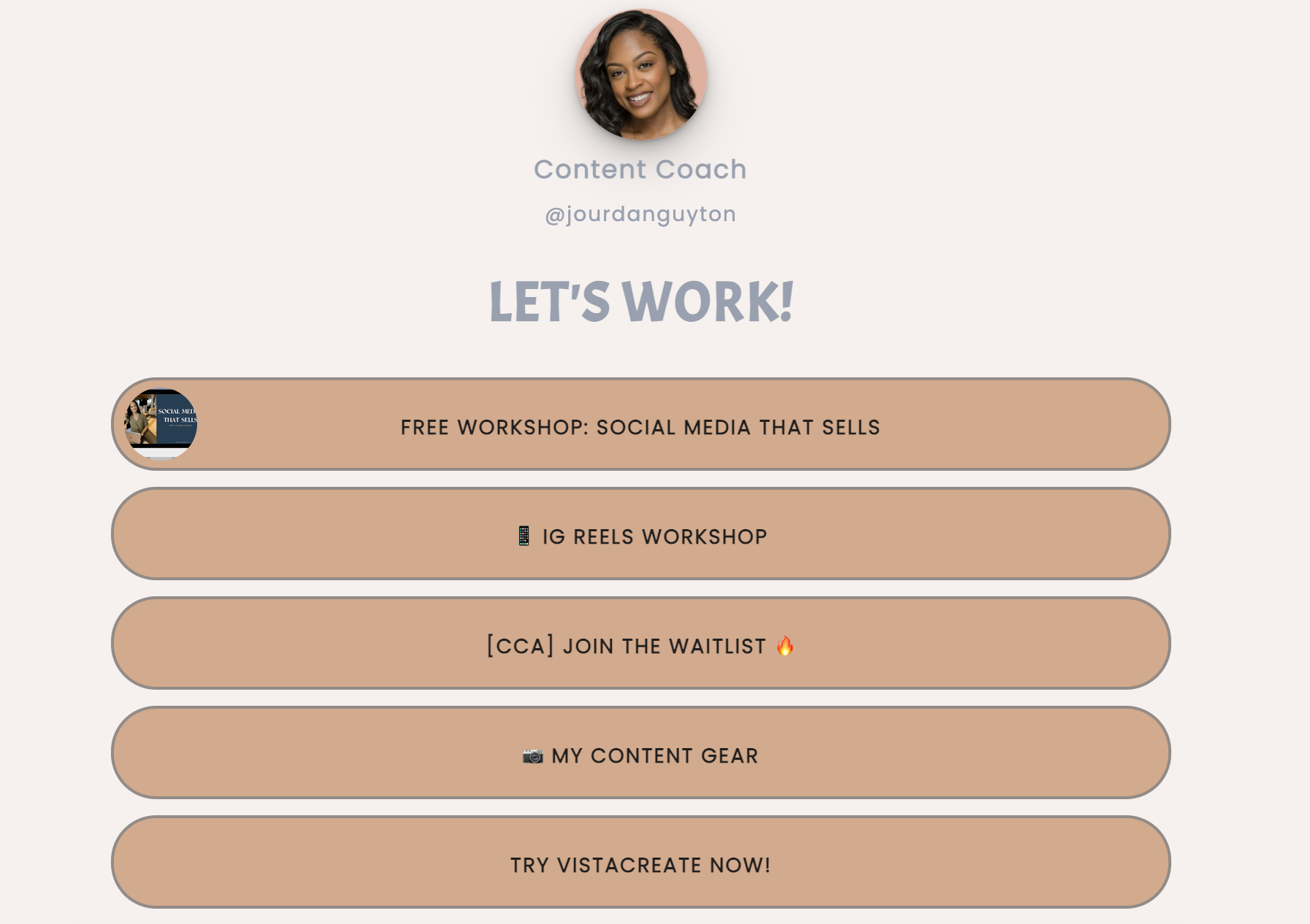
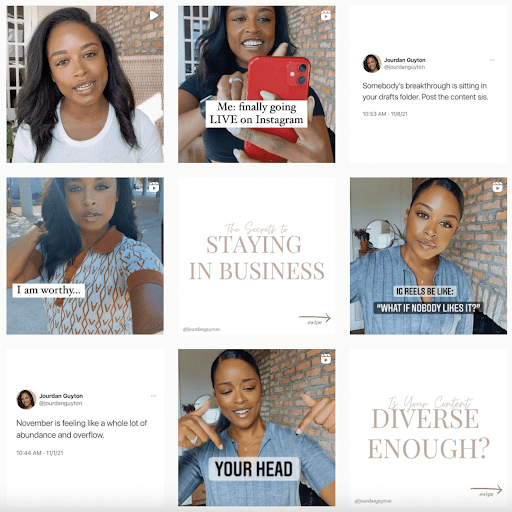
A great example of an optimized profile is Jourdan Guyton’sInstagram bio which allows people who stumble upon her account to know who she is and what can people expect from her:

Also, most social media platforms allow you to include a link. Use that to your advantage to lead people to your blog, podcast, or business page. Tools like Linktree or Link in Bio allow you to create a page with multiple links so you can easily link to multiple places even if you only have space for one link:
When it comes to your community, the size doesn’t matter as much as engagement. Brands will be more likely to work with the smaller influencer who has high engagement than with a large influencer with an audience who doesn’t care much about what they post.
Jenna Kutcher, influencer and creator, says, “More important than the number of followers you have is if the people who follow you trust you.” So, as you’re creating and posting content, always have your audience in mind and ensure that you’re posting content they want to consume.
Also, always reply to your comments and answer any questions your audience might have. For example, if you showcase an editing tool and your audience wants to know what it is, make sure you give them all the information instead of only giving the brand’s name. This will show your audience that you care about them, encouraging them to engage with you even more long-term.
What’s more, if you build up a solid community of super fans, it makes it that much easier to convert followers into customers should you ever monetize your knowledge or expertise with online courses.
Social media is a long-term game. You never know when a video or a post can go viral and gain traction. Kutcher was posting on her Instagram for years until her post with her husband went viral, attracting media attention and blowing up her brand.
Consistency is also important for your audience. People trust influencers who are consistent with their content and show up when they promise they would. Even if your following is small at the start, it’s important to keep being consistent and posting regularly, so your audience notices your efforts.
Also, even the algorithms of social media platforms pay attention to consistency and push out and recommend creators who are consistent with creating and uploading content.

The key to standing out in a crowd with your personal brand and building a long-lasting influencer career is being authentic to who you are. That includes being vocal and honest about your values and beliefs, having a unique tone of voice or style, and always being truthful with products you recommend and use.
Your audience will know if you’re not truthful about the things you recommend. And so will the brands which will reach out to you to work with them. “Brands love to see an influencer who shares what they like and speaks honestly about the products they use…not only when they’re paid to talk about it,” Kutcher explains.
Authenticity also includes your personal style and branding. Take the time to set up your feed to showcase your personality. For example, if you’re bubbly and happy, then use bright colors. If you’re a romantic personality, use soft pastel colors. These small details will allow people who stumble upon your account to make a good first impression and to decide whether it’s worth staying for more.
So, at the very start, focus on building a personal brand unique to you and ensure that everything you recommend fits with your brand and values.
Most influencers have multiple different sources of income that make up their yearly salary. Here are some of the most popular ways that influencers monetize their personal brands:
A micro-influencer is an influencer with 10,000-50,000 followers. There is space for small and big influencers in the market, and they’re divided into different groups depending on their follower count:
If you want to know how to become a micro-influencer, the process is the same as becoming a larger influencer, and some influencers report growing to their first 10k followers in their first year.
Even someone who has 100 followers can count as an influencer. But to be a professional influencer who makes a full-time living, you would need at least 1,000 followers. This number seems to be determined by a few different platforms and their requirements:
Many people underestimate the amount of work that goes into being an influencer. As a professional influencer, you’ll have to create content consistently, requiring you to learn video or audio production skills, master different social media apps, and take visually appealing images.
You’ll also be responsible for marketing and, networking, working with brands which will include negotiations and meeting deadlines. So, being an influencer involves a lot of work behind the scenes. Like most creative work, it can be hard being a full-time influencer. However, the payback for the work is often very satisfying.
The path to becoming an influencer is pretty straightforward. First, you’ll want to decide which niche you want to be known in. Once you choose it, the next step will be deciding which platform you want to start sharing your content and engaging with your audience.
After, you’ll want to decide on who your ideal audience is and how you want to talk to them. Then, once you know who you’re talking to, you’ll want to create a solid content strategy that will allow you to be consistent with posting on your social media account.
Always ensure you’re engaging with your audience and listen to what they have to say. Soon, you’ll see that they supply you with content ideas, and you don’t have to worry about thinking of what to post. And the most important thing when it comes to being an influencer is always being authentic to your personal brand and consistent with your efforts.

If you are wondering how to enter the world of content creation, know that you’re not alone. Content creation has become one of the most popular career paths for many people, and for a good reason. “Creator economy” is valued at $100 billion, and the numbers are growing each year as the demand for new content increases.
Big companies are looking for in-house content creators to help with their digital marketing needs, and brands are looking for content creators to collaborate with as influencer marketing continues to be an efficient marketing strategy.
So, if you’re interested in becoming a full-time content creator, we have put together a quick guide with essential information about what it means to be a digital content creator and how to become one in eight easy steps.

A content creator is a person that creates educational and entertaining content in one or more formats – written, audio, video, and visual for a target audience and shares it on digital platforms. Anyone posting pictures and videos on social media platforms or writing blog posts for their personal blogs can be considered a content creator, but a professional content creator is someone who is able to monetize their content.
Also, there are different business models for content creation:
Most often, being a social media content creator requires wearing many different hats. It’s a very creatively-heavy and dynamic job that requires an interest in various subjects and skills that complement each other, for example, photography and video editing, or writing and social media management.
How much money content creators make on average varies greatly amongst creators. The income will depend mostly on which business model you choose as a content creator – whether you’re freelancing, working for a company in-house, creating your own digital products, or working with brands on creating sponsored content.
Glassdoor reports that the median yearly content creator salary in the US is $48,000. But according to Influencer Marketing Hub, 2 million top content creators make six-figure salaries. So, the sky is the limit when it comes to how much content creators can make.
To understand better how content creators’ incomes vary, let’s look at a few examples of creators in different niches:
Related post: How to find brand collaborations
While being a digital content creator will require you to have multiple skills to build your business and monetize it, start with choosing one skill to master at the start. That skill can be anything from:
Some skills might be easier to learn than others. And, you might already have a skill you can use to craft high-quality content, like writing or photography, which will make it easier for you to start. Once you choose one skill to focus on, you’ll be able to excel at it and monetize it in different ways with time. And of course, your unique skill or niche area of interest may not fall into the above—and that’s OK! You can still hone it and create content.
For example: If you choose video production because you want to start a YouTube channel, as you improve your video production skill, you will be able to start working with clients and brands, producing content for them either as an in-house creator, freelancer, or even as an influencer as you grow your audience.
Pat Flynn started his first content creation business by creating exam study guides for architecture students. He had just passed the architecture exam and wanted to share the method that he knew works with other students. It was a small niche yet very effective, and it allowed him to build his first online business.
So, when you’re ready to start creating content, you have two roads ahead of you:
If you, like Pat Flynn, choose the first option, creating content and coming up with content ideas will be easier at the start. You’ll be able to write blog posts or produce podcast episodes faster and more efficiently because you already know the topic well enough. And, your knowledge of the subject will allow you to present as an expert in the field, helping you build credibility.
Another way is to choose a niche or a topic that you’re passionate about and interested in developing knowledge in. When you are interested in the topic you’re creating content on, you’ll be more inclined to stick with it, and you won’t get bored even after hundreds of hours of writing or talking about the subject. There’s frequent overlap between these two routes, so go with your gut and know that regardless of what you choose, there are endless niches that are easily monetized.

As we already discussed at the start, you can structure your content creation business in many different ways. If you already have expertise in a niche and a skill, like writing, you can start by being a freelancer or working as an in-house content creator for a company or an agency. To find in-house content creator jobs, go to Google and type in “content creator jobs” and see what postings are available.
If you decide to go the freelance writing route, then you’ll need to find clients. You can either apply to jobs on online marketplaces like ProBlogger. Or, simply Google businesses in your niche, make a list of ones you want to work with, and then cold pitch them asking if they need help with their content marketing.
Not everyone will want to choose these business models. Maybe taking the entrepreneur route and creating your products is more up your alley. Or maybe, you always wanted to create lifestyle content and be a social media influencer. Think about which content creation model is the right one for you.
Of course, you can tap into the creator economy yourself through online courses. Online courses and coaching allow you to be in control over the content you share—and how you monetize it. With Teachable, everything you create is 100% yours always. We give you the easy-to-use tools and features you need to share your passion and knowledge in a way that makes sense for you and your audience.

{{pricing-component="/blog-shortcodes/blog-cta"}}
Finally comes the fun part—content creation! To become a successful content creator, you’ll need great good quality content that people want to consume. And the best way to learn to create this type of content is by creating a lot of content.
The first step will be to pick a platform. We recommend picking one at the start that compliments your niche and chosen skill set well:
Once you choose a platform or a few on which you want to create content, your next step will be brainstorming ideas and creating a content calendar. It will allow you to plan and prepare to create intentional content and help build your credibility as a successful content creator.
Creating content will require more energy and time at the very start of your journey. You might not always be happy with the results, and that’s okay. The key here is to create enough content pieces to get you the experience and make you excellent in what you do, allowing you to grow and monetize your content creation business.
No matter which niche you’re in or which format of content you choose to create, finding the thing that makes you unique is crucial for your success. One thing that all great content creators have in common is that they each have something that makes them stand out in a crowd.
As you create your content, think of how you can craft content that stands out from other creators. For example, if you’re a beauty blogger, try to stand out by writing long-form blog posts on a topic instead of crafting short articles. Or, maybe try to add your unique tone of voice every time you write, allowing your readers to recognize you.
If you’re creating a piece of content for TikTok, experiment with different trends and video formats to create something that has the potential to appeal to many people but is a bit different than what the rest of the creators are doing. Due to the nature of the app, good content goes viral quickly, and if you manage to create unique digital content, your chances of it happening are higher.

If you choose to take the influencer or entrepreneur route, you’ll need to build an engaged community interested in your content. The side of your audience is not the focal point. The key here is to build an engaged audience that consumes your content and is a superfan of what you create.
And the best way to build an online community that’s interested in you as a content creator and what you have to offer is by identifying who your target audience is. You can do that by answering these questions:
The more in-depth and in-detail you go with identifying your target audience, the better it is. Knowing who you are talking to when creating content and what language your audience responds to will allow you to stand out in the crowd and connect with them.
Once you have built an engaged online community, you’ll be able to take your content creation business to the next level. And the easiest way to do that is by creating digital products that help improve your target audience’s lives. This brings us to the next step in your journey.

One of the most common questions people have when trying to find out how to become a content creator is how to monetize their content. The easiest and most efficient way to monetize your content when you have an engaged online community is by creating digital products like ebooks, workbooks, and online courses. Online courses are the best option because they allow you to charge a premium price for your expertise without you having to directly exchange your time for money.
Here is your quick step-by-step guide for creating an online course:
Best online courses sell a transformation to people. It can be anything from learning how to draw fashion illustrations, bake sourdough bread, make shoes or get healthy.
Throughout your journey as a content creator, you’ll start noticing the specific pain points your audience has. Make a list of them, and then see what sort of transformation you can offer with your online course.
An efficient strategy for launching an online course is to do a soft launch that includes announcing a pre-sale for your course before you start creating course material. This strategy allows you to validate your idea and ensure that you’re not creating something in which your audience has no value.
When you have a solid online course idea in mind, announce it to your email list, inviting people to pre-order. It’s also a good idea to post your pre-order on your social media channels or Facebook group if you have one. Once you see people pre-ordering, you know that your idea is valid, and it’s time to start creating!
Content creation is something you have already been doing and love! First, you’ll want to create a curriculum for your course and map out your content. When it comes to lessons, remember that less is more, and the most important thing is to map out the journey for your students from start to finish.
Once you have a curriculum, you’ll want to consider the types of content your online course will include. Different people will prefer different types of content, so you’ll want to consider including written, audio, and video content for the most optimal experience.
The launch of your online course is always exciting and fun. But this is also where you’ll have to give your content creator hat a break and put on a marketer hat because your launch and after-launch period is when you want to seriously dig into marketing your course.
Consider these marketing strategies:
To learn more about online courses, check out the in-depth guide on how to create an online course.
As a content creator, you’ll want to diversify your income as you progress further into your career. This will become easier as you gain experience and build your reputation as an expert in your field. Because of how dynamic this job is, many different opportunities await you.
If you started as a freelancer or in-house content creator but have been working on creating YouTube content, you might want to branch out and start working with brands on sponsored deals as your audience grows.
Sorelle Amore turned her YouTube audience’s interest in her “Advanced Selfies” into a profitable online course business. At the start, she created YouTube videos of her travels and how she takes photos of herself on solo travels.
Once she noticed people’s interest, she launched an online course that helped her rack up the $300,000 in her first year as a full-time content creator. Then, to further diversify her income, Amore branched out to working as an influencer and collaborating with brands like Porsche to create sponsored video content for her channel.
As you can see, diversifying your income as a creator is easy once you get more experience and exposure and build your name and online audience.

While the general guidelines for becoming a content creator can apply to all the various platforms, there are more nuanced ways to show up depending on the platform that can bring you more success. It’s important to note that the algorithms for each platform, especially Instagram, are constantly changing. The main goal of instagram’s algorithms are focused on engaging users with relevant content in order to increase their time spent on the app. This is based on the user’s past history when it comes to what kind of content they’re engaging in (posts, stories, reels, videos), who is posting it, and how likely they are to engage in the content. The more likely it is that users will engage with your content, the more your posts will be prioritized in a user’s feed.
In other words, it’s important to invite your audience to interact with what you’re posting. Invite them to “double tap” a post if they agree with the caption/text, ask an engaging question so that people will comment with their opinion or answer, or have a call to action for them to click the link in your bio.
This can feel like a catch-22, because how will people engage with your content if it’s not being shown as much? This is where it’s important to stay consistent, because the more you post relevant content, the more likely it will be engaged with, and the more it will be shown to people. Stick with it—slow and steady wins the Instagram race!
While TikTok also prioritizes content based on engagement, it’s a slightly different game than the other platforms. With TikTok, it’s all about the FYP (“For You Page”). Some of the most important factors that this app’s algorithms take into account are the subject material of the video, trending sounds that are being used, location, and watch time/rewatches.
The more views a video is garnering, the more it will be shown on other’s For You Pages. This makes it a bit easier to go viral on TikTok, and that can happen fast on this app, with some videos getting millions of views in a matter of days.
Just as with other platforms, it’s crucial to create content from the perspective of what will get the most engagement from your audience. You can boost engagement (and the chances of your videos getting seen more!) by using trending sounds, and making shorter videos—when they’re shorter, they’re more likely to loop. This registers as an increase in watch time, and will push your content out to a wider audience. It’s also relevant to start with an attention grabber, because much of the content on the app is very short form, people are faster to scroll away if it doesn’t pique their interest right away.
It’s important to stay patient with this platform as well, since your videos can start (or continue!) to go viral days or even weeks after posting them.

You may be relieved to know that there are no official qualifications required to become a content creator. While there are a plethora of courses, coaches, and content that focus on how you can do this, you don’t need to partake in any of those. All you need is a willingness to be visible, consistent, and to have awareness of navigating common experiences like imposter syndrome, burnout, and prioritizing mental health as a creator. It’s also helpful to familiarize yourself with skills like video editing, photography, and copywriting. Don’t worry about needing to master these before starting though, many of these skills just come with time and practice!
This varies from creator to creator, but in a lot of cases, it’s entirely plausible to monetize your content. This can be done through being a brand ambassador, marketing your courses, or through other aspects of being a digital creator, like virtual offerings and/or coaching. Some platforms like Instagram and TikTok even offer financial incentives to post . There are many income streams that can open up to you as a content creator, including brands approaching you. As this process unfolds, there will likely be a varying length of time in the beginning where you aren’t getting paid, so be sure to plan for that!
This is a highly personal and subjective answer. In order to understand how this would apply to you, get clear on what it is you’re looking to get out of it. If you’re solely looking to make money, then it can be hard to predict if and when it would be deemed “worth it.” However, if your aim is to make money and make a positive impact with your content and to enjoy the creation process along the way, then it’s absolutely a worthwhile endeavor.
It’s also helpful in this case to choose a niche that you care about, as opposed to choosing it solely on how lucrative it has the potential to be. People will be able to sense if you’re genuinely excited and interested in the topics that you’re sharing about—and that can be a determining factor when it comes to them engaging with your content or buying from you.
Additional reporting by Nicole Quintana-Wolf

Losing your job can feel overwhelming and disheartening. But through all the uncertainty and pressure, it’s time to move on and find other sources of income. You may already be considering various career paths, and becoming a content creator could be a promising option.
Content creation has been rising in popularity in the last few years due to the rise of social media platforms and an increasing demand for digital content. A decade ago, few could have imagined that creating simple videos — like speaking to a camera for one-minute clips — could turn into a career.
Yet, today, people like Khaby Lame have turned content creation into lucrative careers without even talking into said camera.
The content creation industry is substantial, with an estimated value of approximately $104.2 billion. This places it on a similar economic scale to established professions such as nursing and marketing.
In this article, we'll explore content creation as a potential career path for those trying to find their footing after a layoff.
While not a get-rich-quick scheme, content creation has the potential to grow over time as you build an audience. You can earn money in different ways, such as sponsorships, merchandise, fan support platforms, etc.
Starting a content creation business after a layoff can be appealing for a few key reasons. First, content creation allows you to make money from skills you already have, like writing, design, video editing, etc. It's also relatively cheap to get started—all you really need is a computer and an internet connection.
Second, it gives you control and flexibility that you didn't have before. As a content creator, you're the boss - you decide what to create, when to work, and what direction to take. This flexibility is great if you have other responsibilities like caregiving.
Third, you get to share your passions, knowledge, and creativity with an audience. There's a high demand for unique online content across all kinds of topics and niches.
So, after a setback like losing your job, turning to content creation and later, influencing, lets you regain control, pursue your interests, and have flexible income potential. But it does require hard work and constant adaptation.
You may be surprised to find that many of your existing skills from your previous job can seamlessly translate into the world of content creation.
Here are some valuable transferable skills that can help you succeed as a solopreneur:
One of the most significant hurdles is building an audience from scratch, which can be a slow and frustrating process. You'll need to consistently produce high-quality content, engage with your audience, and navigate the unpredictable algorithms of social media platforms.
One of the biggest challenges is standing out in an oversaturated market. With millions of content creators vying for attention, it can be difficult to build a loyal audience and establish yourself as an authority in your niche. This means you'll need to consistently produce high-quality, engaging content that offers value to your viewers or readers.
Another obstacle is the unpredictable and often inconsistent income stream. Unlike a traditional job with a steady paycheck, your earnings as a content creator can fluctuate greatly, especially in the early stages. It may take months or even years to build a sustainable income, and you'll need to have a solid financial plan in place to weather the ebbs and flows.
Additionally, you'll need to stay up-to-date with trends, algorithms, and platforms in the content creation world. What works today may not work tomorrow, and you'll need to be adaptable and willing to continuously learn and evolve your strategies.
Also, as your popularity grows, complete independence may become unfeasible. You might find it necessary to hire a manager to safeguard your business interests and even engage cybersecurity professionals to use penetration testing tools on your site to guard against hackers. Remember that investing in a good team is crucial for sustained success.
While these challenges may seem daunting, especially for someone who is looking for a career change after layoff, it's important to remember that with hard work, perseverance, and a willingness to adapt, building a successful content business is possible.
{{todolist-component="/blog-shortcodes/blog-popup"}}
Finding the right niche is crucial but not easy. It sets the direction of your content, helps you connect with the right audience, and distinguishes you in a crowded market.
To find that sweet spot, start by evaluating your interests, hobbies, and expertise. Ask yourself these questions:
These passions can serve as a solid foundation for your content creation journey.
However, it's equally important to identify the skills you possess that could be valuable in creating content. Do you have a knack for writing, design, video editing, or public speaking? Matching your creative talents with your interests can help you produce high-quality content that resonates with your audience.
Once you've identified your passions and skills, now figure out what kind of personality you want to present to your audience. Generally, there are 2 types of creators: entertainers and educators. Entertainers aim to amuse and delight, while educators aim to teach the audience. For instance, Khaby Lame is an entertainer, while Erika Kullberg is an educator.
Once you have these figured out, now try and study successful content creators in your niche and identify opportunities to differentiate yourself. It's also essential to understand your target audience's interests, pain points, and content consumption habits.
Remember, finding your niche is an iterative process, and it may take some experimentation to find the perfect fit. The key is to remain authentic and true to your passions while providing value to your audience.
{{downloadcreatoreconomy-component="/blog-shortcodes/popups4"}}
There are many low-cost ways to establish your presence as a content creator without breaking the bank.
First, research and find free and affordable online tools and platforms for content creation. For content creation, tools like Canva for graphic design, Audacity for audio editing, and OpenShot for video editing offer robust features at little to no cost.
Leveraging these tools and platforms allows you to create high-quality content without a significant financial investment. This way, you can focus on honing your skills and building your brand more efficiently and cost-effectively.
Also, pay attention to popular content creation tools in the market. Despite the energy demand, AI is revolutionizing the content industry, and finding the right tools can be a game changer for you. In fact, data shows that these tools can help you cut the time and cost needed to make videos by up to 80%.
As you grow and expand your content business, you can explore more advanced tools and platforms that align with your evolving needs and budget.
Building an audience as a content creator is a gradual process that requires patience and strategic effort. Here's a step-by-step guide with practical tips to help you grow your following:
When transitioning into one of the different types of creator businesses, understanding how to monetize your work is crucial. Here are some practical and effective monetization strategies that content creators commonly use:
One of the most direct ways to earn money from your content is through advertising. Platforms like YouTube, blogs, and podcasts can integrate ads.
For example, YouTube pays creators a portion of the ad revenue generated from their videos through their Partner Program, but you need to meet specific eligibility criteria to qualify. Blogs can use Google AdSense to display ads, where earnings are based on clicks and impressions.
Affiliate marketing is a performance-based strategy where content creators promote products or services using unique affiliate links and earn a commission from sales or actions taken through these links.
This model benefits both brands, which gain access to the creators' audiences, and affiliates, who can earn passive income without handling products directly.
This strategy involves creating content, such as articles, videos, or social media posts, that subtly promote a brand or product. It's typically more engaging and less intrusive than traditional advertising, allowing for a seamless integration into your regular content stream.
To effectively utilize sponsored content, start by setting clear goals. Whether you aim to increase brand awareness or establish thought leadership, defining these goals will guide the creation of relevant and impactful content.
Collaborate with brands or influencers that share a similar ethos or whose audience overlaps with yours. This synergy ensures the content feels authentic and enhances the likelihood of positive reception (Shopify).
Building a strong support network is crucial for the success of any of these popular types of creator businesses, especially when starting out after a layoff. Here are practical strategies to find mentors and communities that can guide and uplift you on your journey:
{{buildcommunity-component="/blog-shortcodes/blog-cta"}}
Deciding whether to pursue a career in content creation after a layoff is a deeply personal decision. It's crucial to engage in honest self-reflection and ask yourself some tough questions to determine if this path aligns with your goals, skills, and lifestyle.
Here are some essential questions to consider:
While losing your job can be overwhelming, it's also an opportunity to explore new and fulfilling career paths. Becoming a content creator allows you to leverage your skills, gain control over your work, and share your passions with the world. The journey requires hard work, adaptability, and a willingness to learn, but the rewards can be immense.
Ready to start your journey as a content creator? Join Teachable with a free plan today and begin owning your income and impact. Whether you're a budding influencer or an established content creator, Teachable provides the tools you need to turn your passion into a thriving business.

How to become a brand ambassador is one of those mysterious questions nobody can answer straight away. The truth is, everyone’s path to becoming a brand ambassador will be different, just like becoming an influencer or content creator.
However, while there is no one-answer-fits-all, there is a roadmap to becoming a brand ambassador that you can follow to get you where you want to be. So, if you’re ready, let’s dive in!
Brand ambassadors are people passionate about your brand, products, and services so much that they promote your brand to their social circle via worth of mouth. These people are the superfans of your brand, brand partners, and they work hard to increase your brand awareness and promote your brand to other people and convince them to choose your products and services.
Word-of-mouth marketing is still one of the most effective marketing strategies. Even 90% of people trust brand recommendations from other people, even if they’re strangers. So, having a team (even a small one!) of brand ambassadors advocating for your brand might be one of the most effective ways to bring in new customers.
{{threesteps-component="/blog-shortcodes/blog-popup"}}

Some people might become brand ambassadors accidentally. They try a product and a service, and they love it so much that anytime someone asks for a recommendation, they recommend that product or service. However, there is also a more official way to become a brand ambassador. Many brands have ambassador programs that allow people passionate about their offers to join their team of ambassadors. In most cases, the brand ambassadors who get accepted are offered a promotional code or a hefty discount on their products and services in exchange for their work promoting the brand.
There are no official, one-fits-all requirements to becoming a brand ambassador. Unlike influencers, brand ambassadors don’t need a huge following, which makes the role accessible to more people. However, there are certain qualities you want to display if you want to become a brand ambassador with your favorite brand:
Sometimes, the brand might have specific requirements when you apply to their ambassador program. For example, you might need to be on a specific platform like Twitter or in a location like Los Angeles or Austin.
These details will always be listed before you apply, so make sure you read the application throughout.

Influencers and brand ambassadors tend to be regarded as the same thing. However, while both influencers and brand ambassadors utilize word of mouth marketing, there are slight differences between the two. Influencers tend to be people with large followings who get paid directly from the brand on social media campaigns they do for the said brand. They tend to receive free products and affiliate links for products and services.
Brand ambassadors, on the other hand, have smaller social media followings. Some brands don’t have any social media following requirements and accept people based on their location or which university they attend.
When it comes to getting paid, brand ambassadors don’t get paid directly for their promotion. Instead, they might get a referral link or join the affiliate program, which allows them to get paid depending on how much business they bring in.

So, are you ready to become a brand ambassador? Let’s dive into our simple step-by-step guide to help you get started:
First, you’ll want to decide which industry you want to specialize in. While you can be a generalist and advocate for brands in various niches, you’ll have better success as a brand ambassador if you pick one industry and become a trusted source for that industry. Your audience will trust your opinion on a product or service more if you specialize in one niche.
For example: Let’s say you love drawing and share your love for it online. You choose to become a brand ambassador for your favorite acrylic paint brand, as you’ve been using their product for years. Later, you might also join a brand ambassador program for your favorite monthly painting subscription box and join the affiliate program for this charcoal drawing course.
Because your audience is interested in the same things you do—painting—they’ll be much more receptive to your recommendations of the brands you’re an ambassador for. They might not be as inclined to buy what you’re promoting if you chose to become a brand ambassador for a window cleaning product company (however, if you’re in a lifestyle, home decor, or mommy niche, this brand would work great!).
Your personal brand is important for becoming a great brand ambassador. Your online personality helps you stand out in a crowd and find ways to connect with your audience on a deeper, more personal level.
When companies are looking for brand ambassadors, they want to find people who represent what their brand stands for and what kind of lifestyle it represents. So, it’s smart to tailor your personal brand to fit the image of what your favorite brands are looking for.
For example: Let’s say you’re into fashion and want to work with a local minimalist modern fashion brand as their ambassador. Cultivating a minimalistic, modern style that fits with that brand’s aesthetic will help you show them that you understand what their brand is about.
Also, tailoring your personal brand to fit the brands you want to advocate for will help you discover an audience who is interested in your recommendations. If you share minimalist modern fashion content on your socials, people with similar interests will follow you, increasing your chances of being a more successful brand ambassador.
Some other things to consider when crafting your personal brand online:

Next, go through all the brands in your industry and choose potential brands you love and would love to work with. Because you’ll be advocating for the brands, you get to be picky and decide which ones match your values and beliefs.
Look through their website, blog (if they have one), and social media accounts. What kind of people represent their brand? Are they similar or very different from who you are? You might want to create a spreadsheet and note down all the brands you would love to work with and crucial details about them and their ambassador programs. Having all the information in one place will allow you to decide easier on whether you want to work with the brand.
We have a couple of suggestions for brands looking for ambassadors:
Sand Cloud is a lifestyle brand with a mission to help preserve marine life. They sell beach accessories like towels and blankets, a variety of home accessories like bathrobes and towels, and home textiles. If you join their ambassador program, you’ll receive exclusive discounts on their products and will have a chance to be featured on their Instagram.
Happy Earth is a sustainable lifestyle brand focused on saving the planet. They sell a variety of sustainable clothing, accessories, and goods like reusable water bottles and blankets. If you join their ambassador program, you’ll get a 15% discount on their goods that you can share with your family, friends, and followers. Also, they offer free swag, and there is a chance to earn a 10% commission on each sale you make as you move up their ambassador ranks.
For fashion lovers, Brava Fabrics is a sustainable clothing brand based in Spain. They have a unique selection of high-quality clothing. To join their ambassador program, you must have at least 500 followers on Instagram and TikTok. Their perks include free products, a 20% discount code for your personal use, and a 15% discount for your friends, family, and followers. Also, for every purchase made with your discount code, you earn credit for their online store.
Morphe is one of the biggest make-up brands worldwide, and they sell everything from eyeshadows, foundation, and lipsticks to make-up brushes. Their ambassador program doesn’t list all the perks and benefits, but they’re always looking for ambassadors. You might get a chance to get your hands on exclusive discount codes, free products and get exposure on their social media accounts.

Once you know what brands you want to work with, it’s time to build your online presence and get noticed. Spend time genuinely engaging with your audience on your social media platforms. See what people love and what they want to see more of from you.
Don’t forget to network with other people in your industry, showing up in the comments on their social media posts to genuinely build relationships. This will show the brands that you have great communication skills and are confident in getting out there and talking with people about things you love.
You might also want to start engaging with your favorite brands. Follow them on social media, like their content, and comment on their posts and videos. A great way to get noticed is to participate in any trends, giveaways, and challenges the brands do on their socials.
Chances are that the brands will notice you, especially if you’re targeting small businesses. They’ll be flattered by your genuine effort to engage with their brand, and when you reach out to them when the time comes, they’ll be more willing to work with you.
Show the brands you love and are interested in why working with you would benefit their business. One way to do it is by creating high-quality, eye-catching content for your platforms.
Showcase your content skills by creating high-quality graphics and sharing amazing pictures with your audience. Utilize hashtags on platforms that use them, which will tell the brands that you have a basic understanding of marketing and how social media works.
The more you post, the better you’ll become at creating high-quality content. You’ll also develop many skills, including writing, video editing, and photography, as you improve the content you share with your audience.
You might also want to create content that focuses on promoting your favorite brands. It’s a very efficient way to showcase the brands you want to advocate for to choose you as their ambassador.
When you share your favorite tools, products, or services, always tag the brand on social media and use appropriate hashtags. Be the salesperson for the brand, tell your audience what you love about the products or services, and always make sure to be honest.

Finally, it’s time for the last step! When you’re confident in what you have to offer, apply to become an ambassador with the brands that interest you the most.
Some brands will have dedicated pages with application links to apply to become a brand ambassador. Others might call it a “Refer a friend” or a “Become an affiliate” on their website, so keep an eye out for those keywords.
If you would love to become an ambassador for the brand, but they don’t have an application form on their website, find their email and reach out to them yourself. Be professional and to the point, and highlight what benefits they’ll get from having you as their ambassador.
The worst thing that can happen is them saying no or not replying. But, at least you’ll put yourself out there. And you can never know when they might circle back to you in the future for a brand collaboration and offer an opportunity to become their brand ambassador.
Successful brand ambassadors are confident and fearless in putting themselves out there and getting what they want.
Let’s look at some of the most frequently asked questions people have.
Brand ambassadors use word of mouth to promote their favorite brand to their social circle and earn money from the leads they bring to the business. They might promote the brand online via different social media platforms, blog posts, and YouTube videos. Or, they might be working in person, on a university campus, or in a certain location.
Not always. The payment system depends on the brand you work with and how they choose to reward their brand ambassadors. Some brands offer discount codes on their products and services. Others give out referral codes and affiliate links, allowing the brand ambassadors to make money through the leads they bring in. Some brands might choose to do giveaways for their ambassadors and give out their products this way. As you can see, making money as a brand ambassador is not as straightforward and can vary greatly depending on what brands you work with.
Usually, to become a brand ambassador, there are no follower restrictions. The key is to have an engaged audience, even if small. And sometimes, if your role as brand ambassador is not online, then the social media presence doesn’t matter.
Each brand has different criteria for how they choose their brand ambassadors. However, there are certain general guidelines that might help you get chosen:

Learning how to ask for referrals is an invaluable skill for small business owners. According to a Neilsen study, referrals contribute to 65% of new business.
Referral marketing leads have a 30% higher conversion rate than any other channel. Someone referred to you is four times more likely to become a customer. Not only are they more likely to purchase, but they also stick around longer.
Referrals are a powerful and cost-effective marketing tool. Getting more referrals from current and past customers can increase revenue for any business—including online courses and coaching.
Are you convinced you need referrals but still don’t know quite how to ask for them?
We’ve provided step-by-step guidance on how to ask for referrals below. We’ll also reveal how you can use Teachable’s built-in features, like our student referrals program, to make asking for and getting referrals a breeze.
The guidance on this may vary. Most businesses will say that the best time to ask for a referral is immediately after purchase. The product is usually top of mind, so customers are more likely to pay attention and share.
However, since courses and coaching can happen over a span of months, you should identify key milestones along your customer’s journey. There are times throughout the course of their journey when it makes sense to ask for a referral.
It can be when someone completes the first section of your course. If you’re a coach, it could be right after a client has achieved a goal. For example, a career coach might ask a client for a referral when a client gets a promotion or lands a new job.
You might offer rewards for referrals, but money alone will not motivate customers to share your product or service. The best referrals come from customers who are genuinely satisfied with what you offer. They may even have a powerful story about how your course or coaching transformed their lives.
But how do you ask for referrals and convey the value in an authentic way? We’ll show you.
Before you send any referral requests, identify your best customers. A happy customer is highly satisfied and engaged, therefore, more likely to tell others about you. Maybe they’ve had a positive experience with your course or coaching program. Or perhaps they are always the first person to reply to your weekly emails.
Find your power customers and target them first. Look at your data and find out the following:
Not sure where to find this information? You can access course-related data like sales, lesson completion, and leaderboards inside Teachable. To find social media analytics, use the platform’s built-in insights or third-party tools like Google Analytics. You can find email insights like open rates and click rates directly inside your email marketing platform.
Do you have some stellar student testimonials or social media mentions? Don’t forget to include these people in your list. They’ve already vouched for you publicly.
Before you can ask for a referral, you need to provide value. It takes consistent, deliberate effort to nurture loyal customers. It’s not enough to simply drop a course into someone’s inbox or host one coaching session. Once you have someone in the door, continue to show up for them in meaningful ways.
Build value into everything you create—paid or free. Let your customer base know that you’ll continue to release new products or content to serve their needs better. Customers who feel connected and heard are more likely to be loyal to your brand and tell their network about you.
Timing is everything for referral requests. If you ask too early, your customer might get the wrong impression. If you ask too late, your request might get ignored.
Identify key milestones in your process where it’s appropriate to ask. Does your product deliver value right away, or do customers need to complete part of the course to see the value? Pinpoint a time when the perceived value of your product or service is the highest.
You don’t have to wait until the end of the course to ask for referrals. You can place (and automate) some asks by:
Just be careful to moderate your outreach. You don’t want to send an automated email to someone who’s recently left a poor review. Always ask for referrals when customers are happiest and most engaged.
Although automating part of the process of asking for referrals can save you time, it isn’t always the most effective. You are more likely to get a referral when the request feels personal.
Avoid sending cold or broad requests. Personalize your referral requests with specifics and be direct in your request.
Approach every request with a friendly, appreciative tone. Leverage your existing relationship with the customer. Explain how you’ve provided value to them and emphasize how you’d like to help more people in their network.
To increase your chances of getting referrals, you need to remove friction. You’re asking your customers to do you a favor. The easier it is for your customers to promote your product or service, the more likely they are to do it.
Take some time to prep your referral program materials. Create a referral email template and starter copy for customers. Make it so that all they’ll need to do is customize the text with a personal anecdote. Create branded graphics and sample captions with hashtags for social media sharing.
Always include custom referral links. You can easily create unique student referral links with Teachable. Unique referral links allow you to track things like the number of times a student successfully referred a friend to purchase, gross referral revenue, and more.
Another way to create an easy-to-use referral program is by using your built-in Teachable account features. Our new student referral program feature helps creators like you effectively increase sales and expand their student reach.
Our new program is simple. You incentivize existing students with a discount to share your school with their friends. You decide what percentage discount you want to offer your students and those they refer. When your students share, both the student and the referred friend receive a reward discount. Best of all—you receive a new student.
Here’s how to set it up:
Prefer a video walkthrough? Watch this video demo:
Students can easily access your referral program within their Teachable profile. Inside the “refer a friend” tab, students can find the program details, their referral link, and their earned rewards. Our new feature makes it easy for you and your students to reap the rewards of referral marketing.
Before you launch your referral program, you’ll need to determine the right referral reward or offer incentive. When you offer an incentive, students are more inclined to return the favor. Choose an appropriate incentive for the request you are making. Scale the percentage discount with the value of the product or service you are asking students to promote.
Remember: The referral program feature in Teachable is a two-sided referral program. You’ll need to create two incentives—one for the referrer and one for the person who gets referred. The percentage discount can range anywhere from 1 – 100%.
You can also offer other incentives like a gift card or free coaching sessions. These incentives are great for social media campaigns or new product launches.
You need to make sure your students know about your referral program. They can’t take advantage of something they don’t know exists. One of the first things to keep in mind when reaching out to students is which channels they’re most accustomed to hearing from you on. For some students, it’s email. For others, it’s Facebook or Instagram.
Whatever channel you choose, give them the details of how it works and the discount you’re offering for referrals.
Here are some sample email templates you can use when asking for referrals. You can adapt this content for social media, phone call, or in-person requests.
Dear students,
Help us spread the word and grow our [name of school] community!
This month, we are rolling out our brand-new student referral program! Now, whenever you refer your friends, followers, or clients to our course(s), you will both receive a discount of [discount amount].
The best part? It’s super easy to share. Share this link [insert referral link] and start earning discounts toward your next purchase in [insert name of school] right away!
You can also learn more about our referral program here [insert a link to a landing page where students can learn more]
Dear [INSERT NAME],
It’s been a pleasure working with you over the past [insert length of engagement]. I’ve loved watching you grow and [insert specific transformation or benefit].
I appreciate your continued support and trust in me [or business name]. Customers like you help me grow and build better [courses/coaching programs/etc.].
I am reaching out today to ask you a favor. The biggest compliment that I can receive from a client is a referral. If you have friends or colleagues who could benefit from [insert specific benefit(s)], I’d be honored if you would send them my way.
To return the favor, I’d like to offer you and your friend a special discount on my [course/coaching program]. For every referral, you will both receive [insert discount].
If you are interested in learning more, please let me know, and I will send you all the details.
Once your students know you have a referral program, the next step is ensuring they understand how to use it. It’s important to be clear about what you are offering and how your students (and their friends) will benefit from the offer.
You’ll want to include information about the following:
Be sure to include this explanation in your referral program description and your announcement email. You’ll also want to add these details to the “refer a friend” tab on your school’s homepage and the referral block in your course.
You can find more information about how to edit your student referral program information in our Knowledge Base.
Make it easy for your customers to start sharing your referral link by providing some sample referral copy. Send students a prompt that they can customize to fit their experiences. The easier it is, the more likely they are to do it.
I took [creator’s name]’s course [course title] on [course content] to help improve my [whatever you wanted to learn]. The course took place during [month, year], and I enjoyed the [self-paced? cohort-based?] learning experience.
After completing the course, I felt like I had gained [whatever you learned/gained!]. This course would be great for anyone looking to learn [your recommendation].
Interested in discussing why I loved this course so much? Feel free to reach out via [best way to reach you]. If you’ve already made up your mind and want to sign up for the course at a discount, use this link to sign up: [referral link]
To help students personalize the prompt, use this list:
The list above might seem like a lot to include, but you can get the important information in a few sentences or less.
Remember: This is all about helping your students find the right words to explain what your course means to them and share that with others.
It’s not about telling them what to say or forcing a formulaic review. Instead, think of this as a way to help your students put the transformation your course helped them make into words. Their referral can also be about the impact your course had on them that they think others might find helpful. Keep it authentic to you, your course, and your students.
The above is just an example of what you might share with your students. Each creator and each of their students will have a different story they’re looking to tell when referring to others.
So, while you can certainly use the example above as a starting point, make it your own. And make it clear to your students that they should make it their own when sharing it with others. The personal stories of growth and enjoyment are the ones that hit home, so they’re ideal for referrals.

There’s a lot to do when launching your first online course. From content creation, to list building, to coming up with a launch strategy, to actually managing your course once it’s live the list of tasks can seem unmanageable.
If you’re feeling the stress of it all, don’t worry—you’re not alone. And you don’t have to do this alone. Even if you’re a first-time course creator, outsourcing part of the workload to a virtual assistant can make a task that feels insurmountable totally doable.
The idea of outsourcing or working with a VA can be intimidating, but I built my business around virtual assistants, and I can show you how to get it right.
Over the past year, I’ve been developing courses through Teachable to help aspiring virtual assistants start their own at-home business from scratch. I’ve taught hundreds of students in my courses, and have made upwards of $200,000 in the past 6 months with my Teachable courses over at The Virtual Savvy, a virtual assistant training school. It came with a lot of hard work and delegation.
Learning how to delegate is one of the best things a course creator can do, but it can be difficult to know what to delegate and when. In this post, I’m going to give you the down-low to all things outsourcing. I’ll teach you what to outsource, how to outsource, and even give specific ideas and lists of what to delegate before, during, and after your course launch.
Before we jump into how to outsource, it’s important to have a thorough understanding of what outsourcing is and why it’s important to run a successful online business.
Outsourcing is the process of hiring (either domestically or internationally) another team or individual to complete various activities for you.
Specifically, online course creators will often hire a virtual assistant to offload tasks so they can get more done faster.
The tasks you pass along may be monotonous or laborious, so you can be freed up to focus on what really matters. The tasks may also be those that you aren’t naturally skilled at (such as copywriting, proofreading, graphics, etc.), so you outsource that task to someone who is more skilled in that area.
We’ll get into the specifics of the types of tasks you can outsource to a virtual assistant a little later in this post.
But first, let’s answer the big “why”.
I’ve talked with hundreds of course creators and I see the same thing happening time and time again. We are spending too much time on the small stuff.
If we were honest with ourselves, most of us are spending 80–90% of our time doing the maintenance tasks for our courses and only 10–20% of our time marketing and selling them.
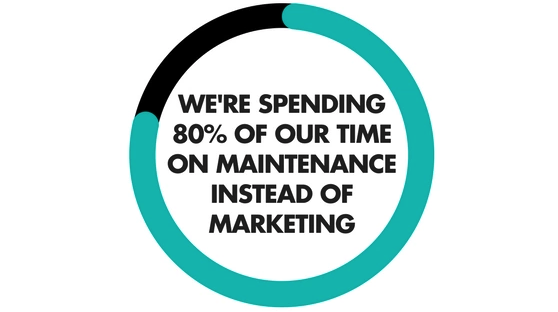
This means that we are spending more time on things that don’t make us money.
However, if we could outsource the majority of our maintenance tasks, then we would have more time to spend on the things that will actually sell our course and bring in income.
The bottom line—your personal productivity is limited by time. Whether you have 10 hours or 80 hours a week to work on your online course, there is a limit.
When you start outsourcing, that time gets multiplied. When a course creator masters the skill of outsourcing, there is literally no limit to what you can get done.
By outsourcing the tasks that aren’t core functions of your business, like customer care, editing, proofreading, billing, etc., you’re able to focus on the aspects of your online course that add value to the customer and will allow you to market your course and expand your business.
Before you go out and hire your first (or next) virtual assistant, there are a couple of investments you need to consider. These are:
You need to go into your outsourcing arrangement with a firm idea of your budget. A virtual assistant’s rates can range dramatically, depending on who you plan to hire. There are three types of Virtual Assistants (VAs) that you can hire:

I’m writing this post from the U.S., so when I say “international,” I mean outside of the States. Many international Virtual Assistants advertise their services for as little as $3–$5 per hour, so if you have a limited budget, this is a good option for you. Keep in mind, however, that if you need to work with someone who has personal experience with your local market, you may want to reserve the work you do with VA services in this category to simpler, rote tasks that are easy to communicate virtually. You can find international virtual assistants using freelancer hiring platforms like Upwork.
If you do have a need to work with someone closer to home, you may want to hire a VA domestically. You’ll often pay more for a virtual assistant that is based in the U.S. (and also the U.K. and Canada). If you are English-speaking only and you need help with tasks that require detailed communication, or if your work requires familiarity with local market trends, you may find that the increased investment is worth it to your business.
The average rates for virtual assistants in the U.S., the U.K., or Canada can range from $18–$40 per hour. The best place I have found for domestic virtual assistants is to search entrepreneurial Facebook groups like Virtual Assistant Savvies. This is my Facebook group that has over 12,000 virtual assistants for hire.
Lastly, you may want to hire an expert for a certain task for your course. Maybe you know your business needs an expert copywriter. Maybe you want to pay for a custom sales page or for a Facebook Ad to be created for your course. Know that you’ll pay more for these services, but it can be a worthwhile investment if the individual has proven results.
You should expect to pay anywhere from $50 per hour to thousands of dollars per project, depending on the scope of work. I suggest looking for personal recommendations from other course creators when it comes to finding an expert.
It’s important to note that there will likely be a time investment on your part to train your new Virtual Assistant. This individual will be brand new to your business and your processes. I’ve found that it usually takes 3–4 weeks for a new virtual assistant to really get accustomed to a client.
During this time, communication is key. Have weekly meetings via phone, Skype, or Zoom to talk about the work that needs to be done for that week. If there is a complex task you need help with, shoot an on-screen video using a tool like Screencastify to show your Virtual Assistant exactly what you need done.
Yes, it takes time to train someone, but if you are willing to put in the time investment, you’ll end up saving yourself time in the long run.
If you have gotten to this point and you’re thinking, “This is the next right step for me”, then read on. I’ve created a step-by-step process to help you choose, hire, and train your new virtual assistant.
You physically only have a certain number of hours in a week to complete all the work that needs to be done to run your online business. It’s up to you to decide what your Most Profitable Tasks (MPTs) are in any given week. What is it that you do that will ultimately generate the most income? Anything else that is taking up your time and energy is really distracting you from your MPTs.
Before you go on the hunt to find the perfect virtual assistant, you’ll need to know what tasks you are looking to outsource to your new VA. In other words, what are you delegating so you can focus on your MPTs?
Again, you may end up hiring a generalist (a Virtual Assistant that can handle a variety of tasks) or a specialist (a Virtual Assistant who specializes in one specific area like bookkeeping, graphic design, proofreading, etc.). Here is a list of 25 most common services offered by virtual assistants:
#1 Make a list of all the tasks that you do on a regular basis. Look back at your past week or even your current to-do list. From this list, circle all of the things that you could potentially hire someone else to take off your plate.
#2 Based off of the items you circled, decide if you want to hire a generalist or a specialist. From there, decide if you want to hire a domestic or international Virtual Assistant.
#3 Create a job description for your virtual assistant, based off of the above information. You can use these questions to help create that job description:
Once you have your job description written up, it’s time to start the hunt for the perfect virtual assistant. Here are some of my top recommendations for where you can begin your search:
Ask other business owners that you know and trust if they have someone who helps them with their tasks. Personal referrals are a great way to find quality help for your business.
If you have an existing email list, this is a great place to start to find the newest addition to your team. These are the people that already know, trust, and follow you. Someone who already believes in the vision of your business could be a perfect fit for you.
A great place to turn for finding help in your business are entrepreneurial Facebook groups. Ask who has worked with quality subcontractors and virtual assistants to help grow their online course.
Upwork is a great resource for finding quality freelancers and virtual assistants. You have the ability to create a personal profile and post specific jobs. You can interview candidates, read reviews of their work, and hire and pay through the site.
You’ve started the search for a Virtual Assistant and the proposals are coming in. Now, it’s time to start the interview process. As you interview, here are a few questions to ask yourself when searching for that perfect fit:
When viewing the proposals, is there anyone that went above and beyond? Maybe they sent you a very personalized proposal instead of something that was obviously a template. Maybe they did some research into your company before applying. If you can find an individual who exceeds what you asked of them, you can be sure that they will continue to be a self-starter once you are working together full time.
It’s difficult to tell how reliable a Virtual Assistant is going to be just from the interview and onboarding process. I normally recommend starting out with a trial month to assess how you work together. After that is complete, come together and decide if this working relationship is something you want to continue with.
Remember, the Virtual Assistant won’t be perfect at his or her job within those 30 days. However, you should be able to assess after one month if this individual is generally reliable and competent to do the job.
Natural skill is an important factor when choosing a virtual assistant. If you are hiring someone to do graphics, you want to make sure that their design work is high-quality. If you are hiring a copywriter, their work needs to be grammatically correct and easy to read. If you can’t assess the applicant’s skill from the proposal they send you, perhaps ask them to send over an example of their work or send them a quick trial project.
Once you have decided who you are going to hire to assist you with your online course, it’s time to onboard that new Virtual Assistant. Here’s the process that we personally work through every time we onboard a new subcontractor:
Have an initial meeting to outline the job description and expectations
Make sure you have an understanding of how much you will pay your new VA, what their invoicing process looks like, and how / if they will keep track of their time spent on projects for you.
Sign a contract. Even if you will only be working together for a trial 30 days, it is still important to have a contract in place to protect you and your business.
What will your meeting rhythm look like? I recommend meeting via Skype or Zoom once a week to discuss projects, make goals, and review progress.
How will you communicate throughout the week? Are you available by phone? Can your VA expect to reach you via email? You may want to consider using a tool like Slack or Trello for specific project communication.
Any time a training or explanation is needed for a specific project, I suggest using video. Film an on-screen video to explain what you want to happen in a project. Get your VA on a video call and walk through a specific process with them, so they can see what is expected and answer questions along the way. If your VA sends a long email with detailed questions, consider picking up the phone and talking with them or sending a video with your spoken response.
Remember, effective communication is the key to a healthy virtual assistant / client relationship!
If you are ready to take your online course to the next level, hiring a virtual assistant may be the next best step for you. Throughout this Ultimate Guide to Outsourcing, we covered what will take for you to hire your first or next Virtual Assistant to support your business.
Here are the tasks that you’ll need to complete in order to successfully bring on the support you need (so your business can grow):
Now it’s time to take action. How are you going to grow your business through outsourcing?

Photographer and teacher Kimberly Murray knew there was a demand for her expertise in flat lay photography. She’d experienced it with her in-person workshops. But she needed to find a better way to reach a broader audience than just through her popular Instagram. Enter her profitable online business, Flat Lay Play. With this, she used her Instagram expertise to expand her niche online courses.

“While blogging and sharing useful content on Instagram has the potential to be far-reaching, teaching an online course allows me to dive deeper into the topics,” she notes.
To better understand how she tapped into this niche for her online course, we spoke with Murray to get her insight and best tips.
“There were several hurdles—e.g., streamlining my message, dealing with technological glitches while recording the modules, putting boundaries around the scope of the course, but I would have to say that the biggest hurdle was an internal struggle. That being, getting over the fear of selling. These days, it seems like everyone is trying to sell something, and I didn’t want to come across as too ‘sales-y.’ But, a mentor told me that I’m just educating people about my offerings; it is their decision to buy or not.”
“In my course Flat Lay Play, I teach flat lay photography, which is somewhat of a niche for online courses. Early on, I feared having enough students to make course creation worth my time. While flat lays have broad appeal and visibility in both social media and print, I wondered if people saw the need to learn how to style flat lays themselves, especially with the proliferation of styled stock sites with ready-made flat lay images for purchase.

Although I had that fear, I knew that the interest to learn how to create custom flat lay images was there from inquiries I kept receiving to conduct workshops or deliver one-on-one mentoring.
Plus, I’ve had the wonderful opportunity to speak in person at a few conferences, and several of the sessions sold out. That helped me to feel confident that there was a solid group of people who were interested in the topic. I just needed to get clear on my target audience (photographers and content creators) and fight the urge to pitch the course to any and everyone. Once I did that, I was able to tailor my message and create a lead magnet that catered to that specific group.”
“Prior to launching Flat Lay Play, I started sharing flat lay images on Instagram regularly and created a hashtag (#kmpstyled) that became a hub, or portfolio, if you will, for my flat lay images. Alongside that, I started adding tips to my captions instead of just posting pretty pictures. Doing so started to establish me as an authority on flat lay photography, and people started engaging with me more around my content. They said that they loved having actionable tips and the ability to peek inside my creative process.
In addition, I created a free Essential Flat Lay Tool Kit designed to get content creators up and running with flat lay photography with as little or as much gear as their budget and interest allowed. I market both the course and tool kit when I speak at conferences as well as online, which helps me to attract even more students.
But, while it is important to find your audience, what is most important is nurturing the people who support you, no matter how large that group is. They will become your biggest cheerleaders and best spokespersons.”
{{todolist-component="/blog-shortcodes/blog-popup"}}

“The path to online course creation was daunting! Even though I had a solid command of my topic, the learning curve was steep when it came to learning best practices for building and marketing my first online course. The Teachable community has been invaluable. At times, some of the other course creators have asked questions that I did not even think to ask. The questions themselves, not to mention the responses from the Teachable community leaders and other course creators, have sparked other ideas about how I might want to structure my course or add other resources that might benefit my students.”
All images courtesy Kimberly Murray

When you make video content, going viral is one of the best things that can happen to that content. In fact, just one video going viral can supercharge any marketing effort and make it much more successful than it would be otherwise. It builds your audience as a creator and brings new people into your content channels.
But just how many views is “viral?” And how can you ensure that your content has as good a chance of going viral as possible? Read on for the answers to these questions and more.
In a nutshell, when a video “goes viral,” it means that a video has become so popular that it now spreads exponentially across the Internet and multiple social media platforms like Facebook, Instagram, TikTok, and YouTube.
When something goes viral you don’t have to post and share the video repeatedly to ensure it gets an increasing number of views. Instead, people voluntarily share the video content or social media algorithms automatically put the content on the screens of users.
Think of going viral as reaching a threshold of growth. A point beyond which the video’s popularity and view count grows faster than you can control. For most marketing purposes, going viral is a good thing. It means that a given advertisement or piece of video content is going to be seen by many more people than initially projected.
That’s an amazing benefit, especially considering the fact that video accounts for over 80% of all Internet traffic. Meaning that the competition for video marketing materials is higher than ever. On top of that, average individuals watch around 100 minutes of video content each day.
Bottom line: You want your video marketing content to go viral since you’ll spread your marketing messages more effectively and more widely than otherwise.
{{socialmedia-component="/blog-shortcodes/blog-popup"}}

There’s no set number or goal for what constitutes a “viral video.” In fact, what counts as viral can vary from platform to platform or business to business.
That said, many marketing experts and business owners consider a video to have gone viral if it gets at least 5 million views within about a week of its initial posting. For example, if you post a new video on a Monday, and it has accumulated 6 million views by the following Sunday, it’s a safe bet that that video has indeed gone viral.
By accumulating millions of views in a week or less, the video has proven its popularity and is almost certain to draw the attention of social media platform algorithms. Those algorithms, in turn, will post the video content in question to the front pages of their platforms. This allows even more people to view the videos and bump up the view count higher.
In this way, when a video goes viral, it accumulates even more views than it did before, snowballing in popularity and effectiveness.
As noted above, there’s no guaranteed limit or view count that you need to target for your video to go viral. However, if you are trying to market effectively with video content on TikTok, you should try to create content that accumulates 3 to 5 million views in a week or less.
TikTok is a fast-moving social media platform, and people post new video content all the time. Therefore, the more views you can rack up in the first three to five days, the better. This will almost guarantee that the video content will be picked up by the TikTok algorithm, helping it achieve viral status.
On Instagram, you have a little extra time for your video content to truly go viral. That said, you should still try to accumulate five million views or so in one week to achieve viral content status.
Remember that your Facebook social media posting can help to drive views to your Instagram videos and vice versa. That’s because Instagram is owned by Facebook, so the two platforms are much more integrated than other social media sites. Use other marketing tools, like sending SMS text messages to customers, to also drive views to your video in the first few days after they are posted.
Generally, a few key factors help to determine whether a video goes viral or not. Those factors are:
Viral videos share these similarities in general. However, popularity trends can vary and shift with time. So you have to pay close attention to the video content marketing scene to pick up on trends and emulate them for maximum virality.

It’s impossible to guarantee that your videos will go viral. After all, the reality is determined by whether or not your target audience picks up on the video content. And by whether they find it entertaining enough to drive its popularity with a social media platform’s algorithm.
That said, you can follow a few key tips and video marketing strategies to make your content more likely to go viral. These include:
To recap, a video normally becomes viral when it gets five million or more views in a week or less. Getting your video content to go viral is one of the best things you can do as a video marketer and creator. And it’s one of the best ways to spread brand awareness of your business or attract new customers and clients. Create video content with the goal of going viral and you’ll see better marketing results in no time.